

 Visualizar em escala
 Enviar
 Compartilhar
 Ver detalhes
 Guia
Guia

 Baixar imagem
 Semelhantes
 Raio X
 Apresentação de slides
 Estatísticas
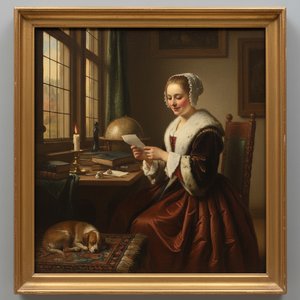
The Dropsical Woman
 Oil On Canvas
- WallArt
- Baroque
 1663
1663 86.0 x 67.0 cm
 Museu do Louvre
 Ver mais
Reprodução em Óleo Feita à Mão
Óleo sobre tela pintado à mão no tamanho e moldura de sua escolha, feito sob encomenda pelos nossos artistas. ( Alternar para Impressão Ver Imagem Digital)




































Escolha entre os nossos tamanhos pré-definidos que respeitam as proporções originais da obra de arte.

Pode inserir as suas próprias dimensões para se adequar a uma moldura ou espaço específico. Se o tamanho selecionado não corresponder às proporções da imagem original, iremos cortar a obra de arte ou estender a pintura com elementos adicionais pintados à mão. Um esboço digital será enviado para sua aprovação antes do início da produção.
Tenha em atenção que a pré-visualização no ecrã não reflete o corte ou extensão real. Apenas o esboço mostrará com precisão a composição final.
Embora tamanhos personalizados estejam disponíveis, recomendamos selecionar uma dimensão da lista predefinida para preservar as proporções originais.
Após o pedido, a equipa OriginalUniqueArt.com enviará um e-mail ao cliente para solicitar instruções e fornecer uma prévia do esboço.
Entrega mundial () em 3 a 4 semanas, em vez das 5 semanas padrão. (21 Setembro). Sem comprometer a qualidade.

Envio expresso gratuito para todo o mundo

Tela de Linho Premium

Seguro de transporte total

Garantia de Reembolso de Impostos Alfandegários

Garantia de Fidelidade de Cor

Política de Devolução em 100 Dias (Apenas para Defeitos)

Garantia de reembolso de 100%

Desconto para múltiplas unidades
 A opção de vidro está disponível apenas para tamanhos inferiores a 110 cm

The Dropsical Woman
Técnica de Reprodução
Dimensões da Reprodução
-


Preço Total
$ 350
A Moment Frozen in Time: Gerrit Dou’s “The Dropsical Woman”
The Dutch Golden Age witnessed an explosion of artistic innovation, fueled by burgeoning commerce and intellectual curiosity. Among the luminaries of this era stood Gerrit Dou (1613-1675), a painter whose meticulous approach to genre scenes cemented his reputation as one of Leiden’s most celebrated fijnschilders – “fine painters.” His masterpiece, “The Dropsical Woman,” transcends mere representation; it's an exquisitely crafted tableau that speaks volumes about the anxieties and affections of its time. Painted in 1663, this oil on canvas depicts a poignant domestic scene within a richly appointed bedroom, capturing a fleeting moment of compassion amidst unspoken sorrow.Composition and Technique: Mastery of Light and Illusion
Dou’s technique is characterized by an unparalleled level of detail and realism achieved through painstaking layering and glazing—a hallmark of Leiden’s artistic tradition. The artist skillfully employs chiaroscuro – dramatic contrasts between light and shadow – to sculpt the figures and illuminate the interior space. Notice how a single window casts a warm glow upon the woman’s face, highlighting her serene expression while simultaneously enveloping the room in subdued darkness. This masterful manipulation of light isn't merely aesthetic; it serves to heighten the emotional impact of the scene, emphasizing vulnerability and conveying a palpable sense of melancholy. The artist meticulously renders textures – from the velvety draperies to the smooth skin of the woman – creating an immersive experience for the viewer. Impasto brushstrokes are particularly prominent on the fabrics and walls, adding depth and physicality to the composition. Furthermore, Dou’s use of trompe l'oeil—optical illusions—adds another layer of sophistication, subtly blurring the boundaries between reality and artifice.Historical Context: Anxiety and Domestic Tranquility
“The Dropsical Woman” emerges from a period marked by significant social and intellectual upheaval. The Dutch Republic wrestled with religious tensions following the Thirty Years’ War, grappling with questions of faith and morality. Yet, amidst this turmoil, Dou captures a scene of quiet domesticity—a woman lying in bed attended by her husband and daughter—representing an idealized vision of familial care and devotion. This depiction reflects the prevailing humanist sensibilities of the era, emphasizing human compassion and empathy. The painting’s subject matter speaks to broader themes of illness, grief, and the importance of nurturing relationships during times of hardship. It's a testament to Dou’s ability to distill complex emotions into a single, unforgettable image.Symbolism: Layers of Meaning Beneath the Surface
Beyond its technical brilliance, “The Dropsical Woman” is laden with symbolic significance. The woman’s unconscious posture suggests fragility and vulnerability—a reflection of the anxieties surrounding mortality prevalent during Dou's lifetime. Her husband and daughter offer solace and support, embodying ideals of paternal love and filial piety. The muted color palette contributes to the painting’s somber mood, reinforcing the pervasive atmosphere of sorrow. However, the subtle illumination emanating from the window symbolizes hope—a glimmer of light amidst darkness—suggesting that even in moments of despair, compassion and tenderness endure.Emotional Impact: A Window into Human Experience
Ultimately, “The Dropsical Woman” resonates deeply with viewers because it captures a universal human experience – caring for someone afflicted by illness or grief. Dou’s masterful rendering of emotion transcends time, inviting contemplation on themes of empathy, devotion, and the enduring power of familial bonds. It stands as an exceptional example of Baroque artistry, demonstrating not only technical prowess but also profound insight into the complexities of human psychology. Reproductions of this iconic artwork offer a captivating glimpse into the artistic spirit of the Dutch Golden Age and continue to inspire admiration for its beauty and emotional depth.Biografia do Artista
Gerrit Dou (1613 - 1675)
Gerrit Dou was born in Leiden, Netherlands, on April 7, 1613, the son of Marytje Jansdr van Rosenburg and the glassmaker and engraver Douwe Jansz de Vries van Arentsvelt. According to Jan Jansz. Orlers’s biography published in 1641, *Beschryvinge van de Stad Leyden,* Dou evinced “a pleasure and desire toward painting” at a young age. He studied drawing under Bartholomäus Dolendo, and then trained in the stained-glass workshop of Pieter Couwenhorn. In February 1628, at the age of fourteen, his father sent him to study painting in the studio of Rembrandt van Rijn, who lived nearby. From Rembrandt, with whom he remained for about three years, Dou acquired his skill in colouring and in the more subtle effects of *chiaroscuro*, and his master’s style is reflected in several of his earlier pictures, notably a self-portrait at the age of 22, around 1635–1638, in the Bridgewater Collection, and in the *Blind Tobit going to meet his Son*, at Wardour Castle. Rembrandt's influence was profound, shaping Dou’s artistic vision and technique.Artistic Style and Specialization
Gerrit Dou is renowned for his distinctive “fijnschilder” style—fine painting—characterized by meticulous detail and polished realism. He achieved this remarkable level of precision through innovative methods, including the use of a concave lens combined with a convex mirror to examine subjects accurately and meticulously applying brushstrokes. This technique allowed him to capture subtle nuances of light and texture, creating images that are both visually stunning and intellectually stimulating. Dou’s mastery of *chiaroscuro*, particularly in his candlelit night-scenes—such as *The Astronomer by Candlelight*—established him as a pioneer in portraying atmospheric illumination with unparalleled fidelity. These paintings exemplify the Leiden Fijnschilders' commitment to capturing the essence of reality through masterful manipulation of light and shadow.Notable Works and Collections
Gerrit Dou produced over 200 paintings during his lifetime, many of which are housed in prominent museums across Europe. Among his most celebrated works is *The Astronomer by Candlelight*, a masterpiece that exemplifies his exceptional skill in rendering candlelight effects—a technique he perfected through painstaking observation and experimentation. This painting resides on OriginalUniqueArt.com. Furthermore, the Leiden Collection, located in New York, showcases an impressive assemblage of artworks by Gerrit Dou alongside other masters of the Dutch Golden Age. For a comprehensive guide to this collection, visit Leiden Collection, New York: A Comprehensive Guide on OriginalUniqueArt.com.Influences and Legacy
Gerrit Dou’s artistic trajectory was shaped by several influential figures, notably Rembrandt van Rijn, who served as his mentor during his formative years. Dou's pupil Frans van Mieris the Elder continued Dou’s legacy, inheriting his meticulous style and mastering the art of *trompe l'œil*, creating illusions that blurred the boundaries between reality and representation. Gerrit Dou’s work has been recognized for its enduring beauty and technical brilliance, securing his place as one of the most important artists of the Dutch Golden Age. His influence extends beyond his immediate contemporaries, inspiring generations of painters who sought to emulate his masterful approach to artmaking. You can find more information about Gerrit Dou's legacy in museums like Het Rijksmuseum in Amsterdam and The Mauritshuis in Delft.
Gerrit Dou
1613 - 1675 , Países Bajos
Informações Rápidas
- Artistic Movement Or Style: Fijnschilder (Fine Painting)
- Artists Or Movements Influenced By This Artist: ['Leiden Fijnschilders']
- Artists Who Influenced This Artist: ['Rembrandt van Rijn']
- Date Of Birth: 7 de abril de 1613
- Full Name: Gerrit Dou
- Nationality: Holandés
- Notable Artworks:
- O Astrônomo à luz de velas
- Retrato de uma Velha
- Place Of Birth: Leiden, Países Bajos
Artigos Relacionados

Mastering Light & Shadow: A Journey Through the Dutch Golden Age's Luminous Legacy
Embark on a cultural journey through the Dutch Golden Age. Explore the masterful interplay of light and shadow in 17th-century masterpieces, from Rembrandt to Vermeer, and discover how this era of profound realism continues to inspire fine art collectors today.

Golden Light & Dutch Skies: The Timeless Magic of Dutch Golden Age Landscapes
Discover the breathtaking beauty of Dutch Golden Age landscapes. Explore the mastery of light, chiaroscuro, and 17th-century realism through an expert art history lens, celebrating the enduring legacy of the Dutch Masters for discerning collectors and art lovers.

A Era de Ouro Holandesa: 10 Mestras-Obras Imperdíveis para Decorar com Arte
Descubra as 10 obras-primas da Era de Ouro Holandesa! Explore a história, técnica e beleza atemporal de Rembrandt, Vermeer e outros mestres. Encontre reproduções de arte exclusivas para decorar sua casa com elegância em OriginalUniqueArt.com.

Golden Age Reflections: Dutch Baroque Painting & Cultural Innovation
Explore the Dutch Golden Age of painting! Discover key artists like Vermeer & ter Borch, their innovative techniques, and the rich cultural context behind these Baroque masterpieces. Learn about collecting & appreciating this iconic art period.
Gerrit Dou: Intimacy & Light in the Dutch Golden Age
Explore the exquisite world of Gerrit Dou, a master of Dutch Golden Age painting. Discover his intimate genre scenes, signature use of light, and lasting legacy. Learn about collecting Dou's works & their value.


