

 Visualizar na parede
 Compartilhar
 Compartilhar
 Detalhes
 Guia
Guia

 Baixar imagem
 Semelhantes
 Raio X
 Ver diaporama
 Estatísticas
Georgia O'Keeffe
 Óleo sobre tela
- Arte de Parede
- American Modernism
 1935
1935- Modernismo
 91.0 x 76.0 cm
 Ler mais
A obra de arte exibida nesta página é protegida por leis de direitos autorais, o que significa que não podemos criar ou vender legalmente uma reprodução idêntica. Esta proteção é aplicada por meio de acordos internacionais, tais como a Convenção de Berna e pelas leis nacionais, incluindo as estabelecidas por Lei de Direitos Autorais dos EUA - Título 17.
Este método cumpre plenamente as regulamentações de direitos autorais, pois não envolve a cópia ou duplicação da obra protegida. Em vez disso, trata-se de uma reinterpretação criativa — uma nova pintura que é influenciada pela original, mas não idêntica a ela.
Giclée / Impressão de Arte
Impressão giclée ou em tela de qualidade de museu, com produção rápida e opções flexíveis de acabamento. ( Comprar pintura feita à mão Alternar para Imagem Digital)




P118B €10

P118H €10

P118W €10

P438Z €10

P508JH €12

P508YH €12

P805H €10

P805Z €10

P919BZ €10

P919G €10

P919XJ €10

P959ZH €10

P968JZ €12

W106C €8

W218G €10

W218JH €8

W218Y €10

W307PJ €10

W316G €10

W316PJ €8

W316Y €10

W398PJ €8

W4111J €10

W500HY €15

W500JH €15

W692G €12

W849H €8

W940BG €15

W953PJ €8




Escolha entre os nossos tamanhos pré-definidos que respeitam as proporções originais da obra de arte.

Insira a largura e a altura desejadas para se ajustarem à sua moldura ou parede. Uma impressão pode ser apenas cortada, nunca ampliada além da imagem original; portanto, um tamanho com proporções diferentes resultará na perda de parte da imagem. Enviamos uma maquete digital para sua aprovação antes de realizarmos a impressão. A imagem exibida nesta página não mostra o corte real — apenas a maquete o faz.
Entrega mundial () em 2 semanas, em vez das 4/5 semanas padrão. (25 Outubro)

Envio expresso gratuito para todo o mundo

Tela de Linho de Alta Qualidade

Seguro de transporte completo

Garantia de Reembolso de Impostos Alfandegários

Garantia de Fidelidade Cromática

Política de Devolução em 100 Dias (Apenas para Defeitos)

Garantia de reembolso de 100%

Oferta de desconto por quantidade
 A opção de vidro está disponível apenas para tamanhos inferiores a 110 cm

Georgia O'Keeffe
Giclée / Impressão de Arte
Tamanho da Reprodução
-


Preço Total
€ 70
A Beleza Austera: Explorando Mortalidade e Resiliência em "Cabeça de Carneiro, Colinas de Hollyhock Branco"
Pintada em 1935, esta obra icônica de Georgia O’Keeffe apresenta uma imagem poderosamente evocativa – um crânio animal descolorido situado contra a vastidão do Oeste Americano. Mais do que uma simples representação de osso e paisagem, é uma profunda meditação sobre a vida, a morte e o espírito duradouro da natureza. O’Keeffe, uma figura líder no Modernismo Americano, frequentemente chamada de “Mãe do Modernismo Americano”, combina magistralmente formas simplificadas com um realismo meticuloso. Executada principalmente em tinta a óleo, a obra demonstra seus traços característicos de pinceladas suaves e camadas deliberadas, particularmente evidentes no céu turbulento. A composição é notavelmente simétrica, ancorando o crânio centralmente enquanto permite que as curvas varridas de suas pontas equilibrem a extensão horizontal da paisagem. Esta abordagem precisa se alinha com os princípios do Precisionismo, um estilo que enfatiza clareza, formas geométricas e temas industriais – embora O’Keeffe tenha aplicado exclusivamente isso a motivos naturais.
Visão Modernista e Técnica Artística
A paleta de cores limitada, porém impactante, é fundamental para o efeito emocional da pintura. O branco puro do crânio domina, contrastando com os tons quentes de vermelho, laranja e marrom na paisagem e os azuis frios e cinzas no céu dramático. Esta interação entre cores quentes e frias intensifica o peso emocional da obra. A linha baixa do horizonte enfatiza a vastidão do ambiente, amplificando ainda mais a sensação de escala e isolamento. O’Keeffe não se limitou à mera representação; ela construiu uma atmosfera, um estado de espírito. As pinceladas, embora suaves, revelam uma textura sutil que convida o olhar a percorrer a superfície da tela, descobrindo nuances e profundidade. A técnica de camadas, característica do seu estilo, confere à pintura uma qualidade quase translúcida, como se a imagem estivesse emergindo de um sonho.
Simbolismo e o Oeste Americano
O próprio crânio funciona como um memento mori, um lembrete artístico tradicional da mortalidade. Justaposto à vibrante floração de uma única flor, cria uma tensão cativante entre decadência e renovação. Este contraste não é meramente estético; ele fala sobre a natureza cíclica da vida e da morte. A paisagem árida sugere dificuldades e resiliência, enquanto o céu expansivo evoca tanto eternidade quanto o poder indiferente da natureza. Para muitos espectadores, o crânio também ressoa como um símbolo do Oeste Americano – especificamente, o destino das populações de bisões e a mudança na face da fronteira. A escolha de O’Keeffe em incorporar elementos encontrados na paisagem, como ossos e flores silvestres, confere à obra uma autenticidade visceral, conectando-a profundamente ao seu ambiente.
Ressonância Emocional e Impacto Interior
Esta obra evoca uma gama de emoções – melancolia, contemplação, reverência e talvez até uma aceitação silenciosa dos ciclos inevitáveis da vida. Sua poderosa imagem e estética minimalista a tornam um ponto focal cativante para qualquer espaço interior. Uma reprodução desta pintura empreenderia sofisticação e profundidade a uma sala de estar, escritório ou quarto, estimulando a conversa e convidando à introspecção. É uma peça que transcende a mera decoração; é um convite a contemplar a beleza e a fragilidade da existência. A obra não impõe uma interpretação única, mas sim abre um diálogo íntimo entre o espectador e os mistérios da vida e da morte, da solidão e da esperança.
Perguntas e Respostas
Existe um guia para "Georgia O'Keeffe", de Georgia O'Keeffe?
O guia para "Georgia O'Keeffe" é a página de Ficha informativa da obra — uma ficha informativa imprimível que apresenta a obra com sua legenda, autoria e tabela de identificação (artista, datas, técnica, tamanho original, coleção).
Que tipo de obra de arte é "Georgia O'Keeffe", de Georgia O'Keeffe?
"Georgia O'Keeffe", de Georgia O'Keeffe é classificado como Arte de Parede. A categoria descreve o tipo de obra de arte que a peça original representa.
Qual é a luminosidade de "Georgia O'Keeffe", de Georgia O'Keeffe?
As cores de "Georgia O'Keeffe" apresentam uma luminância Equilíbrio de Brilho.
Biografia do Artista
Early Life and Artistic Foundations
Georgia Totto O’Keeffe, a name synonymous with American modernism, emerged from the unassuming landscape of Sun Prairie, Wisconsin, in 1887. Born into a family of Irish and Hungarian descent engaged in dairy farming, young Georgia displayed an artistic inclination early on, deciding by age ten that she would dedicate her life to art. This determination was nurtured through lessons with local watercolorist Sara Mann, followed by formal studies at the School of the Art Institute of Chicago from 1905 to 1906 and later at the University of Virginia. However, it was her encounter with Arthur Wesley Dow’s principles – emphasizing personal expression and a harmonious balance of color and line – that truly ignited her artistic path. Dow's teachings steered O’Keeffe away from strict realism toward a more subjective and emotionally resonant approach to art, an approach that would define her career. These formative years weren’t without their challenges; periods of illness and dissatisfaction led her to temporarily abandon painting, but the creative impulse always drew her back, evolving with each new experience and influence.New York and the Stieglitz Circle
A pivotal moment arrived in 1916 when O’Keeffe’s abstract charcoal drawings were discovered by Alfred Stieglitz, a renowned photographer and art dealer. He exhibited her work without her prior knowledge, sparking a dialogue that would profoundly shape both their lives and the course of American art. Stieglitz recognized an exceptional talent in O'Keeffe, one that resonated with his own modernist sensibilities. He invited her to New York City in 1918, providing not only professional support but also fostering a deep personal connection. Their relationship blossomed into marriage in 1924, creating a dynamic artistic partnership and intellectual exchange. Stieglitz championed O’Keeffe’s work, showcasing it at his gallery “291” and promoting her as a leading figure in the American avant-garde. During this period, she began to develop her signature style – bold, simplified forms and intensely saturated colors – initially expressed through depictions of New York skyscrapers and, most famously, magnified flower paintings. These floral works, often interpreted (though consistently denied by O’Keeffe herself) as veiled representations of female anatomy, challenged conventional notions of beauty and sexuality in art.The Allure of the Southwest
While New York provided a crucial platform for her early success, it was the landscapes of the American Southwest that truly captured O’Keeffe’s imagination and profoundly influenced her artistic vision. Her first visit to New Mexico in 1929 marked the beginning of a lifelong love affair with the region's stark beauty, vibrant colors, and unique cultural heritage. The vastness of the desert, the dramatic rock formations, and the ancient Pueblo architecture resonated deeply within her, inspiring a new series of paintings that reflected the spirit of the land. Works like *Cow’s Skull: Red, White, and Blue* (1931) and *Summer Days* (1936) are powerful testaments to this influence, transforming seemingly mundane objects into iconic symbols of the American West. She eventually settled permanently in New Mexico in 1949 following Stieglitz’s death, establishing a home and studio in Abiquiu that became integral to her artistic process and identity.Style and Technique
O'Keeffe’s style evolved significantly throughout her career. Initially influenced by Arthur Dow’s emphasis on abstraction and color harmony, she later developed a distinctive approach characterized by monumental scale, simplified forms, and intense colors. Her flower paintings, in particular, are renowned for their close-up perspective, which transforms ordinary blossoms into captivating symbols of beauty and fragility. She often employed a limited palette – primarily reds, blues, yellows, and greens – to create striking visual effects. Furthermore, O’Keeffe experimented with various media, including oil paint, watercolor, casein, and collage, adapting her techniques to suit the subject matter and desired effect. Her work is notable for its emotional intensity and its ability to evoke a sense of wonder and contemplation.Legacy and Enduring Influence
Georgia O'Keeffe continued to paint prolifically throughout her life, experimenting with new subjects and pushing the boundaries of abstraction. Her later works included aerial views of clouds and skies, reflecting a fascination with the vastness and ethereal quality of the natural world. She remained fiercely independent and uncompromising in her artistic vision, refusing to be categorized or defined by prevailing art movements. O’Keeffe’s impact on American art is immeasurable. She paved the way for future generations of female artists, challenging societal norms and asserting her own unique voice in a male-dominated field. Her paintings continue to captivate audiences with their bold simplicity, emotional depth, and evocative power. The establishment of the Georgia O'Keeffe Museum in Santa Fe in 1997 further solidified her legacy, preserving her art and providing a space for ongoing scholarship and appreciation. In 2014, *Jimson Weed/White Flower No. 1* sold for $44.4 million, setting a record price for a work by a female artist – a testament to the enduring value and significance of her artistic contribution. O’Keeffe's influence extends beyond painting; she became an icon of American individualism and self-reliance, inspiring countless artists and admirers with her unwavering commitment to her craft and her unique perspective on the world. Her work remains a powerful reminder of the transformative power of art and the enduring beauty of the natural world.Key Works & Museum Presence
- Red Canna: Exemplifies her early exploration of floral abstraction.
- Cow’s Skull: Red, White, and Blue (1931): A powerful symbol of the American Southwest and a meditation on mortality.
- Summer Days (1936): Captures the essence of the New Mexico landscape with its vibrant colors and simplified forms.
- Jimson Weed/White Flower No. 1: A monumental floral painting that showcases her mastery of scale and composition.
- Georgia O'Keeffe Museum (Santa Fe)
- Museum of Modern Art (New York)
- Art Institute of Chicago
- National Gallery of Art (Washington, D.C.)

Georgia O'Keeffe
1887 - 1986 , Estados Unidos da América
Dados Rápidos
- Artistic Movement Or Style: Modernismo, Precisionismo
- Artists Or Movements Influenced By This Artist: ['Expressionismo']
- Artists Who Influenced This Artist:
- Arthur Dow
- Alfred Stieglitz
- Date Of Birth: 15 de novembro de 1887
- Date Of Death: 6 de março de 1986
- Full Name: Georgia Totto O'Keeffe
- Nationality: Americana
- Notable Artworks:
- Red Canna
- Crânio de vaca
- Flores-brancas
- Place Of Birth: Sun Prairie, EUA
Artigos Relacionados

Grant Wood & American Regionalism: Identity, Myth & the Rural Landscape
Explore the world of Grant Wood & American Regionalism with OriginalUniqueArt. Discover the symbolism behind 'American Gothic', recurring themes, and the movement's lasting impact on art history. High-quality reproductions available.
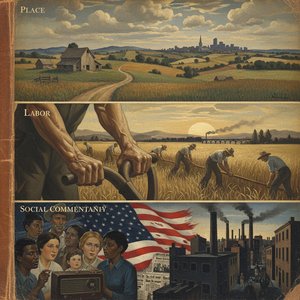
American Regionalism: A Crucible of Identity – Exploring Themes of Place, Labor & Social Commentary
Explore American Regionalism's powerful depiction of the American heartland during the Great Depression. Discover Grant Wood, Thomas Hart Benton & more. Expert analysis & high-quality art reproductions at OriginalUniqueArt.

Realismo Americano: 10 Obras-Primas que Moldaram a Arte e Decoram o Lar
Descubra as 10 obras-primas do Realismo Americano! Explore a história de Hopper, Homer e Cassatt. Encontre reproduções de arte com qualidade museológica para decorar sua casa. Inspire-se em cores vibrantes e atmosferas únicas. Explore a coleção completa na OriginalUniqueArt.com.

Georgia O'Keeffe: Redefining Modernism Through Symbolism & the American Landscape
Explore the captivating world of Georgia O'Keeffe! Discover her groundbreaking flower paintings, New Mexico landscapes & lasting impact on American Modernism. Expert analysis and insights.
Martin Johnson Heade: Luminism, American Identity & the Poetic Still Life
Explore the captivating world of Martin Johnson Heade, a master of Luminism. Discover his serene landscapes, vibrant still lifes & profound connection to American identity. Learn about his techniques and legacy.


