Visualizar em escala
 Enviar
 Compartilhar
 Ver detalhes
 Guia de Obras do Aluno

 Baixar imagem
 Semelhantes
 Raio X
 Apresentação de slides
 Estatísticas
St. Thomas


 Ver mais
Reprodução em Óleo Feita à Mão
Óleo sobre tela pintado à mão no tamanho e moldura de sua escolha, feito sob encomenda pelos nossos artistas. ( Alternar para Impressão Ver Imagem Digital)




P118B €10

P118H €10

P118W €10

P438Z €10

P508JH €12

P508YH €12

P805H €10

P805Z €10

P919BZ €10

P919G €10

P919XJ €10

P959ZH €10

P968JZ €12

W106C €8

W218G €10

W218JH €8

W218Y €10

W307PJ €10

W316G €10

W316PJ €8

W316Y €10

W398PJ €8

W4111J €10

W500HY €15

W500JH €15

W692G €12

W849H €8

W940BG €15

W953PJ €8




Escolha entre os nossos tamanhos pré-definidos que respeitam as proporções originais da obra de arte.

Digite a largura e a altura de que necessita, para se ajustar à sua moldura ou à sua parede. Esta obra é pintada à mão, por isso, para um tamanho com uma proporção diferente, o artista pode pintar um pouco mais ao redor da imagem ou cortar um pouco — você escolhe. Enviamos-lhe uma maquete digital para aprovação antes de a pintura começar. A imagem exibida nesta página não mostra o resultado real — apenas a maquete mostra.
Após o pedido, a equipa OriginalUniqueArt.com enviará um e-mail ao cliente para solicitar instruções e fornecer uma prévia do esboço.
Entrega mundial () em 3 a 4 semanas, em vez das 5 semanas padrão. (22 Outubro). Sem comprometer a qualidade.

Envio expresso gratuito para todo o mundo

Tela de Linho Premium

Seguro de transporte total

Garantia de Reembolso de Impostos Alfandegários

Garantia de Fidelidade de Cor

Política de Devolução em 100 Dias (Apenas para Defeitos)

Garantia de reembolso de 100%

Desconto para múltiplas unidades
 A opção de vidro está disponível apenas para tamanhos inferiores a 110 cm

St. Thomas
Técnica de Reprodução
Dimensões da Reprodução
-


Preço Total
€ 263
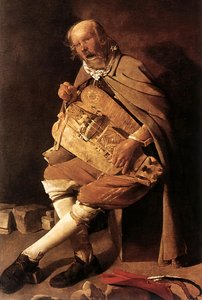
A Portrait Illuminated by Darkness: Exploring Georges de La Tour’s St. Thomas
The painting “St. Thomas” by Georges de la Tour—a deceptively simple depiction of an elderly man holding a knife—commands attention not through ostentation but through masterful manipulation of light and shadow, hallmarks of the Baroque artistic movement. Completed in 1620 during a period marked by intense religious piety and burgeoning scientific inquiry, this oil on canvas transcends mere representation; it delves into profound spiritual contemplation and subtly communicates complex ideas about faith and mortality.- Subject Matter & Composition: The central figure is unmistakably Saint Thomas Aquinas, the Dominican theologian renowned for his contributions to Christian theology and philosophy. De La Tour’s deliberate choice of subject matter speaks volumes about the artistic sensibilities of the time—the Catholic Church held immense sway in Europe, commissioning artworks intended to inspire piety and reinforce doctrinal beliefs.
- Style & Technique – Tenebrism: What distinguishes “St. Thomas” is De La Tour’s groundbreaking application of tenebrism, a technique popularized by Caravaggio that dramatically contrasts intense darkness with pools of radiant light. This stylistic decision isn't merely decorative; it serves as an integral component of the painting’s narrative and emotional resonance. The deep shadows engulf most of the canvas, creating an atmosphere of solemnity and introspection—a deliberate antithesis to the luminous glow emanating from Saint Thomas’s face and hands.
Historical Context: Faith Under Pressure
Painted during the Thirty Years' War (1618-1648), “St. Thomas” reflects the anxieties of a Europe grappling with religious conflict and political instability. The Catholic Church faced challenges from Protestant denominations, fostering an environment where art served as a powerful tool for reaffirming faith and conveying moral authority. De La Tour’s depiction aligns perfectly with this cultural climate—the subdued lighting and contemplative gaze of Saint Thomas embody the virtues of humility and piety deemed essential by the Church.
Symbolism & Interpretation
The knife held by Saint Thomas is arguably the painting's most striking symbolic element. While seemingly incongruous within a devotional scene, it represents intellectual discernment—the ability to critically examine theological concepts and arrive at reasoned conclusions. More broadly, it symbolizes the struggle between faith and reason, a debate that preoccupied thinkers throughout the Baroque era. The light illuminating Saint Thomas’s face isn't merely physical illumination; it signifies divine grace, representing enlightenment and spiritual understanding.
Emotional Impact & Legacy
"St. Thomas" transcends its formal elements to evoke a palpable sense of solemn contemplation and profound emotion. De La Tour skillfully captures the inner turmoil—the questioning spirit—that accompanies genuine faith. The painting’s enduring appeal lies in its ability to resonate with viewers across centuries, prompting reflection on themes of spirituality, mortality, and the pursuit of truth. It remains a testament to De La Tour's genius as a painter and his profound understanding of the human condition.
Perguntas e Respostas
Qual é a cor predominante de "St. Thomas" de Georges de La Tour?
A cor que mais se destaca em "St. Thomas" é Black (#1c0a0c). A cor dominante é útil ao combinar uma obra de arte com um ambiente interno.
Qual é a tonalidade predominante que percorre "St. Thomas" de Georges de La Tour?
A tonalidade dominante de "St. Thomas" de Georges de La Tour é Amber to Saffron. A tonalidade é o tom subjacente da paleta.
Como "St. Thomas" equilibra luz e sombra?
Os valores registrados para "St. Thomas" de Georges de La Tour são: deep_shadow de brilho, Dark de luminância.
Biografia do Artista
A Life Bathed in Shadow: The Enigmatic World of Georges de La Tour
Georges de La Tour, a name that resonates with the hushed reverence reserved for masters of light and shadow, remains one of the most compelling figures of the French Baroque. Born in 1593 in Vic-sur-Seille, a small town nestled within the Duchy of Lorraine, his life unfolded against a backdrop of religious fervor and political upheaval. While details surrounding his early training remain somewhat elusive—scholars speculate about potential journeys to Italy or apprenticeships with local artists like Jacques Bellange—the seeds of his artistic vision were undoubtedly sown in this environment. He wasn’t born into an artistically established family; his father was a baker, yet the circumstances of his mother's lineage hint at a possible connection to nobility, a subtle influence perhaps reflected in the dignity and quiet grace that permeate his work. In 1617 he married Diane Le Nerf, establishing a stable home life in Lunéville, where he would spend much of his career serving both the French court and the Dukes of Lorraine. This dual patronage allowed him to flourish, yet it was within the intimate confines of domestic scenes and religious contemplation that his true genius found expression.The Dance of Light and Darkness: Artistic Influences and Development
De La Tour’s artistic journey wasn't one of radical innovation but rather a masterful synthesis of existing influences, transformed through the lens of his unique sensibility. The dramatic chiaroscuro—the stark contrast between light and dark—that defines his paintings owes an undeniable debt to Caravaggio, the Italian master who revolutionized painting with his intensely realistic and emotionally charged scenes. However, De La Tour didn’t simply imitate; he filtered Caravaggism through the prism of Dutch Caravaggisti, particularly those from the Utrecht School like Hendrick Terbrugghen. This fusion resulted in a style that was both powerful and restrained, characterized by a muted palette dominated by earth tones and subtle gradations of light. His early works, predating 1630, exhibit a greater vibrancy and dynamism, reflecting the influence of the Utrecht school. But as his career progressed, he moved towards an increasingly introspective and minimalist aesthetic. He began to pare down compositions, focusing on essential forms and reducing extraneous details, creating scenes that felt both timeless and deeply personal. This evolution wasn’t merely technical; it was a reflection of his growing spiritual depth and his desire to convey profound emotional truths through the simplest of means.Candlelight and Contemplation: Major Works and Recurring Themes
The hallmark of De La Tour's oeuvre is undoubtedly his masterful use of candlelight, which he employed not merely as a source of illumination but as a metaphor for divine grace and spiritual awakening. His paintings are often set at night, with figures bathed in the warm, flickering glow of a single candle or lamp. This creates an atmosphere of intimacy and quiet contemplation, drawing the viewer into the scene and inviting them to share in the emotional experience of the subjects. The Fortune-Teller, painted around 1630, exemplifies this early style—a lively genre scene rendered with sharp observation and dramatic lighting. But it is his later religious works that truly showcase his genius. Adoration of the Shepherds, created around 1640, demonstrates his ability to imbue a traditional subject with profound emotional resonance. The figures are not idealized or heroic; they are ordinary people, humbled by the presence of the divine. The Tears of Saint Peter, painted in the 1650s, is a particularly poignant example of his psychological insight—the apostle’s grief rendered with heartbreaking subtlety and realism. Saint Joseph the Carpenter, another iconic work, depicts a serene domestic scene, highlighting De La Tour's mastery of capturing the quiet dignity of everyday life. These paintings aren’t simply depictions of religious events; they are meditations on faith, doubt, and the human condition.A Rediscovered Legacy: Historical Significance and Enduring Appeal
Despite achieving recognition during his lifetime—he was appointed “Painter to the King” by Louis XIII in 1638—De La Tour’s work fell into relative obscurity after his death in 1652. For centuries, many of his paintings were misattributed to other artists, and his name faded from art historical memory. It wasn't until the early 20th century that a concerted effort was made to rediscover and re-evaluate his oeuvre, led by scholars like Hermann Voss. This rediscovery revealed an artist of extraordinary originality and depth, whose work bridged the gap between Caravaggism and French Classicism. De La Tour’s innovative use of light and shadow, combined with his psychological insight into his subjects, continues to captivate audiences today. His paintings offer a glimpse into 17th-century life and spirituality, reflecting both the religious fervor and the social realities of his time. *He remains celebrated for his ability to imbue everyday scenes with profound meaning and emotional depth*, reminding us that even in the darkest of times, there is always hope to be found in the flickering light of faith and human connection. His influence can be seen in later artists who explored similar themes of introspection and spiritual longing, solidifying his place as a pivotal figure in the history of European art.
Georges de La Tour
1593 - 1652 , França
Informações Rápidas
- Artistic Movement Or Style: Barroco, Tenebrismo
- Artists Or Movements Influenced By This Artist: ['Classicismo Francês']
- Artists Who Influenced This Artist:
- Caravaggio
- Terbrugghen
- Date Of Birth: 13 Mar 1593
- Date Of Death: 30 Jan 1652
- Full Name: Georges de La Tour
- Nationality: Francês
- Notable Artworks:
- A Profecia
- Adoração dos Pássaros
- Lágrimas de São Pedro
- Place Of Birth: Vic-le-Comte, França
Artigos Relacionados
Georges de La Tour: Luminosity, Spirituality & Realism in Baroque Painting
Discover the captivating world of Georges de La Tour, a Baroque master renowned for his dramatic chiaroscuro & spiritual realism. Explore key works, influences, and his remarkable rediscovery. Learn more at OriginalUniqueArt.

Goya: As 25 Obras-Primas que Definem um Mestre da Arte Espanhola | OriginalUniqueArt
Descubra as 25 obras-primas de Francisco Goya, o mestre espanhol do Romantismo. Explore retratos icônicos, gravuras impactantes e a história por trás de 'Saturno Devorando seu Filho' e 'A Majas'. Encontre reproduções de arte exclusivas para decorar sua casa com OriginalUniqueArt.com.

Georges Seurat: As 25 Obras-Primas do Mestre do Pontilhismo | OriginalUniqueArt
Descubra as 25 obras-primas de Georges Seurat, o mestre do pontilhismo! Explore a história, cores vibrantes e técnica inovadora por trás de seus quadros mais famosos. Encontre reproduções de arte exclusivas para decorar sua casa com OriginalUniqueArt.com.

The Dramatic Flourish: Exploring the Baroque Movement's Enduring Legacy in Art History
Explore the dramatic world of Baroque art! Discover iconic artists like Caravaggio & Rubens, defining techniques, and its lasting impact on art history. Expert insights for collectors & enthusiasts at OriginalUniqueArt.

Georges Braque: As 25 Obras-Primas Essenciais para Amantes da Arte Moderna | OriginalUniqueArt
Descubra as 25 obras-primas de Georges Braque, pioneiro do Cubismo! Explore a história, cores e técnicas por trás de seus quadros mais famosos. Encontre reproduções de arte exclusivas para decorar sua casa com elegância em OriginalUniqueArt.com.