() ·

Uma pintura feita para você, à mão

Landscape

Reprodução em Óleo Feita à Mão

Óleo sobre tela pintado à mão no tamanho e moldura de sua escolha, feito sob encomenda pelos nossos artistas. ( Alternar para Impressão Alternar para Imagem Digital)

Descrição do Item

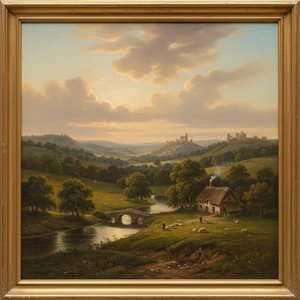
George Howland Beaumont's 'Landscape' (1825) captures a serene rural scene with vibrant colors and detailed brushwork, reflecting Romantic ideals. Explore this beautiful painting by a British art patron.

Biografia do Artista

George Healy: retratista icônico que capturou a alma de presidentes e figuras históricas da América. Explore sua obra e legado artístico!

de ·

Capítulo 1

Qual deve ser o tamanho?

Deslize para alterar o tamanho; a imagem à esquerda mostra a moldura em sua largura real. As proporções originais são mantidas.

Tamanho padrão
personalizado
CM
INCH

Escolha entre os nossos tamanhos pré-definidos que respeitam as proporções originais da obra de arte.

largura
altura

Insira a largura e a altura desejadas para se ajustarem à sua moldura ou parede. Como esta obra é pintada à mão, para um tamanho com proporções diferentes, o artista poderá pintar um pouco mais ao redor da imagem ou reduzir ligeiramente a composição — você escolhe. Enviamos uma maquete digital para sua aprovação antes de iniciar a pintura. A imagem exibida nesta página não representa o resultado real — apenas a maquete mostra o resultado final.

Capítulo 2

Como deve chegar?

Escolha as bordas da tela esticada

Escolha sua moldura

Corner sample of the WhiteWrap canvas edge finish, stretched on madeira maciça bars
Branco €1
Corner sample of the BlurSideWrap canvas edge finish, stretched on madeira maciça bars
Bordas esfumaçadas €1
Corner sample of the ExtendedWrap canvas edge finish, stretched on madeira maciça bars
Bordas estendidas €1
Corner sample of the P118B picture frame: poliestireno moldado, 5 cm wide and 3 cm thick
P118B €10
Corner sample of the P118H picture frame: poliestireno moldado, 5 cm wide and 3 cm thick
P118H €10
Corner sample of the P118W picture frame: poliestireno moldado, 5 cm wide and 3 cm thick
P118W €10
Corner sample of the P438Z picture frame: poliestireno moldado, 5.5 cm wide and 3.5 cm thick
P438Z €10
Corner sample of the P508JH picture frame: poliestireno moldado, 7 cm wide and 3.5 cm thick
P508JH €12
Corner sample of the P508YH picture frame: poliestireno moldado, 7 cm wide and 3.5 cm thick
P508YH €12
Corner sample of the P805H picture frame: poliestireno moldado, 5 cm wide and 3.5 cm thick
P805H €10
Corner sample of the P805Z picture frame: poliestireno moldado, 5 cm wide and 3.5 cm thick
P805Z €10
Corner sample of the P919BZ picture frame: poliestireno moldado, 7 cm wide and 3.5 cm thick
P919BZ €10
Corner sample of the P919G picture frame: poliestireno moldado, 7 cm wide and 3.5 cm thick
P919G €10
Corner sample of the P919XJ picture frame: poliestireno moldado, 7 cm wide and 3.5 cm thick
P919XJ €10
Corner sample of the P959ZH picture frame: poliestireno moldado, 5 cm wide and 3 cm thick
P959ZH €10
Corner sample of the P968JZ picture frame: poliestireno moldado, 6 cm wide and 4 cm thick
P968JZ €12
Corner sample of the W106C picture frame: madeira maciça, 5 cm wide and 3 cm thick
W106C €8
Corner sample of the W218G picture frame: madeira maciça, 5 cm wide and 3 cm thick
W218G €10
Corner sample of the W218JH picture frame: madeira maciça, 5 cm wide and 3 cm thick
W218JH €8
Corner sample of the W218Y picture frame: madeira maciça, 5 cm wide and 3 cm thick
W218Y €10
Corner sample of the W307PJ picture frame: madeira maciça, 6 cm wide and 3 cm thick
W307PJ €10
Corner sample of the W316G picture frame: madeira maciça, 6 cm wide and 3 cm thick
W316G €10
Corner sample of the W316PJ picture frame: madeira maciça, 6 cm wide and 3 cm thick
W316PJ €8
Corner sample of the W316Y picture frame: madeira maciça, 6 cm wide and 3 cm thick
W316Y €10
Corner sample of the W398PJ picture frame: madeira maciça, 5 cm wide and 3 cm thick
W398PJ €8
Corner sample of the W4111J picture frame: madeira maciça, 6.5 cm wide and 3.5 cm thick
W4111J €10
Corner sample of the W500HY picture frame: madeira maciça, 7 cm wide and 5 cm thick
W500HY €15
Corner sample of the W500JH picture frame: madeira maciça, 7 cm wide and 5 cm thick
W500JH €15
Corner sample of the W692G picture frame: madeira maciça, 8 cm wide and 4 cm thick
W692G €12
Corner sample of the W849H picture frame: madeira maciça, 5 cm wide and 3 cm thick
W849H €8
Corner sample of the W940BG picture frame: madeira maciça, 7.5 cm wide and 4.5 cm thick
W940BG €15
Corner sample of the W953PJ picture frame: madeira maciça, 6 cm wide and 3.5 cm thick
W953PJ €8
Corner sample of the H24-GOLD picture frame: madeira entalhada com gesso, 10 cm wide and 6 cm thick
H24-GOLD €30
Corner sample of the H24-SILVER picture frame: madeira entalhada com gesso, 10 cm wide and 6 cm thick
H24-SILVER €30
Corner sample of the H36-GOLD picture frame: madeira entalhada com gesso, 15 cm wide and 6.5 cm thick
H36-GOLD €45
Corner sample of the H36-SILVER picture frame: madeira entalhada com gesso, 15 cm wide and 6.5 cm thick
H36-SILVER €45
Prévia da moldura
Com moldura

Moldura: . Dimensões totais com a moldura: .

Capítulo 3

Quem o pinta, e deveria algo mudar?

Exemplos do que pode ser alterado: Substituir o rosto pela foto do cliente; Adicionar um animal de estimação (ex: substituir gato por cachorro); Incluir uma mensagem oculta no fundo; Alterar a paisagem ou elementos do fundo.
Após o pedido, a equipe da OriginalUniqueArt.com enviará um e-mail ao cliente para instruções e fornecerá uma prévia da montagem

Entrega mundial () em 3 a 4 semanas, em vez das 5 semanas padrão. (4 Novembro). Sem comprometer a qualidade.

Capítulo 4

Os retoques finais

Uma placa de identificação, como em um museu?

Detalhes da Placa de Bronze Gravada

This elegant plaque features the artist's name and the title of the artwork, finely engraved for a timeless presentation.

It is made from bronze with a refined, elegant finish. The text is precisely laser-engraved for a sharp and permanent result. Measuring 9x2 cm, the plaque is compact yet easy to read. It's built to be durable and scratch-resistant, offering a professional, museum-quality look. Mounting is simple thanks to the included adhesive backing.

Detalhes da Placa de Acrílico Transparente

The plaque includes essential engraved details such as the artist's name, the title of the artwork, the date it was created, the type of media used-like oil on canvas or watercolor-a brief description of the piece, and a QR code that links to the complete artwork information.

It is crafted from clear acrylic, offering a sleek, modern appearance. The text is UV-engraved in black to ensure strong visual contrast. With a size of 10x15 cm, it ensures optimal readability. It comes equipped with two metal hooks for secure wall mounting. The plaque is designed to be weather-resistant, making it suitable for various environments, and it includes interactive features that work seamlessly with smartphone scanning.

Detalhes da Placa de Acrílico Preto

This elegant plaque includes engraved information such as the artist's name, the title of the artwork, the date it was created, the type of media used (like oil on canvas or watercolor), a short description of the artwork, and a QR code for quick access to more information.

The plaque itself is made from refined black acrylic with a premium finish. The text is laser-engraved in white for high contrast and readability. Its size is 10x15 cm, designed to be easy to read. It comes with two metal hooks for professional mounting. The design is sleek and fits any interior style. It is also weather-resistant and durable, with built-in digital integration for mobile compatibility.

Um verniz protetor?

Para quando você precisa?

Capítulo 5

A sua pintura, conforme encomendada

Landscape

Técnica de Reprodução

Tamanho da Reprodução

-

Artista Sênior de Elite

Mais detalhes, refinamento e tempo de produção adicional

-

Moldura para Reprodução

-

-

Para obras de arte ou reproduções com mais de 105 cm (aproximadamente 41 polegadas) em qualquer um dos lados, a moldura será enviada como um kit desmontado. Este método garante uma entrega segura e evita danos durante o transporte.

Montagem profissional necessária — este não é um produto DIY (faça você mesmo).
O kit deve ser montado e a tela esticada por um profissional de molduraria experiente, utilizando cola de madeira (não inclusa), um alicate de esticar tela e grampos para manter as travessas alinhadas enquanto a cola seca. A montagem incorreta ou a tensão desigual da tela podem danificar permanentemente a obra de arte e não estão cobertas pela nossa garantia.

  • Todas as barras de madeira maciça estão incluídas, precisamente cortadas ao tamanho certo.

  • Montado com os parafusos fornecidos, além de cola para madeira para as junções dos cantos, que não está inclusa e deve ser providenciada pelo seu moldurista.

  • São necessárias ferramentas profissionais não incluídas: um alicate de estiramento de tela (esticador) e grampos para manter as ripas alinhadas enquanto a cola seca.

Importante:
As junções dos cantos requerem cola para madeira, as ripas devem ser mantidas com grampos até que a cola esteja completamente seca, e o estiramento da tela na moldura montada requer um alicate de esticar tela. Nenhum destes itens está incluído no kit. Por favor, certifique-se de contar com um profissional de molduraria experiente antes de encomendar este tamanho.

Etiqueta de identificação

-

-

Verniz de Proteção

Verniz brilhante (realça as cores e protege contra a luz e a umidade)

-

Personalizar minha obra

Exemplos de alterações possíveis: Substituir o rosto por uma foto do cliente; Adicionar um animal de estimação (ex.: substituir gato por cachorro); Incluir uma mensagem oculta no fundo; Alterar a paisagem ou os elementos do fundo.

-

Urgente

Entrega mundial () em 3 a 4 semanas, em vez das 5 semanas padrão. (4 Novembro). Sem comprometer a qualidade.

-

Envio Expresso

Entrega mundial para em 5 semanas. (11 Novembro).

Com envio incluído

Preço Total

€ 267

Preço Total € 267

A opção de vidro está disponível apenas para tamanhos inferiores a 110 cm

Incluído em todos os pedidos

  • Envio expresso gratuito para todo o mundo
  • Tela de Linho de Alta Qualidade
  • Seguro de transporte completo
  • Garantia de Reembolso de Impostos Alfandegários
  • Garantia de Fidelidade Cromática
  • Política de Devolução em 100 Dias (Apenas para Defeitos)
  • Garantia de reembolso de 100%
  • Oferta de desconto por quantidade

A Window on the Soul: George Howland Beaumont’s ‘Landscape’

George Howland Beaumont's “Landscape,” painted in 1825, isn’t merely a depiction of a rural scene; it’s an invitation into a world steeped in Romantic sensibility and a profound appreciation for the natural world. This oil on canvas transports us to a tranquil valley, bathed in the soft light of a late afternoon, where the subtle interplay of color and form speaks volumes about the artist's vision and his deep connection to the English countryside.

Beaumont, a prominent figure in British art during the early 19th century, was more than just an amateur painter; he was a dedicated collector and connoisseur. His journey through Italy ignited a passion for the Old Masters, particularly the landscapes of Claude Lorrain and other Baroque masters. This influence is strikingly evident in “Landscape,” where the composition echoes classical principles – a balanced arrangement of elements, a sense of depth achieved through atmospheric perspective, and an emphasis on harmonious color palettes. The painting’s roots lie firmly within the Romantic movement, but Beaumont tempered its more dramatic tendencies with a refined elegance and a meticulous attention to detail.

The Language of Light and Color

Beaumont masterfully employs light as his primary tool, creating a sense of luminous serenity. Notice how he captures the diffuse glow filtering through the trees, casting long shadows that dance across the foreground. The color palette is restrained yet rich – predominantly blues and greens dominate, punctuated by earthy browns and ochres in the distant hills. These colors aren’t applied with brute force; instead, they are layered delicately to build depth and atmosphere. The artist's use of glazing techniques—thin layers of translucent paint—allows light to penetrate through the surface, giving the scene an almost ethereal quality.

A key element is the subtle rendering of texture. The rough bark of the central tree, the undulating contours of the hills, and even the suggestion of grass beneath the figures are all conveyed with remarkable sensitivity. Beaumont’s brushstrokes aren't overtly expressive; they are controlled and deliberate, contributing to the painting’s overall sense of quiet contemplation.

Figures in a Pastoral Setting

Two figures, positioned near the base of the large tree, add a touch of human presence to this otherwise solitary landscape. Their postures suggest an activity—perhaps a simple task or a moment of shared observation—but their identities remain deliberately ambiguous. They aren’t presented as heroes or protagonists; rather, they are integrated seamlessly into the scene, serving as reminders of humanity's place within the vastness of nature. This subtle inclusion invites viewers to contemplate their own relationship with the natural world.

The placement of these figures also contributes to the painting’s sense of depth and perspective. They appear smaller in scale than the towering tree, reinforcing the impression of a distant horizon and emphasizing the grandeur of the landscape. The composition guides the eye through the scene, drawing us into the heart of the valley.

A Legacy of Romantic Vision

“Landscape” stands as a testament to George Howland Beaumont’s artistic skill and his profound appreciation for the beauty of the English countryside. It embodies the core tenets of the Romantic movement—a reverence for nature, an emphasis on emotion and imagination, and a fascination with the sublime. Beaumont's work continues to resonate today, offering viewers a moment of tranquility and a reminder of the enduring power of art to capture the essence of our world.

Reproductions of this piece offer a wonderful opportunity to bring this evocative landscape into your home or office, allowing you to experience its beauty and serenity firsthand. Consider framing it in a classic style to complement its timeless appeal.

Perguntas e Respostas

"Landscape", de George Howland Beaumont está em domínio público?

Quanto aos direitos autorais, "Landscape" está em em domínio público — seus direitos autorais expiraram.

Para qual ambiente "Landscape", de George Howland Beaumont é recomendado, considerando as suas cores?

A paleta de cores Earthy de "Landscape", de George Howland Beaumont harmoniza perfeitamente com o ambiente recomendado: um(a) Living Room.

Que sensação as cores de "Landscape", de George Howland Beaumont transmitem?

A paleta Earthy de "Landscape", de George Howland Beaumont harmoniza-se com seu tom emocional Melancholic. A cor é uma das formas pelas quais uma obra transmite sentimento.

Saiba mais sobre esta pintura

Visualizar na parede Visualizar em RA Alternar para Impressão Alternar para Imagem Digital Compartilhar
Detalhes Guia Adicionar aos favoritos Baixar imagem Semelhantes Raio X Ver diaporama Perguntas e Respostas Estatísticas

Em números

  • 1825o ano em que foi pintada
  • 29molduras para escolher
  • tamanhos padrão, em suas próprias proporções
  • 5semanas para pintar e entregar
George Howland Beaumont

George Howland Beaumont

1753 - 1827, Reino Unido

Informações rápidas sobre George Howland Beaumont

  • Artistic Movement Or Style: Romanticismo
  • Artists Or Movements Influenced By This Artist: ['John Constable']
  • Artists Who Influenced This Artist:
    • Alexander Cozens
    • Richard Wilson
    • Thomas Hearne
  • Date Of Birth: 1753
  • Date Of Death: 1827
  • Full Name: George Howland Beaumont
  • Nationality: Britânico
  • Notable Artworks: ['Paisagem com Hagar e o Anjo']
  • Place Of Birth: Dunmow, Reino Unido

Biografia do Artista

A Life Dedicated to Art: The World of George Howland Beaumont

Sir George Howland Beaumont, born in 1753 amidst the tranquil Essex countryside of Great Dunmow, was a figure whose life embodied the evolving tastes and passions of late 18th and early 19th-century Britain. Inheriting both a baronetcy and an estate at a young age, Beaumont’s path wasn't immediately destined for artistic pursuits. However, his education at Eton College included initial training in landscape painting under Alexander Cozens, sparking a lifelong fascination with the visual arts—a fascination that would define his entire existence. This early exposure served as a crucial catalyst, propelling him toward a transformative experience: the Grand Tour undertaken in 1782 alongside his wife, Margaret. Italy and its rich artistic heritage proved pivotal; Beaumont’s eyes were opened to the masterpieces of the Old Masters, igniting within him not only an appreciation but also a fervent desire to collect and understand these works—a passion that would consume him for decades to come. This journey laid the foundation for a life irrevocably shaped by art—both as a discerning connoisseur and a committed artist striving for excellence.

Cultivating Taste: Collection, Patronage, and Artistic Development

Upon his return to England, Beaumont embarked on building an impressive collection of Old Master paintings, driven by genuine enthusiasm despite considerable financial constraints. Central to this endeavor was Claude Lorrain’s *A Landscape with Hagar and the Angel*, a painting that held profound significance for him—a visual embodiment of his aesthetic ideals. He wasn't merely acquiring objects; he was assembling a veritable artistic library, meticulously curated to reflect his evolving comprehension of artistic perfection. Simultaneously, Beaumont began exhibiting his own work at the Royal Academy from 1794 to 1825, establishing himself as a respected amateur within London’s vibrant art circles—a testament to his unwavering dedication and social engagement. His life flourished alongside his artistic pursuits, centered around his residence at 34 Grosvenor Square and a period serving as Tory MP for Beer Alston (1790-1796), reflecting his involvement in shaping the political landscape of his time. This multifaceted existence underscored Beaumont’s belief that art and civic responsibility could coexist harmoniously—a conviction that permeated his artistic endeavors and intellectual pursuits. His artistic style was profoundly influenced by Alexander Cozens, whose teachings instilled in him a deep appreciation for capturing the sublime beauty of nature. He continued to paint throughout his life, producing landscapes imbued with Romantic sensibilities—works characterized by dramatic lighting, expressive brushstrokes, and an emphasis on conveying emotion rather than mere representation. Notable examples include *View near Keswick* (1779), which showcased Cozens’s masterful technique and established Beaumont as a talented landscape painter. Despite initial criticism regarding this early effort – “A View of Keswick” – he persevered in honing his craft, demonstrating resilience and unwavering commitment to artistic development. He frequently exhibited at the Royal Academy between 1794 and 1825, showcasing his evolving style and securing recognition within London’s art community. ## Beaumont's Patronage: Supporting British Artists and Shaping Artistic Discourse Beaumont’s influence extended beyond his own artistic creations; he actively championed younger generations of British artists—a role that cemented his position as a leading arbiter of taste. He recognized the importance of fostering creativity and nurturing talent, believing that art should inspire contemplation and elevate human understanding. His generosity shone through in his acquisition of David Wilkie’s *The Blind Fiddler* (1806), marking a pivotal moment in Wilkie’s burgeoning career—a testament to Beaumont’s discerning eye and willingness to invest in artistic potential. Furthermore, he welcomed John Constable to Coleorton Hall, Leicestershire, inviting him to study his collection of Old Masters and fostering a relationship that resulted in Constable's evocative painting *The Cenotaph to Memory of Sir Joshua Reynolds* (1806), erected on Beaumont’s estate—a poignant tribute to Reynolds and a symbol of Beaumont’s artistic legacy. This patronage wasn’t merely philanthropic; it was an affirmation of Beaumont’s conviction that art could illuminate the human spirit and contribute to cultural enrichment. His involvement in shaping artistic discourse extended beyond individual artists; he served as director of the British Institution (established in 1806), advocating for a more inclusive vision of artistic excellence—one that embraced diverse styles and perspectives. He championed the academic tradition, upholding Reynolds’s influence on his own artistic style and resisting movements perceived as undermining established standards. This stance reflected Beaumont’s intellectual curiosity and his unwavering belief in the importance of preserving artistic heritage—a conviction that guided his actions throughout his life. ## The Legacy of Coleorton Hall and Artistic Inspiration Beaumont's home at Coleorton Hall served as a focal point for artistic activity, attracting artists eager to engage with his collection and discuss their creative endeavors. His estate became a haven for artistic exploration, fostering connections between established masters and emerging talents—a testament to Beaumont’s generosity and visionary leadership. Notably, Constable’s visit to Coleorton Hall inspired him to produce *The Cenotaph to Memory of Sir Joshua Reynolds*, commemorating Reynolds's influence on his own artistic style – a painting that embodies Beaumont’s aesthetic ideals and secures his place as a pivotal figure in British art history. The enduring beauty of Reynolds’s portrait, housed at Coleorton Hall, continues to captivate viewers today—a tangible reminder of Beaumont’s discerning taste and his unwavering admiration for artistic excellence. ## A Collector's Eye: Shaping Taste and Preserving Artistic Heritage Beaumont’s dedication to collecting Old Master paintings profoundly impacted British art history—establishing him as a pioneer in fostering appreciation for European artistic traditions. His acquisition of Claude Lorrain’s *A Landscape with Hagar and the Angel* exemplifies his commitment to preserving visual masterpieces and disseminating knowledge about artistic heritage. He recognized that access to great art could inspire creativity, broaden intellectual horizons, and enrich the cultural landscape—a conviction that underpinned his lifelong pursuits as a collector and connoisseur. His legacy extends beyond individual artworks; it encompasses the broader influence he exerted on shaping taste and promoting artistic discourse—solidifying his position as one of Britain’s most distinguished figures in art history.

Informações Rápidas

  • Subject or theme: Landscape scene
  • Dimensions: 45 x 38 cm
  • Influences:
    • Cozen's
    • Italian masters
  • Title: Landscape
  • Notable elements: Tree, figures, hills

Quiz de Arte

Cada pergunta possui apenas uma resposta correta.

Pergunta 1:
What is the primary subject matter of George Howland Beaumont’s ‘Landscape’?
Pergunta 2:
In what year was George Howland Beaumont’s ‘Landscape’ painted?
Pergunta 3:
George Howland Beaumont was known for his role as:
Pergunta 4:
The painting ‘Landscape’ reflects which artistic movement?
Pergunta 5:
What is the approximate size of George Howland Beaumont’s ‘Landscape’?