

 Visualizar em escala
 Enviar
 Compartilhar
 Ver detalhes
 Guia de Obras do Aluno

 Baixar imagem
 Semelhantes
 Raio X
 Apresentação de slides
 Estatísticas
Uma jovem sampan chinesa


 Ver mais
Giclée / Impressão de Arte
Impressão giclée ou em tela de qualidade de museu, com produção rápida e opções flexíveis de acabamento. ( Encomendar reprodução pintada à mão Ver Imagem Digital)




P118B $10

P118H $10

P118W $10

P438Z $10

P508JH $12

P508YH $12

P805H $10

P805Z $10

P919BZ $10

P919G $10

P919XJ $10

P959ZH $10

P968JZ $12

W106C $8

W218G $10

W218JH $8

W218Y $10

W307PJ $10

W316G $10

W316PJ $8

W316Y $10

W398PJ $8

W4111J $10

W500HY $15

W500JH $15

W692G $12

W849H $8

W940BG $15

W953PJ $8




Escolha entre os nossos tamanhos pré-definidos que respeitam as proporções originais da obra de arte.

Você pode inserir suas próprias dimensões para se ajustar a uma moldura ou espaço específico. Se o tamanho selecionado não corresponder às proporções da imagem original, iremos recortar a obra de arte ou estender a imagem com uma borda espelhada ou preenchimento sólido. Um mockup digital será enviado para sua aprovação antes do início da produção.
Por favor, observe que a visualização na tela não reflete o recorte ou a extensão real. Apenas o mockup mostrará com precisão a composição final.
Embora tamanhos personalizados estejam disponíveis, recomendamos selecionar uma dimensão da lista predefinida para preservar as proporções originais.
Entrega mundial () em 2 semanas, em vez das 4/5 semanas padrão. (25 Setembro)

Envio expresso gratuito para todo o mundo

Tela de Linho Premium

Seguro de transporte total

Garantia de Reembolso de Impostos Alfandegários

Garantia de Fidelidade de Cor

Política de Devolução em 100 Dias (Apenas para Defeitos)

Garantia de reembolso de 100%

Desconto para múltiplas unidades
 A opção de vidro está disponível apenas para tamanhos inferiores a 110 cm

Uma jovem sampan chinesa
Giclée / Impressão de Arte
Dimensões da Reprodução
-


Preço Total
$ 80
A Window into Colonial Serenity
In the delicate brushstrokes of George Chinnery’s "A Chinese Sampan Girl," we find much more than a mere portrait; we encounter a poignant intersection of cultures and eras. Painted around 1845, this work serves as a captivating emblem of the Victorian era's profound fascination with the Far East. The subject, a young woman captured in a moment of quiet repose, wears a hat adorned with a striking blue ribbon—a detail that acts as a focal point of color and symbolic charm amidst the softer tones of the composition. As she gazes toward the viewer, there is an undeniable sense of intimacy, as if the boundaries of time have dissolved, allowing us to share in her serene presence. The background, featuring distant, misty mountains and the subtle suggestion of a boat in the foreground, provides a sense of vastness and depth, grounding the portrait within the lush, maritime landscape of the era.
The technical mastery displayed in this piece reflects Chinnery’s prestigious training at the Royal Academy Schools in London. He employs a sophisticated use of chiaroscuro, utilizing dramatic contrasts between light and shadow to breathe life into the subject's features. This technique creates luminous tonal gradations that lend a palpable, three-dimensional quality to her skin and the fabric of her dress. His ability to blend pigments with such precision allows for a soft, atmospheric effect that captures the humid, heavy air of the coastal regions he frequented. For the discerning collector or interior designer, this mastery of light offers a sophisticated texture that can anchor a room, providing a sense of classical elegance and historical weight.
The Echoes of an Imperial Era
To understand the soul of this painting, one must look to the historical landscape of Madras and Southern China during the mid-nineteenth century. George Chinnery was a pivotal figure in the British colonial artistic circle, moving through the bustling hubs of the East India Company's influence. This period was defined by an intense interplay of economic expansion and cultural exchange. Through his eyes, we see the quiet, domestic side of this grand imperial narrative. While history books often focus on the movements of armies and merchants, Chinnery’s work captures the human element—the faces and lives that existed within the colonial sphere. The presence of other figures in the periphery of the scene suggests a lived-in world, a bustling maritime life that continues just beyond the frame.
For those looking to incorporate fine art into a curated space, "A Chinese Sampan Girl" offers an unparalleled emotional resonance. It is a piece that invites contemplation, evoking feelings of nostalgia and wanderlust. Whether placed in a sunlit study or a grand hallway, the painting’s subtle palette and evocative subject matter provide a sophisticated touch of storytelling. Owning a high-quality reproduction of this work allows one to preserve this fragment of history, bringing the grace of a bygone age into a modern setting and sparking endless conversation about the beauty of cultural convergence.
Biografia do Artista
Early Life and Training (1774-1801)
George Chinnery, a name synonymous with the vibrant landscapes and captivating portraits of 19th-century India and China, was born in London on January 5, 1774. His lineage held a fascinating connection to the world of communication – his father, John Chinnery, was a prominent exponent of the Gurney system of shorthand, a revolutionary method for rapid note-taking that profoundly influenced George’s artistic approach. This early exposure to efficient recording techniques would later become a defining characteristic of his work, allowing him to capture fleeting moments and detailed observations with remarkable speed.
Chinnery's formal artistic education unfolded at the Royal Academy Schools in London. Here, he immersed himself in the classical traditions of European art, mastering foundational skills in drawing, painting, and composition. These rigorous studies provided a crucial bedrock upon which he would later build his distinctive style, blending established techniques with the burgeoning influences of Orientalism.
Before establishing himself in Asia, Chinnery spent several years honing his craft in Ireland, where he gained valuable experience as an artist. This early exposure to diverse subjects and artistic styles undoubtedly shaped his perspective and contributed to his later success in capturing the nuances of both Western and Eastern cultures.
Life in Asia: India and China (1802-1852)
In 1802, a pivotal moment arrived when Chinnery embarked on a journey eastward, sailing to Madras (now Chennai), India. This marked the beginning of a remarkable chapter in his life and career, transforming him into one of the most prominent Western artists residing within the British community. Madras quickly became his base of operations, where he established himself as a sought-after portraitist and landscape painter.
Chinnery’s time in Calcutta (now Kolkata) proved to be particularly fruitful and influential. He was appointed the leading artist for the British residency, documenting the social fabric and prominent figures of colonial society. His portraits of individuals like Colonel James Achilles Kirkpatrick and his family offer invaluable insights into the dynamics of colonial life, capturing not only likenesses but also a sense of familial relationships and societal hierarchies.
However, mounting debts eventually prompted Chinnery to relocate to Macau in 1825. This move marked a shift in his artistic focus, as he continued to paint portraits – now primarily of European merchants, Chinese residents, and sea captains – while simultaneously embracing the unique landscapes and cultural traditions of Southern China. His style during this period was closely imitated by the Cantonese artist Lam Qua, highlighting Chinnery’s significant impact on the local art scene.
In 1846, Chinnery undertook a six-month visit to Hong Kong, meticulously documenting the newly established colony through detailed sketches and studies. This journey provided him with a unique opportunity to capture the energy and transformation of this burgeoning trading center.
Artistic Style and Techniques
Chinnery’s artistic identity is most strongly defined by his portraits – works characterized by an extraordinary ability to capture likenesses with sensitivity, detail, and a remarkable understanding of human expression. He possessed a keen eye for capturing not just physical appearance but also the subtle nuances of personality and emotion.
Yet, Chinnery’s work transcends simple portraiture; it is deeply rooted in Orientalism – an artistic movement that sought to depict Asian subjects within a European aesthetic framework. However, unlike many Western artists of his time, Chinnery demonstrated a genuine empathy and observational acuity, moving beyond mere exoticization to portray Asian cultures with respect and understanding.
He primarily worked in oil paint and watercolor, employing both mediums to achieve diverse effects. Notably, he utilized a modified version of the Gurney shorthand system to quickly jot down notes on his sketches – a technique that provided invaluable contextual information about his subjects and observations. This method allowed him to record details with remarkable precision while maintaining artistic spontaneity.
Furthermore, Chinnery’s work was subtly influenced by local Chinese artistic traditions, particularly in his depictions of landscapes and everyday life. He skillfully integrated elements of Chinese brushwork and compositional techniques into his Western style, creating a unique and compelling visual language.
Major Achievements and Historical Significance
George Chinnery's legacy extends far beyond the individual portraits and landscapes he created. His most significant achievement lies in his role as one of the few Western artists to establish a sustained presence in Southern China during the early-to-mid 19th century. This unique position allowed him to document a period of profound transformation, capturing the lives, customs, and landscapes of a region undergoing rapid change.
His paintings provide invaluable historical documentation of British colonial life in India and Macau, offering a rare glimpse into the social dynamics, economic activities, and cultural interactions of that era. They are not merely artistic representations but also windows into the past, revealing the complexities of a world shaped by colonialism and cross-cultural exchange.
Chinnery’s influence extended to local Chinese artists, who adopted his portrait style and incorporated elements of his technique into their own work. This demonstrates the reciprocal nature of cultural exchange during this period, with Western artistic practices contributing to the development of local art forms.
Perhaps most remarkably, Chinnery's works vividly depict the lives of ordinary people – laborers, merchants, farmers, and artisans – offering a rare and intimate portrayal of everyday existence in 19th-century India and China. His paintings humanize a period often dominated by grand narratives of empire and conquest.
Finally, Chinnery’s story is intertwined with the literary world; his character Aristotle Quance served as inspiration for James Clavell’s novel Tai-pan, further cementing his place in popular culture.
Death and Legacy (1852 - Present)
George Chinnery passed away on May 30, 1852, in Macau. His remains were interred in the Old Protestant Cemetery, a testament to his life and contributions to the region’s artistic landscape.
Today, substantial collections of his drawings reside in prestigious institutions worldwide – including the Victoria and Albert Museum and the British Museum in London, the Peabody Essex Museum in Salem, Massachusetts, Birmingham Museum & Art Gallery, Hong Kong Museum of Art, Macau Museum, and Macau Museum of Art. These holdings ensure that his artistic legacy continues to be appreciated and studied.
Chinnery’s work has been the subject of numerous exhibitions internationally, demonstrating a sustained interest in his art and its historical significance. His paintings remain captivating examples of Orientalist portraiture, offering valuable insights into 19th-century India and China – a testament to the enduring power of an artist who captured the essence of a bygone era.
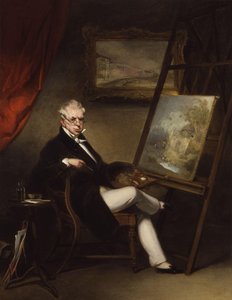
George Chinnery
1774 - 1852 , Reino Unido
Informações Rápidas
- Artistic Movement Or Style: Orientalismo, Retrato
- Artists Or Movements Influenced By This Artist: ['Lam Qua']
- Date Of Birth: 5 jan 1774
- Date Of Death: 30 mai 1852
- Full Name: George Chinnery
- Nationality: Inglês
- Notable Artworks:
- Autorretrato (1825)
- Macau
- Retratos de figuras notáveis
- Place Of Birth: Londres, Reino Unido
Artigos Relacionados
George Hayter: Portraiture, Power & Victorian Society's Canvas
Explore the life & work of George Hayter, Queen Victoria’s Principal Painter. Discover his iconic Victorian portraits, historical masterpieces, and lasting impact on British art history. Learn more at OriginalUniqueArt.

Georges Braque: As 25 Obras-Primas Essenciais para Amantes da Arte Moderna | OriginalUniqueArt
Descubra as 25 obras-primas de Georges Braque, pioneiro do Cubismo! Explore a história, cores e técnicas por trás de seus quadros mais famosos. Encontre reproduções de arte exclusivas para decorar sua casa com elegância em OriginalUniqueArt.com.

George Goodwin Kilburne: Capturing Victorian Sentimentality Through Genre Painting
Explore the evocative Victorian paintings of George Goodwin Kilburne. Discover his detailed scenes of domestic life, masterful use of light, and lasting impact on British genre painting. Learn more at OriginalUniqueArt.
The Refined Aesthetic of Victorian Illustration: A Study in Narrative & Technique
Explore the captivating world of Victorian illustration! Discover Pre-Raphaelite influences, key artists like Rossetti & Stephens, and the era's rich narrative detail. A deep dive for art enthusiasts.

Georges Seurat: As 25 Obras-Primas do Mestre do Pontilhismo | OriginalUniqueArt
Descubra as 25 obras-primas de Georges Seurat, o mestre do pontilhismo! Explore a história, cores vibrantes e técnica inovadora por trás de seus quadros mais famosos. Encontre reproduções de arte exclusivas para decorar sua casa com OriginalUniqueArt.com.
