Tamanho do texto

() ·

Uma pintura feita para você, à mão

Two Comanche Girls

Reprodução em Óleo Feita à Mão

Óleo sobre tela pintado à mão no tamanho e moldura de sua escolha, feito sob encomenda pelos nossos artistas. ( Alternar para Impressão Alternar para Imagem Digital)

Descrição do Item

Capture the proud spirit of Two Comanche Girls with this evocative 1834 portrait by George Catlin; discover this historic American masterpiece today.

Biografia do Artista

George Catlin (1796-1872): pintor icônico que documentou a vida e cultura dos nativos americanos no Velho Oeste com obras vibrantes e significativas.

de ·

Capítulo 1

Qual deve ser o tamanho?

Deslize para alterar o tamanho; a imagem à esquerda mostra a moldura em sua largura real. As proporções originais são mantidas.

Tamanho padrão
personalizado
CM
INCH

Escolha entre os nossos tamanhos pré-definidos que respeitam as proporções originais da obra de arte.

largura
altura

Insira a largura e a altura desejadas para se ajustarem à sua moldura ou parede. Como esta obra é pintada à mão, para um tamanho com proporções diferentes, o artista poderá pintar um pouco mais ao redor da imagem ou reduzir ligeiramente a composição — você escolhe. Enviamos uma maquete digital para sua aprovação antes de iniciar a pintura. A imagem exibida nesta página não representa o resultado real — apenas a maquete mostra o resultado final.

Capítulo 2

Como deve chegar?

Escolha as bordas da tela esticada

Escolha sua moldura

Corner sample of the WhiteWrap canvas edge finish, stretched on madeira maciça bars
Branco €1
Corner sample of the BlurSideWrap canvas edge finish, stretched on madeira maciça bars
Bordas esfumaçadas €1
Corner sample of the ExtendedWrap canvas edge finish, stretched on madeira maciça bars
Bordas estendidas €1
Corner sample of the P118B picture frame: poliestireno moldado, 5 cm wide and 3 cm thick
P118B €10
Corner sample of the P118H picture frame: poliestireno moldado, 5 cm wide and 3 cm thick
P118H €10
Corner sample of the P118W picture frame: poliestireno moldado, 5 cm wide and 3 cm thick
P118W €10
Corner sample of the P438Z picture frame: poliestireno moldado, 5.5 cm wide and 3.5 cm thick
P438Z €10
Corner sample of the P508JH picture frame: poliestireno moldado, 7 cm wide and 3.5 cm thick
P508JH €12
Corner sample of the P508YH picture frame: poliestireno moldado, 7 cm wide and 3.5 cm thick
P508YH €12
Corner sample of the P805H picture frame: poliestireno moldado, 5 cm wide and 3.5 cm thick
P805H €10
Corner sample of the P805Z picture frame: poliestireno moldado, 5 cm wide and 3.5 cm thick
P805Z €10
Corner sample of the P919BZ picture frame: poliestireno moldado, 7 cm wide and 3.5 cm thick
P919BZ €10
Corner sample of the P919G picture frame: poliestireno moldado, 7 cm wide and 3.5 cm thick
P919G €10
Corner sample of the P919XJ picture frame: poliestireno moldado, 7 cm wide and 3.5 cm thick
P919XJ €10
Corner sample of the P959ZH picture frame: poliestireno moldado, 5 cm wide and 3 cm thick
P959ZH €10
Corner sample of the P968JZ picture frame: poliestireno moldado, 6 cm wide and 4 cm thick
P968JZ €12
Corner sample of the W106C picture frame: madeira maciça, 5 cm wide and 3 cm thick
W106C €8
Corner sample of the W218G picture frame: madeira maciça, 5 cm wide and 3 cm thick
W218G €10
Corner sample of the W218JH picture frame: madeira maciça, 5 cm wide and 3 cm thick
W218JH €8
Corner sample of the W218Y picture frame: madeira maciça, 5 cm wide and 3 cm thick
W218Y €10
Corner sample of the W307PJ picture frame: madeira maciça, 6 cm wide and 3 cm thick
W307PJ €10
Corner sample of the W316G picture frame: madeira maciça, 6 cm wide and 3 cm thick
W316G €10
Corner sample of the W316PJ picture frame: madeira maciça, 6 cm wide and 3 cm thick
W316PJ €8
Corner sample of the W316Y picture frame: madeira maciça, 6 cm wide and 3 cm thick
W316Y €10
Corner sample of the W398PJ picture frame: madeira maciça, 5 cm wide and 3 cm thick
W398PJ €8
Corner sample of the W4111J picture frame: madeira maciça, 6.5 cm wide and 3.5 cm thick
W4111J €10
Corner sample of the W500HY picture frame: madeira maciça, 7 cm wide and 5 cm thick
W500HY €15
Corner sample of the W500JH picture frame: madeira maciça, 7 cm wide and 5 cm thick
W500JH €15
Corner sample of the W692G picture frame: madeira maciça, 8 cm wide and 4 cm thick
W692G €12
Corner sample of the W849H picture frame: madeira maciça, 5 cm wide and 3 cm thick
W849H €8
Corner sample of the W940BG picture frame: madeira maciça, 7.5 cm wide and 4.5 cm thick
W940BG €15
Corner sample of the W953PJ picture frame: madeira maciça, 6 cm wide and 3.5 cm thick
W953PJ €8
Corner sample of the H24-GOLD picture frame: madeira entalhada com gesso, 10 cm wide and 6 cm thick
H24-GOLD €30
Corner sample of the H24-SILVER picture frame: madeira entalhada com gesso, 10 cm wide and 6 cm thick
H24-SILVER €30
Corner sample of the H36-GOLD picture frame: madeira entalhada com gesso, 15 cm wide and 6.5 cm thick
H36-GOLD €45
Corner sample of the H36-SILVER picture frame: madeira entalhada com gesso, 15 cm wide and 6.5 cm thick
H36-SILVER €45
Prévia da moldura
Com moldura

Moldura: . Dimensões totais com a moldura: .

Capítulo 3

Quem o pinta, e deveria algo mudar?

Exemplos do que pode ser alterado: Substituir o rosto pela foto do cliente; Adicionar um animal de estimação (ex: substituir gato por cachorro); Incluir uma mensagem oculta no fundo; Alterar a paisagem ou elementos do fundo.
Após o pedido, a equipe da OriginalUniqueArt.com enviará um e-mail ao cliente para instruções e fornecerá uma prévia da montagem

Entrega mundial () em 3 a 4 semanas, em vez das 5 semanas padrão. (9 Novembro). Sem comprometer a qualidade.

Capítulo 4

Os retoques finais

Uma placa de identificação, como em um museu?

Detalhes da Placa de Bronze Gravada

This elegant plaque features the artist's name and the title of the artwork, finely engraved for a timeless presentation.

It is made from bronze with a refined, elegant finish. The text is precisely laser-engraved for a sharp and permanent result. Measuring 9x2 cm, the plaque is compact yet easy to read. It's built to be durable and scratch-resistant, offering a professional, museum-quality look. Mounting is simple thanks to the included adhesive backing.

Detalhes da Placa de Acrílico Transparente

The plaque includes essential engraved details such as the artist's name, the title of the artwork, the date it was created, the type of media used-like oil on canvas or watercolor-a brief description of the piece, and a QR code that links to the complete artwork information.

It is crafted from clear acrylic, offering a sleek, modern appearance. The text is UV-engraved in black to ensure strong visual contrast. With a size of 10x15 cm, it ensures optimal readability. It comes equipped with two metal hooks for secure wall mounting. The plaque is designed to be weather-resistant, making it suitable for various environments, and it includes interactive features that work seamlessly with smartphone scanning.

Detalhes da Placa de Acrílico Preto

This elegant plaque includes engraved information such as the artist's name, the title of the artwork, the date it was created, the type of media used (like oil on canvas or watercolor), a short description of the artwork, and a QR code for quick access to more information.

The plaque itself is made from refined black acrylic with a premium finish. The text is laser-engraved in white for high contrast and readability. Its size is 10x15 cm, designed to be easy to read. It comes with two metal hooks for professional mounting. The design is sleek and fits any interior style. It is also weather-resistant and durable, with built-in digital integration for mobile compatibility.

Um verniz protetor?

Para quando você precisa?

Capítulo 5

A sua pintura, conforme encomendada

Two Comanche Girls

Técnica de Reprodução

Tamanho da Reprodução

-

Artista Sênior de Elite

Mais detalhes, refinamento e tempo de produção adicional

-

Moldura para Reprodução

-

-

Para obras de arte ou reproduções com mais de 105 cm (aproximadamente 41 polegadas) em qualquer um dos lados, a moldura será enviada como um kit desmontado. Este método garante uma entrega segura e evita danos durante o transporte.

Montagem profissional necessária — este não é um produto DIY (faça você mesmo).
O kit deve ser montado e a tela esticada por um profissional de molduraria experiente, utilizando cola de madeira (não inclusa), um alicate de esticar tela e grampos para manter as travessas alinhadas enquanto a cola seca. A montagem incorreta ou a tensão desigual da tela podem danificar permanentemente a obra de arte e não estão cobertas pela nossa garantia.

  • Todas as barras de madeira maciça estão incluídas, precisamente cortadas ao tamanho certo.

  • Montado com os parafusos fornecidos, além de cola para madeira para as junções dos cantos, que não está inclusa e deve ser providenciada pelo seu moldurista.

  • São necessárias ferramentas profissionais não incluídas: um alicate de estiramento de tela (esticador) e grampos para manter as ripas alinhadas enquanto a cola seca.

Importante:
As junções dos cantos requerem cola para madeira, as ripas devem ser mantidas com grampos até que a cola esteja completamente seca, e o estiramento da tela na moldura montada requer um alicate de esticar tela. Nenhum destes itens está incluído no kit. Por favor, certifique-se de contar com um profissional de molduraria experiente antes de encomendar este tamanho.

Etiqueta de identificação

-

-

Verniz de Proteção

Verniz brilhante (realça as cores e protege contra a luz e a umidade)

-

Personalizar minha obra

Exemplos de alterações possíveis: Substituir o rosto por uma foto do cliente; Adicionar um animal de estimação (ex.: substituir gato por cachorro); Incluir uma mensagem oculta no fundo; Alterar a paisagem ou os elementos do fundo.

-

Urgente

Entrega mundial () em 3 a 4 semanas, em vez das 5 semanas padrão. (9 Novembro). Sem comprometer a qualidade.

-

Envio Expresso

Entrega mundial para em 5 semanas. (16 Novembro).

Com envio incluído

Preço Total

€ 268

Preço Total € 268

A opção de vidro está disponível apenas para tamanhos inferiores a 110 cm

Incluído em todos os pedidos

  • Envio expresso gratuito para todo o mundo
  • Tela de Linho de Alta Qualidade
  • Seguro de transporte completo
  • Garantia de Reembolso de Impostos Alfandegários
  • Garantia de Fidelidade Cromática
  • Política de Devolução em 100 Dias (Apenas para Defeitos)
  • Garantia de reembolso de 100%
  • Oferta de desconto por quantidade

A Glimpse into Vanishing Worlds: The Spirit of Two Comanche Girls

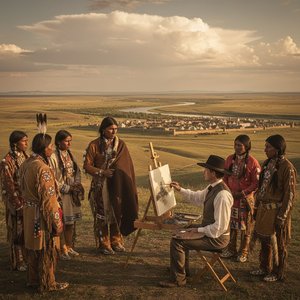
To stand before George Catlin's depiction of "Two Comanche Girls" is not merely to observe a painting; it is to step across the threshold of time, into a moment suspended between vibrant cultural life and inevitable change. Painted in 1834, this work transcends simple portraiture. It is a profound ethnographic document imbued with the dignity and resilience of a people whose way of life was rapidly transforming under the relentless march of history. The composition centers on two magnificent Comanche women, their presence commanding attention. Their gaze, directed outward toward the viewer, is not passive; it carries the weight of tradition, a palpable sense of pride, perhaps even defiance, that resonates across the centuries.

The Artistry and Technique of Catlin

George Catlin, an artist whose career spanned the volatile intersection of American expansion and indigenous cultures, employed a masterful technique to capture this scene. While the details suggest meticulous observation—the drape of the traditional garments reaching gracefully to their ankles, the careful rendering of every facial nuance—the overall effect is one of immediacy. His skill allowed him to document not just figures, but an entire ecosystem of culture. The inclusion of surrounding elements—a watchful child near the teepee, another figure on the periphery, and a loyal dog resting nearby—grounds the portrait in reality. These secondary subjects enrich the narrative, suggesting the rhythm of daily life around the central, powerful tableau.

Historical Resonance and Cultural Depth

The year 1834 places this painting at a critical juncture for Native American tribes. Catlin’s dedication to recording these cultures was both an artistic endeavor and, perhaps, a poignant act of preservation. The scene evokes the richness of life before overwhelming external pressures reshaped the landscape. Viewing it today allows us a privileged, if filtered, window into Comanche society—a world rich with ceremony, community, and deep connection to the land. It compels us to consider what we risk losing when history moves too quickly.

Symbolism and Emotional Echoes for the Modern Collector

For the contemporary collector or designer seeking art that speaks volumes without uttering a word, this piece offers immense emotional depth. The symbolism here is potent: it speaks of enduring spirit, maternal strength, and cultural continuity. When considering a high-quality reproduction of "Two Comanche Girls," one acquires more than just wall decor; one acquires a conversation starter, an object imbued with narrative weight. It serves as a powerful reminder to pause, to look closely, and to appreciate the beauty found in steadfast tradition.

Perguntas e Respostas

Posso ver "Two Comanche Girls", de George Catlin na minha própria parede antes de comprar?

A página de Prévia em RA de "Two Comanche Girls", de George Catlin utiliza realidade aumentada para mostrar a obra em seu próprio espaço, através de um dispositivo compatível.

Como o meio e o movimento se combinam em "Two Comanche Girls"?

Em "Two Comanche Girls", a técnica de Oil On Canvas encontra o movimento American Romanticism.

Qual era a idade de George Catlin ao criar "Two Comanche Girls" em 1834?

Quando "Two Comanche Girls" foi criada em 1834, George Catlin — nascido(a) em 1796 — tinha 38 anos.

Saiba mais sobre esta pintura

Visualizar na parede Visualizar em RA Alternar para Impressão Alternar para Imagem Digital Compartilhar
Detalhes Guia Adicionar aos favoritos Baixar imagem Semelhantes Raio X Ver diaporama Perguntas e Respostas Estatísticas

Em números

  • 1834o ano em que foi pintada
  • 29molduras para escolher
  • tamanhos padrão, em suas próprias proporções
  • 5semanas para pintar e entregar
George Catlin

George Catlin

1796 - 1872, Estados Unidos da América

Informações rápidas sobre George Catlin

  • Artistic Movement Or Style: Pintura Fronteira
  • Artists Or Movements Influenced By This Artist: ['Impressionismo']
  • Artists Who Influenced This Artist:
    • Peale
    • Sully
  • Date Of Birth: 1796
  • Date Of Death: 1872
  • Full Name: George Catlin
  • Nationality: Americano
  • Notable Artworks:
    • Sham Fight
    • Prairie
    • Pipestone
    • Buffalo
    • Dança do Águia
  • Place Of Birth: Wilkes-Barre, EUA

Biografia do Artista

Early Life and the Call of the Frontier

George Catlin, born in Wilkes-Barre, Pennsylvania, in 1796, was destined for a life profoundly shaped by the frontier—a world both alluringly romantic and relentlessly challenging. His childhood wasn’t one of quiet refinement but rather steeped in tales spun by his mother, Polly Sutton, a woman who bore the indelible mark of her own harrowing experience: capture during an Indian raid. These narratives, filled with vivid descriptions of wilderness survival and the clash between cultures, ignited within young Catlin a deep fascination with the West—a land perceived as simultaneously dangerous and imbued with a unique, almost mythical quality. Initially pursuing a career in law, he found himself drawn to a different path, one that resonated far more deeply than the confines of a courtroom. He abandoned legal practice after only two years, driven by an artistic impulse and a growing conviction that the traditions and appearances of Native American tribes deserved meticulous documentation—a sense of urgency born from the realization that westward expansion threatened to irrevocably erase these vibrant cultures. His early work focused on engravings depicting scenes along the Erie Canal, demonstrating his burgeoning technical skill and attention to detail – qualities that would later become hallmarks of his ambitious projects. These initial endeavors weren’t merely exercises in draftsmanship; they were a crucial foundation, honing his observational abilities and solidifying his commitment to visual storytelling as a means of preserving a vanishing world.

Documenting a Vanishing World: The Indian Gallery

Catlin's most enduring legacy is undoubtedly “The Indian Gallery,” an extraordinary collection comprising over 500 paintings dedicated to portraying the diverse life and culture of Native American tribes across North America. Beginning in the 1830s, he embarked on five extensive expeditions into the heart of the West—traveling up the Missouri River and venturing into territories inhabited by tribes such as the Mandan, Sioux, Blackfeet, and Choctaw. This wasn’t simply a matter of observation; Catlin immersed himself within these communities, participating in ceremonies, witnessing daily life, and forging genuine relationships with tribal leaders. He sought to capture not just physical likenesses but also the essence of their traditions, beliefs, and social structures. His paintings are remarkable for their realism—a departure from the often-stereotyped depictions prevalent at the time—and vibrant colors, conveying a sense of dignity and complexity rarely seen in artistic representations of Native Americans. Works like Sham Fight, Mandan Boys (1832-1833) capture the playful energy and communal spirit of young warriors, while portraits such as Medicine Buffalo of the Sioux (1839) reveal a powerful leader radiating authority and wisdom. Catlin’s meticulous attention to detail—including elaborate backgrounds that provide context for his subjects—demonstrates his commitment to providing a comprehensive and nuanced portrayal of Native American life. He believed, passionately, that documenting these cultures was an urgent task, a race against time as the West relentlessly encroached upon their territories.

Challenges and Recognition: A Life Dedicated to Preservation

Despite the artistic merit and historical significance of The Indian Gallery, Catlin’s journey wasn't without its considerable obstacles. He faced persistent challenges in gaining recognition and securing financial support for his work—a reflection of the prevailing prejudices against Native Americans at the time. Initially envisioning a donation of the collection to the U.S. government as a means of ensuring its preservation, his proposals were repeatedly rejected. Undeterred by these setbacks, Catlin took his gallery on an extensive tour, exhibiting it first in London, then Paris, and Brussels during the 1840s and 50s. These European exhibitions garnered considerable acclaim, introducing audiences to a world previously known only through secondhand accounts and often-biased narratives. He also published several influential books detailing his travels and observations, including *Manners, Customs, and Condition of the North American Indians* (1841) and *Last Rambles Amongst the Indians of the Rocky Mountains and the Andes* (1868), further solidifying his reputation as a leading authority on Native American culture. However, financial difficulties persisted throughout his life, casting a shadow over his achievements. In a desperate attempt to recoup some of his investment, he recreated over 400 paintings in a smaller “cartoon collection,” but this effort ultimately proved insufficient. This period was marked by a poignant irony—a man dedicated to preserving a culture facing imminent extinction found himself struggling for his own survival.

Style and Techniques

Catlin’s artistic style evolved significantly throughout his career, reflecting both the influences of European art traditions and his direct engagement with Native American cultures. Initially trained in engraving, he quickly mastered oil painting, developing a distinctive approach characterized by bold colors, dynamic compositions, and meticulous detail. He frequently employed a technique known as “flat perspective,” flattening the background to emphasize his subjects and create a sense of immediacy. His portraits were particularly notable for their psychological depth—Catlin sought not just to capture physical likenesses but also to convey the inner character and spirit of his sitters. He was deeply influenced by the Romantic movement, which emphasized emotion, individualism, and the sublime beauty of nature. However, unlike many Romantic artists who idealized the wilderness, Catlin presented a more complex and nuanced view—acknowledging both the allure and the dangers of the frontier. His use of color was particularly striking, often employing vibrant hues to capture the richness of Native American clothing, adornments, and landscapes. Furthermore, he meticulously researched tribal customs and traditions, incorporating them into his paintings to ensure accuracy and authenticity.

Legacy and Historical Significance

George Catlin died in 1872, leaving behind a legacy that continues to resonate today. While his work wasn’t fully appreciated during his lifetime, it has since been recognized as an invaluable historical record of Native American life before the sweeping changes brought about by westward expansion. His paintings offer a rare and intimate glimpse into cultures that were often misrepresented or ignored in mainstream narratives—a testament to his dedication and vision. Works like Prairie Meadows Burning (1832) capture not only the landscape but also the profound connection between Native Americans and their environment, while portraits such as Little Wolf, A Famos Warrior (1844) symbolize strength and resilience in the face of adversity. Catlin’s meticulous documentation provides invaluable insights into tribal customs, social structures, religious beliefs, and artistic traditions—information that would have been lost to history without his tireless efforts. He wasn't simply an artist; he was a chronicler, a witness, and a passionate advocate for a vanishing way of life—a legacy that continues to inspire and inform our understanding of American history and culture.

Informações Rápidas

  • Title: Two Comanche Girls
  • Year: 1834
  • Subject or theme: Native American life and culture