

 Visualizar em escala
 Enviar
 Compartilhar
 Ver detalhes

 Baixar
 Semelhantes
 Raio X
 Apresentação de slides
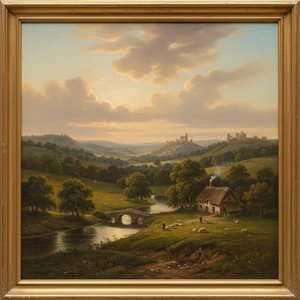
Landscape with a Ruined Tower
 Oil On Canvas
- WallArt
- Romantic Pastoral
 100.0 x 125.0 cm
 National Trust
 Ver mais
Reprodução em Óleo Feita à Mão
Óleo sobre tela pintado à mão no seu tamanho e moldura, feito sob encomenda pelos nossos artistas. ( Encomendar impressão Comprar imagem em alta resolução)




P118B $10

P118H $10

P118W $10

P438Z $10

P508JH $12

P508YH $12

P805H $10

P805Z $10

P919BZ $10

P919G $10

P919XJ $10

P959ZH $10

P968JZ $12

W106C $8

W218G $10

W218JH $8

W218Y $10

W307PJ $10

W316G $10

W316PJ $8

W316Y $10

W398PJ $8

W4111J $10

W500HY $15

W500JH $15

W692G $12

W849H $8

W940BG $15

W953PJ $8




Escolha entre os nossos tamanhos pré-definidos que respeitam as proporções originais da obra de arte.

Pode inserir as suas próprias dimensões para se adequar a uma moldura ou espaço específico. Se o tamanho selecionado não corresponder às proporções da imagem original, iremos cortar a obra de arte ou estender a pintura com elementos adicionais pintados à mão. Um esboço digital será enviado para sua aprovação antes do início da produção.
Tenha em atenção que a pré-visualização no ecrã não reflete o corte ou extensão real. Apenas o esboço mostrará com precisão a composição final.
Embora tamanhos personalizados estejam disponíveis, recomendamos selecionar uma dimensão da lista predefinida para preservar as proporções originais.
Após o pedido, a equipa OriginalUniqueArt.com enviará um e-mail ao cliente para solicitar instruções e fornecer uma prévia do esboço.
Entrega mundial () em 3 a 4 semanas, em vez das 5 semanas padrão. (20 Agosto). Sem comprometer a qualidade.

Envio Expresso Gratuito para todo o Mundo

Tela de Linho Premium

Seguro de transporte total

Garantia de Reembolso de Impostos Alfandegários

Garantia de Fidelidade de Cor

Política de Devolução de 60 Dias (Apenas para Defeitos)

Garantia de reembolso de 100%

Desconto para múltiplas unidades
 A opção de vidro está disponível apenas para tamanhos inferiores a 110 cm

Landscape with a Ruined Tower
Técnica de Reprodução
Dimensões da Reprodução
-


Preço Total
$ 300
Descrição da Obra
George Barret the Elder’s “Landscape with a Ruined Tower”: A Vision of English Pastoral
“Landscape with a Ruined Tower,” painted circa 1762-1784 by George Barret the Elder, is more than just a depiction of a rural scene; it's a carefully constructed meditation on time, memory, and the fading grandeur of the English countryside. Barret, an Irish artist who established himself as a leading figure in London’s art world, masterfully captures a moment suspended between decay and enduring beauty, reflecting the philosophical currents of his era – particularly the influence of Edmund Burke's exploration of the sublime.
The painting immediately draws the eye to the imposing ruin itself: a weathered tower rising from a gently sloping hillside, partially obscured by a dense copse of trees. Its stones, rendered in muted ochres and browns, speak of centuries spent exposed to the elements, hinting at forgotten histories and lost power. The tower isn’t merely a structural element; it's a potent symbol – a visual representation of decline, yet simultaneously imbued with an undeniable sense of solemn dignity. This deliberate juxtaposition is central to Barret’s artistic vision.
A Painterly Echo of Burke’s Sublime
Barret’s approach to landscape painting was profoundly shaped by Edmund Burke's philosophical treatise, *A Philosophical Enquiry into the Origin of Our Ideas of the Sublime and Beautiful*. Burke argued that experiences of awe and terror – what he termed the “sublime” – could be found not just in dramatic events but also in the contemplation of vastness, decay, and solitude. Barret translates this philosophical concept onto canvas with remarkable skill.
Notice how the artist employs atmospheric perspective—the subtle blurring of distant elements to create a sense of depth and recession. The hazy blue sky, punctuated by wisps of cloud, contributes to the painting’s overall mood of melancholy and contemplation. The careful use of light and shadow further emphasizes the tower's weathered state, highlighting its vulnerability against the backdrop of the seemingly eternal landscape. This isn’t a vibrant celebration of nature; it’s an exploration of its quieter, more profound aspects.
Details of Technique and Composition
Barret was initially influenced by engravings of classical Italianate scenes, reworking them with his own distinctive style. The composition is carefully balanced, drawing the eye towards the tower while simultaneously establishing a sense of spaciousness. The placement of the trees, the gentle curve of the hillside, and the distant body of water all contribute to this harmonious arrangement.
The artist’s brushwork is remarkably controlled, particularly in rendering the textures of stone and foliage. He employs a delicate layering technique—thin glazes of paint applied over dry underlayers—to achieve a luminous quality that captures the subtle nuances of light and shadow. The details are meticulously observed, from the individual stones of the tower to the leaves rustling in the breeze. This attention to detail elevates the painting beyond mere representation, transforming it into a carefully considered work of art.
Symbolism and Emotional Resonance
Beyond its technical merits, “Landscape with a Ruined Tower” resonates deeply on an emotional level. The ruined tower evokes a sense of loss—the passing of time, the decline of empires, and the inevitable decay of all things. Yet, it also possesses a certain beauty in its weathered state, suggesting that even in ruin, there is still value to be found.
The painting invites us to contemplate our own mortality and the fleeting nature of existence. It’s a poignant reminder that beauty can be discovered not only in moments of triumph but also in the quiet contemplation of decay. It's a timeless image, speaking to universal themes of memory, loss, and the enduring power of the natural world – making it a compelling subject for collectors and interior designers seeking pieces with depth and emotional resonance.
Biografia do Artista
George Barret Sr.: Vida e Legado
Primeiros Anos e Formação
- Nascimento: Entre 1728 e 1732, em Libertyville, Irlanda, filho de um comerciante de tecidos.
- Inicialmente, foi aprendiz de um fabricante de espartilhos antes de descobrir o seu talento artístico.
- Iniciou o treino formal de desenho na Academia de Robert West, em Dublin, por volta de 1747, com o patrocínio da Royal Dublin Society.
- Posteriormente, lecionou desenho na mesma academia, demonstrando uma promessa e habilidade precoces.
- Uma amizade formativa com Edmund Burke, estabelecida durante o tempo de Burke no Trinity College, em Dublin, revelaria-se crucial mais tarde na sua vida.
Desenvolvimento Artístico Inicial e Influências
- As primeiras pinturas de Barret apresentavam frequentemente cenários clássicos e figuras mitológicas.
- Influenciado por: Os escritos filosóficos de Edmund Burke, particularmente a obra A Philosophical Enquiry into the Origin of Our Ideas of the Sublime and Beautiful, que moldou a sua abordagem artística à paisagem.
- Inicialmente, trabalhou através da reinterpretação de gravuras de cenas clássicas italianas de artistas como Claude Lorrain, demonstrando uma base sólida nos estilos estabelecidos.
- Apesar de retratar paisagens italianas, não existem evidências de que ele próprio tenha alguma vez viajado para a Itália.
Mudança para Londres e Ascensão à Proeminência
- Em 1762, Barret mudou-se para Londres em busca de maiores oportunidades artísticas.
- Ganhou rapidamente reconhecimento como um dos principais artistas de paisagem do período.
- Expôs na Society of Artists of Great Britain e atraiu o patrocínio de importantes colecionadores de arte.
- Conquista Fundamental: Em 1768, Barret foi um dos membros fundadores que deixaram a Society of Artists para estabelecer a Royal Academy – um momento crucial na história da arte britânica.
Estilo Artístico e Temas
- O estilo de Barret evoluiu de paisagens italianas idealizadas para representações mais naturalistas de cenários ingleses e irlandeses.
- Viajou extensivamente pela Inglaterra, Gales, Escócia e Irlanda, realizando encomendas e capturando a beleza de diversas paisagens.
- Os temas comuns incluíam vistas idílicas, o campo pitoresco, cascatas (como a sua famosa The Powerscourt Waterfall) e representações topográficas de propriedades e propriedades senhoriais.
- As suas pinturas frequentemente incluíam figuras dentro da paisagem, conferindo uma sensação de escala e narrativa.
Vida Tardia e Patrocínio
- Sofreu de asma, o que o levou a mudar-se para Westbourne Green em 1772 por razões de saúde.
- Apesar de obter rendimentos substanciais, foi descrito como "despreparado" com o dinheiro e enfrentou dificuldades financeiras ocasionalmente.
- Apoio Contínuo: Edmund Burke permaneceu um amigo leal e auxiliou Barret financeira e profissionalmente.
- Em 1782, Burke recomendou Barret para o cargo de Pintor Mestre do Chelsea Hospital, posição que ocupou até à sua morte em 1784.
Legado e Significado Histórico
- Embora a sua viúva e filhos tenham ficado desamparados após a sua morte, a Royal Academy concedeu uma pequena pensão.
- A obra de Barret representa uma transição significativa na pintura de paisagem britânica, passando da imitação clássica para um estilo distintamente nacional.
- As suas pinturas oferecem visões valiosas sobre as paisagens do século XVIII e a vida aristocrática.
- Muitas das suas obras encontram-se agora em coleções de prestígio, incluindo a National Gallery of Ireland e o Yale Center for British Art.

George Barret Sr.
1732 - 1784 , Irlanda
Informações Rápidas
- Artistic Movement Or Style: Romanticismo
- Artists Or Movements Influenced By This Artist: ['Thomas Hudson']
- Artists Who Influenced This Artist:
- Edmund Burke
- Claude Lorrain
- Date Of Birth: 1732
- Full Name: George Barret Sr.
- Nationality: Irlandês
- Notable Artworks:
- A Vista da Cascata de Powerscourt
- Uma Perspetiva do Parque Scarsdale
- Llyn Nantlle
- O lado norte da propriedade Scarsdale
- Place Of Birth: Libertyville, Irlanda
Artigos Relacionados

Georges Braque: As 25 Obras-Primas Essenciais para Amantes da Arte Moderna | OriginalUniqueArt
Descubra as 25 obras-primas de Georges Braque, pioneiro do Cubismo! Explore a história, cores e técnicas por trás de seus quadros mais famosos. Encontre reproduções de arte exclusivas para decorar sua casa com elegância em OriginalUniqueArt.com.
George Barret the Elder: Pioneering British Pastoral Painting & Landscape's Rise
Explore the life & art of George Barret Sr., a pioneer of British pastoral painting. Discover his influence on Romantic landscape art, patronage, and collecting tips from OriginalUniqueArt.

Georges Seurat: As 25 Obras-Primas do Mestre do Pontilhismo | OriginalUniqueArt
Descubra as 25 obras-primas de Georges Seurat, o mestre do pontilhismo! Explore a história, cores vibrantes e técnica inovadora por trás de seus quadros mais famosos. Encontre reproduções de arte exclusivas para decorar sua casa com OriginalUniqueArt.com.
Os 10 Melhores Quadros de Paisagem: Arte, História e Decoração Inspiradora
Descubra os 10 quadros de paisagem mais icônicos da história da arte! Explore Monet, Van Gogh e outros mestres, suas técnicas e inspirações. Encontre reproduções de alta qualidade para decorar sua casa com beleza e elegância em OriginalUniqueArt.com.

Idyllic Visions: Exploring the Pastoral Scene in Art History – From Arcadia to Modern Interpretations
Explore the captivating history of pastoral art from classical Arcadia to modern masterpieces. Discover key artists like Millet & Cole at OriginalUniqueArt. Find serene landscape paintings for your home.



