

 Visualizar em escala
 Enviar
 Compartilhar
 Ver detalhes
 Guia de Obras do Aluno

 Baixar imagem
 Semelhantes
 Raio X
 Apresentação de slides
 Estatísticas
untitled (6361)


 Ver mais
Giclée / Impressão de Arte
Impressão giclée ou em tela de qualidade de museu, com produção rápida e opções flexíveis de acabamento. ( Encomendar reprodução pintada à mão Ver Imagem Digital)




P118B €10

P118H €10

P118W €10

P438Z €10

P508JH €12

P508YH €12

P805H €10

P805Z €10

P919BZ €10

P919G €10

P919XJ €10

P959ZH €10

P968JZ €12

W106C €8

W218G €10

W218JH €8

W218Y €10

W307PJ €10

W316G €10

W316PJ €8

W316Y €10

W398PJ €8

W4111J €10

W500HY €15

W500JH €15

W692G €12

W849H €8

W940BG €15

W953PJ €8




Escolha entre os nossos tamanhos pré-definidos que respeitam as proporções originais da obra de arte.

Digite a largura e a altura de que necessita, para se ajustar à sua moldura ou à sua parede. Uma impressão só pode ser cortada, nunca ampliada além da imagem original, pelo que um tamanho com uma proporção diferente perderá parte da imagem. Enviamos-lhe uma maquete digital para aprovação antes de imprimirmos qualquer coisa. A imagem apresentada nesta página não mostra o corte real — apenas a maquete o faz.
Entrega mundial () em 2 semanas, em vez das 4/5 semanas padrão. (22 Outubro)

Envio expresso gratuito para todo o mundo

Tela de Linho Premium

Seguro de transporte total

Garantia de Reembolso de Impostos Alfandegários

Garantia de Fidelidade de Cor

Política de Devolução em 100 Dias (Apenas para Defeitos)

Garantia de reembolso de 100%

Desconto para múltiplas unidades
 A opção de vidro está disponível apenas para tamanhos inferiores a 110 cm

untitled (6361)
Giclée / Impressão de Arte
Dimensões da Reprodução
-


Preço Total
€ 70
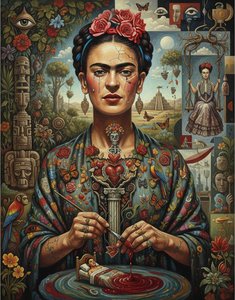
A Portrait of Defiance: Unveiling Frida Kahlo’s ‘Untitled (6361)’
Untitled (6361) is a captivating work by Frida Kahlo, instantly recognizable for its intimate portrayal and bold challenge to conventional beauty standards. More than just a portrait, it's a powerful statement of self-acceptance, resilience, and the complexities of female identity.
Subject & Composition: A Gaze That Holds You
The painting centers on a woman—a figure often interpreted as a self-portrait in disguise—accompanied by a mischievous monkey perched upon her shoulder. Her most striking feature is a deliberately painted mustache, a defiant gesture rejecting societal expectations of femininity. The subject’s direct and unwavering gaze commands attention, creating an immediate connection with the viewer. A necklace adorns her neck, hinting at personal significance or cultural symbolism frequently found within Kahlo's oeuvre.
The composition is layered and intriguing. Two additional figures are subtly placed in the background, adding depth and narrative complexity. These secondary characters likely represent individuals from Kahlo’s life—friends, family, or symbolic archetypes reflecting her inner world. A banana rests nearby, potentially referencing themes of desire, fertility, or a playful nod to the monkey's presence. The inclusion of a leaf in the bottom left corner grounds the scene with a touch of naturalism.
Style & Technique: Blending Folk Art and Surrealism
Kahlo’s distinctive style is immediately apparent—a fusion of vibrant Mexican folk art traditions with elements often associated with Surrealism, though she herself resisted that categorization. The painting showcases meticulous detail in the rendering of the woman's face and features, contrasted by a flatter, more stylized treatment of the background figures. While the exact medium and size remain unknown, it’s highly probable Kahlo employed oil paints, layering them to create depth, texture, and emotionally charged color palettes characteristic of her work.
Historical & Personal Context: A Life Etched in Paint
Frida Kahlo (1907-1954) lived a life marked by physical suffering and emotional turmoil. A childhood bout with polio, followed by a devastating bus accident at age 18, left her with lifelong pain and medical complications. These experiences profoundly shaped her art, which served as a vehicle for exploring themes of identity, the body, pain, death, and the female experience.
The recurring motif of the monkey in Kahlo’s work is particularly intriguing. Often serving as self-portraits or representations of mischievousness, companionship, or even her own perceived “animalistic” nature, its presence adds another layer of symbolic meaning. The woman's mustache is a bold statement challenging conventional beauty standards and asserting female empowerment.
Symbolism & Emotional Impact: Vulnerability and Strength
Untitled (6361) evokes a powerful sense of both vulnerability and strength. The direct gaze of the central figure is arresting, demanding attention and inviting introspection. The painting’s ambiguity allows for multiple interpretations—it could be a self-portrait in disguise, a commentary on societal expectations, or a reflection on Kahlo's complex relationships.
Key Symbolism:
- Mustache: Defiance of gender norms and embrace of natural appearance.
- Monkey: Self-portrait, mischievousness, companionship, primal instincts.
- Banana: Desire, fertility, playful symbolism.
- Necklace: Personal significance, cultural identity.
Display & Interior Design Recommendations
This piece would make a striking statement in various settings:
- Residential: A living room, study, or bedroom with an emphasis on art and personal expression. The painting’s intensity pairs well with neutral color palettes and natural materials.
- Commercial: A boutique hotel lobby, upscale restaurant, or creative office space seeking to convey sophistication and artistic flair.
- Gallery/Museum: As part of a collection showcasing Kahlo’s work or exploring themes of identity and the female experience.
Framing should be simple and elegant, allowing the artwork itself to take center stage. A dark wood frame with a subtle texture would complement the painting’s richness without overpowering it. Consider pairing this piece with textiles featuring bold colors and geometric patterns to echo Kahlo's Mexican heritage.
Untitled (6361) is more than just a portrait; it’s a testament to Frida Kahlo’s enduring legacy as an artist who fearlessly explored the depths of human experience and challenged conventional norms. It’s a piece that invites contemplation, sparks conversation, and resonates with viewers on a deeply personal level.
Perguntas e Respostas
"untitled (6361)" de Frida Kahlo é uma obra de tons claros ou escuros?
"untitled (6361)" de Frida Kahlo está registrado com bright, apresentando uma luminância de Gentle Luminance.
Que atmosfera "untitled (6361)" traria para um ambiente?
Com sua atmosfera Dramatic, "untitled (6361)" é sugerida para um(a) Living Room.
"untitled (6361)" de Frida Kahlo utiliza contrastes fortes ou harmonias suaves?
Em "untitled (6361)", um Statement contraste é acompanhado por uma Strong Color Unity harmonia.
Biografia do Artista
A Life Forged in Pain and Passion
Magdalena Carmen Frida Kahlo y Calderón, known to the world simply as Frida Kahlo, was more than an artist; she was a force of nature, a defiant spirit whose life became inextricably woven into her art. Born on July 6, 1907, in Coyoacán, Mexico City, her existence was marked by physical suffering and emotional turbulence, experiences that would ultimately fuel the intensely personal and symbolic imagery for which she is celebrated. Her father, Guillermo Kahlo, a German-Mexican photographer, fostered her intellectual curiosity and artistic inclinations from an early age. However, Frida’s childhood was shadowed by illness; at six years old, she contracted polio, leaving her with a permanent limp and impacting her physical development. This early encounter with vulnerability and limitation would become a recurring theme in her work, shaping her perspective on the body, pain, and resilience.
The Shattered Body, The Blossoming Art
In 1925, at the tender age of eighteen, Frida’s life irrevocably changed. A horrific bus accident left her with catastrophic injuries – fractures to her spine, pelvis, and leg, among others. Confined to a lengthy period of recovery, often bedridden and encased in plaster casts, she turned inward, finding solace and expression through painting. Her mother provided an easel adapted for use while lying down, transforming the confines of her physical limitations into a space for artistic exploration. It was during this time that Frida began to explore self-portraiture with relentless intensity. Unable to venture out into the world, she turned her gaze inward, meticulously documenting her own image as a means of understanding and confronting her pain, both physical and emotional. These early works were not merely representations of her likeness; they were visceral explorations of identity, vulnerability, and the enduring power of the human spirit. The accident wasn’t simply a tragedy; it was a catalyst that unlocked her artistic potential, forcing her to confront her own mortality and find meaning in suffering.
A Tumultuous Union and Artistic Flourishing
Frida's life took another pivotal turn in 1929 when she married the renowned Mexican muralist Diego Rivera. Their relationship was a passionate but tempestuous affair, marked by intense love, infidelity, artistic rivalry, and periods of separation and reconciliation. Despite the emotional turmoil, Rivera proved to be a significant influence on Frida’s artistic development. He encouraged her unique vision, offering constructive criticism while recognizing the raw power and originality of her work. Under his guidance, and through her own relentless experimentation, Frida's style began to coalesce, blending elements of Mexican folk art, realism, and surrealism into a distinctive visual language. Her paintings became increasingly symbolic, exploring themes of identity, the human body, pain, death, and the complexities of female experience. She didn’t shy away from depicting her own suffering; instead, she embraced it as a central theme in her work, transforming personal trauma into universal statements about the human condition.
Symbols of Suffering, Resilience, and Identity
Frida Kahlo is perhaps best known for her self-portraits, which are characterized by their unflinching honesty and symbolic depth. Works like The Two Fridas (1939), a powerful depiction of her dual identity following her divorce from Rivera, showcase her ability to externalize internal conflict through striking visual metaphors. Self-Portrait with Thorn Necklace and Hummingbird (1940) is laden with symbolism – the thorns representing pain, the hummingbird symbolizing hope and resilience, and the black cat a harbinger of bad luck. The Broken Column (1944), a harrowing portrayal of her physical suffering, depicts Frida’s torso split open to reveal a crumbling Ionic column in place of her spine, held together by straps and pierced with nails. Even Henry Ford Hospital (1932), a raw and deeply personal depiction of her miscarriage, demonstrates her willingness to confront taboo subjects with unflinching honesty. These paintings are not merely representations of pain; they are acts of defiance, assertions of selfhood in the face of adversity.
A Lasting Legacy
Frida Kahlo’s influence extends far beyond the realm of art. She was a cultural icon who challenged traditional gender roles and societal expectations through her life and work. Her embrace of Mexican culture and identity helped to elevate its profile on the international stage, and her unflinching portrayal of pain resonated with audiences worldwide, making her a symbol of resilience and strength. She became an important figure for Chicanos in the United States, representing their cultural heritage and struggles. Though she resisted being categorized as a Surrealist, her work shares affinities with the movement’s exploration of the subconscious and dreamlike imagery. Today, Frida Kahlo is celebrated as one of the most important artists of the 20th century, whose legacy continues to inspire generations to embrace their identities, confront adversity, and express themselves authentically. Her art remains a testament to the enduring power of the human spirit to find beauty and meaning even in the darkest of times.
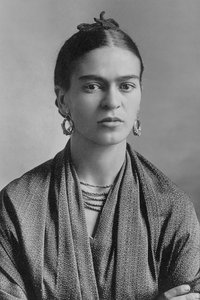
Frida Kahlo
1907 - 1954 , México
Informações Rápidas
- Artistic Movement Or Style: Surrealismo, Folk art
- Artists Or Movements Influenced By This Artist: ['Chicano art']
- Artists Who Influenced This Artist:
- Diego Rivera
- Mexican folk artists
- Date Of Birth: 6 julho 1907
- Date Of Death: 13 julho 1954
- Full Name: Magdalena Carmen Frida Kahlo y Calderón
- Nationality: Mexicana
- Notable Artworks:
- As Duas Fridas
- Flor da Vida
- Henry Ford Hospital
- Place Of Birth: Cidade do México, México
Artigos Relacionados
Revolution on Canvas: Exploring the Socio-Political Power & Artistic Legacy of Mexican Muralism
Explore the powerful world of Mexican muralism! Discover Diego Rivera, Frida Kahlo & Orozco's revolutionary art, social impact & lasting legacy. Expert insights & high-quality reproductions at OriginalUniqueArt.
Unveiling Frida Kahlo: A Journey Through Her Most Iconic Masterpieces and the Soul of Mexican Surrealism
Embark on a profound journey through Frida Kahlo's most iconic masterpieces. Discover the deep symbolism, Mexican heritage, and resilient spirit behind her legendary works in this expert art-historical exploration designed for true art enthusiasts.

Surrealismo: 10 Obras-Primas que Definiram um Movimento Artístico Inovador | OriginalUniqueArt.com
Mergulhe no universo onírico do Surrealismo! Explore 10 obras-primas de Dalí, Magritte e outros artistas icônicos. Descubra a história, técnica e emoção por trás dessas pinturas revolucionárias. Encontre reproduções de arte exclusivas em OriginalUniqueArt.com.
Vibrant Visions: A Definitive Guide to the Masterpieces of Mexican Art History
Explore the profound legacy of Mexican art history, from the monumental murals of 'The Big Three' to the intimate surrealism of Frida Kahlo. A scholarly guide for art lovers seeking deep historical context and the beauty of masterwork reproductions.
Frida Kahlo: A Life Painted – Surrealism, Identity & Autobiographical Narrative
Explore the life & art of Frida Kahlo – a journey through surrealism, identity, pain, and resilience. Discover her autobiographical masterpieces & lasting feminist legacy with OriginalUniqueArt.


