

 Visualizar na parede
 Compartilhar
 Compartilhar
 Detalhes
 Guia
Guia

 Baixar imagem
 Semelhantes
 Raio X
 Ver diaporama
 Estatísticas
Self-portrait with Monkey
 Óleo sobre tela
- Arte de Parede
- Surrealist Expressionism
 1945
1945- Modernismo
 59.0 x 42.0 cm
 Museo Robert Brady
 Ler mais
Get a print-ready file that goes far beyond the web preview. Every digital image we sell comes from a high-resolution master in our stock database — usually 5,000 to 15,000 pixels wide — so you can print large, crop tightly, or reproduce fine detail with confidence.
No file leaves our studio untouched. A digital expert checks the colors against the original painting and corrects them if needed, then improves clarity and detail with professional retouching tools — always staying faithful to the artist's brushwork and style. The result is an image that looks like the painting, not like a filtered scan.
You approve before you're done: our expert sends the image by e-mail within 72 hours for your review. Not satisfied? Ask for improvements or corrections, or request a refund if the quality falls short.
This is the quality relied on by publishers, design studios, galleries and print shops.
Imagem Digital
Baixe um arquivo de alta resolução para exibição pessoal, impressão e projetos criativos. ( Alternar para Impressão Comprar pintura feita à mão)
Incluído em cada compra de imagem digital
Entrega Digital Especializada e Garantida
Ao escolher o OriginalUniqueArt.com, você não está apenas adquirindo uma imagem — você está recebendo uma obra de arte digital profissionalmente aprimorada, elaborada com precisão e com garantia de satisfação. Aqui está tudo o que acompanha seu pedido, automaticamente:

Entrega rápida por e-mail
O seu arquivo de imagem digital em alta resolução será enviado por e-mail em até 72 horas após o pedido — pronto para uso imediato.

Arquivo Digital com IA Otimizado
Sua obra de arte é otimizada profissionalmente por meio de ferramentas avançadas de IA e edição manual, garantindo o máximo de detalhes, clareza e precisão de cores.

Reenvio gratuito vitalício
Apagou ou perdeu o seu ficheiro acidentalmente? Não se preocupe – nós reenviamos para si a qualquer momento, gratuitamente.

Sem Taxas de Importação - Sempre
Desfrute da sua obra de arte instantaneamente, sem taxas alfandegárias, impostos ou custos de entrega — downloads digitais são sempre isentos de taxas.

Garantia de Fidelidade de Cores
Garantimos que sua imagem digital reflita as cores originais com a maior fidelidade possível, utilizando ferramentas profissionais e gerenciamento de cores.

Garantia de satisfação de 100 dias
Se não estiver satisfeito com a sua imagem digital, nós a revisaremos ou reembolsaremos 100% dentro de 100 dias — sem perguntas.

Garantia de Reembolso 100%
Não está satisfeito? Receba o reembolso total em até 100 dias após o recebimento do seu arquivo digital — sem perguntas.

Descontos para pedidos em lote
Compre 3 imagens, economize 10% - Compre 5, economize 15% - Compre 10+, economize 20%. Ideal para projetos criativos, galerias e agências.
Frida Kahlo’s Self-Portrait with Monkey: A Symbol of Resilience and Creativity
Frida Kahlo, arguably Mexico's most enduring artistic icon, continues to fascinate audiences worldwide. Her oeuvre transcends mere visual representation; it embodies a profound exploration of identity, pain, and the unwavering spirit of survival—themes powerfully conveyed in works like “Self-Portrait with Monkey,” painted in 1945 on masonite.
Located at the Museo Robert Brady in Cuernavaca, Mexico, this canvas measures 59 x 42 cm and exemplifies Kahlo’s distinctive artistic approach. Combining elements of Mexican folk art traditions with modernist techniques—particularly oil paint on masonite—the painting captures a striking image of Kahlo herself, rendered with meticulous detail.
A Portrait Steeped in Symbolism
Kahlo's self-portrait is far more than just a likeness; it’s laden with symbolic significance. The prominent monkey perched on her shoulder serves as a potent emblem of fertility and creativity—a direct reflection of Kahlo’s personal struggles surrounding motherhood and reproductive health, experiences that profoundly shaped her artistic vision.
Furthermore, the mustache adorning Kahlo's face is interpreted as an assertion of duality – embracing both masculine and feminine qualities. This deliberate stylistic choice underscores Kahlo’s complex understanding of gender roles and her refusal to conform to societal expectations. The necklace she wears symbolizes cultural heritage and perhaps a personal adornment reflecting her identity.
Stylistic Fusion: Primitivism Meets Modernism
Kahlo's artistic style in “Self-Portrait with Monkey” aligns perfectly with her primitivist tendencies, mirroring the influence of European avant-garde movements like Surrealism. However, unlike many artists of her time who embraced purely abstract forms, Kahlo skillfully blended traditional Mexican motifs—such as vibrant colors and stylized depictions—with modernist techniques to achieve a harmonious blend.
This masterful fusion allows for an emotional resonance that transcends stylistic conventions. The painting’s careful composition and meticulous brushstrokes convey not only visual beauty but also the palpable weight of Kahlo's inner life, inviting viewers to contemplate themes of vulnerability, strength, and artistic expression.
Notable Companions: Exploring Frida Kahlo’s Artistic Legacy
Alongside “Self-Portrait with Monkey,” Kahlo produced other unforgettable masterpieces, including “The Mask” (40 x 31 cm), housed at Museo Dolores Olmedo in Mexico City, and “Magnolias” (41 x 57 cm), residing in Frida Kahlo Museum, Mexico City. These works further solidify Kahlo’s reputation as a visionary artist who dared to confront personal trauma with unflinching honesty.
If you aspire to own a stunning reproduction of Frida Kahlo's art—specifically “Self-Portrait with Monkey”—OriginalUniqueArt offers exceptional quality, handcrafted oil painting reproductions. Visit https://OriginalUniqueArt.com to discover a captivating collection of her paintings and immerse yourself in the enduring beauty of Kahlo’s artistic legacy.
For further insights into Frida Kahlo's life and work, refer to Hayden Herrera’s seminal biography, “Frida Kahlo: T
Perguntas e Respostas
Que harmonia de cores apresenta "Self-portrait with Monkey", de Frida Kahlo?
As cores de "Self-portrait with Monkey", de Frida Kahlo apresentam uma harmonia Harmonia de Cores Intensa. A harmonia descreve como as cores se relacionam entre si.
"Self-portrait with Monkey", de Frida Kahlo utiliza contrastes fortes ou harmonias suaves?
Em "Self-portrait with Monkey", um Declaração contraste une-se a uma Harmonia de Cores Intensa harmonia.
Quando foi criada a obra "Self-portrait with Monkey" e a qual movimento ela pertence?
"Self-portrait with Monkey" foi criada em 1945 como uma obra do movimento Surrealist Expressionism. A data e o movimento situam a obra na história da arte.
Biografia do Artista
A Life Forged in Pain and Passion
Magdalena Carmen Frida Kahlo y Calderón, known to the world simply as Frida Kahlo, was more than an artist; she was a force of nature, a defiant spirit whose life became inextricably woven into her art. Born on July 6, 1907, in Coyoacán, Mexico City, her existence was marked by physical suffering and emotional turbulence, experiences that would ultimately fuel the intensely personal and symbolic imagery for which she is celebrated. Her father, Guillermo Kahlo, a German-Mexican photographer, fostered her intellectual curiosity and artistic inclinations from an early age. However, Frida’s childhood was shadowed by illness; at six years old, she contracted polio, leaving her with a permanent limp and impacting her physical development. This early encounter with vulnerability and limitation would become a recurring theme in her work, shaping her perspective on the body, pain, and resilience.
The Shattered Body, The Blossoming Art
In 1925, at the tender age of eighteen, Frida’s life irrevocably changed. A horrific bus accident left her with catastrophic injuries – fractures to her spine, pelvis, and leg, among others. Confined to a lengthy period of recovery, often bedridden and encased in plaster casts, she turned inward, finding solace and expression through painting. Her mother provided an easel adapted for use while lying down, transforming the confines of her physical limitations into a space for artistic exploration. It was during this time that Frida began to explore self-portraiture with relentless intensity. Unable to venture out into the world, she turned her gaze inward, meticulously documenting her own image as a means of understanding and confronting her pain, both physical and emotional. These early works were not merely representations of her likeness; they were visceral explorations of identity, vulnerability, and the enduring power of the human spirit. The accident wasn’t simply a tragedy; it was a catalyst that unlocked her artistic potential, forcing her to confront her own mortality and find meaning in suffering.
A Tumultuous Union and Artistic Flourishing
Frida's life took another pivotal turn in 1929 when she married the renowned Mexican muralist Diego Rivera. Their relationship was a passionate but tempestuous affair, marked by intense love, infidelity, artistic rivalry, and periods of separation and reconciliation. Despite the emotional turmoil, Rivera proved to be a significant influence on Frida’s artistic development. He encouraged her unique vision, offering constructive criticism while recognizing the raw power and originality of her work. Under his guidance, and through her own relentless experimentation, Frida's style began to coalesce, blending elements of Mexican folk art, realism, and surrealism into a distinctive visual language. Her paintings became increasingly symbolic, exploring themes of identity, the human body, pain, death, and the complexities of female experience. She didn’t shy away from depicting her own suffering; instead, she embraced it as a central theme in her work, transforming personal trauma into universal statements about the human condition.
Symbols of Suffering, Resilience, and Identity
Frida Kahlo is perhaps best known for her self-portraits, which are characterized by their unflinching honesty and symbolic depth. Works like The Two Fridas (1939), a powerful depiction of her dual identity following her divorce from Rivera, showcase her ability to externalize internal conflict through striking visual metaphors. Self-Portrait with Thorn Necklace and Hummingbird (1940) is laden with symbolism – the thorns representing pain, the hummingbird symbolizing hope and resilience, and the black cat a harbinger of bad luck. The Broken Column (1944), a harrowing portrayal of her physical suffering, depicts Frida’s torso split open to reveal a crumbling Ionic column in place of her spine, held together by straps and pierced with nails. Even Henry Ford Hospital (1932), a raw and deeply personal depiction of her miscarriage, demonstrates her willingness to confront taboo subjects with unflinching honesty. These paintings are not merely representations of pain; they are acts of defiance, assertions of selfhood in the face of adversity.
A Lasting Legacy
Frida Kahlo’s influence extends far beyond the realm of art. She was a cultural icon who challenged traditional gender roles and societal expectations through her life and work. Her embrace of Mexican culture and identity helped to elevate its profile on the international stage, and her unflinching portrayal of pain resonated with audiences worldwide, making her a symbol of resilience and strength. She became an important figure for Chicanos in the United States, representing their cultural heritage and struggles. Though she resisted being categorized as a Surrealist, her work shares affinities with the movement’s exploration of the subconscious and dreamlike imagery. Today, Frida Kahlo is celebrated as one of the most important artists of the 20th century, whose legacy continues to inspire generations to embrace their identities, confront adversity, and express themselves authentically. Her art remains a testament to the enduring power of the human spirit to find beauty and meaning even in the darkest of times.
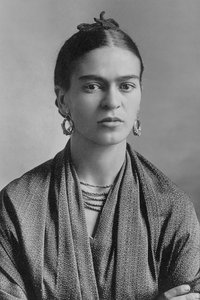
Frida Kahlo
1907 - 1954 , México
Breve Biografia
- Artistic Movement Or Style: Surrealismo, Folk art
- Artists Or Movements Influenced By This Artist: ['Chicano art']
- Artists Who Influenced This Artist:
- Diego Rivera
- Mexican folk artists
- Date Of Birth: 6 julho 1907
- Date Of Death: 13 julho 1954
- Full Name: Magdalena Carmen Frida Kahlo y Calderón
- Nationality: Mexicana
- Notable Artworks:
- As Duas Fridas
- Flor da Vida
- Henry Ford Hospital
- Place Of Birth: Cidade do México, México