

 Visualizar em escala
 Enviar
 Compartilhar
 Ver detalhes
 Guia
Guia

 Baixar imagem
 Semelhantes
 Raio X
 Apresentação de slides
 Estatísticas
Northeast Headlands, Appledore


 Ver mais
Reprodução em Óleo Feita à Mão
Óleo sobre tela pintado à mão no tamanho e moldura de sua escolha, feito sob encomenda pelos nossos artistas. ( Alternar para Impressão Ver Imagem Digital)




P118B $10

P118H $10

P118W $10

P438Z $10

P508JH $12

P508YH $12

P805H $10

P805Z $10

P919BZ $10

P919G $10

P919XJ $10

P959ZH $10

P968JZ $12

W106C $8

W218G $10

W218JH $8

W218Y $10

W307PJ $10

W316G $10

W316PJ $8

W316Y $10

W398PJ $8

W4111J $10

W500HY $15

W500JH $15

W692G $12

W849H $8

W940BG $15

W953PJ $8




Escolha entre os nossos tamanhos pré-definidos que respeitam as proporções originais da obra de arte.

Pode inserir as suas próprias dimensões para se adequar a uma moldura ou espaço específico. Se o tamanho selecionado não corresponder às proporções da imagem original, iremos cortar a obra de arte ou estender a pintura com elementos adicionais pintados à mão. Um esboço digital será enviado para sua aprovação antes do início da produção.
Tenha em atenção que a pré-visualização no ecrã não reflete o corte ou extensão real. Apenas o esboço mostrará com precisão a composição final.
Embora tamanhos personalizados estejam disponíveis, recomendamos selecionar uma dimensão da lista predefinida para preservar as proporções originais.
Após o pedido, a equipa OriginalUniqueArt.com enviará um e-mail ao cliente para solicitar instruções e fornecer uma prévia do esboço.
Entrega mundial () em 3 a 4 semanas, em vez das 5 semanas padrão. (20 Setembro). Sem comprometer a qualidade.

Envio expresso gratuito para todo o mundo

Tela de Linho Premium

Seguro de transporte total

Garantia de Reembolso de Impostos Alfandegários

Garantia de Fidelidade de Cor

Política de Devolução em 100 Dias (Apenas para Defeitos)

Garantia de reembolso de 100%

Desconto para múltiplas unidades
 A opção de vidro está disponível apenas para tamanhos inferiores a 110 cm

Northeast Headlands, Appledore
Técnica de Reprodução
Dimensões da Reprodução
-


Preço Total
$ 300
A Symphony of Light and Texture: Exploring Frederick Childe Hassam’s Northeast Headlands, Appledore
Frederick Childe Hassam's “Northeast Headland, Appledore,” painted in 1909, stands as a cornerstone of American Impressionism—a movement that sought to capture fleeting moments of beauty and emotion through vibrant color palettes and loose brushstrokes. More than just a depiction of the New England coastline, this canvas embodies a profound connection between artist and subject, reflecting Hassam’s unwavering fascination with capturing the essence of everyday life against the backdrop of nature.
Subject Matter and Composition
The painting transports viewers to Appledore Beach in Massachusetts, presenting a panoramic vista dominated by a rugged cliff face plunging into the Atlantic Ocean. Gentle waves roll ashore, creating a dynamic interplay between movement and stillness. Scattered boats punctuate the horizon line, adding depth and scale to the scene—a deliberate compositional choice that emphasizes the grandeur of the natural world.
Style and Technique: Impressionistic Brilliance
Hassam’s masterful technique exemplifies the principles of Impressionism. He eschewed meticulous realism in favor of capturing the effects of light and atmosphere. Thick, visible brushstrokes—characteristic of the style—build up layers of color to create a shimmering surface that vibrates with luminosity. The artist skillfully blended hues directly onto the canvas, prioritizing optical perception over precise representation. This approach lends “Northeast Headlands” an immediacy and spontaneity that resonates powerfully with the viewer.
Historical Context: Embracing Modernity
Painted during the height of the Impressionist movement in Paris, Hassam’s work reflects a broader cultural shift toward valuing subjective experience and capturing the spirit of the age. The Impressionists rejected academic conventions, prioritizing observation and experimentation—a bold stance that challenged established artistic norms. “Northeast Headlands” captures the burgeoning optimism of the early 20th century, reflecting a desire to celebrate the beauty of America’s landscapes and urban environments.
Symbolism and Emotional Resonance
Beyond its visual splendor, “Northeast Headlands” carries symbolic weight. The cliff face represents resilience and permanence against the ceaseless forces of nature—a motif frequently explored by Hassam in his oeuvre. The solitary figure gazing upon the ocean symbolizes contemplation and connection with the sublime—a profound appreciation for the majesty of the natural world. Ultimately, the painting evokes a feeling of tranquility and wonder, inviting viewers to immerse themselves in the sensory experience of coastal life.
Biografia do Artista
A Pioneer of American Impressionism: The Life and Art of Frederick Childe Hassam
Frederick Childe Hassam, born in Boston on October 17, 1859, stands as a pivotal figure in the development of American Impressionism. His artistic journey, beginning with an early inclination towards drawing and culminating in recognition as one of the nation’s most celebrated painters, is a testament to his dedication, innovative spirit, and unique ability to capture the essence of his time. Unlike many of his contemporaries who sought formal training exclusively abroad, Hassam largely honed his skills through diligent self-study and practical experience, initially finding employment as an illustrator for prominent magazines such as *Harper’s Weekly* and *Scribner’s Monthly*. This formative period instilled within him a keen observational eye and a talent for narrative composition—qualities that would consistently define his artistic style. While he did undertake a brief study abroad in Paris in 1886, it was the American landscape and burgeoning urban life that truly ignited his creative imagination. He wasn’t merely replicating European techniques; rather, he skillfully adapted them to depict distinctly *American* scenes and experiences.Capturing Light and Modern Life
Hassam's art is immediately recognizable for its luminous quality, achieved through a masterful manipulation of light and color. Heavily influenced by the revolutionary work of Claude Monet and Edgar Degas, he wholeheartedly embraced the core principles of Impressionism—the fleeting nature of moments and the evocative power of atmospheric effects. However, Hassam’s artistic vision transcended mere imitation; he infused his paintings with a uniquely American sensibility. He found beauty not only in idyllic landscapes but also in the vibrant energy of modern cities like New York and Boston. His canvases frequently depicted scenes of urban life—fashionable ladies strolling along Fifth Avenue, horse-drawn carriages navigating crowded streets, or quiet moments within domestic interiors. These weren’t simply representations of places; they were poignant portraits of a rapidly evolving society, capturing the dynamism and spirit of late 19th and early 20th century America. Works such as *The Sonata* (1893) exemplify his ability to evoke mood and atmosphere through subtle color harmonies and delicate brushwork, creating an intimate and contemplative experience for the viewer. Similarly, his coastal scenes, like *Gloucester* (1899), demonstrate a remarkable sensitivity to light and atmosphere, transforming ordinary harbors into shimmering visions of tranquility.The Ten American Painters and Artistic Independence
A defining moment in Hassam’s career was his involvement with “The Ten American Painters,” a collective formed in 1897 as a bold assertion against the conservative policies of the Society of American Artists. This influential group, comprised of artists like John Henry Twachtman, Willard Leroy Metcalf, and Edmund Tarbell, sought to establish an independent exhibition platform and champion a more progressive approach to art. Hassam assumed the role of the first president of The Ten, solidifying his position as a leading figure within the American art world. This period marked a significant commitment to artistic independence—a deliberate rejection of academic constraints and a celebration of individual expression. His participation in these independent exhibitions played a crucial role in establishing Impressionism as a legitimate and respected movement within the United States.Patriotism and Later Years: The Flag Paintings
With the outbreak of World War I, Hassam’s artistic focus underwent a dramatic shift. Inspired by a surge of patriotic fervor, he embarked on a series of paintings depicting American flags waving proudly along Fifth Avenue in New York City. These “Flag” paintings, created between 1916 and 1919, are arguably his most iconic works. They transcend simple representations of national symbols; they are powerful expressions of civic pride and wartime solidarity. The vibrant colors and dynamic compositions convey a sense of energy and optimism amidst the anxieties of global conflict. *Victory Day, May 1919* stands as a prime example, capturing the jubilant atmosphere of New York City following the armistice. In his later years, Hassam continued to paint, experimenting with etching and lithography alongside his oil paintings, demonstrating an ongoing commitment to artistic exploration and innovation.Legacy and Enduring Influence
Frederick Childe Hassam passed away in East Hampton, New York, on August 27, 1935, leaving behind a vast and influential body of work. His legacy extends far beyond his technical mastery; he played a crucial role in establishing American Impressionism as a distinct artistic movement. He demonstrated that American artists could not only adopt European techniques but also adapt them to create something uniquely their own. Hassam’s paintings continue to resonate with audiences today, offering glimpses into a bygone era and reminding us of the enduring power of art to capture the spirit of a time and place. *His influence can be seen in the work of countless artists who followed him*, solidifying his position as one of the most important figures in American art history. His dedication to capturing light, color, and the essence of modern life ensures that his paintings will continue to inspire and captivate generations to come.
Frederick Childe Hassam
1859 - 1935 , Estados Unidos da América
Informações Rápidas
- Artistic Movement Or Style: Impressionismo, Tonalismo
- Artists Or Movements Influenced By This Artist: ['Impressionismo Americano']
- Artists Who Influenced This Artist: ['Claude Monet']
- Date Of Birth: 17 Outubro 1859
- Date Of Death: 27 Agosto 1935
- Full Name: Frederick Childe Hassam
- Nationality: Americano
- Notable Artworks:
- Maestras na Neblina
- Monte Beacon em Newburgh
- A Caixa de Música
- Gloucester
- O Sonato
- Dia da Vitória, 1919
- Place Of Birth: Boston, Estados Unidos
Artigos Relacionados

Evocations of Place: A Historical Journey Through Landscape Art
Explore the rich history of landscape art with OriginalUniqueArt. Discover renowned artists, movements like Impressionism & Romanticism, and expert guidance for collecting timeless pieces. Find your perfect serene escape today!
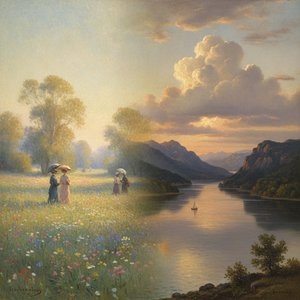
Capturing the Light: A Journey Through the Soul of American Impressionism and the Hudson River School
Explore the luminous beauty of American Impressionism and the Hudson River School. Discover a curated journey through light, landscape, and history, celebrating the enduring legacy of masters through exquisite, hand-painted oil reproductions for the discerning art lover.

Frederick Childe Hassam: American Impressionism's Chronicler of Light & Modern Life
Explore the captivating world of Frederick Childe Hassam, a pioneer of American Impressionism. Discover his iconic paintings capturing light, urban life & coastal beauty. Learn about his legacy and influence on American art history.

Evocations of Place: A Historical Journey Through Landscape Art
Explore the rich history of landscape art with OriginalUniqueArt. Discover renowned artists, movements like Impressionism & tonalism, and expert guidance for collecting timeless pieces. Find your perfect serene escape today!

Grant Wood & American Regionalism: Identity, Myth & the Rural Landscape
Explore the world of Grant Wood & American Regionalism with OriginalUniqueArt. Discover the symbolism behind 'American Gothic', recurring themes, and the movement's lasting impact on art history. High-quality reproductions available.


