

 Visualizar em escala
 Enviar
 Compartilhar
 Ver detalhes
 Guia de Obras do Aluno

 Baixar imagem
 Semelhantes
 Raio X
 Apresentação de slides
 Estatísticas
Imaginary River Landscape


 Ver mais
Reprodução em Óleo Feita à Mão
Óleo sobre tela pintado à mão no tamanho e moldura de sua escolha, feito sob encomenda pelos nossos artistas. ( Alternar para Impressão Ver Imagem Digital)




P118B €10

P118H €10

P118W €10

P438Z €10

P508JH €12

P508YH €12

P805H €10

P805Z €10

P919BZ €10

P919G €10

P919XJ €10

P959ZH €10

P968JZ €12

W106C €8

W218G €10

W218JH €8

W218Y €10

W307PJ €10

W316G €10

W316PJ €8

W316Y €10

W398PJ €8

W4111J €10

W500HY €15

W500JH €15

W692G €12

W849H €8

W940BG €15

W953PJ €8




Escolha entre os nossos tamanhos pré-definidos que respeitam as proporções originais da obra de arte.

Pode inserir as suas próprias dimensões para se adequar a uma moldura ou espaço específico. Se o tamanho selecionado não corresponder às proporções da imagem original, iremos cortar a obra de arte ou estender a pintura com elementos adicionais pintados à mão. Um esboço digital será enviado para sua aprovação antes do início da produção.
Tenha em atenção que a pré-visualização no ecrã não reflete o corte ou extensão real. Apenas o esboço mostrará com precisão a composição final.
Embora tamanhos personalizados estejam disponíveis, recomendamos selecionar uma dimensão da lista predefinida para preservar as proporções originais.
Após o pedido, a equipa OriginalUniqueArt.com enviará um e-mail ao cliente para solicitar instruções e fornecer uma prévia do esboço.
Entrega mundial () em 3 a 4 semanas, em vez das 5 semanas padrão. (13 Outubro). Sem comprometer a qualidade.

Envio expresso gratuito para todo o mundo

Tela de Linho Premium

Seguro de transporte total

Garantia de Reembolso de Impostos Alfandegários

Garantia de Fidelidade de Cor

Política de Devolução em 100 Dias (Apenas para Defeitos)

Garantia de reembolso de 100%

Desconto para múltiplas unidades
 A opção de vidro está disponível apenas para tamanhos inferiores a 110 cm

Imaginary River Landscape
Técnica de Reprodução
Dimensões da Reprodução
-


Preço Total
€ 259
A Symphony of Nature: The Visionary World of Frederic Edwin Church
In the heart of the nineteenth century, a period defined by both rapid industrial expansion and a profound romantic longing for the untouched wild, Frederic Edwin Church emerged as a master storyteller of the American landscape. His work, particularly pieces like Imaginary River Landscape, serves as a window into a world where nature remains untamed, majestic, and deeply spiritual. Painted around 1870, this evocative composition invites the viewer to step away from the clamor of civilization and into a serene, pastoral sanctuary. The painting centers on a magnificent tree, its branches reaching out like welcoming arms, serving as a focal point for a delicate ecosystem of life. Through his brush, Church does not merely depict a scene; he orchestrates a moment of profound stillness, where the rustle of leaves and the soft flutter of wings seem almost audible to the observant soul.
The technique employed in this masterpiece reflects the pinnacle of the Hudson River School tradition. Church was renowned for his ability to marry meticulous, scientific realism with a sense of sublime grandeur. In this landscape, one can observe the careful layering of light and shadow that gives the central tree its sculptural presence. The artist utilizes a delicate palette of verdant greens, earthy ochres, and soft sky tones to create a sense of atmospheric depth. Notice how the birds—some perched in quiet contemplation and others caught in mid-flight—are rendered with such precision that they breathe life into the canvas. This interplay between the stationary strength of the ancient trees and the kinetic energy of the avian inhabitants creates a dynamic tension, a hallmark of Church’s ability to capture the "living" quality of the natural world.
Symbolism and the Emotional Resonance of the Wild
Beyond its aesthetic beauty, Imaginary River Landscape carries a weight of symbolic significance that would have resonated deeply with his contemporary audience. During an era of great change, the depiction of a flourishing, undisturbed habitat served as a poignant reminder of the divine presence within nature. The birds, often symbols of the soul or messengers of the heavens, interact with the landscape in a way that suggests a perfect, harmonious balance. To the collector or the interior designer, this painting offers more than just decoration; it provides an emotional anchor. It is a piece that evokes feelings of tranquility, nostalgia, and a deep-seated reverence for the earth.
For those looking to integrate fine art into a sophisticated living space, a high-quality reproduction of this work offers an unparalleled opportunity to introduce a sense of timelessness and peace. The composition’s balance—with its central anchor and receding background trees—makes it a versatile choice for various interior styles, from classic traditionalism to more contemporary, organic aesthetics. Placing such a piece in a room can transform the atmosphere, turning a modern dwelling into a contemplative retreat. It is an invitation to pause, to breathe, and to reconnect with the enduring beauty of the natural landscape that Church so lovingly immortalized on canvas.
Perguntas e Respostas
Posso ver "Imaginary River Landscape" de Frederic Edwin Church sob diferentes luzes?
"Imaginary River Landscape" pode ser examinado camada por camada na página Raio X da obra, um visualizador inspirado em uma mesa de luz de conservação com onze leituras ópticas da imagem.
Quais cores predominam em "Imaginary River Landscape" de Frederic Edwin Church?
A identidade cromática de "Imaginary River Landscape" de Frederic Edwin Church: uma paleta Neutrals, dominada por Espresso (#645136).
Que tom emocional acompanha o estilo Hudson River School de "Imaginary River Landscape"?
A emoção Tranquil de "Imaginary River Landscape" acompanha seu estilo Hudson River School.
Como o contraste e a harmonia se combinam em "Imaginary River Landscape"?
A composição cromática de "Imaginary River Landscape" de Frederic Edwin Church combina um contraste Gentle com uma harmonia Unified Palette.
Onde se recomenda exibir o formato Landscape de "Imaginary River Landscape"?
Com o seu formato Landscape, uma reprodução de "Imaginary River Landscape" é sugerida para um(a) Wellness Center.
Qual origem nacional fundamenta o Hudson River School de "Imaginary River Landscape"?
"Imaginary River Landscape" conecta o movimento Hudson River School com Estados Unidos da América por meio do local de nascimento de seu criador.
"Imaginary River Landscape" está livre de direitos autorais?
"Imaginary River Landscape" de Frederic Edwin Church está em em domínio público - seus direitos autorais expiraram. Este status determina como a imagem da obra pode ser reproduzida.
Como posso adquirir uma impressão de "Imaginary River Landscape" de Frederic Edwin Church?
Uma impressão de "Imaginary River Landscape" de Frederic Edwin Church pode ser encomendada diretamente em esta página: uma impressão fine art em tela de algodão ou papel canvas de arquivo.
Biografia do Artista
A Pioneer of American Landscape: The Life and Art of Frederic Edwin Church
Frederic Edwin Church, born in Hartford, Connecticut, on May 4th, 1826, emerged as a pivotal figure in the blossoming landscape tradition of 19th-century America. His lineage was steeped in New England history—a direct descendant of Puritan pioneers—and his family’s prosperity afforded him opportunities rare for aspiring artists of the time. This financial stability allowed Church to dedicate himself wholeheartedly to his artistic pursuits, a path that would ultimately lead him to become one of the most celebrated and influential painters of the Hudson River School. His early training began at the age of eighteen under the tutelage of Thomas Cole, the very founder of this distinctly American art movement. These formative years spent in Catskill, New York, were crucial, instilling in Church a deep reverence for nature and a commitment to capturing its grandeur on canvas. The apprenticeship wasn’t merely technical; it was an immersion into a philosophy that saw landscape not just as scenery, but as a reflection of the divine and a symbol of national identity.Early Influences and Artistic Development
Church quickly distinguished himself from his contemporaries through a remarkable ability to blend meticulous realism with a romantic sensibility. His paintings are characterized by an astonishing level of detail, capturing the textures of foliage, the play of light on water, and the imposing scale of mountains with breathtaking accuracy. However, this wasn’t simply photographic representation; Church infused his work with a dramatic flair, employing sweeping panoramic views, vibrant color palettes, and a masterful command of atmospheric perspective. He was deeply influenced by the scientific explorations of Alexander von Humboldt, whose writings on the interconnectedness of nature resonated profoundly with the artist. This influence is evident in Church’s later expeditions to South America and his attempts to convey not just the visual beauty of these landscapes but also their underlying geological and botanical complexities. The Oxbow, completed in 1836, stands as an early testament to this synthesis of observation and imagination—a romantic vision of the American wilderness that would become a hallmark of his style. His technique involved “hidden” brushstrokes, creating smooth surfaces that enhanced the realism and luminosity of his paintings. The influence of Thomas Cole was paramount; Church absorbed Cole’s emphasis on dramatic light and atmospheric effects, while developing his own distinctive approach to composition and color.Ventures into the Wild: Travels and Major Works
Church’s ambition extended beyond the familiar landscapes of New England and New York. Driven by a thirst for firsthand experience and inspired by Humboldt's writings, he embarked on daring expeditions to remote corners of the world. These journeys—to South America in 1853 and 1857, and later to the Arctic regions—provided him with an unparalleled wealth of visual material. The Heart of the Andes, completed in 1859, is perhaps his most ambitious undertaking, a monumental canvas that sought to encapsulate the entire ecosystem of the Andean mountains. The painting was exhibited in a specially constructed gallery, illuminated by skylights, creating an immersive experience for viewers and solidifying Church’s reputation as a master showman as well as an artist. His subsequent series of paintings inspired by his Arctic travels, such as Icebergs: The North, demonstrated his versatility and willingness to tackle challenging subjects. These works weren't merely depictions of remote landscapes; they were statements about the power and fragility of nature, reflecting a growing environmental consciousness in the mid-19th century. He meticulously documented these expeditions, creating detailed sketches and watercolors that served as the basis for his larger paintings.A Master of Exhibition: Innovation and Public Engagement
Church’s approach to presenting his art was revolutionary for its time. Rather than simply displaying paintings in galleries, he conceived of elaborate exhibitions designed to transport viewers into the heart of the landscapes he depicted. For *The Heart of the Andes*, he constructed a specially designed gallery with darkened walls and concealed skylights, simulating the experience of being immersed in the Andean highlands. This innovative approach captivated audiences and transformed the viewing experience from a passive observation to an active engagement. He also pioneered single-painting exhibitions, showcasing his works in grand spaces and creating a sense of spectacle that drew large crowds. These practices not only elevated Church’s status as an artist but also helped to popularize landscape painting and establish it as a major form of artistic expression. His ability to connect with the public through immersive experiences cemented his legacy as a visionary artist and a master showman.Legacy and Enduring Influence
Frederic Edwin Church died in 1900, leaving behind a legacy of breathtaking paintings and a profound appreciation for the enduring power of nature. His work bridged the gap between Romanticism and Realism, capturing both the sublime beauty of the natural world and the scientific understanding of its complexities. He pioneered immersive exhibition techniques that captivated audiences and set a precedent for future art displays. Beyond his painting, Church was also a dedicated conservationist, advocating for the preservation of Niagara Falls and playing a role in the establishment of national parks. His art continues to resonate with viewers today, reminding us of the beauty that surrounds us and the importance of preserving it for future generations. He remains one of the most celebrated figures of the Hudson River School, an artist whose vision continues to inspire awe and wonder.
Frederic Edwin Church
1826 - 1900 , Estados Unidos da América
Informações Rápidas
- Artistic Movement Or Style: Escola do Rio Hudson
- Artists Or Movements Influenced By This Artist: ['Pintura de paisagem americana']
- Artists Who Influenced This Artist:
- Thomas Cole
- Alexander von Humboldt
- Date Of Birth: 4 de maio de 1826
- Date Of Death: 7 de abril de 1900
- Full Name: Frederic Edwin Church
- Nationality: Americano
- Notable Artworks:
- O Coração dos Andes
- Niagara
- Twilight na Wilderness
- Place Of Birth: Hartford, Estados Unidos
Artigos Relacionados
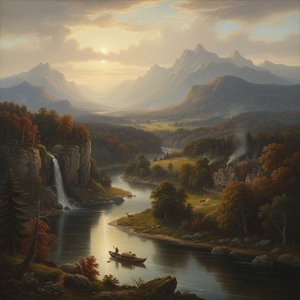
Capturing the American Spirit: A Journey Through Iconic Landscapes and the Legacy of the Hudson River School
Explore the profound beauty of American art history. From the Hudson River School to iconic landscapes, discover a curated journey through the masterpieces that defined a nation's spirit and the enduring legacy of American Romanticism.
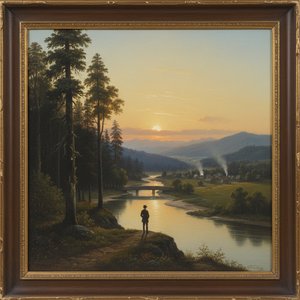
Robert Spencer: Luminism, Narrative & the American Landscape Tradition
Explore the captivating world of Luminism & the Hudson River School with our expert analysis. Discover the history, artists, and enduring beauty of 19th-century American landscape painting. Find museum-quality reproductions at OriginalUniqueArt.
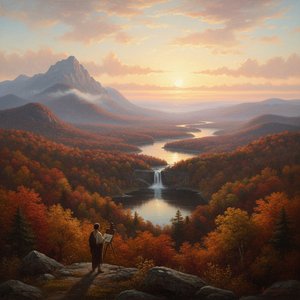
The Sublime Landscape: Exploring the Hudson River School Movement
Explore the captivating world of the Hudson River School! Discover the history, artists, and defining characteristics of this iconic American art movement. Learn about Romanticism's influence & find inspiration for your collection.
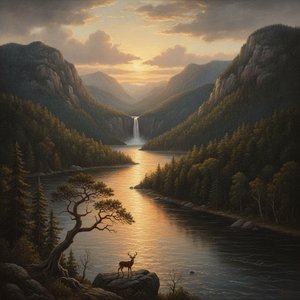
Epic Landscapes & Wild Nature: The Power of the Hudson River School's Sublime Artistry
Explore the breathtaking power of the Hudson River School. Journey through epic American landscapes, from Thomas Cole's sublime vistas to Luminist light, and discover how these timeless masterpieces continue to inspire modern collectors and art lovers worldwide.

As 10 Obras-Primas que Definiram a Escola do Rio Hudson | Arte e Decoração de Luxo
Descubra as 10 obras-primas da Escola do Rio Hudson! Explore a beleza das paisagens americanas de Thomas Cole, Frederic Church e outros mestres. Encontre reproduções de arte exclusivas para decorar sua casa com elegância em OriginalUniqueArt.com.


