

 Visualizar na parede
 Compartilhar
 Compartilhar
 Detalhes
 Guia
Guia

 Baixar imagem
 Semelhantes
 Raio X
 Ver diaporama
 Q&A
Q&A Estatísticas
Duet
 Oil
Oil- WallArt
- Dutch Golden Age
 1658
1658- Early Modern
 31.0 x 24.0 cm
 Staatliches Museum
 Ler mais
Obtenha um arquivo pronto para impressão que vai muito além da visualização na web. Cada imagem digital que vendemos provém de um arquivo mestre de alta resolução em nosso banco de dados — geralmente entre 5.000 e 15.000 pixels de largura — para que você possa imprimir em grandes formatos, realizar cortes precisos ou reproduzir detalhes minuciosos com total confiança.
Nenhum arquivo sai do nosso estúdio sem passar por um cuidadoso processo de revisão. Um especialista digital verifica as cores em relação à pintura original e as corrige se necessário, aumentando então a clareza e o detalhe com ferramentas profissionais de retoque — sempre mantendo a fidelidade às pinceladas e ao estilo do artista. O resultado é uma imagem que se assemelha à pintura, e não a um scan com filtros.
Aprovação antes da finalização: nosso especialista enviará a imagem por e-mail em até 72 horas para sua revisão. Não ficou satisfeito? Solicite melhorias ou correções, ou peça o reembolso caso a qualidade não atenda às suas expectativas.
Esta é a qualidade em que confiam editoras, estúdios de design, galerias e gráficas.
Imagem Digital
Baixe um arquivo de alta resolução para exibição pessoal, impressão e projetos criativos. ( Alternar para Impressão Comprar pintura feita à mão)
Incluído em cada compra de imagem digital
Entrega Digital Especializada e Garantida
Ao escolher o OriginalUniqueArt.com, você não está apenas adquirindo uma imagem — você está recebendo uma obra de arte digital profissionalmente aprimorada, elaborada com precisão e com garantia de satisfação. Aqui está tudo o que acompanha seu pedido, automaticamente:

Entrega rápida por e-mail
O seu arquivo de imagem digital em alta resolução será enviado por e-mail em até 72 horas após o pedido — pronto para uso imediato.

Arquivo Digital com IA Otimizado
Sua obra de arte é otimizada profissionalmente por meio de ferramentas avançadas de IA e edição manual, garantindo o máximo de detalhes, clareza e precisão de cores.

Reenvio gratuito vitalício
Apagou ou perdeu o seu ficheiro acidentalmente? Não se preocupe – nós reenviamos para si a qualquer momento, gratuitamente.

Sem Taxas de Importação - Sempre
Desfrute da sua obra de arte instantaneamente, sem taxas alfandegárias, impostos ou custos de entrega — downloads digitais são sempre isentos de taxas.

Garantia de Fidelidade de Cores
Garantimos que sua imagem digital reflita as cores originais com a maior fidelidade possível, utilizando ferramentas profissionais e gerenciamento de cores.

Garantia de satisfação de 100 dias
Se não estiver satisfeito com a sua imagem digital, nós a revisaremos ou reembolsaremos 100% dentro de 100 dias — sem perguntas.

Garantia de Reembolso 100%
Não está satisfeito? Receba o reembolso total em até 100 dias após o recebimento do seu arquivo digital — sem perguntas.

Descontos para pedidos em lote
Compre 3 imagens, economize 10% - Compre 5, economize 15% - Compre 10+, economize 20%. Ideal para projetos criativos, galerias e agências.
A Symphony of Light and Detail
In the quiet intimacy of a seventeenth-century Dutch interior, Frans van Mieris the Elder captures a moment of profound musical connection in his masterpiece, Duet. This exquisite work serves as a quintessential example of the fijnschilder style, a technique where the artist’s brushwork becomes nearly invisible, leaving behind only the breathtaking reality of texture and light. As we gaze upon the scene, we are transported to an era of refined elegance, where the soft glow of candlelight or filtered daylight dances across the polished wood of a harpsimchord and the rich, crimson folds of a lady's gown. The painting is not merely a depiction of a musical performance; it is a sensory experience that invites the viewer to hear the delicate pluck of strings and feel the hushed reverence of the room.
The composition centers on a woman lost in the rhythmic flow of her music, her posture poised and graceful. Beside her, a companion watches with an intensity that suggests a shared emotional resonance, creating a silent dialogue between the performers. The inclusion of a small dog, resting loyally at their feet, adds a layer of domestic warmth and symbolizes fidelity, grounding the sophisticated atmosphere in a sense of home and heart. Every element, from the delicate lace of a collar to the subtle sheen on the musical score, is rendered with a precision that speaks to Van Mieris’s mastery of the Leiden school, making this piece a jewel of the Dutch Golden Age.
Historical Elegance for the Modern Collector
To possess a reproduction of Duet is to bring a piece of history into the contemporary living space. Created in 1658, during the height of the Dutch Golden Age, this work reflects the prosperity and cultural sophistication of the Netherlands. During this period, artists like Van Mieris were celebrated for their ability to elevate genre scenes—everyday moments of life—into high art through unparalleled technical virtuosity. For the discerning interior designer, this painting offers a timeless focal point that complements both classical and modern decor. Its rich palette of deep reds, warm ambers, and soft shadows provides a sophisticated anchor for a room, evoking a sense of luxury and intellectual depth.
Beyond its aesthetic appeal, the painting serves as an emotional sanctuary. In an age of digital noise, the stillness captured in Duet offers a meditative quality that can transform the atmosphere of any gallery or private residence. It is a celebration of the fine arts, the beauty of domesticity, and the enduring power of human connection. Whether displayed in a sunlit study or a formal dining room, this work continues to inspire awe, reminding us of the meticulous beauty that can be found in life's most quiet, harmonious moments.
Perguntas e Respostas
Qual é o lugar de "Duet", de Frans van Mieris na história da arte?
"Duet", de Frans van Mieris pertence ao movimento Dutch Golden Age, dentro do período Early Modern. Juntos, eles conferem à obra o seu lugar na história da arte.
Quais cores predominam em "Duet", de Frans van Mieris?
"Duet" é definido por uma paleta Earthy com destaque para Phthalo Green (#301e1f).
O que "Duet", de Frans van Mieris retrata e qual é a sua atmosfera?
"Duet", de Frans van Mieris combina portrait, harpsichord, music, dutch golden age, 17th century, elegant scene, fijnschilder com uma atmosfera Elegant.
Biografia do Artista
Uma Vida Imersa no Detalhe: O Mundo de Frans van Mieris, o Velho
Frans van Mieris, o Velho, um nome sinônimo de detalhe meticuloso e arte refinada, ocupa uma posição significativa dentro da Era de Ouro holandesa. Nascido em Leiden, em 1635, seu caminho divergiu do ofício familiar da ourivesaria — um artesanato praticado por seu pai, Jan Bastiaensz van Mieris — em direção ao mundo cativante da pintura. Essa inclinação precoce pelo desenho preparou o cenário para uma carreira que definiria o estilo “fijnschilder” e ofereceria um vislumbre íntimo da sociedade holandesa do século XVII. Seu treinamento inicial sob Abraham Toorenvliet, seguido pela instrução crucial do estimado Gerrit Dou, estabeleceu uma base sólida sobre a qual ele construiu sua voz artística distinta. Esses anos formativos instilaram nele não apenas habilidade técnica, mas também um apreço pela nuance narrativa e pelo poder da observação sutil.A Ascensão de um ‘Fijnschilder’
Van Mieris rapidamente tornou-se celebrado como um mestre do fijnschilder — um termo holandês que denota a "pintura fina". Esta técnica era caracterizada por uma atenção quase obsessiva aos detalhes, pinceladas suaves e polidas, e uma preferência por telas de pequena escala. Não se tratava meramente de replicar a realidade; era sobre elevá-la através de uma precisão minuciosa. As superfícies em suas pinturas parecem cintilar com vida – o brilho lustroso do cetim, a textura delicada do veludo, o reflexo do metal – tudo renderizado com uma precisão surpreendente. Ele não pintava simplesmente um cômodo; ele recriava a própria atmosfera de seu interior, convidando os espectadores para cenas de domesticidade e opulência. Seus temas frequentemente giravam em torno da vida dos ricos: reuniões elegantes, interiores elaborados, retratos que capturavam não apenas a semelhança, mas também o caráter. Motivos recorrentes, como almoços com ostras, médicos atendendo pacientes e mulheres envolvidas em tarefas cotidianas, serviam como janelas para os hábitos e rituais sociais das classes altas. Embora inicialmente fortemente influenciado pelo estilo de Gerrit Dou, Van Mieris desenvolveu gradualmente sua própria abordagem única. Ele se afastou de uma abundância excessiva de detalhes em direção a uma maior ênfase na interação entre as figuras e nas narrativas que se desenrolavam em suas composições. Obras posteriores por vezes exibem qualidades tonais mais escuras em comparação com as paletas mais brilhantes de suas pinturas iniciais, refletindo uma maturidade crescente e exploração artística.Obras Significativas e um Legado Duradouro
Diversas obras fundamentais permanecem como testemunhos da habilidade e do estilo evolutivo de Van Mieris. A Visita do Médico (1657), considerada uma de suas peças datadas mais importantes e precoces, demonstra sua independência emergente da influência de Dou. A pintura é uma aula magistral na captura da tensão silenciosa de um exame médico, renderizada com um nível de realismo impressionante. Seu Autorretrato com uma Cítara é igualmente envolvente, demonstrando sua capacidade de retratar trajes opulentos enquanto transmite simultaneamente um senso de personalidade e introspecência. O Retrato da Esposa do Artista, Cunera van der Cock, exemplifica seu domínio do retrato, destacando tanto a perícia técnica quanto a compreensão do chiaroscuro — o jogo dramático entre luz e sombra. Além das cenas de gênero e retratos, Van Mieris também se aventurou em pinturas alegóricas, como aquelas que retratam vícios como o beber, o fumar e o jogo, demonstrando a amplitude de suas capacidades artísticas. O impacto de Frans van Mierismo estendeu-se muito além de sua própria vida. Sua influência ressoou dentro de sua família; seu filho Willem van Mieris (1662–1747) e seu neto Frans van Mieris, o Jovem (1689–1763), ambos tornaram-se pintores de gênero realizados, continuando a tradição artística. A popularidade de seu estilo também gerou inúmeros imitadores, notadamente A. D. Snaphaan, que trabalhou em Leipzig e contou com o patrocínio da corte de Anhalt-Dessau.Uma Contribuição Permanente para a Arte Holandesa
Frans van Mieris desempenhou um papel fundamental na moldagem do movimento fijnschilder dentro da pintura da Era de Ouro holandesa. Sua dedicação ao detalhe meticuloso, as representações realistas da vida cotidiana e da sociedade de classe alta, e seu brilhantismo técnico contribuíram significativamente para uma era já renomada por sua inovação artística. Ele desfrutou do patrocínio de figuras proeminentes, incluindo o Arquiduque Leopoldo e Cosme III de' Medici, um testemunho do reconhecimento internacional de seu talento. Mesmo hoje, suas obras continuam a cativar o público com sua execução primorosa e seu retrato perspicaz da cultura do século XVII. O roubo de um autorretrato da Art Gallery of New South Wales, em Sydney, serve como um lembrete pungente do valor duradouro e do apelo de sua arte — um legado que continua a inspirar e intrigar colecionadores e entusiastas da arte da mesma forma. Suas pinturas não são meros artefatos históricos; são janelas para uma era passada, meticulosamente elaboradas e imbuídas de uma beleza atemporal.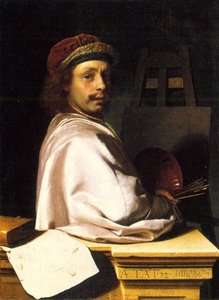
Frans van Mieris
1635 - 1681 , Países Bajos
Breve Biografia
- Artistic Movement Or Style: Fijnschilder
- Artists Or Movements Influenced By This Artist: ['Gerard Dou']
- Artists Who Influenced This Artist: ['Gerrit Dou']
- Date Of Birth: Leiden, 1635
- Date Of Death: Leiden, 1681
- Full Name: Frans Jansz. van Mieris
- Nationality: Holandês
- Notable Artworks:
- A Man and a Woman with Two Dogs known as "Teasing the Pet"
- Doctor's Visit
- Place Of Birth: Leiden