Visualizar na parede
 Compartilhar
 Compartilhar
 Detalhes

 Baixar imagem
 Semelhantes
 Raio X
 Slideshow
Lucas de Clercq
 Oil
Oil- WallArt
- Dutch Golden Age Portraiture
 1635
1635- Early Modern
 126.0 x 93.0 cm
 Rijksmuseum
 Ler mais
Reprodução em Óleo Feita à Mão
Óleo sobre tela pintado à mão no tamanho e moldura de sua escolha, feito sob encomenda pelos nossos artistas. ( Comprar impressão Comprar imagem)




P118B $10

P118H $10

P118W $10

P438Z $10

P508JH $12

P508YH $12

P805H $10

P805Z $10

P919BZ $10

P919G $10

P919XJ $10

P959ZH $10

P968JZ $12

W106C $8

W218G $10

W218JH $8

W218Y $10

W307PJ $10

W316G $10

W316PJ $8

W316Y $10

W398PJ $8

W4111J $10

W500HY $15

W500JH $15

W692G $12

W849H $8

W940BG $15

W953PJ $8




Escolha entre os nossos tamanhos pré-definidos que respeitam as proporções originais da obra de arte.

Pode inserir as suas próprias dimensões para se adequar a uma moldura ou espaço específico. Se o tamanho selecionado não corresponder às proporções da imagem original, iremos cortar a obra de arte ou estender a pintura com elementos adicionais pintados à mão. Um esboço digital será enviado para sua aprovação antes do início da produção.
Tenha em atenção que a pré-visualização no ecrã não reflete o corte ou extensão real. Apenas o esboço mostrará com precisão a composição final.
Embora tamanhos personalizados estejam disponíveis, recomendamos selecionar uma dimensão da lista predefinida para preservar as proporções originais.
Após o pedido, a equipa OriginalUniqueArt.com enviará um e-mail ao cliente para solicitar instruções e fornecer uma prévia do esboço.
Entrega mundial () em 3 a 4 semanas, em vez das 5 semanas padrão. (27 Agosto). Sem comprometer a qualidade.

Envio expresso gratuito para todo o mundo

Tela de Linho de Alta Qualidade

Seguro de transporte completo

Garantia de Reembolso de Impostos Alfandegários

Garantia de Fidelidade Cromática

Política de Devolução em 60 Dias (Apenas para Defeitos)

Garantia de reembolso de 100%

Oferta de desconto por quantidade
 A opção de vidro está disponível apenas para tamanhos inferiores a 110 cm

Lucas de Clercq
Técnica de Reprodução
Tamanho da Reprodução
-


Preço Total
$ 300
A Glimpse into Haarlem’s Golden Soul
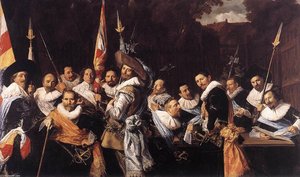
In the heart of the Dutch Golden Age, amidst the bustling commerce and burgeoning intellectual fervor of 17th-century Haarlem, Frans Hals I captured something far more profound than a mere likeness. His portrait of Lucas de Clercq stands as a breathtaking testament to an era defined by both prosperity and piety. As we gaze upon this masterpiece, we are not simply looking at a man, but rather stepping into the very soul of a period where the lines between mercantile success and spiritual devotion were beautifully intertwined. De Clercq, a prominent Mennonite businessman, is presented with a striking sense of presence that commands the room, offering a window into the understated elegance and quiet confidence of the Haar/Mennonite community.
The painting serves as a poignant historical document, reflecting the social fabric of a society navigating the turbulent waters of religious and political change. Through Hals’s lens, we see the dignity of the merchant class—a group whose wealth was built on industry yet whose lifestyle was anchored in the sober, disciplined values of their faith. This tension between worldly achievement and spiritual humility is palpable in every stroke, making the work an essential piece for any collector who appreciates art that tells a deep, human story.
The Mastery of the Expressive Brush
What truly distinguishes this work from the meticulous, almost photographic precision of his contemporaries is Hals’s revolutionary approach to technique. He was a master of the alla prima style, utilizing a loose, spontaneous brushstroke that feels remarkably modern even centuries later. Rather than hiding his hand behind layers of smooth, blended glazes, Hals deliberately left visible traces of his movement across the canvas. This creates a palpable energy, a sense of vitality that makes the subject feel as though he might breathe or shift at any moment.
The artist’s use of chiaroscuro—the dramatic interplay between light and shadow—is nothing short of cinematic. Light cascades across De Clercq’s face and torso, sculpting his muscular physique and highlighting the textures of his attire with brilliant clarity. This strategic illumination does more than just define form; it directs the viewer's emotional journey, pulling our eyes toward the subject's gaze and the subtle details of his expression. For interior designers, this dramatic lighting provides a focal point that can transform the atmosphere of a room, adding depth, sophistication, and a sense of classical grandeur to any curated space.
Symbolism and the Spirit of the Age
Every element within the composition is imbued with a layer of meaning that rewards the attentive observer. The inclusion of a pipe in De Clercq’s hand is far from a casual accessory; it serves as a sophisticated symbol of both status and contemplation. In the context of the 17th century, such an object suggested a man of intellect and leisure, someone capable of quiet reflection amidst a life of active commerce. This subtle nod to the humanist ideals of the era adds a layer of intellectual richness to the portrait.
Furthermore, the attire—the crisp white collar and the rich red cravat—speaks to the "understated elegance" favored by the Mennonite elite. It is a study in controlled opulence, where wealth is displayed through quality and texture rather than gaudy ornamentation. To possess a reproduction of this work is to invite a piece of history into one's home that celebrates the enduring values of character, stability, and refined taste. Whether placed in a private study or a grand living area, the portrait of Lucas de Clercq acts as an anchor of timelessness, bridging the gap between the triumphs of the Dutch Golden Age and the aesthetic desires of the modern connoisseur.
Biografia do Artista
Frans Hals I: A Life in Paint
Frans Hals I was a Dutch painter born in Antwerp, Belgium, around 1580. Though his early life remains somewhat shrouded in mystery, he rose to become one of the most important figures of the Dutch Golden Age, celebrated for his innovative portraiture and genre scenes. His artistic legacy continues to inspire artists and captivate audiences centuries later.Early Life and Training
Details surrounding Hals’s formative years are scarce. It is believed he received initial artistic training in Antwerp, a prominent center for painting at the time. However, due to religious and political turmoil, his family relocated to Haarlem in the Netherlands. He became a member of the Haarlem Guild of St. Luke in 1610, marking the formal beginning of his professional career—a pivotal moment that secured him access to influential patrons and established him as a respected artist within the artistic community.Artistic Style and Development
Hals distinguished himself through a remarkably fresh and spontaneous style. Unlike many of his contemporaries who favored meticulous detail, Hals employed a loose and expressive brushstroke. This technique imbued his paintings with a sense of immediacy and vitality, capturing the personality and character of his subjects in a way that was revolutionary for its time. He wasn’t merely attempting to reproduce appearances; he sought to convey emotion and psychological insight—a characteristic that distinguishes him from many other painters of his era. His masterful use of light and shadow added depth and drama to his compositions, creating scenes brimming with atmosphere and capturing fleeting moments of human interaction.Notable Works
While Hals produced a wide range of works, he is best known for his portraits. Some of his most celebrated paintings include:- The Laughing Cavalier (1624) – This iconic portrait exemplifies Hals’s ability to capture character and movement with breathtaking realism. The subject's joyous expression—a subtle smirk—is rendered with remarkable precision, conveying a sense of confidence and amusement that transcends time.
- Malle Babbe (c. 1633-1635) – Hals’s depiction of an elderly woman is equally striking. He skillfully portrays age and vulnerability while simultaneously capturing the subject's inner life—a testament to his profound understanding of human psychology.
- Portraits of the Regents of the Old Men’s Home in Haarlem (1664) - Demonstrating Hals’ mastery of group portraiture, these canvases showcase a remarkable feat of artistic skill. He captured the dignity and solemnity of the elderly residents with sensitivity and nuance, creating images that resonate with compassion and respect.
Beyond portraits, Hals created compelling genre scenes—depictions of everyday life—that offered glimpses into Dutch society during his lifetime. These works reveal a keen observation of human behavior and an ability to convey atmosphere and emotion with remarkable effectiveness.
Influences and Legacy
Determining Hals’s direct influences is challenging, as he developed a highly individual style. However, it's likely he was aware of the work of earlier Flemish painters like Pieter Bruegel the Elder—particularly his depictions of peasant life—who championed a naturalistic approach to art. His innovative technique profoundly impacted subsequent generations of artists. He influenced figures such as Adriaen Brouwer and Johannes Vermeer, who adopted Hals’s looser brushwork and focus on capturing light and atmosphere. Furthermore, Hals's legacy extends beyond the immediate artistic circle; his emphasis on portraying personality paved the way for more intimate and psychological portraits in later centuries—a testament to his enduring influence on Western art history.Today, Hals’s paintings are housed in major museums worldwide, including the Frans Hals Museum in Haarlem, which holds the largest collection of his work—a remarkable achievement that ensures his artistic vision continues to inspire admiration and scholarly study.

Frans Hals
1580 - 1585 , Bélgica
Dados Rápidos
- Artistic Movement Or Style: Século de Ouro Holandês
- Artists Or Movements Influenced By This Artist:
- Adriaen Brouwer
- Johannes Vermeer
- Artists Who Influenced This Artist: ['Pieter Bruegel o Velho']
- Date Of Birth: c. 1582
- Date Of Death: 1666
- Full Name: Frans Hals I
- Nationality: Holandês
- Notable Artworks:
- O Cavalheiro Rindo
- Malle Babbe
- Retratos dos Regentes do Lar Idoso
- Place Of Birth: Antwerp, Belgium
Artigos Relacionados

Frans Hals I: Innovation, Intimacy & the Dutch Golden Age Portrait
Explore the revolutionary portraiture of Frans Hals I, a master of the Dutch Golden Age. Discover his innovative techniques, captivating character studies & lasting impact on art history. Learn more at OriginalUniqueArt.

A Era de Ouro Holandesa: 10 Mestras-Obras Imperdíveis para Decorar com Arte
Descubra as 10 obras-primas da Era de Ouro Holandesa! Explore a história, técnica e beleza atemporal de Rembrandt, Vermeer e outros mestres. Encontre reproduções de arte exclusivas para decorar sua casa com elegância em OriginalUniqueArt.com.

Golden Light & Dutch Skies: The Timeless Magic of Dutch Golden Age Landscapes
Discover the breathtaking beauty of Dutch Golden Age landscapes. Explore the mastery of light, chiaroscuro, and 17th-century realism through an expert art history lens, celebrating the enduring legacy of the Dutch Masters for discerning collectors and art lovers.

Illuminating Innovation: Exploring the Dutch Golden Age of Painting
Explore the Dutch Golden Age of painting with OriginalUniqueArt. Discover Rembrandt, Vermeer & other Masters. Learn about key characteristics, iconic artworks, and lasting influence. Expert insights for collectors & enthusiasts.
Illuminating Realism: Exploring the Dutch Golden Age of Painting (1600-1700)
Explore the Dutch Golden Age of painting (1600-1700) with OriginalUniqueArt. Discover Rembrandt, Vermeer & other masters. Learn about techniques, history & find museum-quality reproductions.