Menu
Consultoria de arte gratuita
Visualizar em escalaVisualizar em escala Visualizar em RAVisualizar em RA Encomendar impressão Encomendar impressãoComprar imagem em alta resolução Comprar imagem em alta resolução EnviarEnviar
Ver detalhesVer detalhes Adicionar aos favoritos Adicionar aos favoritos BaixarBaixar SemelhantesSemelhantes Raio XRaio X Apresentação de slidesApresentação de slides

Girl Reading

Discover Frank Duveneck's 'Girl Reading,' a captivating realism painting from 1876. This evocative work, featuring a young woman lost in her book, showcases the artist’s masterful use of color and detail – a poignant reflection of life and emotion.

Descubra Frank Duveneck (1848-1919), pintor realista americano influenciado por Frans Hals e a Escola de Munique. Explore sua vida, obra marcante e legado artístico!

Reprodução em Óleo Feita à Mão

Óleo sobre tela pintado à mão no seu tamanho e moldura, feito sob encomenda pelos nossos artistas. (Encomendar impressão Encomendar impressãoComprar imagem em alta resolução Comprar imagem em alta resolução)

P118B $10
P118H $10
P118W $10
P438Z $10
P508JH $12
P508YH $12
P805H $10
P805Z $10
P919BZ $10
P919G $10
P919XJ $10
P959ZH $10
P968JZ $12
W106C $8
W218G $10
W218JH $8
W218Y $10
W307PJ $10
W316G $10
W316PJ $8
W316Y $10
W398PJ $8
W4111J $10
W500HY $15
W500JH $15
W692G $12
W849H $8
W940BG $15
W953PJ $8

Standard
custom
CM
INCH

Escolha entre os nossos tamanhos pré-definidos que respeitam as proporções originais da obra de arte.

largura
altura

Pode inserir as suas próprias dimensões para se adequar a uma moldura ou espaço específico. Se o tamanho selecionado não corresponder às proporções da imagem original, iremos cortar a obra de arte ou estender a pintura com elementos adicionais pintados à mão. Um esboço digital será enviado para sua aprovação antes do início da produção.
Tenha em atenção que a pré-visualização no ecrã não reflete o corte ou extensão real. Apenas o esboço mostrará com precisão a composição final.
Embora tamanhos personalizados estejam disponíveis, recomendamos selecionar uma dimensão da lista predefinida para preservar as proporções originais.

Exemplos do que pode ser personalizado: Substituir o rosto pela foto do cliente; Adicionar um animal de estimação (ex: substituir gato por cão); Incluir uma mensagem oculta no fundo; Alterar a paisagem ou elementos do fundo.
Após o pedido, a equipa OriginalUniqueArt.com enviará um e-mail ao cliente para solicitar instruções e fornecer uma prévia do esboço.

Entrega mundial () em 3 a 4 semanas, em vez das 5 semanas padrão. (21 Agosto). Sem comprometer a qualidade.

why_choose_icon
Envio Expresso Gratuito para todo o Mundo
why_choose_icon
Tela de Linho Premium
why_choose_icon
Seguro de transporte total
why_choose_icon
Garantia de Reembolso de Impostos Alfandegários
why_choose_icon
Garantia de Fidelidade de Cor
why_choose_icon
Política de Devolução de 60 Dias (Apenas para Defeitos)
why_choose_icon
Garantia de reembolso de 100%
why_choose_icon
Desconto para múltiplas unidades

Preço Total

$ 300

reproduction

Girl Reading

Técnica de Reprodução

Dimensões da Reprodução

-

Preço Total

$ 300

Detalhes Rápidos

  • Artistic style: Impressionistic realism
  • Medium: Oil on canvas
  • Subject or theme: Reading, Portraiture
  • Notable elements: Loose brushstrokes
  • Year: 1876
  • Artist: Frank Duveneck

Teste de Conhecimentos Artísticos

Cada pergunta possui apenas uma resposta correta.

Questão 1:
What is the primary artistic style evident in Frank Duveneck’s ‘Girl Reading’?
Questão 2:
The young woman in the painting is wearing a distinctive red dress. What does this color choice likely symbolize?
Questão 3:
In what century was ‘Girl Reading’ painted?
Questão 4:
Frank Duveneck's life was marked by tragedy. What significant event early in his life profoundly impacted his artistic development?
Questão 5:
The dark background in ‘Girl Reading’ serves what purpose?

Descrição da Obra

A Moment of Quiet Reflection: Frank Duveneck’s “Girl Reading”

Frank Duveneck's "Girl Reading," painted in 1876, isn’t merely a portrait; it’s a carefully constructed tableau of domesticity and intellectual pursuit. The painting immediately draws the viewer into a scene of serene contemplation – a young woman lost within the pages of her book, bathed in a soft, diffused light that speaks to both intimacy and a certain melancholy. Duveneck, a remarkably prolific artist whose life was tragically cut short at the age of 71, masterfully captures this quiet moment, imbuing it with an emotional resonance that transcends its simple subject matter.

The composition is deceptively straightforward. The girl, dressed in a vibrant crimson gown – a bold and striking color choice for the era – sits poised on what appears to be a small stool or bench. Her posture suggests both comfort and concentration; her hand rests lightly upon the book, while her gaze is utterly absorbed by its contents. The dark shawl draped across her shoulders and the matching hat contribute to a sense of understated elegance and perhaps a touch of reserve. The background, rendered in muted browns and greens, serves as a subtle counterpoint to the girl’s vivid attire, directing the eye back to her central figure.

Impressionistic Realism: A Delicate Balance

Duveneck's style is often described as “impressionistic realism,” a term that perfectly encapsulates his approach. He skillfully blends elements of both movements – the loose brushstrokes and emphasis on capturing fleeting moments characteristic of Impressionism, with the meticulous detail and accurate representation favored by Realists. Notice how he uses broken color to create an atmospheric effect, particularly in the dappled light filtering through an unseen window. The paint isn’t blended smoothly; instead, it's applied in short, visible strokes that give the scene a sense of immediacy and vitality. This technique allows him to convey not just what he *sees*, but also how he *feels* about what he sees – a subtle emotional layering that elevates the painting beyond a simple likeness.

The artist’s use of light is particularly noteworthy. It's not harsh or dramatic, but rather soft and diffused, creating a sense of warmth and intimacy. This gentle illumination highlights the girl’s face and hands, drawing attention to her engagement with the book. The shadows are equally deliberate, adding depth and dimension to the scene and subtly hinting at the quiet solitude of the moment.

A Window into 19th-Century Life

"Girl Reading" offers a poignant glimpse into the domestic life of mid-19th century America. The painting reflects a time when education, particularly for women, was increasingly valued, though still often limited. The girl’s act of reading represents a burgeoning intellectual curiosity and a desire for knowledge – a subtle assertion of agency within a society that frequently confined women to traditional roles. Furthermore, the setting itself—a simple interior space—suggests a life centered around family and home, values deeply rooted in the era.

Considering Duveneck’s own biography adds another layer of meaning. His early life was marked by profound loss – the death of his father at a young age and the subsequent remarriage of his mother. These experiences undoubtedly shaped his artistic vision, imbuing his work with a sense of melancholy and perhaps a yearning for stability and connection. “Girl Reading,” therefore, can be interpreted as an exploration of these themes—a quiet meditation on loss, memory, and the solace found in intellectual pursuits.

Symbolism and Emotional Resonance

Beyond its historical context, "Girl Reading" is rich with symbolic meaning. The book itself represents knowledge, wisdom, and escape – a portal to other worlds and ideas. The girl’s posture suggests introspection and a desire for self-discovery. The crimson dress, while vibrant, also carries connotations of passion and perhaps even vulnerability. Duveneck masterfully uses color and composition to create an atmosphere of quiet contemplation, inviting the viewer to share in the girl's moment of solitude.

Ultimately, “Girl Reading” is a remarkably evocative work that transcends its simple subject matter. It’s a testament to Duveneck’s artistic skill and his ability to capture not just the physical appearance of his subjects, but also their inner lives. It remains a powerful reminder of the enduring appeal of quiet moments, intellectual pursuits, and the beauty found in the everyday.


Biografia do Artista

A Life Forged in Tragedy and Realism

Frank Duveneck, born Frank Decker in 1848 amidst the bustling river town of Covington, Kentucky, was an artist whose life story is as compelling as the powerfully rendered canvases he created. His early years were profoundly shaped by loss; the untimely death of his father to cholera when he was barely a year old indelibly altered his trajectory. This formative tragedy, coupled with his mother’s subsequent marriage to Joseph “Squire” Duveneck – from whom he adopted his enduring name – instilled within him a remarkable resilience and perhaps, an enhanced sensitivity that would later manifest in the emotional depth of his art. The blending of German heritage through his stepfather and the distinctly American landscape of his upbringing formed a unique cultural foundation for the artist, contributing to a complex and layered artistic vision. Even as a young boy, a natural aptitude for drawing blossomed, leading to studies under local painter Johann Schmitt and an apprenticeship with a firm specializing in church decoration—a crucial period where he honed technical skills and absorbed the narrative power of visual imagery, learning how art could evoke profound emotion and tell compelling stories – lessons that would resonate throughout his career.

The Munich Crucible: Embracing Dark Realism

In 1869, Duveneck embarked on a transformative journey to Munich, Germany, seeking advanced artistic training at the Royal Academy. This move proved pivotal, exposing him to an entirely different aesthetic landscape. The prevailing artistic climate in Munich was characterized by a stark realism—a deliberate rejection of academic idealism in favor of direct observation and unflinching honesty. It resonated deeply with Duveneck, who embraced a darker palette and a more vigorous, expressive brushstroke. He became captivated by the work of 17th-century Dutch masters like Frans Hals, whose lively portraits and masterful handling of light profoundly influenced his style. Hals’s ability to capture fleeting moments of life, imbued with both joy and melancholy, served as a powerful model for Duveneck's own artistic approach. This influence is strikingly evident in paintings such as *Lady with Fan* (1873), where slashing brushwork and a somber tonality echo Hals’s spirit while simultaneously establishing Duveneck’s own distinctive voice – a willingness to confront the complexities of human experience with unflinching honesty. The atmosphere of Munich, steeped in artistic debate and experimentation, provided fertile ground for Duveneck's creative development. He spent years immersed in the studio, absorbing techniques and developing his unique style, laying the groundwork for his future success.

A Mentor’s Influence: The “Duveneck Boys” and Beyond

By 1878, Duveneck had established himself as a significant figure in the art world, not only as a painter but also as an influential educator. He opened his own school in Munich, attracting a cohort of ambitious American artists who became known collectively as the “Duveneck Boys.” Among them were John Twachtman, Otto Bacher, Julius Rolshoven, and John White Alexander—artists who would themselves become prominent figures in American Impressionism and Realism. Duveneck’s teaching philosophy emphasized direct observation, bold brushwork, and a rejection of conventional academic constraints. He encouraged his students to forge their own artistic paths while grounding them in the principles of sound draftsmanship and expressive color. His influence extended back to America when he accepted a position at the Art Academy of Cincinnati, where he mentored another generation of artists including Ida Holterhoff Holloway, John Christen Johansen, and Russel Wright. He fostered a spirit of innovation and independence that helped shape the course of American art, leaving an indelible mark on those who studied under his guidance – students who carried forward his commitment to realism and emotional expression.

Evolving Visions and Lasting Legacy

Duveneck’s artistic journey continued to evolve after his return to America. While he remained committed to realism, his palette began to lighten, influenced by the burgeoning Impressionist movement and his frequent travels to Italy and France. He explored landscape painting with increasing frequency, capturing the sun-drenched scenes of Venice and the rugged beauty of coastal Massachusetts. Despite these stylistic shifts, his work always retained a distinctive character—a blend of technical mastery, psychological depth, and emotional resonance. The personal tragedy of losing his wife, Elizabeth Boott Duveneck, in 1888 cast a long shadow over his later years, perhaps contributing to the introspective quality of some of his subsequent works. His paintings from this period often convey a sense of quiet melancholy and profound reflection. Frank Duveneck passed away in Covington, Kentucky, in 1919, leaving behind a rich artistic legacy that continues to inspire artists today. His paintings are now held in prestigious collections such as the Metropolitan Museum of Art in New York City, the National Gallery of Art in Washington, D.C., and the Cincinnati Art Museum—testaments to his enduring contribution to American art. He remains a pivotal figure in the transition from academic tradition to modern realism, an artist who dared to challenge conventions and forge his own path with unwavering conviction.

A Lasting Impact

Duveneck’s legacy extends far beyond his individual paintings; it resides in the spirit of artistic independence he instilled in his students and the enduring power of his vision. His pioneering commitment to portraying life as it was, without idealization, paved the way for future generations of American realist painters. He fostered a vibrant community of artists who embraced direct observation and emotional honesty. The “Duveneck Boys” became renowned for their distinctive style, carrying forward his influence into the 20th century. His technical mastery—his skillful handling of brushwork, color, and composition—continues to inspire artists today. And finally, his ability to capture the inner lives of his subjects – their joys, sorrows, and complexities – adds a layer of psychological depth and emotional resonance to his work that resonates deeply with viewers. Frank Duveneck stands as a testament to the transformative potential of art, born from personal tragedy and fueled by an unwavering commitment to truth and beauty.
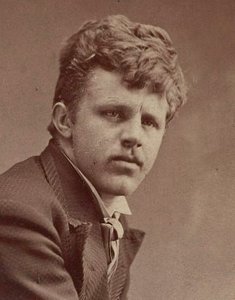
Frank Duveneck

Frank Duveneck

1848 - 1919 , Estados Unidos da América

Informações Rápidas

  • Artistic Movement Or Style: Realismo
  • Artists Or Movements Influenced By This Artist: ['Impressionismo']
  • Artists Who Influenced This Artist: ['Frans Hals']
  • Date Of Birth: 9 out 1848
  • Date Of Death: 3 jan 1919
  • Full Name: Frank Duveneck
  • Nationality: Americano
  • Notable Artworks:
    • Lady with Fan
    • Whistling Boy
  • Place Of Birth: Covington, EUA