 Visualizar na parede
 Compartilhar
 Compartilhar
 Detalhes
 Guia
Guia

 Baixar imagem
 Semelhantes
 Raio X
 Ver diaporama
 Q&A
Q&A Estatísticas
Untitled

 Ler mais
Giclée / Impressão de Arte
Impressão giclée ou em tela de qualidade de museu, com produção rápida e opções flexíveis de acabamento. ( Comprar pintura feita à mão Alternar para Imagem Digital)




































Escolha entre os nossos tamanhos pré-definidos que respeitam as proporções originais da obra de arte.

Insira a largura e a altura desejadas para se ajustarem à sua moldura ou parede. Uma impressão pode ser apenas cortada, nunca ampliada além da imagem original; portanto, um tamanho com proporções diferentes resultará na perda de parte da imagem. Enviamos uma maquete digital para sua aprovação antes de realizarmos a impressão. A imagem exibida nesta página não mostra o corte real — apenas a maquete o faz.
Entrega mundial () em 2 semanas, em vez das 4/5 semanas padrão. (1 Novembro)

Envio expresso gratuito para todo o mundo

Tela de Linho de Alta Qualidade

Seguro de transporte completo

Garantia de Reembolso de Impostos Alfandegários

Garantia de Fidelidade Cromática

Política de Devolução em 100 Dias (Apenas para Defeitos)

Garantia de reembolso de 100%

Oferta de desconto por quantidade
 A opção de vidro está disponível apenas para tamanhos inferiores a 110 cm

Untitled
Giclée / Impressão de Arte
Tamanho da Reprodução
-


Preço Total
€ 71
Subject & Composition
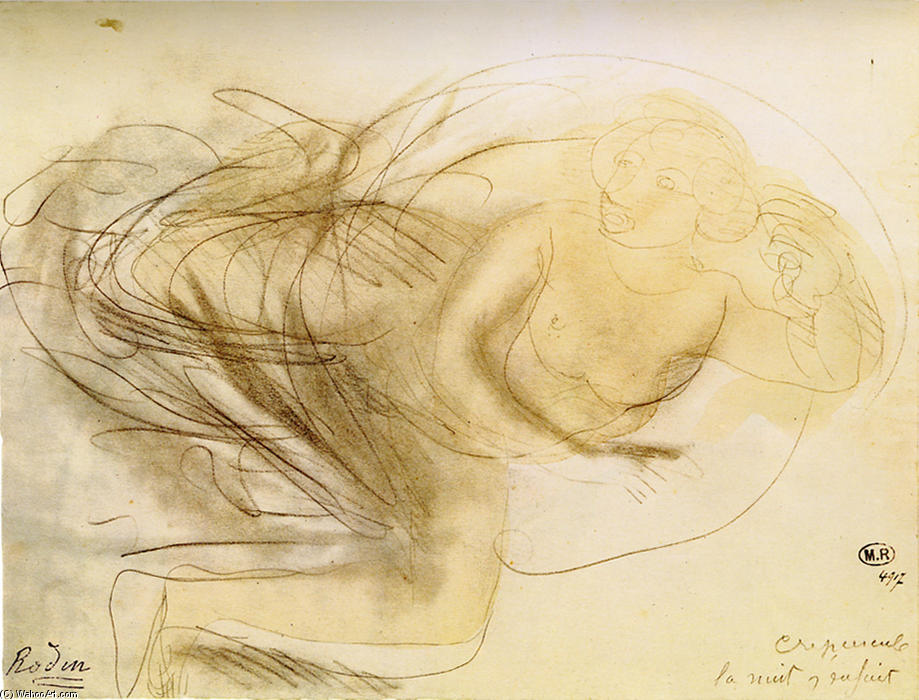
This captivating black and white photograph presents an intimate study of a reclining female figure, likely derived from one of François Auguste René Rodin's sculptural explorations. The subject lies gracefully on her side, exuding an aura of tranquility and repose. Her arm is elegantly raised above her head, creating a dynamic curve that contrasts with the stillness of her body. While other figures are subtly present in the background, they remain secondary to the primary focus – the solitary woman and her evocative posture. The composition itself is intricate, demonstrating Rodin's masterful understanding of line, shape, and form, even when captured through photography.
Rodin’s Style & Technique
The photograph offers a glimpse into Rodin's distinctive artistic style – one that prioritized capturing the raw emotion and physicality of the human body. Rodin was a revolutionary figure in sculpture, moving away from traditional academic constraints to embrace a more expressive and subjective approach. He famously used clay as his primary medium, allowing him to model complex surfaces with remarkable fluidity. This photograph likely depicts a study or preparatory work for one of Rodin’s larger sculptures, showcasing the artist's exploration of form and movement before its final realization in bronze or marble.
Historical Context & Symbolism
Created during Rodin's prolific career (1840-1917), this image reflects a period of significant artistic change. The late 19th century witnessed a shift away from Neoclassical ideals towards more modern and subjective forms of expression. Rodin’s work, though initially controversial for its departure from traditional figurative sculpture, ultimately paved the way for many subsequent generations of artists. While the specific symbolism within this particular image remains open to interpretation, reclining female figures often evoke themes of rest, contemplation, and sensuality – concepts frequently explored in Rodin's oeuvre. The black and white medium further enhances a sense of timelessness and introspection.
Emotional Impact & Artistic Legacy
The photograph possesses a quiet emotional power. The woman’s relaxed posture and the soft lighting create an atmosphere of serenity, inviting viewers to contemplate her inner world. Despite being captured in monochrome, the image retains a remarkable sense of depth and texture, highlighting Rodin's skill in rendering human form. This piece serves as a testament to Rodin's enduring legacy as a pioneer of modern sculpture, demonstrating his ability to capture not just physical likeness but also the profound complexities of human emotion.
Why Acquire a Reproduction?
- A Touch of Masterful Artistry: Bring the iconic style of Rodin into your home or office.
- Conversation Starter: This piece is sure to spark interest and admiration from guests.
- Timeless Appeal: The black and white aesthetic ensures enduring relevance across various interior design styles.
- High-Quality Reproduction: Our hand-painted reproductions capture the essence of Rodin's original work with exceptional detail and fidelity.
Perguntas e Respostas
"Untitled" possui uma prévia em realidade aumentada?
Visualize "Untitled", de Auguste Rodin na sua própria parede através da página de Prévia em RA da obra, utilizando realidade aumentada em um dispositivo compatível.
A qual movimento artístico pertence "Untitled", de Auguste Rodin?
"Untitled", de Auguste Rodin pertence ao movimento Other. Este movimento fornece o contexto estilístico da obra.
Existem obras semelhantes a "Untitled"?
Obras de arte semelhantes a "Untitled", de Auguste Rodin podem ser encontradas na página de Obras semelhantes desta obra.
Biografia do Artista
The Sculptor of Souls: A Life Forged in Clay
François Auguste René Rodin, a name that resonates through the annals of art history, wasn’t simply a sculptor; he was a revolutionary who redefined how we perceive and experience human emotion. Born in Paris on November 12, 1840, into a modest family – his father a clerk in the police department – Rodin's journey to artistic greatness was far from predetermined. Initially facing rejection from the prestigious École des Beaux-Arts, he found his footing through the demanding craft of decorative stonemasonry, an experience that instilled within him a profound understanding of material and form. This early apprenticeship, marked by rigorous training and hands-on skill development, proved to be a crucial foundation for his later innovations. A deeply personal tragedy – the untimely death of his beloved sister Marie in 1862 – profoundly impacted Rodin’s artistic sensibilities, leading him through a period of contemplation before he wholeheartedly embraced his destiny as an artist. This emotional depth, this willingness to confront and express profound sorrow and longing, would become a defining characteristic of his work, imbuing it with a raw honesty rarely seen in sculpture of the time.Breaking with Tradition: A New Language in Stone
Rodin’s artistic trajectory was marked by a deliberate and courageous departure from the rigid conventions that dominated sculptural practice during the 19th century. While formally trained in classical techniques, he resolutely rejected the idealized forms and narrative constraints prevalent in academic sculpture. Instead, he sought to capture the fleeting nuances of human emotion, the weight of thought, and the intricate complexities of the inner life – a pursuit that fundamentally challenged established artistic norms. His early works, such as *The Age of Bronze* (1877), initially met with considerable skepticism and controversy. Critics found his figures unsettlingly realistic, lacking the polished perfection expected of traditional sculpture. However, Rodin remained steadfast in his conviction, driven by an unwavering belief in his unique artistic vision. He began to experiment with fragmented forms, rough textures, and dynamic compositions that conveyed a sense of movement and psychological intensity – techniques that signaled a radical shift towards a more expressive and emotionally resonant style. This bold experimentation wasn’t merely about aesthetics; it was a deliberate attempt to break free from the constraints of the past and forge a new language for sculpture, one that prioritized human experience over idealized representation.Iconic Forms: The Thinker, The Kiss, and Beyond
Rodin's legacy is indelibly linked to a series of iconic sculptures that continue to captivate audiences worldwide. *The Thinker* (1880-1882), originally conceived as part of the monumental *Gates of Hell*, quickly ascended to become an enduring symbol of philosophical contemplation and intellectual struggle. Its powerfully rendered form embodies the weight of thought, the burden of questioning, and the profound introspection inherent in the human condition. Equally renowned is *The Kiss* (1886-1898), a breathtakingly sensual depiction of romantic love – a testament to Rodin’s ability to capture intimacy and passion with remarkable sensitivity. And *The Burghers of Calais* (1884-1895), a monumental tribute to the courage and selflessness of six citizens who bravely faced certain death during the Hundred Years' War, stands as a poignant reminder of human resilience in the face of adversity. These works weren’t merely representations of physical bodies; they were profound explorations of the human experience – imbued with psychological depth, emotional resonance, and an undeniable sense of humanity. Rodin’s willingness to embrace imperfection, to portray vulnerability and struggle alongside moments of beauty and triumph, distinguished his work from the idealized forms of previous generations.The Gates of Hell: A Masterpiece in Progress
Perhaps no single work embodies Rodin's artistic vision more powerfully than *The Gates of Hell* (1880-1917). This colossal sculpture, initially commissioned for a doorway to the future Museum of Decorative Arts in Paris, remained unfinished at his death, yet it stands as one of his most celebrated achievements. The sculpture depicts a chaotic scene from Dante’s *Inferno*, capturing the torment and suffering of damned souls. Rodin masterfully employed a technique of modeling directly onto a rough-hewn block of marble, leaving visible traces of his hand and chisel – a deliberate choice that emphasized the process of creation and highlighted the raw, visceral nature of the subject matter. The figures in *The Gates of Hell* are not idealized heroes or noble warriors; they are flawed, tormented individuals grappling with their own demons. This unflinching portrayal of human suffering resonated deeply with audiences and cemented Rodin’s reputation as a sculptor who dared to confront the darker aspects of the human experience.A Lasting Influence: Rodin's Place in Art History
By the turn of the 20th century, Auguste Rodin had achieved international acclaim, becoming arguably the most celebrated sculptor of his time. His work profoundly influenced generations of artists, inspiring them to break free from traditional constraints and explore new avenues of artistic expression. He is widely considered a pivotal figure in the transition from 19th-century realism to modern sculpture – a bridge between the past and the future. Rodin’s emphasis on emotional intensity, psychological depth, and innovative use of form laid the groundwork for movements such as Expressionism and Cubism. His sculptures continue to be exhibited in museums and private collections around the world, serving as enduring testaments to his artistic genius and his profound understanding of the human condition. Beyond his technical mastery, Rodin’s legacy lies in his courage – his willingness to challenge conventions, embrace imperfection, and express the full spectrum of human emotion through the transformative power of sculpture.
Auguste Rodin
1840 - 1917 , França
Dados Rápidos
- Artistic Movement Or Style: Escultura Moderna
- Artists Or Movements Influenced By This Artist:
- Expressionismo
- Cubismo
- Artists Who Influenced This Artist:
- Michelangelo
- Donatello
- Date Of Birth: 12 de novembro de 1840
- Date Of Death: 17 de novembro de 1917
- Full Name: François Auguste René Rodin
- Nationality: Francês
- Notable Artworks:
- O Pensador
- Beijo
- Burghers de Calais
- Place Of Birth: Paris, França
Artigos Relacionados

As 10 Pinturas Mais Famosas Dominadas pelo Preto: Arte, História e Decoração
Descubra as 10 pinturas mais icônicas dominadas pelo preto! Explore a história, técnica e emoção por trás de obras-primas do Romantismo, Realismo e Expressionismo. Encontre reproduções de arte exclusivas na OriginalUniqueArt.com.

Os 10 Quadros Mais Famosos Dominados pelo Branco: Arte e Decoração
Descubra os 10 quadros mais famosos dominados pelo branco, de Monet a Kandinsky! Explore a história da arte, técnicas e o poder da paleta neutra. Encontre reproduções de alta qualidade para sua decoração em OriginalUniqueArt.com.

The Enduring Form: Exploring Themes & Techniques in Sculpture Across Historical Periods
Explore the rich history of sculpture from ancient masterpieces to contemporary innovations. Discover key techniques, influential artists & investment potential for discerning art collectors.

As 10 Obras em Bronze Mais Icônicas que Transformaram a História da Arte | OriginalUniqueArt
Descubra as 10 esculturas em bronze mais influentes da história! Explore a arte de Rodin, Michelangelo e outros mestres. Reproduções de alta qualidade para decorar sua casa com elegância. OriginalUniqueArt.

Esculturas em Bronze Icônicas: 10 Obras que Revolucionaram a Arte | OriginalUniqueArt
Descubra as 10 esculturas em bronze mais icônicas da história! Explore a arte de Rodin, Michelangelo e outros mestres. Encontre reproduções de alta qualidade para sua casa em OriginalUniqueArt.com.

