Visualizar em escala
 Enviar
 Compartilhar
 Ver detalhes
 Guia de Obras do Aluno

 Baixar imagem
 Semelhantes
 Raio X
 Apresentação de slides
 Estatísticas
Pretty teacher
 Etching
- WallArt
- Romanticism
 1799
1799- Modern
 21.0 x 15.0 cm
 Ver mais
Reprodução em Óleo Feita à Mão
Óleo sobre tela pintado à mão no tamanho e moldura de sua escolha, feito sob encomenda pelos nossos artistas. ( Alternar para Impressão Ver Imagem Digital)




P118B $10

P118H $10

P118W $10

P438Z $10

P508JH $12

P508YH $12

P805H $10

P805Z $10

P919BZ $10

P919G $10

P919XJ $10

P959ZH $10

P968JZ $12

W106C $8

W218G $10

W218JH $8

W218Y $10

W307PJ $10

W316G $10

W316PJ $8

W316Y $10

W398PJ $8

W4111J $10

W500HY $15

W500JH $15

W692G $12

W849H $8

W940BG $15

W953PJ $8




Escolha entre os nossos tamanhos pré-definidos que respeitam as proporções originais da obra de arte.

Pode inserir as suas próprias dimensões para se adequar a uma moldura ou espaço específico. Se o tamanho selecionado não corresponder às proporções da imagem original, iremos cortar a obra de arte ou estender a pintura com elementos adicionais pintados à mão. Um esboço digital será enviado para sua aprovação antes do início da produção.
Tenha em atenção que a pré-visualização no ecrã não reflete o corte ou extensão real. Apenas o esboço mostrará com precisão a composição final.
Embora tamanhos personalizados estejam disponíveis, recomendamos selecionar uma dimensão da lista predefinida para preservar as proporções originais.
Após o pedido, a equipa OriginalUniqueArt.com enviará um e-mail ao cliente para solicitar instruções e fornecer uma prévia do esboço.
Entrega mundial () em 3 a 4 semanas, em vez das 5 semanas padrão. (26 Setembro). Sem comprometer a qualidade.

Envio expresso gratuito para todo o mundo

Tela de Linho Premium

Seguro de transporte total

Garantia de Reembolso de Impostos Alfandegários

Garantia de Fidelidade de Cor

Política de Devolução em 100 Dias (Apenas para Defeitos)

Garantia de reembolso de 100%

Desconto para múltiplas unidades
 A opção de vidro está disponível apenas para tamanhos inferiores a 110 cm

Pretty teacher
Técnica de Reprodução
Dimensões da Reprodução
-


Preço Total
$ 300
A Surreal Encounter: Unpacking Francisco Goya’s “Pretty Teacher”
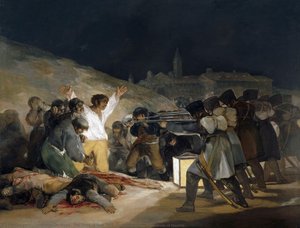
Francisco José de Goya y Lucientes' "Pretty Teacher" (1799) is not merely an etching; it’s a carefully constructed visual riddle, a haunting tableau that invites endless interpretation. This captivating work, now meticulously reproduced by OriginalUniqueArt.com, transcends the limitations of its monochrome palette and drypoint technique to deliver a potent blend of folklore, social commentary, and unsettling psychological depth. Initially conceived as part of Goya's “Los Caprichos,” a series of satirical prints critiquing Spanish society, "Pretty Teacher" stands alone as a powerful exploration of female agency, superstition, and the precarious boundaries between innocence and corruption.
The scene unfolds with arresting dynamism: a young woman, seemingly caught mid-flight on a broomstick, is guided by a cackling witch. Birds circle overhead, adding to the dreamlike quality of the composition. Goya’s masterful use of diagonal lines—the sweeping arc of the broom, the figure's tilted posture—creates an immediate sense of movement and instability. The background isn’t a simple landscape; it’s a swirling vortex of hatching and cross-hatching, suggesting turbulent skies or perhaps the chaotic realm of witchcraft itself. Notice how Goya employs varying line weights – bold outlines defining the central figure and broom, delicate lines rendering the feathers and atmospheric haze – demonstrating his exceptional control over the etching process.
Decoding Symbolism: Witchcraft, Innocence, and Social Critique
The title itself is deliberately ironic. The “pretty teacher” isn’t conventionally attractive; she's depicted with a partially concealed face, hinting at shame or perhaps a nascent corruption. Goya frequently used the figure of the witch in his work, but here, it’s not simply a monstrous stereotype. Instead, he presents a complex scenario – is this woman being initiated into a dark practice, or is she actively choosing her path? The presence of the night owl (a Spanish term for prostitute) adds another layer of intrigue, suggesting a connection between female sexuality and the supernatural. Art historians often interpret this print as a critique of societal pressures on women during the late 18th century, where traditional roles were increasingly challenged.
The etching’s overall atmosphere is profoundly unsettling. Goya's skillful manipulation of light and shadow – achieved through meticulous hatching – creates a dramatic effect, emphasizing the figure’s vulnerability and the witch’s menacing presence. The open mouth and wide eyes of the young woman convey surprise, fear, or perhaps even a disturbing acceptance of her fate. The use of monochrome amplifies this sense of unease, stripping away any potential distractions and focusing attention on the raw emotion conveyed through line and tone.
Technique and Craftsmanship: A Masterclass in Etching
"Pretty Teacher" is a testament to Goya’s extraordinary technical skill. As an etching, it relies entirely on the artist's ability to manipulate lines – scratching into a copper plate with etching needles, then carefully applying ink before pressing the print onto paper. The resulting texture is remarkably rich and varied, ranging from the dense, grainy hatching that defines the background to the smoother areas where lines are less concentrated. This textural contrast not only adds visual interest but also contributes significantly to the sense of dynamism within the composition.
The meticulous layering of aquatint – a technique used to create tonal variations – further enhances the print’s depth and atmosphere. Goya's mastery of these techniques is evident in every detail, from the precise rendering of the birds’ feathers to the swirling patterns of the background. The reproduction offered by OriginalUniqueArt.com faithfully captures this intricate craftsmanship, allowing viewers to appreciate the full beauty and complexity of Goya’s original work.
Bringing “Pretty Teacher” Home: A Reproduction for Collectors
OriginalUniqueArt.com's hand-painted reproductions offer a unique opportunity to own a stunning representation of this iconic etching. Unlike traditional prints, our reproductions capture the nuances of Goya’s style with unparalleled accuracy and detail, faithfully recreating the print’s dramatic lighting, intricate textures, and haunting atmosphere. Whether you are an art collector, interior designer seeking a statement piece, or simply an admirer of Goya's genius, a OriginalUniqueArt reproduction of “Pretty Teacher” is a captivating addition to any collection – a window into the mind of one of history’s most visionary artists.
Biografia do Artista
The Spanish Soul: A Life Forged in Shadow and Light
Francisco José de Goya y Lucientes, a name that echoes through the corridors of art history, embodies a profound paradox – a man simultaneously rooted in the traditions of the Old Masters and a visionary who presaged the anxieties and expressive freedom of modern art. Born in 1746 in the unassuming village of Fuendetodos, Spain, Goya’s journey from a provincial artist to court painter, and ultimately, to a chronicler of human suffering and societal decay, is a testament to his extraordinary talent and the turbulent era he navigated. His early training began at fourteen under José Luzán y Martinez, laying a foundational understanding of classical techniques before he sought refinement in Madrid with Anton Raphael Mengs, then the dominant artistic force within the Spanish court. This initial period instilled in him a mastery of form and composition, vividly demonstrated in his early commissions – intricate designs for tapestries depicting lively scenes of everyday life, subtly infused with a distinctly Spanish realism that hinted at both Rococo elegance and a burgeoning critical eye. His marriage to Josefa Bayeu, sister to another painter within the royal circle, further solidified his position within the artistic establishment, providing access to influential patrons and opportunities for advancement. However, these early works, while technically proficient and aesthetically pleasing, offered little indication of the profound emotional depth and unsettling darkness that would characterize much of his later oeuvre.Ascension and Transformation: From Courtly Grace to Inner Turmoil
Goya’s ascent through the ranks of the Spanish court was a steady climb. He secured a position as a painter to the Royal Chamber in 1786, amassing a substantial commission portfolio from the aristocracy and royalty. These portraits are remarkable not merely for their technical brilliance – Goya possessed an uncanny ability to capture likeness with startling honesty – but also for their astute psychological insight. He didn’t simply paint what his sitters *looked* like; he revealed something of their character, their vulnerabilities, and often, their hidden anxieties. The Countess of Chinchón, for example, is not merely a beautiful woman adorned in elegant attire, but a figure radiating intelligence, perhaps tinged with melancholy – a subtle suggestion of the complexities beneath her outward composure. Yet, beneath this veneer of courtly success, a significant transformation was taking place within Goya’s soul. In 1793, a debilitating illness, likely a combination of syphilis and mercury poisoning, left him profoundly deaf, an event that irrevocably altered his perception of the world and consequently, his artistic vision. This affliction plunged him into a period of intense introspection and isolation, severing his connection to the social life he once enjoyed and forcing him inward, towards a darker, more subjective reality. The shift in his artistic style was dramatic – a deliberate departure from the bright colors and cheerful scenes that had defined his earlier work. He began to explore themes of madness, violence, and the irrational, foreshadowing the anxieties that would grip Europe during the tumultuous years ahead.The Dark Visions: Caprichos, Disasters, and Black Paintings
This period of artistic ferment culminated in some of Goya’s most iconic and unsettling works. Los Caprichos, a series of eighty etchings published in 1799, serve as a scathing satire of Spanish society – its follies, superstitions, and moral corruption laid bare with biting wit and unflinching irony. The images are often grotesque yet undeniably captivating, populated by witches, monstrous figures, and caricatures of the aristocracy, all rendered with a masterful command of etching techniques. However, it was The Disasters of War, created between 1810 and 1820, that truly cemented Goya’s reputation as a fearless chronicler of human suffering. These harrowing etchings depict the brutal realities of the Peninsular War – the atrocities committed by both sides, the starvation, the despair, and the utter devastation inflicted upon the Spanish people. They are not romanticized accounts of battle; they are unflinching portrayals of its horrors, devoid of any glorification or sentimentality. Perhaps most profoundly disturbing are The Black Paintings, a series of fourteen murals Goya painted directly onto the walls of his house, “Quinta del Sordo” (the Deaf Man’s Villa), between 1819 and 1823. These works – including the terrifying Saturn Devouring His Son and the haunting Asmodea – represent a descent into the darkest recesses of the human psyche, expressing themes of despair, madness, and existential dread with unparalleled intensity. They are a radical departure from traditional artistic conventions, anticipating the expressive power of abstract art and reflecting Goya’s own inner turmoil.Themes and Techniques
Throughout his career, several recurring themes emerge in Goya’s work. The exploration of human folly and societal corruption is prominent in Los Caprichos, while the horrors of war are brutally depicted in The Disasters of War. A fascination with darkness, superstition, and the irrational pervades much of his later output, culminating in the unsettling imagery of The Black Paintings. Technically, Goya was a master of various mediums. He excelled in portraiture, capturing not only physical likeness but also psychological depth. His use of color evolved over time, from the lighter palettes of his early works to the somber tones of his later paintings and etchings. He was particularly innovative in his printmaking techniques, utilizing aquatint to create tonal variations and dramatic effects.- Etching: Goya’s mastery of etching allowed him to create intricate details and expressive lines.
- Aquatint: This technique enabled him to achieve a range of tones and textures, enhancing the emotional impact of his prints.
- Brushwork: His loose and expressive brushwork, particularly in his later paintings, contributed to their sense of immediacy and emotional intensity.
A Legacy of Innovation and Influence
In 1824, disillusioned by political unrest in Spain, Goya sought exile in Bordeaux, France, where he continued to work until his death in 1828. His final years were marked by a renewed focus on printmaking, culminating in the La Tauromaquia series, which explored the spectacle and brutality of bullfighting. Francisco Goya’s legacy is immense and far-reaching. He stands as a pivotal figure in art history, bridging the gap between the Old Masters and the modern movement. His influence can be seen in the works of countless artists who followed – from Édouard Manet and Pablo Picasso to Francis Bacon – all drawn to his expressive brushwork, psychological depth, and willingness to confront uncomfortable truths. He challenged artistic conventions, embraced innovation, and dared to explore the darker aspects of human experience, leaving behind a body of work that continues to resonate with audiences today. Goya wasn’t merely painting pictures; he was holding up a mirror to society, forcing us to confront our own flaws and vulnerabilities, and reminding us of the enduring power – and fragility – of the human spirit.
Francisco de Goya
1746 - 1828 , Espanha
Informações Rápidas
- Artistic Movement Or Style: Romantismo
- Artists Or Movements Influenced By This Artist:
- Manet
- Picasso
- Artists Who Influenced This Artist:
- Mengs
- Luzán
- Date Of Birth: 30 Mar 1746
- Date Of Death: 16 Abr 1828
- Full Name: Francisco José de Goya y Lucientes
- Nationality: Espanhol
- Notable Artworks:
- Los Desastres de la Guerra
- Caprichos
- Saturno Devorando Seu Filho
- Place Of Birth: Fuendetodos, Espanha
Artigos Relacionados

Goya: As 25 Obras-Primas que Definem um Mestre da Arte Espanhola | OriginalUniqueArt
Descubra as 25 obras-primas de Francisco Goya, o mestre espanhol do Romantismo. Explore retratos icônicos, gravuras impactantes e a história por trás de 'Saturno Devorando seu Filho' e 'A Majas'. Encontre reproduções de arte exclusivas para decorar sua casa com OriginalUniqueArt.com.

The Intricate World of Etching: A Historical Survey of Technique, Aesthetic Evolution, and Enduring Artistic Impact
Explore the rich history of etching, from its origins to modern practice. Discover techniques, key artists like Rembrandt, and insights for collectors. A comprehensive guide by OriginalUniqueArt.

Etching: A Historical Survey of Technique, Aesthetic Qualities & Enduring Artistic Significance
Explore the rich history of etching, from its origins to Rembrandt's masterful innovations. Discover the technique, aesthetic qualities & enduring legacy of this captivating art form. Expert insights for collectors and enthusiasts.
Francisco Goya: Darkness & Enlightenment – A Comprehensive Exploration of the Artist's Life, Works, and Enduring Legacy
Explore the life & works of Francisco Goya, Spain's Romantic master. Discover his evolution from court painter to a visionary chronicler of war and social injustice. A comprehensive guide for art enthusiasts.
As 10 Gravuras Mais Icônicas da História da Arte | OriginalUniqueArt
Descubra as 10 gravuras mais influentes da história, de Rembrandt a Goya! Explore a técnica, o contexto e a beleza atemporal dessas obras-primas. Encontre reproduções de alta qualidade para decorar sua casa com arte clássica em OriginalUniqueArt.com.