

 Visualizar na parede
 Compartilhar
 Compartilhar
 Detalhes

 Baixar imagem
 Semelhantes
 Raio X
 Slideshow
Jenny Lind


 Ler mais
Reprodução em Óleo Feita à Mão
Óleo sobre tela pintado à mão no tamanho e moldura de sua escolha, feito sob encomenda pelos nossos artistas. ( Comprar impressão Comprar imagem)




P118B $10

P118H $10

P118W $10

P438Z $10

P508JH $12

P508YH $12

P805H $10

P805Z $10

P919BZ $10

P919G $10

P919XJ $10

P959ZH $10

P968JZ $12

W106C $8

W218G $10

W218JH $8

W218Y $10

W307PJ $10

W316G $10

W316PJ $8

W316Y $10

W398PJ $8

W4111J $10

W500HY $15

W500JH $15

W692G $12

W849H $8

W940BG $15

W953PJ $8




Escolha entre os nossos tamanhos pré-definidos que respeitam as proporções originais da obra de arte.

Pode inserir as suas próprias dimensões para se adequar a uma moldura ou espaço específico. Se o tamanho selecionado não corresponder às proporções da imagem original, iremos cortar a obra de arte ou estender a pintura com elementos adicionais pintados à mão. Um esboço digital será enviado para sua aprovação antes do início da produção.
Tenha em atenção que a pré-visualização no ecrã não reflete o corte ou extensão real. Apenas o esboço mostrará com precisão a composição final.
Embora tamanhos personalizados estejam disponíveis, recomendamos selecionar uma dimensão da lista predefinida para preservar as proporções originais.
Após o pedido, a equipa OriginalUniqueArt.com enviará um e-mail ao cliente para solicitar instruções e fornecer uma prévia do esboço.
Entrega mundial () em 3 a 4 semanas, em vez das 5 semanas padrão. (30 Agosto). Sem comprometer a qualidade.

Envio expresso gratuito para todo o mundo

Tela de Linho de Alta Qualidade

Seguro de transporte completo

Garantia de Reembolso de Impostos Alfandegários

Garantia de Fidelidade Cromática

Política de Devolução em 60 Dias (Apenas para Defeitos)

Garantia de reembolso de 100%

Oferta de desconto por quantidade
 A opção de vidro está disponível apenas para tamanhos inferiores a 110 cm

Jenny Lind
Técnica de Reprodução
Tamanho da Reprodução
-


Preço Total
$ 300
Biografia do Artista
Early Life and Artistic Foundations
Francis Bicknell Carpenter, born August 6, 1830, in the quiet upstate New York town of Homer, emerged from a farming family where an artistic inclination was initially viewed as a charming diversion rather than a viable path. His parents, Asaph Harmon and Almira Clark Carpenter, recognized his budding talent early on, but it was his father’s eventual encouragement that proved pivotal. In 1844, at the age of fourteen, young Francis began formal studies under Sanford Thayer in Syracuse—a six-month immersion that laid the groundwork for his future endeavors. This foundational training instilled in him essential skills and a discipline that would serve him well as he navigated the burgeoning art world. Even before fully establishing himself, Carpenter’s talent garnered recognition; in 1848, he received a purchase prize from the American Art-Union, an early validation of his artistic promise. These formative years, steeped in rural life yet touched by academic instruction, shaped a sensibility that would later inform his depictions of both intimate portraiture and grand historical narratives.A Rising Portraitist and Access to History
By the age of twenty-one, Carpenter had already established a studio in New York City, boldly embarking on a career as a professional artist. His initial focus was portraiture—a popular genre that allowed him to hone his skills in capturing likeness and character. He quickly gained commissions from prominent figures, including Presidents Millard Fillmore, Franklin Pierce, and John Tyler, establishing himself within the elite circles of American society. This success led to his election as an associate member of the National Academy of Design in 1852—a significant milestone that acknowledged his growing reputation among his peers. However, it was a commission unlike any other that would ultimately define his legacy. In 1864, Carpenter conceived of a painting depicting the momentous occasion of President Lincoln’s first reading of the Emancipation Proclamation to his cabinet. Remarkably, he secured unprecedented access to the White House and Lincoln himself, spending six months immersed in the heart of American history. The genesis of this ambitious project was particularly striking; Carpenter claimed the idea originated from a vivid dream—a testament to the spiritual and visionary element that underpinned his artistic process.“First Reading” and Lasting Impact
"First Reading of the Emancipation Proclamation", completed in 1864, is undeniably Carpenter’s most celebrated work. The painting—a large-scale composition depicting Lincoln and his cabinet engaged in a solemn discussion—transcends mere historical documentation; it captures the weight of the moment, the moral gravity of the decision, and the complex emotions swirling within the room. It now hangs prominently in the United States Capitol, serving as a powerful visual reminder of this pivotal turning point in American history. Beyond the painting itself, Carpenter’s experiences at the White House yielded another significant contribution: his 1866 memoir, “Six Months at the White House with Abraham Lincoln.” This firsthand account offers invaluable insights into Lincoln's personality, his leadership during the Civil War, and the political climate of the era. Carpenter’s ability to both visually represent and narratively recount this crucial period solidified his place in American cultural memory. He continued to paint portraits of influential figures—Horace Greeley, Ezra Cornell, James Russell Lowell, and John C. Frémont among them—creating a visual record of 19th-century American society. Following Lincoln’s assassination, he produced numerous posthumous portraits, further cementing the president's iconic image in the national consciousness.Style, Influences, and Artistic Legacy
Carpenter’s artistic style is generally categorized as realism, characterized by a commitment to accurate representation of people and events. He skillfully employed established traditions of American portrait painting, prioritizing likeness and conveying dignity within his subjects. "First Reading", however, demonstrates his ability to transcend conventional portraiture, weaving individual representations into a compelling historical narrative. While popular during his lifetime, Carpenter’s later works received mixed critical reception, with some observers noting a perceived decline in artistic quality—a shift that coincided with his increasing focus on religious themes. Despite this, his legacy remains firmly anchored in "First Reading of the Emancipation Proclamation", an enduring image of Abraham Lincoln and a significant work of American historical art. His memoirs provide invaluable firsthand accounts of life at the White House during one of the nation’s most tumultuous periods. Though perhaps not as widely celebrated today, Carpenter's contributions to 19th-century American portraiture and historical painting are undeniable—a testament to his skill, ambition, and unique access to a defining moment in history.
Francis Bicknell Carpenter
1830 - 1900 , United States of America
Dados Rápidos
- Artistic Movement Or Style: Realism
- Date Of Birth: August 6, 1830
- Date Of Death: May 23, 1900
- Full Name: Francis Bicknell Carpenter
- Nationality: American
- Notable Artworks:
- First Reading of the Emancipation Proclamation
- Jenny Lind
- Salmon P. Chase
- Place Of Birth: Homer, USA
Artigos Relacionados
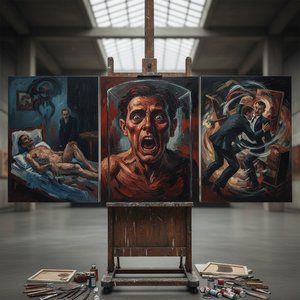
Francis Bacon: As 25 Obras Essenciais do Mestre da Angústia – OriginalUniqueArt
Descubra as 25 obras mais impactantes de Francis Bacon, o mestre da angústia e do expressionismo. Explore a história por trás dos retratos icônicos, cores vibrantes e emoções intensas. Encontre reproduções de arte exclusivas para transformar sua casa em OriginalUniqueArt.com!

The Enduring Legacy of Oil on Canvas: Technique, History & Aesthetic Impact
Explore the rich history & techniques of oil painting – from Renaissance masters to Impressionism. Discover pigments, layering methods, and why this timeless medium endures. Expert insights for artists & art enthusiasts.

Oil on Canvas: A Historical & Technical Exploration of a Timeless Artistic Medium
Explore the rich history & enduring techniques of oil painting on canvas. Discover the science behind its longevity, conservation practices, and contemporary relevance. Expert insights for art enthusiasts.

Século XIX na Arte: 10 Obras que Definem uma Era | OriginalUniqueArt
Mergulhe no século XIX com 10 obras de arte icônicas! Explore Monet, Renoir e Van Gogh. Descubra a história, técnica e emoção por trás dos mestres do Impressionismo e Realismo. Encontre reproduções de alta qualidade em OriginalUniqueArt.com.

The Enduring Power of Painting: A Historical & Contemporary Exploration of Form and Emotion
Explore the rich history & enduring techniques of oil painting with OriginalUniqueArt. Discover masterpieces, learn about art collecting, and find authentic handmade reproductions crafted by skilled artists.

