Tamanho do texto

() ·

Uma pintura feita para você, à mão

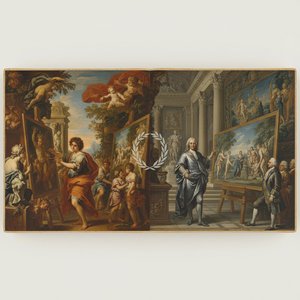
Diana and Endymion

Reprodução em Óleo Feita à Mão

Óleo sobre tela pintado à mão no tamanho e moldura de sua escolha, feito sob encomenda pelos nossos artistas. ( Alternar para Impressão Alternar para Imagem Digital)

Descrição do Item

Francesco Solimena’s ‘Diana and Endymion,’ painted in 1710, showcases a dramatic narrative of Greek mythology. Featuring nude figures engaged in conversation amidst horses, dogs, and birds, this opulent fresco exemplifies Baroque grandeur and artistic innovation.

Biografia do Artista

Francesco Solimena (1657-1747): Mestre do Barroco napolitano, conhecido por suas dramáticas pinturas de cenas religiosas e mitológicas. Sua obra combina influências romanas com um estilo único, moldando a arte da região.

de ·

Capítulo 1

Qual deve ser o tamanho?

Deslize para alterar o tamanho; a imagem à esquerda mostra a moldura em sua largura real. As proporções originais são mantidas.

Tamanho padrão
personalizado
CM
INCH

Escolha entre os nossos tamanhos pré-definidos que respeitam as proporções originais da obra de arte.

largura
altura

Insira a largura e a altura desejadas para se ajustarem à sua moldura ou parede. Como esta obra é pintada à mão, para um tamanho com proporções diferentes, o artista poderá pintar um pouco mais ao redor da imagem ou reduzir ligeiramente a composição — você escolhe. Enviamos uma maquete digital para sua aprovação antes de iniciar a pintura. A imagem exibida nesta página não representa o resultado real — apenas a maquete mostra o resultado final.

Capítulo 2

Como deve chegar?

Escolha as bordas da tela esticada

Escolha sua moldura

Corner sample of the WhiteWrap canvas edge finish, stretched on madeira maciça bars
Branco €1
Corner sample of the BlurSideWrap canvas edge finish, stretched on madeira maciça bars
Bordas esfumaçadas €1
Corner sample of the ExtendedWrap canvas edge finish, stretched on madeira maciça bars
Bordas estendidas €1
Corner sample of the P118B picture frame: poliestireno moldado, 5 cm wide and 3 cm thick
P118B €10
Corner sample of the P118H picture frame: poliestireno moldado, 5 cm wide and 3 cm thick
P118H €10
Corner sample of the P118W picture frame: poliestireno moldado, 5 cm wide and 3 cm thick
P118W €10
Corner sample of the P438Z picture frame: poliestireno moldado, 5.5 cm wide and 3.5 cm thick
P438Z €10
Corner sample of the P508JH picture frame: poliestireno moldado, 7 cm wide and 3.5 cm thick
P508JH €12
Corner sample of the P508YH picture frame: poliestireno moldado, 7 cm wide and 3.5 cm thick
P508YH €12
Corner sample of the P805H picture frame: poliestireno moldado, 5 cm wide and 3.5 cm thick
P805H €10
Corner sample of the P805Z picture frame: poliestireno moldado, 5 cm wide and 3.5 cm thick
P805Z €10
Corner sample of the P919BZ picture frame: poliestireno moldado, 7 cm wide and 3.5 cm thick
P919BZ €10
Corner sample of the P919G picture frame: poliestireno moldado, 7 cm wide and 3.5 cm thick
P919G €10
Corner sample of the P919XJ picture frame: poliestireno moldado, 7 cm wide and 3.5 cm thick
P919XJ €10
Corner sample of the P959ZH picture frame: poliestireno moldado, 5 cm wide and 3 cm thick
P959ZH €10
Corner sample of the P968JZ picture frame: poliestireno moldado, 6 cm wide and 4 cm thick
P968JZ €12
Corner sample of the W106C picture frame: madeira maciça, 5 cm wide and 3 cm thick
W106C €8
Corner sample of the W218G picture frame: madeira maciça, 5 cm wide and 3 cm thick
W218G €10
Corner sample of the W218JH picture frame: madeira maciça, 5 cm wide and 3 cm thick
W218JH €8
Corner sample of the W218Y picture frame: madeira maciça, 5 cm wide and 3 cm thick
W218Y €10
Corner sample of the W307PJ picture frame: madeira maciça, 6 cm wide and 3 cm thick
W307PJ €10
Corner sample of the W316G picture frame: madeira maciça, 6 cm wide and 3 cm thick
W316G €10
Corner sample of the W316PJ picture frame: madeira maciça, 6 cm wide and 3 cm thick
W316PJ €8
Corner sample of the W316Y picture frame: madeira maciça, 6 cm wide and 3 cm thick
W316Y €10
Corner sample of the W398PJ picture frame: madeira maciça, 5 cm wide and 3 cm thick
W398PJ €8
Corner sample of the W4111J picture frame: madeira maciça, 6.5 cm wide and 3.5 cm thick
W4111J €10
Corner sample of the W500HY picture frame: madeira maciça, 7 cm wide and 5 cm thick
W500HY €15
Corner sample of the W500JH picture frame: madeira maciça, 7 cm wide and 5 cm thick
W500JH €15
Corner sample of the W692G picture frame: madeira maciça, 8 cm wide and 4 cm thick
W692G €12
Corner sample of the W849H picture frame: madeira maciça, 5 cm wide and 3 cm thick
W849H €8
Corner sample of the W940BG picture frame: madeira maciça, 7.5 cm wide and 4.5 cm thick
W940BG €15
Corner sample of the W953PJ picture frame: madeira maciça, 6 cm wide and 3.5 cm thick
W953PJ €8
Corner sample of the H24-GOLD picture frame: madeira entalhada com gesso, 10 cm wide and 6 cm thick
H24-GOLD €30
Corner sample of the H24-SILVER picture frame: madeira entalhada com gesso, 10 cm wide and 6 cm thick
H24-SILVER €30
Corner sample of the H36-GOLD picture frame: madeira entalhada com gesso, 15 cm wide and 6.5 cm thick
H36-GOLD €45
Corner sample of the H36-SILVER picture frame: madeira entalhada com gesso, 15 cm wide and 6.5 cm thick
H36-SILVER €45
Prévia da moldura
Com moldura

Moldura: . Dimensões totais com a moldura: .

Capítulo 3

Quem o pinta, e deveria algo mudar?

Exemplos do que pode ser alterado: Substituir o rosto pela foto do cliente; Adicionar um animal de estimação (ex: substituir gato por cachorro); Incluir uma mensagem oculta no fundo; Alterar a paisagem ou elementos do fundo.
Após o pedido, a equipe da OriginalUniqueArt.com enviará um e-mail ao cliente para instruções e fornecerá uma prévia da montagem

Entrega mundial () em 3 a 4 semanas, em vez das 5 semanas padrão. (6 Novembro). Sem comprometer a qualidade.

Capítulo 4

Os retoques finais

Uma placa de identificação, como em um museu?

Detalhes da Placa de Bronze Gravada

This elegant plaque features the artist's name and the title of the artwork, finely engraved for a timeless presentation.

It is made from bronze with a refined, elegant finish. The text is precisely laser-engraved for a sharp and permanent result. Measuring 9x2 cm, the plaque is compact yet easy to read. It's built to be durable and scratch-resistant, offering a professional, museum-quality look. Mounting is simple thanks to the included adhesive backing.

Detalhes da Placa de Acrílico Transparente

The plaque includes essential engraved details such as the artist's name, the title of the artwork, the date it was created, the type of media used-like oil on canvas or watercolor-a brief description of the piece, and a QR code that links to the complete artwork information.

It is crafted from clear acrylic, offering a sleek, modern appearance. The text is UV-engraved in black to ensure strong visual contrast. With a size of 10x15 cm, it ensures optimal readability. It comes equipped with two metal hooks for secure wall mounting. The plaque is designed to be weather-resistant, making it suitable for various environments, and it includes interactive features that work seamlessly with smartphone scanning.

Detalhes da Placa de Acrílico Preto

This elegant plaque includes engraved information such as the artist's name, the title of the artwork, the date it was created, the type of media used (like oil on canvas or watercolor), a short description of the artwork, and a QR code for quick access to more information.

The plaque itself is made from refined black acrylic with a premium finish. The text is laser-engraved in white for high contrast and readability. Its size is 10x15 cm, designed to be easy to read. It comes with two metal hooks for professional mounting. The design is sleek and fits any interior style. It is also weather-resistant and durable, with built-in digital integration for mobile compatibility.

Um verniz protetor?

Para quando você precisa?

Capítulo 5

A sua pintura, conforme encomendada

Diana and Endymion

Técnica de Reprodução

Tamanho da Reprodução

-

Artista Sênior de Elite

Mais detalhes, refinamento e tempo de produção adicional

-

Moldura para Reprodução

-

-

Para obras de arte ou reproduções com mais de 105 cm (aproximadamente 41 polegadas) em qualquer um dos lados, a moldura será enviada como um kit desmontado. Este método garante uma entrega segura e evita danos durante o transporte.

Montagem profissional necessária — este não é um produto DIY (faça você mesmo).
O kit deve ser montado e a tela esticada por um profissional de molduraria experiente, utilizando cola de madeira (não inclusa), um alicate de esticar tela e grampos para manter as travessas alinhadas enquanto a cola seca. A montagem incorreta ou a tensão desigual da tela podem danificar permanentemente a obra de arte e não estão cobertas pela nossa garantia.

  • Todas as barras de madeira maciça estão incluídas, precisamente cortadas ao tamanho certo.

  • Montado com os parafusos fornecidos, além de cola para madeira para as junções dos cantos, que não está inclusa e deve ser providenciada pelo seu moldurista.

  • São necessárias ferramentas profissionais não incluídas: um alicate de estiramento de tela (esticador) e grampos para manter as ripas alinhadas enquanto a cola seca.

Importante:
As junções dos cantos requerem cola para madeira, as ripas devem ser mantidas com grampos até que a cola esteja completamente seca, e o estiramento da tela na moldura montada requer um alicate de esticar tela. Nenhum destes itens está incluído no kit. Por favor, certifique-se de contar com um profissional de molduraria experiente antes de encomendar este tamanho.

Etiqueta de identificação

-

-

Verniz de Proteção

Verniz brilhante (realça as cores e protege contra a luz e a umidade)

-

Personalizar minha obra

Exemplos de alterações possíveis: Substituir o rosto por uma foto do cliente; Adicionar um animal de estimação (ex.: substituir gato por cachorro); Incluir uma mensagem oculta no fundo; Alterar a paisagem ou os elementos do fundo.

-

Urgente

Entrega mundial () em 3 a 4 semanas, em vez das 5 semanas padrão. (6 Novembro). Sem comprometer a qualidade.

-

Envio Expresso

Entrega mundial para em 5 semanas. (13 Novembro).

Com envio incluído

Preço Total

€ 268

Preço Total € 268

A opção de vidro está disponível apenas para tamanhos inferiores a 110 cm

Incluído em todos os pedidos

  • Envio expresso gratuito para todo o mundo
  • Tela de Linho de Alta Qualidade
  • Seguro de transporte completo
  • Garantia de Reembolso de Impostos Alfandegários
  • Garantia de Fidelidade Cromática
  • Política de Devolução em 100 Dias (Apenas para Defeitos)
  • Garantia de reembolso de 100%
  • Oferta de desconto por quantidade

Francesco Solimena’s *Diana and Endymion*: A Neapolitan Baroque Masterpiece

Francesco Solimena's 1710 painting, *Diana and Endymion*, is a breathtaking testament to the grandeur of Neapolitan Baroque art. Executed with meticulous detail and imbued with profound mythological symbolism, this work offers a captivating glimpse into the world of Greek legend and the artistic sensibilities of one of Italy’s most celebrated painters. Measuring an impressive 2328 x 1790 cm, the scale alone commands attention, drawing the viewer into a scene brimming with movement, emotion, and divine beauty.

  • Subject Matter: The painting depicts the poignant love story of Diana, the goddess of the hunt and the moon, and Endymion, a mortal shepherd. Traditionally, Endymion was granted eternal youth by Diana, who fell deeply in love with him. This narrative explores themes of immortality, desire, and the delicate balance between the divine and human realms.
  • Style & Technique: Solimena’s style is characterized by its dramatic lighting, rich color palette, and remarkably realistic depiction of figures and animals. He employs a technique known as *sfumato*, subtly blending colors to create soft transitions and atmospheric effects, particularly evident in the rendering of the drapery and the luminous skin tones. The composition is meticulously balanced, guiding the eye through a complex arrangement of figures and elements.

A Window into Neapolitan Baroque Patronage

Solimena’s rise to prominence was inextricably linked to the patronage system that flourished in Naples during the 17th and 18th centuries. His early training under his father, Angelo Solimena, and subsequent studies with established masters like Francesco di Maria and Giacomo del Po, provided him with a solid foundation in classical technique and composition. However, it was the support of Cardinal Vincenzo Orsini that truly propelled him to artistic recognition. Orsini’s patronage allowed Solimena to undertake increasingly ambitious fresco commissions, establishing his reputation as one of the leading artists of his time. This painting itself likely originated from a private commission, reflecting the wealthy tastes and aesthetic preferences of influential patrons.

Symbolism and Narrative Depth

The scene is rich in symbolic detail, reflecting the complex mythology at its core. Diana, depicted with her characteristic bow and arrow, embodies power, grace, and divine authority. Endymion, reclining peacefully, represents earthly beauty and vulnerability. The presence of the horses, dog, and bird further enriches the narrative, evoking images associated with the hunt, loyalty, and freedom – all elements integral to Diana’s domain. The overall atmosphere is one of serene contemplation punctuated by moments of intense emotion, capturing the essence of this timeless love story.

Emotional Impact and Artistic Legacy

*Diana and Endymion* remains a powerfully evocative work of art, demonstrating Solimena's mastery of Baroque aesthetics. Its dramatic composition, luminous colors, and nuanced portrayal of human emotion continue to captivate viewers centuries later. As a hand-painted reproduction offered by OriginalUniqueArt.com, this artwork provides an unparalleled opportunity to experience the beauty and artistry of one of Neapolitan Baroque’s greatest masters – a timeless masterpiece that speaks to the enduring power of myth and love.

Perguntas e Respostas

A qual movimento artístico pertence "Diana and Endymion", de Francesco Solimena?

"Diana and Endymion", de Francesco Solimena pertence ao movimento Baroque Grandeur. Este movimento fornece o contexto estilístico da obra.

Qual é o tamanho de impressão recomendado para "Diana and Endymion"?

Sugere-se uma reprodução de Large para "Diana and Endymion", de Francesco Solimena. O tamanho pode ser ajustado mantendo as proporções.

Qual disposição melhor se adapta ao formato de "Diana and Endymion", de Francesco Solimena?

O formato Landscape de "Diana and Endymion", de Francesco Solimena é recomendado para um(a) Living Room. O formato e o espaço juntos orientam a disposição de uma reprodução.

Saiba mais sobre esta pintura

Visualizar na parede Visualizar em RA Alternar para Impressão Alternar para Imagem Digital Compartilhar
Detalhes Guia Adicionar aos favoritos Baixar imagem Semelhantes Raio X Ver diaporama Perguntas e Respostas Estatísticas

Em números

  • 1710o ano em que foi pintada
  • 29molduras para escolher
  • tamanhos padrão, em suas próprias proporções
  • 5semanas para pintar e entregar
Francesco Solimena

Francesco Solimena

1657 - 1747, Itália

Informações rápidas sobre Francesco Solimena

  • Artistic Movement Or Style: Barroco Neapolitan
  • Artists Or Movements Influenced By This Artist: ['Francesco de Mura']
  • Artists Who Influenced This Artist:
    • Luca Giordano
    • Giovanni Lanfranco
  • Date Of Birth: 4 de outubro, 1657
  • Date Of Death: 3 de abril, 1747
  • Full Name: Francesco Solimena
  • Nationality: Italiano
  • Notable Artworks:
    • Allegoria da Regra
    • Frescos em Nápoles
  • Place Of Birth: Canale di Serino, Itália

Biografia do Artista

A Neapolitan Master of Baroque Grandeur

Francesco Solimena, born in the small Italian town of Canale di Serino near Avellino in 1657, emerged as one of the most significant figures in Neapolitan painting during the late Baroque period. His artistic journey began within a family already steeped in artistic tradition; his father, Angelo Solimena, served as his initial instructor, collaborating with him on early projects like the Paradise fresco for the cathedral of Nocera. This foundational experience instilled in young Francesco a deep appreciation for technique and composition. He further refined his skills under the tutelage of Francesco di Maria and Giacomo del Po, absorbing diverse influences that would ultimately shape his distinctive style. The patronage of Cardinal Vincenzo Orsini proved pivotal, providing encouragement and opportunities that allowed Solimena to establish himself as an independent artist by the 1680s, undertaking increasingly ambitious fresco commissions.
  • Early Training: Francesco’s initial artistic education began within his family circle, with his father, Angelo Solimena, a respected painter known for his naturalistic style. This early exposure to painting techniques and compositional principles laid the groundwork for his future development.
  • Mentorships: He subsequently sought guidance from established artists in Naples, including Francesco di Maria and Giacomo del Po, absorbing their expertise and broadening his artistic horizons.
  • Cardinal Orsini’s Patronage: A crucial turning point in Solimena's career was the support he received from Cardinal Vincenzo Orsini, later Pope Benedict XIII. This patronage provided him with financial stability and access to prestigious commissions, allowing him to establish himself as a leading artist.

Forging a Style: Echoes of Rome in Neapolitan Splendor

Solimena’s artistic voice is immediately recognizable through its warm, brownish shadowing and dramatic use of light – qualities deeply indebted to the Roman Baroque masters Luca Giordano and Giovanni Lanfranco. However, he didn't merely imitate; instead, he synthesized these influences into a uniquely Neapolitan aesthetic. The hallmarks of his work include dynamic compositions brimming with emotional intensity, reflecting the Baroque period’s penchant for grandeur and theatricality. He possessed an exceptional ability to capture movement and drama within his scenes, drawing viewers into narratives both sacred and mythological. His paintings often feature elaborate allegorical settings, populated by figures caught in moments of intense emotion or action – a characteristic that contributed significantly to their dramatic impact. Solimena’s style can be described as a harmonious blend of Roman dynamism and Neapolitan warmth, resulting in a distinctive visual language that captivated audiences throughout Italy.
  • Roman Influences: Solimena drew heavily from the techniques of Luca Giordano and Giovanni Lanfranco, particularly their masterful use of chiaroscuro (the dramatic contrast between light and shadow).
  • Neapolitan Adaptation: He didn’t simply copy these styles; he adapted them to suit the local context, imbuing his paintings with a distinctive warmth and richness that reflected the spirit of Naples.
  • Dramatic Composition: Solimena's compositions are characterized by their dynamism and emotional intensity, often depicting scenes from religious or mythological narratives with a theatrical flair.

A Prolific Output: Frescoes, Altarpieces, and Mythological Visions

Francesco Solimena was an extraordinarily prolific artist, leaving behind a vast body of work encompassing a wide range of subjects and formats. He excelled in large-scale fresco cycles, transforming the interiors of Neapolitan churches and palaces into vibrant displays of religious fervor and aristocratic splendor. His altarpieces are particularly noteworthy for their ability to convey complex theological narratives with both emotional depth and technical brilliance. Beyond his religious works, Solimena also demonstrated a mastery of mythological scenes, imbuing classical tales with dramatic energy and sensuous beauty. His work often featured elaborate allegorical settings, populated by figures engaged in symbolic gestures and expressions – a testament to his skill in conveying complex ideas through visual imagery. Among his most celebrated pieces is the *Allegory of Rule*, currently housed in the State Hermitage Museum in St. Petersburg – a masterpiece that exemplifies his ability to synthesize diverse influences into a cohesive and compelling artistic vision. His depictions of weddings and courtly events further showcase his versatility, capturing the elegance and opulence of Neapolitan society.
  • Fresco Cycles: Solimena’s most significant contributions were his large-scale fresco cycles, which adorned numerous churches and palaces throughout Naples.
  • Altarpieces: He also produced a wealth of altarpieces, showcasing his ability to convey complex theological narratives with emotional impact.
  • Mythological Scenes: Solimena’s repertoire included captivating depictions of mythological subjects, imbued with dramatic energy and visual splendor.

Legacy and Influence: A School of Neapolitan Painting

Solimena’s impact extended far beyond his own artistic creations. His large, well-organized atelier functioned as a veritable academy, playing a crucial role in the cultural life of Naples. He trained numerous pupils who went on to become prominent artists in their own right, solidifying his position as a central figure in 18th-century Italian art. Notable among his students were Francesco de Mura, Giuseppe Bonito, Pietro Capelli, and Corrado Giaquinto – each contributing significantly to the evolution of Neapolitan painting. Solimena’s success wasn't limited to artistic recognition; he amassed a considerable fortune during his lifetime, being bestowed with the title of baron and living a life commensurate with his fame. He passed away in 1747 at Barra, near Naples, leaving behind an enduring legacy that continues to be celebrated through exhibitions, scholarly studies, and reproductions available today. He stands as one of the most important figures in Neapolitan Baroque painting, successfully synthesizing Roman influences with local traditions to create a distinctive style that defined artistic production in Naples for generations. His works remain admired for their dramatic flair, technical mastery, and enduring beauty – a testament to his genius and lasting contribution to art history.

Informações Rápidas

  • Subject or theme: Mythological narrative
  • Location: National Museums Liverpool
  • Notable elements or techniques: Dramatic lighting, Classical influence
  • Influences: Classical art
  • Title: Diana and Endymion
  • Movement: Baroque

Quiz de Arte

Cada pergunta possui apenas uma resposta correta.

Pergunta 1:
What mythological story is depicted in Francesco Solimena’s painting, Diana and Endymion?
Pergunta 2:
Diana and Endymion portrays a scene featuring prominent figures from Greek mythology. Who is Diana?
Pergunta 3:
Francesco Solimena employed what artistic style to create this masterpiece?
Pergunta 4:
The painting utilizes dramatic lighting and shading techniques characteristic of Baroque art. What is the primary purpose of this technique?
Pergunta 5:
Where can you find Diana and Endymion currently displayed?