
 Visualizar na parede
 Compartilhar
 Compartilhar
 Detalhes
 Guia
Guia

 Baixar imagem
 Semelhantes
 Raio X
 Ver diaporama
 Q&A
Q&A Estatísticas
Aeneas and Dido


 Ler mais
Giclée / Impressão de Arte
Impressão giclée ou em tela de qualidade de museu, com produção rápida e opções flexíveis de acabamento. ( Comprar pintura feita à mão Alternar para Imagem Digital)




P118B €10

P118H €10

P118W €10

P438Z €10

P508JH €12

P508YH €12

P805H €10

P805Z €10

P919BZ €10

P919G €10

P919XJ €10

P959ZH €10

P968JZ €12

W106C €8

W218G €10

W218JH €8

W218Y €10

W307PJ €10

W316G €10

W316PJ €8

W316Y €10

W398PJ €8

W4111J €10

W500HY €15

W500JH €15

W692G €12

W849H €8

W940BG €15

W953PJ €8




Escolha entre os nossos tamanhos pré-definidos que respeitam as proporções originais da obra de arte.

Insira a largura e a altura desejadas para se ajustarem à sua moldura ou parede. Uma impressão pode ser apenas cortada, nunca ampliada além da imagem original; portanto, um tamanho com proporções diferentes resultará na perda de parte da imagem. Enviamos uma maquete digital para sua aprovação antes de realizarmos a impressão. A imagem exibida nesta página não mostra o corte real — apenas a maquete o faz.
Entrega mundial () em 2 semanas, em vez das 4/5 semanas padrão. (31 Outubro)

Envio expresso gratuito para todo o mundo

Tela de Linho de Alta Qualidade

Seguro de transporte completo

Garantia de Reembolso de Impostos Alfandegários

Garantia de Fidelidade Cromática

Política de Devolução em 100 Dias (Apenas para Defeitos)

Garantia de reembolso de 100%

Oferta de desconto por quantidade
 A opção de vidro está disponível apenas para tamanhos inferiores a 110 cm

Aeneas and Dido
Giclée / Impressão de Arte
Tamanho da Reprodução
-


Preço Total
€ 71
A Symphony of Fate and Passion in Solimena’s Baroque Vision
In the grand tapestry of Neapolitan Baroque art, few threads shimmer with as much tragic brilliance as Francesco Solimena’s 1739 masterpiece, Aeneas and Dido. This evocative oil on canvas serves as a profound window into the soul of Roman mythology, capturing a moment of agonizing tension from Virgil’s epic poem, The Aeneid. As the viewer approaches this work, they are not merely observing a historical scene but are thrust into the heart of a cosmic struggle between personal desire and inescapable destiny. The painting depicts the fateful encounter where Queen Dido of Tyre, already ensnared by her affection for the Trojan prince, must navigate the treacherous waters of political duty and burgeoning romance. Solimena does not simply paint a story; he orchestrates an emotional crescendo that resonates through the centuries.
The technical prowess displayed in this work is nothing short of breathtaking, showcasing the very essence of the Baroque era's obsession with chiaroscuro. Solimena utilizes a masterful interplay of light and shadow to sculpt his figures, lending them a sculptural weight that feels almost tangible within the frame. The central figure of Aeneas commands the composition, his presence anchored by a striking red cape that provides a singular, vibrant pulse of color against the more somber, atmospheric tones of the background. This deliberate use of light directs the eye through a complex arrangement of figures, where subtle gradations of tone create an illusionistic depth. The meticulous rendering of textures—from the heavy, dramatic folds of luxurious drapery to the cold, weathered surfaces of architectural elements—invites the observer to experience the tactile reality of this legendary court.
Symbolism and the Weight of Divine Intervention
Beyond its visual splendor, Aeneas and Dido is a dense thicket of symbolic meaning, designed to provoke deep contemplation. Every element within the frame serves to reinforce the themes of sacrifice and the whims of the gods. Within the gathering of figures, one may discern the presence of Cupid, depicted as a radiant child; his inclusion is far from decorative, acting instead as a divine omen that foreshadows the doomed nature of the lovers' union. Dido’s gaze, heavy with sorrow and resignation, becomes the emotional anchor of the piece, embodying the tragic necessity of her sacrifice for the survival of her people. The painting captures the precise moment where free will begins to dissolve under the pressure of fate.
For the discerning collector or interior designer, this artwork offers more than mere decoration; it provides a focal point of intellectual and aesthetic gravity. The composition’s balance of movement and stillness makes it an ideal centerpiece for spaces that demand a sense of history, drama, and sophistication. Whether placed in a curated gallery setting or as a commanding element in a classical study, Solimena’s work brings with it an aura of timelessness. It is a piece that invites conversation, prompting viewers to reflect on the eternal human struggle between the heart's longing and the world's demands, making it a truly profound addition to any high-end collection of fine art reproductions.
Perguntas e Respostas
A que período da carreira de Francesco Solimena pertence "Aeneas and Dido"?
"Aeneas and Dido" pertence ao Late Baroque da carreira de Francesco Solimena. Esta classificação relaciona a obra ao desenvolvimento do artista.
Em que ano foi criada a obra "Aeneas and Dido", de Francesco Solimena?
"Aeneas and Dido" data de 1739. A data situa a obra na carreira de Francesco Solimena e em sua época.
Que sentimento "Aeneas and Dido", de Francesco Solimena expressa dentro de Baroque Grandeur?
A emoção Melancholic de "Aeneas and Dido" acompanha seu estilo Baroque Grandeur.
Biografia do Artista
A Neapolitan Master of Baroque Grandeur
Francesco Solimena, born in the small Italian town of Canale di Serino near Avellino in 1657, emerged as one of the most significant figures in Neapolitan painting during the late Baroque period. His artistic journey began within a family already steeped in artistic tradition; his father, Angelo Solimena, served as his initial instructor, collaborating with him on early projects like the Paradise fresco for the cathedral of Nocera. This foundational experience instilled in young Francesco a deep appreciation for technique and composition. He further refined his skills under the tutelage of Francesco di Maria and Giacomo del Po, absorbing diverse influences that would ultimately shape his distinctive style. The patronage of Cardinal Vincenzo Orsini proved pivotal, providing encouragement and opportunities that allowed Solimena to establish himself as an independent artist by the 1680s, undertaking increasingly ambitious fresco commissions.- Early Training: Francesco’s initial artistic education began within his family circle, with his father, Angelo Solimena, a respected painter known for his naturalistic style. This early exposure to painting techniques and compositional principles laid the groundwork for his future development.
- Mentorships: He subsequently sought guidance from established artists in Naples, including Francesco di Maria and Giacomo del Po, absorbing their expertise and broadening his artistic horizons.
- Cardinal Orsini’s Patronage: A crucial turning point in Solimena's career was the support he received from Cardinal Vincenzo Orsini, later Pope Benedict XIII. This patronage provided him with financial stability and access to prestigious commissions, allowing him to establish himself as a leading artist.
Forging a Style: Echoes of Rome in Neapolitan Splendor
Solimena’s artistic voice is immediately recognizable through its warm, brownish shadowing and dramatic use of light – qualities deeply indebted to the Roman Baroque masters Luca Giordano and Giovanni Lanfranco. However, he didn't merely imitate; instead, he synthesized these influences into a uniquely Neapolitan aesthetic. The hallmarks of his work include dynamic compositions brimming with emotional intensity, reflecting the Baroque period’s penchant for grandeur and theatricality. He possessed an exceptional ability to capture movement and drama within his scenes, drawing viewers into narratives both sacred and mythological. His paintings often feature elaborate allegorical settings, populated by figures caught in moments of intense emotion or action – a characteristic that contributed significantly to their dramatic impact. Solimena’s style can be described as a harmonious blend of Roman dynamism and Neapolitan warmth, resulting in a distinctive visual language that captivated audiences throughout Italy.- Roman Influences: Solimena drew heavily from the techniques of Luca Giordano and Giovanni Lanfranco, particularly their masterful use of chiaroscuro (the dramatic contrast between light and shadow).
- Neapolitan Adaptation: He didn’t simply copy these styles; he adapted them to suit the local context, imbuing his paintings with a distinctive warmth and richness that reflected the spirit of Naples.
- Dramatic Composition: Solimena's compositions are characterized by their dynamism and emotional intensity, often depicting scenes from religious or mythological narratives with a theatrical flair.
A Prolific Output: Frescoes, Altarpieces, and Mythological Visions
Francesco Solimena was an extraordinarily prolific artist, leaving behind a vast body of work encompassing a wide range of subjects and formats. He excelled in large-scale fresco cycles, transforming the interiors of Neapolitan churches and palaces into vibrant displays of religious fervor and aristocratic splendor. His altarpieces are particularly noteworthy for their ability to convey complex theological narratives with both emotional depth and technical brilliance. Beyond his religious works, Solimena also demonstrated a mastery of mythological scenes, imbuing classical tales with dramatic energy and sensuous beauty. His work often featured elaborate allegorical settings, populated by figures engaged in symbolic gestures and expressions – a testament to his skill in conveying complex ideas through visual imagery. Among his most celebrated pieces is the *Allegory of Rule*, currently housed in the State Hermitage Museum in St. Petersburg – a masterpiece that exemplifies his ability to synthesize diverse influences into a cohesive and compelling artistic vision. His depictions of weddings and courtly events further showcase his versatility, capturing the elegance and opulence of Neapolitan society.- Fresco Cycles: Solimena’s most significant contributions were his large-scale fresco cycles, which adorned numerous churches and palaces throughout Naples.
- Altarpieces: He also produced a wealth of altarpieces, showcasing his ability to convey complex theological narratives with emotional impact.
- Mythological Scenes: Solimena’s repertoire included captivating depictions of mythological subjects, imbued with dramatic energy and visual splendor.
Legacy and Influence: A School of Neapolitan Painting
Solimena’s impact extended far beyond his own artistic creations. His large, well-organized atelier functioned as a veritable academy, playing a crucial role in the cultural life of Naples. He trained numerous pupils who went on to become prominent artists in their own right, solidifying his position as a central figure in 18th-century Italian art. Notable among his students were Francesco de Mura, Giuseppe Bonito, Pietro Capelli, and Corrado Giaquinto – each contributing significantly to the evolution of Neapolitan painting. Solimena’s success wasn't limited to artistic recognition; he amassed a considerable fortune during his lifetime, being bestowed with the title of baron and living a life commensurate with his fame. He passed away in 1747 at Barra, near Naples, leaving behind an enduring legacy that continues to be celebrated through exhibitions, scholarly studies, and reproductions available today. He stands as one of the most important figures in Neapolitan Baroque painting, successfully synthesizing Roman influences with local traditions to create a distinctive style that defined artistic production in Naples for generations. His works remain admired for their dramatic flair, technical mastery, and enduring beauty – a testament to his genius and lasting contribution to art history.
Francesco Solimena
1657 - 1747 , Itália
Dados Rápidos
- Artistic Movement Or Style: Barroco Neapolitan
- Artists Or Movements Influenced By This Artist: ['Francesco de Mura']
- Artists Who Influenced This Artist:
- Luca Giordano
- Giovanni Lanfranco
- Date Of Birth: 4 de outubro, 1657
- Date Of Death: 3 de abril, 1747
- Full Name: Francesco Solimena
- Nationality: Italiano
- Notable Artworks:
- Allegoria da Regra
- Frescos em Nápoles
- Place Of Birth: Canale di Serino, Itália
Artigos Relacionados

Baroque Classicism: The Grandeur of Order and Drama in 17th-Century Art History
Explore the profound elegance of Baroque Classicism. Discover how 17th-century masters synthesized dramatic emotion with classical order through the lens of the Counter-Reformation and the works of legends like Carlo Maratta and Andrea Sacchi.
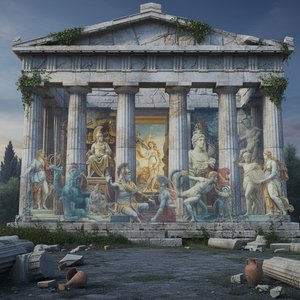
Echoes of Olympus: Mythological Narratives in Western Art Through the Ages
Explore the captivating history of mythological narratives in Western art! From ancient Greece to modern masterpieces, discover iconic artworks & symbolism. Expert analysis and high-quality reproductions at OriginalUniqueArt.

Pietro da Cortona: Baroque Grandeur & the Synthesis of Roman Painting
Explore the life & masterpieces of Pietro da Cortona, a defining figure of the Italian Baroque. Discover his stunning frescoes at Palazzo Barberini and lasting influence on Roman art history. Learn more with OriginalUniqueArt.

Barroco Brasileiro: Opulência e Emoção para Interiores Contemporâneos
Descubra como o Barroco brasileiro pode transformar seus interiores! Explore a história, elementos-chave e dicas para integrar este estilo luxuoso e cheio de emoção em sua casa.

The Dramatic Flourish: Exploring the Baroque Movement's Enduring Legacy in Art History
Explore the dramatic world of Baroque art! Discover iconic artists like Caravaggio & Rubens, defining techniques, and its lasting impact on art history. Expert insights for collectors & enthusiasts at OriginalUniqueArt.