

 Visualizar em escala
 Enviar
 Compartilhar
 Ver detalhes
 Guia de Obras do Aluno

 Baixar imagem
 Semelhantes
 Raio X
 Apresentação de slides
 Estatísticas
Anjo carregador de chama
 Acrílico sobre tela
- Arte de Parede
- Renaissance Revival
 1466
1466 139.0 x 42.0 cm
 Castello Sforzesco
 Ver mais
Giclée / Impressão de Arte
Impressão giclée ou em tela de qualidade de museu, com produção rápida e opções flexíveis de acabamento. ( Encomendar reprodução pintada à mão Ver Imagem Digital)




P118B €10

P118H €10

P118W €10

P438Z €10

P508JH €12

P508YH €12

P805H €10

P805Z €10

P919BZ €10

P919G €10

P919XJ €10

P959ZH €10

P968JZ €12

W106C €8

W218G €10

W218JH €8

W218Y €10

W307PJ €10

W316G €10

W316PJ €8

W316Y €10

W398PJ €8

W4111J €10

W500HY €15

W500JH €15

W692G €12

W849H €8

W940BG €15

W953PJ €8




Escolha entre os nossos tamanhos pré-definidos que respeitam as proporções originais da obra de arte.

Você pode inserir suas próprias dimensões para se ajustar a uma moldura ou espaço específico. Se o tamanho selecionado não corresponder às proporções da imagem original, iremos recortar a obra de arte ou estender a imagem com uma borda espelhada ou preenchimento sólido. Um mockup digital será enviado para sua aprovação antes do início da produção.
Por favor, observe que a visualização na tela não reflete o recorte ou a extensão real. Apenas o mockup mostrará com precisão a composição final.
Embora tamanhos personalizados estejam disponíveis, recomendamos selecionar uma dimensão da lista predefinida para preservar as proporções originais.
Entrega mundial () em 2 semanas, em vez das 4/5 semanas padrão. (13 Outubro)

Envio expresso gratuito para todo o mundo

Tela de Linho Premium

Seguro de transporte total

Garantia de Reembolso de Impostos Alfandegários

Garantia de Fidelidade de Cor

Política de Devolução em 100 Dias (Apenas para Defeitos)

Garantia de reembolso de 100%

Desconto para múltiplas unidades
 A opção de vidro está disponível apenas para tamanhos inferiores a 110 cm

Anjo carregador de chama
Giclée / Impressão de Arte
Dimensões da Reprodução
-


Preço Total
€ 69
A Alma da Arte Renascentista Italiana: Uma Jornada pela Luz e Sombra de Francesco Solari
O século XV e XVI testemunharam uma verdadeira explosão criativa na Itália, período marcado por uma revitalização da cultura clássica após séculos de obscuridade medieval. Nesse contexto artístico, escultores como Francesco Solari emergiram como figuras emblemáticas, capazes de capturar a essência do espírito humano em obras que transcendem o tempo.
Solari, um artista profundamente influenciado pelo pensamento humanístico e pela busca pela beleza idealizada, dedicou sua carreira à criação de imagens religiosas e profanas que celebram a dignidade da vida humana e a força da natureza. Sua abordagem técnica inovadora – caracterizada pelo uso meticuloso do ácido sulfúrico para obter efeitos de textura e luz – permitiu que ele alcançasse resultados impressionantes, como podemos observar na obra “Torchbearing angel”, uma escultura monumental que hoje encontra seu lugar permanente no Museu Nacional Romano.
- Estilo: Solari pertence à escola florentina, um movimento artístico que valoriza a proporção matemática e a busca pela perfeição estética. Sua obra reflete os princípios da perspectiva linear e do estudo anatômico, elementos essenciais para representar o corpo humano com precisão e expressividade.
- Técnica: O escultor dominava diversas técnicas de trabalho em pedra marmorena, incluindo o uso do torno antigo e da escultura a quente. Sua habilidade técnica era acompanhada por um profundo conhecimento dos materiais utilizados e pela capacidade de explorar suas propriedades físicas para criar efeitos visuais únicos.
- Contexto Histórico: A criação de “Torchbearing angel” ocorreu durante uma época de intensa transformação política e religiosa na Itália, marcada pelo retorno ao cristianismo após o período da Reforma Protestante. Solari buscava transmitir valores religiosos importantes como fé, esperança e amor divino através da linguagem escultórica.
Mais do que apenas objetos de arte, as esculturas solarianas são testemunhas da cultura e das ideias da época em que foram produzidas. Sua obra convida o espectador a contemplar a beleza sublime da criação divina e a refletir sobre questões existenciais fundamentais. O resultado é uma experiência estética profunda e emocionante que permanece relevante até os dias de hoje.
A escultura “Torchbearing angel”, com suas dimensões impressionantes (139 x 42 cm) e sua composição cuidadosamente elaborada, representa um marco na história da arte italiana. Sua luz suave e seus detalhes minuciosos capturam a atenção do observador e evocam imagens de serenidade e espiritualidade.
Fonte: Museu Nacional RomanoPerguntas e Respostas
Sobre o que trata "Anjo carregador de chama" e qual é a sua atmosfera?
"Anjo carregador de chama" de Francesco Solari combina religious symbolism, angel figure, medieval art, italian sculpture, ca' granda baptistry, florence cathedral, torchbearer com uma atmosfera Sereno.
Como "Anjo carregador de chama" se encaixa nos temas e no estilo de Francesco Solari?
"Anjo carregador de chama" compartilha com as outras obras de Francesco Solari o seu estilo Renaissance Revival e os temas recorrentes: symbolic christian imagery, florence cathedral influence, medieval tradition respect, monumental sculpture style, artist's spiritual vision.
Posso usar realidade aumentada para ver "Anjo carregador de chama" de Francesco Solari no meu ambiente?
"Anjo carregador de chama" possui uma prévia em realidade aumentada: a página de Visualização em RA da obra mostra como ela ficaria no seu próprio espaço através de um dispositivo compatível.
Em que período da carreira de Francesco Solari se situa "Anjo carregador de chama"?
"Anjo carregador de chama" pertence ao Late Renaissance da carreira de Francesco Solari. Esta classificação relaciona a obra ao desenvolvimento do artista.
Quão intensas são as cores de "Anjo carregador de chama"?
A cor de "Anjo carregador de chama" possui Suave de saturação e Monocromático de intensidade.
Quais temas aparecem em "Anjo carregador de chama" de Francesco Solari?
"Anjo carregador de chama" de Francesco Solari retrata: religious symbolism, angel figure, medieval art, italian sculpture, ca' granda baptistry, florence cathedral, torchbearer.
"Anjo carregador de chama" de Francesco Solari é uma composição em formato retrato, paisagem ou quadrada?
"Anjo carregador de chama" de Francesco Solari possui um formato Alto. O formato descreve as proporções da composição.
Onde e para qual finalidade é recomendado "Anjo carregador de chama"?
"Anjo carregador de chama" é sugerida para Ponto de cor, e o espaço recomendado é um(a) Sala de Estar.
Biografia do Artista
The Shadowed Canvas: Exploring the Life and Art of Jean-Baptiste Mongeau
Jean-Baptiste Mongeau, a name perhaps less familiar than his contemporaries, nevertheless stands as a pivotal figure in the late 18th and early 19th French art scene. Born in Lyon in 1785 – a city renowned for its silk weaving and burgeoning artistic community – Mongeau’s life was inextricably linked to the revolutionary fervor sweeping through France. While his contemporaries, like David and Géricault, grappled with grand historical narratives, Mongeau found his voice in the intimate portrayal of everyday life, particularly within the confines of domestic interiors and the quiet contemplation of rural landscapes. His work, characterized by a subtle yet profound use of light and shadow, offers a poignant glimpse into a world on the cusp of dramatic change. Mongeau’s early artistic training was somewhat unconventional. He apprenticed not with a formal academy, but under his father, a skilled cabinet maker and miniature painter. This early exposure to meticulous craftsmanship instilled in him an appreciation for detail and a deep understanding of materials – qualities that would later inform his distinctive style. However, it was the vibrant salon culture of Lyon, filled with discussions of Neoclassicism, Romanticism, and the burgeoning ideals of the Enlightenment, that truly ignited his artistic passion. He initially experimented with historical subjects, producing several small-scale portraits reflecting the aristocratic clientele of the region, but quickly found himself drawn to a more personal and observational approach. A defining moment in Mongeau’s career came during the tumultuous years of the French Revolution and its immediate aftermath. Witnessing firsthand the social upheaval and the subsequent rise of Napoleon, he began to incorporate themes of loss, memory, and the fragility of human existence into his work. This shift is particularly evident in his series of “Intérieurs” – interior scenes depicting ordinary families engaged in their daily routines. These paintings are not grand historical statements; rather, they offer a quiet meditation on the rhythms of domestic life, capturing fleeting moments of tenderness, sorrow, and contemplation. The use of muted colors, often dominated by browns, grays, and ochres, creates an atmosphere of melancholy and introspection – a deliberate departure from the brighter palettes favored by many of his contemporaries. Mongeau’s artistic influences were diverse and complex. While he admired the technical mastery of Jacques-Louis David, he rejected his overtly heroic style, preferring to explore more subtle emotional resonances. He was also deeply affected by the Romantic movement, particularly the emphasis on subjective experience and the power of nature – though he tempered this influence with a distinctly French sensibility. The works of Jean-François Millet, known for his depictions of rural life, served as an important model, demonstrating the potential to find beauty and dignity in the lives of ordinary people. Furthermore, the meticulous detail evident in his work echoes the traditions of Flemish painting, particularly the genre of “tronies” – intimate portraits capturing a single moment of emotion. Despite facing periods of financial hardship and struggling for recognition during his lifetime, Mongeau’s influence on subsequent generations of French artists is undeniable. His emphasis on realism, psychological depth, and the exploration of everyday subjects paved the way for later Impressionist painters like Renoir and Monet. His “Intérieurs” series, in particular, anticipated the focus on domestic interiors that would become a hallmark of 19th-century art. Mongeau’s work was exhibited sporadically throughout his career, primarily at smaller salons and private collections. He died in Lyon in 1847, leaving behind a modest but significant body of paintings – a testament to the quiet power of observation and the enduring beauty of the human experience.Key Works
- La Famille au Repas (1815) - A quintessential “Intérieur” depicting a family gathered around a simple meal, capturing a moment of shared intimacy.
- Le Jardinier Solitaire (1820) – A study in solitude and the beauty of the natural world, showcasing Mongeau’s ability to evoke atmosphere through subtle color variations.
- Portrait de Madame Dubois (1830) - A remarkably intimate portrait capturing a moment of quiet contemplation by a woman reading.
- Le Choeur du Village (1835) – A depiction of villagers gathered for a religious service, highlighting the importance of community and faith in rural France.
Legacy and Historical Context
Mongeau’s art is inextricably linked to the broader historical context of post-revolutionary France. The period following the Napoleonic Wars was marked by social unrest, economic hardship, and a growing sense of disillusionment with grand political narratives. Mongeau's focus on the lives of ordinary people reflected this shift in sensibility – a move away from heroic ideals towards a more grounded and humanistic perspective. His work can be seen as a subtle critique of the excesses of the aristocracy and a celebration of the resilience and dignity of the common man. Furthermore, his exploration of memory and loss resonated with the collective trauma experienced by France following decades of war and upheaval. While not widely celebrated during his lifetime, Mongeau’s quiet yet profound contributions to French art continue to be recognized today as a vital expression of the era's complex social and emotional landscape.
Francesco Solari
1469 , Italy
Informações Rápidas
- Date Of Death: 1469
- Place Of Birth: Milan, Italy
- Notable Artworks: ['Various works featured in The EY Exhibition']
- Artistic Movement Or Style: World Goes Pop
Artigos Relacionados

Esculturas em Bronze Icônicas: 10 Obras que Revolucionaram a Arte | OriginalUniqueArt
Descubra as 10 esculturas em bronze mais icônicas da história! Explore a arte de Rodin, Michelangelo e outros mestres. Encontre reproduções de alta qualidade para sua casa em OriginalUniqueArt.com.

As 10 Obras em Bronze Mais Icônicas que Transformaram a História da Arte | OriginalUniqueArt
Descubra as 10 esculturas em bronze mais influentes da história! Explore a arte de Rodin, Michelangelo e outros mestres. Reproduções de alta qualidade para decorar sua casa com elegância. OriginalUniqueArt.

The Enduring Form: Sculpture Across History, Technique & Emotional Resonance
Explore the rich history of sculpture with OriginalUniqueArt. Discover key techniques, influential artists & investment potential for discerning collectors. Expert insights into valuing and collecting timeless masterpieces.

The Enduring Form: Exploring Themes & Techniques in Sculpture Across Historical Periods
Explore the rich history of sculpture from ancient masterpieces to contemporary innovations. Discover key techniques, influential artists & investment potential for discerning art collectors.
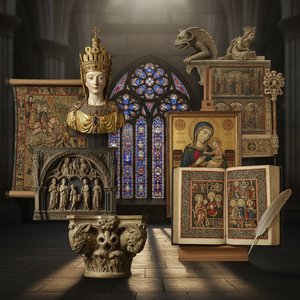
High Medieval Art: 10 Masterpieces That Shaped an Era | OriginalUniqueArt
Journey through High Medieval Art! Explore 10 iconic masterpieces – from Giotto's frescoes to stunning Gothic cathedrals. Discover the stories behind these timeless paintings, sculptures & illuminated manuscripts. Find museum-quality art reproductions at OriginalUniqueArt.com.


