Cubism · 1924
Three Characters (Fernand Léger, 1924)
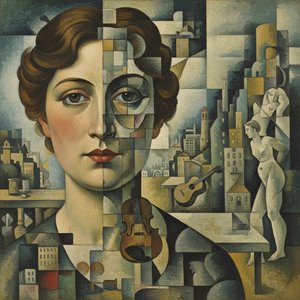
Fernand Léger (1881–1955) criou Three Characters. Data de 1924. Pertence ao movimento Cubism. É feito em Acrylic On Canvas.
- 1924
- Acrylic On Canvas

 Visualizar na parede

 Pintura a Óleo Feita à Mão
 Compartilhar
 Compartilhar
 Guia


 Baixar imagem
 Semelhantes
 Raio X
 Ver diaporama
 Perguntas e Respostas

 Estatísticas
Three Characters: o essencial
- Título
- Three Characters
- Artista
- Fernand Léger (1881–1955)
- Artista nascido em
- Argentan, França
- Data
- 1924
- Técnica
- Acrylic On Canvas
- Movimento
- Cubism
- Período
- Modern
- Tema
- geometric figures, modern composition, cubist style art, human interaction, bold color palette, everyday objects
O que Three Characters retrata?
A Symphony of Form and Feeling: Exploring Fernand Léger’s “Three Characters”
Fernand Léger's 1924 painting, *“Three Characters,”* is a pivotal work exemplifying his distinctive contribution to Cubism – a style he uniquely evolved into what became known as ‘Tubism.’ More than just an exercise in geometric abstraction, this piece offers a compelling glimpse into the artist’s vision of modern life and human connection amidst industrialization.Deconstructing the Composition: Style & Technique
Léger masterfully employs simplified, cylindrical forms to depict three figures positioned closely together. This isn't about realistic representation; it’s a deliberate fragmentation and reassembly of reality through a Cubist lens. The painting eschews traditional perspective, presenting multiple viewpoints simultaneously within a flattened picture plane. The technique is characterized by smooth brushstrokes and carefully blended colors, creating a polished surface despite the angularity of the forms. This creates a sense of solidity and monumentality, grounding the abstracted figures.A Palette of Modernity: Color & Symbolism
While rooted in Cubism’s analytical approach, *“Three Characters”* distinguishes itself through its vibrant color palette. Léger moves beyond the muted tones often associated with early Cubism, embracing bold hues that inject energy and warmth into the composition. The inclusion of symbolic objects – a baseball bat and a book – adds layers of meaning. These aren’t merely decorative elements; they represent facets of everyday life, leisure, and intellectual pursuit, hinting at Léger's interest in portraying the modern individual within their environment. The figures themselves are not portraits but archetypes, representing universal aspects of human experience.Historical Context: Cubism & Beyond
Created in the aftermath of World War I, *“Three Characters”* reflects a broader cultural shift towards embracing modernity and industrialization. Léger, alongside Picasso and Braque, was at the forefront of the Cubist revolution, challenging traditional artistic conventions. However, he diverged from his peers by incorporating elements of machine aesthetics and popular culture into his work. His style evolved toward “Crystal Cubism,” emphasizing large, overlapping geometric planes and a strong focus on surface activity. This painting stands as a testament to that evolution, bridging the gap between abstract experimentation and representational form.Emotional Resonance & Lasting Influence
*“Three Characters”* evokes a sense of quiet contemplation and interconnectedness. Despite their abstracted forms, the figures possess a palpable presence, suggesting a shared experience or unspoken dialogue. The painting’s enduring appeal lies in its ability to resonate with viewers on an emotional level, prompting reflection on themes of identity, community, and the human condition. Léger's work profoundly influenced subsequent art movements, including Futurism, Abstract Art, and Surrealism, solidifying his legacy as a visionary artist who redefined the possibilities of painting in the 20th century.Collecting & Interior Design Considerations
- Style Compatibility: This artwork complements modern, minimalist, or Art Deco interiors. Its geometric forms and bold colors create a striking focal point.
- Color Palette Integration: The painting’s color scheme can be echoed in accent furniture, textiles, or wall colors to create a cohesive design aesthetic.
- Placement Suggestions: Ideal for living rooms, dining areas, or home offices. Consider pairing it with contemporary sculptures or abstract artwork.
- Investment Potential: As a seminal work by a highly influential artist, a high-quality reproduction of *“Three Characters”* represents not only an aesthetic addition but also a potential investment in art history.
Three Characters em alta resolução

Fernand Léger, Three Characters (1924). Domínio público.
Um especialista digital verifica as cores em relação à pintura original e retoca o ficheiro, respeitando fielmente a pincelada do artista.
Comprar a imagem em alta resoluçãoPerguntas sobre Three Characters
Qual é o tamanho de impressão recomendado para "Three Characters", de Fernand Léger?
O tamanho de impressão recomendado para "Three Characters", de Fernand Léger é Large.
Qual é a data e o estilo de "Three Characters", de Fernand Léger?
"Three Characters" foi realizada em 1924, dentro do movimento Cubism.
As cores de "Three Characters" parecem intensas ou suaves?
As cores em "Three Characters", de Fernand Léger possuem uma intensidade Monochromatic.
Por que o status de direitos autorais de "Three Characters" é como é?
"Three Characters", de Fernand Léger está em em domínio público — seus direitos autorais expiraram. O período de direitos autorais conta a partir do falecimento do artista, ocorrido em 1955.
Qual é a tonalidade predominante que percorre "Three Characters", de Fernand Léger?
"Three Characters" inclina-se para um tom Ochre to Sepia.
Onde posso baixar "Three Characters", de Fernand Léger?
"Three Characters", de Fernand Léger pode ser descarregado na página de Download da obra, como download de imagem digital em alta resolução.
Como "Three Characters" se posiciona entre os temas recorrentes de Fernand Léger?
Os temas recorrentes de Fernand Léger incluem exploration of flat planes, expansion of color usage, cubism's geometric forms, early 20th-century modernism, urban life & modernity, human connection & interaction; "Three Characters" foca em geometric figures, modern composition, cubist style art, human interaction, bold color palette, everyday objects, abstract forms.
Posso examinar "Three Characters" com mais detalhes?
A página Raio X de "Three Characters", de Fernand Léger é um visualizador interativo que permite percorrer onze camadas ópticas da imagem da obra, incluindo uma visualização em estilo raio-X.
Qual é o lugar de "Three Characters" na história da arte?
Historicamente, "Three Characters" é uma obra Cubism da mais ampla era Modern.
Sobre o artista, Fernand Léger

1881–1955, França
Fernand Léger
A Vida de Fernand Léger A história de Fernand Léger começa na aldeia de Argentan, situada na região de Orne, na Baixa Normandia. Ele chegou a este mundo em 4 de fevereiro de 1881, como filho único. Seus primeiros anos foram moldados pela quietude do campo francês e pela presença de sua mãe, Marie-Adèle Daunou. Seu pai, um homem que ganhava a vida como criador de gado, faleceu quando Fernand ainda era apenas um menino, deixando a criança para ser criada pela mãe em um lar marcado pela piedade e por uma certa natureza humilde.
Também de Fernand Léger
 A Cidade1919
 O Mecânico1920
 Três Mulheres1921
 Nudes na Floresta1910

Ensaios sobre Three Characters
 Fernand Léger: As 25 Obras-Primas que Definem um Ícone da Arte Moderna | OriginalUniqueArtDescubra as 25 obras-primas de Fernand Léger, pioneiro do tubismo e da arte moderna. Explore a história, cores vibrantes e técnicas inovado…
 Deconstructing Reality: Cubism's Revolutionary Impact on 20th-Century ArtExplore the revolutionary world of Cubism with OriginalUniqueArt. Discover Picasso & Braque's groundbreaking techniques, its philosophical …
 Top 10 Obras de Arte com Vibração Industrial | OriginalUniqueArt.comDescubra 10 obras de arte icônicas que capturam a atmosfera industrial! Explore Monet, Manet e outros mestres do Impressionismo e Realismo.…