
 Visualizar em escala
 Enviar
 Compartilhar
 Ver detalhes
 Guia de Obras do Aluno

 Baixar imagem
 Semelhantes
 Raio X
 Apresentação de slides
 Estatísticas
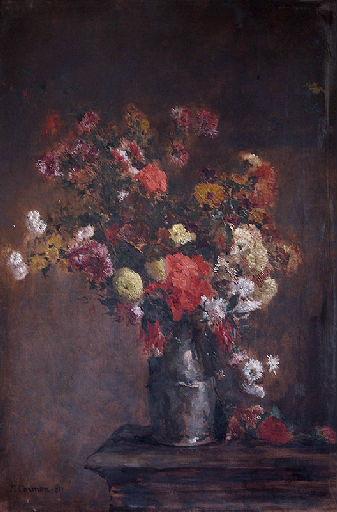
Fleurs

 Ver mais
Reprodução em Óleo Feita à Mão
Óleo sobre tela pintado à mão no tamanho e moldura de sua escolha, feito sob encomenda pelos nossos artistas. ( Alternar para Impressão Ver Imagem Digital)




































Escolha entre os nossos tamanhos pré-definidos que respeitam as proporções originais da obra de arte.

Pode inserir as suas próprias dimensões para se adequar a uma moldura ou espaço específico. Se o tamanho selecionado não corresponder às proporções da imagem original, iremos cortar a obra de arte ou estender a pintura com elementos adicionais pintados à mão. Um esboço digital será enviado para sua aprovação antes do início da produção.
Tenha em atenção que a pré-visualização no ecrã não reflete o corte ou extensão real. Apenas o esboço mostrará com precisão a composição final.
Embora tamanhos personalizados estejam disponíveis, recomendamos selecionar uma dimensão da lista predefinida para preservar as proporções originais.
Após o pedido, a equipa OriginalUniqueArt.com enviará um e-mail ao cliente para solicitar instruções e fornecer uma prévia do esboço.
Entrega mundial () em 3 a 4 semanas, em vez das 5 semanas padrão. (26 Setembro). Sem comprometer a qualidade.

Envio expresso gratuito para todo o mundo

Tela de Linho Premium

Seguro de transporte total

Garantia de Reembolso de Impostos Alfandegários

Garantia de Fidelidade de Cor

Política de Devolução em 100 Dias (Apenas para Defeitos)

Garantia de reembolso de 100%

Desconto para múltiplas unidades
 A opção de vidro está disponível apenas para tamanhos inferiores a 110 cm

Fleurs
Técnica de Reprodução
Dimensões da Reprodução
-


Preço Total
$ 300
Biografia do Artista
Fernand Cormon: A Painter of Myth, History, and the Human Spirit
Fernand Cormon (1845-1924) wasn’t merely a painter; he was a chronicler of humanity's journey through time, a master of dramatic storytelling rendered in rich color and evocative detail. Born into an artistic milieu – his father, Eugène Cormon, was a celebrated playwright, and his mother, Charlotte Furais, a renowned actress – Fernand inherited a deep appreciation for performance and narrative. This theatrical sensibility profoundly shaped his approach to art, imbuing his historical scenes with a palpable sense of drama and immediacy. His early training at the studios of Alexandre Cabanel, Eugène Fromentin, and Jean-François Portaels provided him with a solid foundation in academic technique, but it was Cormon’s own distinctive vision that ultimately defined his legacy.
Cormon's artistic trajectory began with a fascination for the sensational. Early works like “Murder in the Seraglio” (1868) and “The Death of Ravana” (1875), depicting scenes of violence and bloodshed, garnered attention – some critical acclaim, but also controversy for their graphic realism. These pieces established his reputation as an artist unafraid to confront difficult subjects, a characteristic that would continue to inform his work throughout his career. However, Cormon’s artistic interests soon broadened beyond mere spectacle. He demonstrated a keen interest in mythology and the grand narratives of history, seeking to capture not just events but also the emotions and human dramas inherent within them.
The Salon Years and Artistic Development
Cormon's rise to prominence was inextricably linked to the prestigious Paris Salon, the dominant art exhibition of its time. He consistently exhibited at the Salon from 1863 onwards, gaining recognition for his powerful compositions and masterful brushwork. The Salon’s emphasis on historical painting provided Cormon with a vital platform to showcase his abilities and establish himself as one of France's leading historical artists. His early successes – medals in 1870 and 1873 – solidified his position within the artistic establishment.
A pivotal moment in Cormon’s career arrived with the commission for “Cain Fleeing Before Jehovah’s Curse” (1880), a monumental work that cemented his reputation for dramatic intensity. This painting, depicting the biblical story of Cain and Abel, demonstrated Cormon's ability to convey profound emotion through gesture, color, and composition. The sheer scale and emotional power of “Cain” established him as a major force in French art. He continued to explore themes of mythology and history, producing iconic works such as "A Forge" (1894) and "Anticipation," each imbued with his characteristic dramatic flair.
Beyond the Salon: Portraits and Institutional Commissions
While Cormon remained a committed participant in the Salon system, he also expanded his artistic practice beyond traditional historical painting. He became increasingly sought after as a portraitist, capturing the likenesses of prominent figures from Parisian society. His portraits were notable for their psychological depth and ability to reveal the inner lives of his subjects. He was particularly known for his evocative depictions of women.
A significant commission during this period came from the Musée de l'Homme (now part of the Natural History Museum), where he created a series of panels illustrating key stages of human development – birth, death, marriage, war, and peace. These grisaille murals, executed with remarkable skill and detail, offered a visual narrative of humanity’s journey through time and demonstrated Cormon’s versatility as an artist. His work on the museum's prehistoric collections, particularly his depictions of Stone Age life, showcased his commitment to exploring themes of human origins and evolution.
Legacy and Influence
Fernand Cormon’s career spanned several decades, witnessing significant shifts in the art world. Despite experiencing a period of relative obscurity after World War I, he remained a respected figure within the artistic community. His influence can be seen in the work of numerous artists who studied at his atelier, including Henri de Toulouse-Lautrec, Louis Anquetin, and Vincent van Gogh (who visited Cormon’s studio in 1888). Cormon's emphasis on dramatic storytelling, expressive brushwork, and a deep engagement with historical and mythological themes left an enduring mark on French painting.
His untimely death in 1924 – struck down by a taxi outside his studio – cut short a remarkable career. Today, Cormon’s paintings are housed in major museums across France and beyond, testament to the lasting power of his artistic vision. He remains a compelling figure in French art history, celebrated for his ability to capture the drama, emotion, and enduring spirit of humanity.

fernand-anne piestre dit cormon
1845 - 1924
Informações Rápidas
- Artistic Movement Or Style: Historical painting
- Artists Or Movements Influenced By This Artist:
- Van Gogh
- Lautrec
- Artists Who Influenced This Artist:
- Cabanel
- Fromentin
- Portaels
- Date Of Birth: 1845
- Date Of Death: 1924
- Full Name: Fernand-Anne Piestre dit Cormon
- Nationality: French
- Notable Artworks:
- Murder in Sereglio
- Death of Ravana
- Cain fleeing Jehovah
- Place Of Birth: Paris, France
Artigos Relacionados

Blossoms of Time: A Historical & Aesthetic Exploration of Floral Painting Across Cultures
Explore the rich history of floral painting! Discover symbolism, techniques & masterpieces from Van Huysum to O'Keeffe. Expert insights for art lovers & collectors at OriginalUniqueArt.
Fernand Léger: As 25 Obras-Primas que Definem um Ícone da Arte Moderna | OriginalUniqueArt
Descubra as 25 obras-primas de Fernand Léger, pioneiro do tubismo e da arte moderna. Explore a história, cores vibrantes e técnicas inovadoras por trás de seus quadros icônicos. Encontre reproduções de alta qualidade para decorar sua casa com estilo em OriginalUniqueArt.com.
Blossoming Symbolism: A Historical Journey Through Flowers in Western Painting
Explore the rich history of flower symbolism in Western painting! Discover how artists from the Renaissance to Modernism used blossoms to convey meaning, emotion & beauty. Learn about iconic artworks and movements.
The Timeless Charm of Oil on Board: Reimagining Texture and Light through the Impressionist Lens
Discover the profound intimacy of oil on panel. Explore how Impressionist masters used rigid supports to capture light, texture, and impasto depth through exquisite, handmade oil reproductions for discerning collectors.
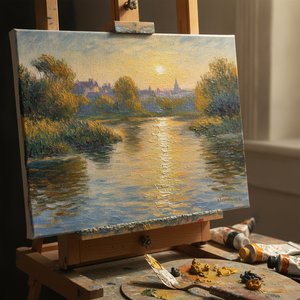
The Soul of Impressionism: Why Oil on Canvas Captures Eternal Light and Timeless Emotion
Discover the enchanting alchemy of Impressionism. Explore how the mastery of oil on canvas, through glazing and impasto, captures eternal light and emotion. Perfect for lovers of Monet and Van Gogh seeking the profound depth of hand-painted fine art.