

 Visualizar em escala
 Enviar
 Compartilhar
 Ver detalhes
 Guia de Obras do Aluno

 Baixar imagem
 Semelhantes
 Raio X
 Apresentação de slides
 Estatísticas
Reclining Nude


 Ver mais
Giclée / Impressão de Arte
Impressão giclée ou em tela de qualidade de museu, com produção rápida e opções flexíveis de acabamento. ( Encomendar reprodução pintada à mão Ver Imagem Digital)




P118B €10

P118H €10

P118W €10

P438Z €10

P508JH €12

P508YH €12

P805H €10

P805Z €10

P919BZ €10

P919G €10

P919XJ €10

P959ZH €10

P968JZ €12

W106C €8

W218G €10

W218JH €8

W218Y €10

W307PJ €10

W316G €10

W316PJ €8

W316Y €10

W398PJ €8

W4111J €10

W500HY €15

W500JH €15

W692G €12

W849H €8

W940BG €15

W953PJ €8




Escolha entre os nossos tamanhos pré-definidos que respeitam as proporções originais da obra de arte.

Digite a largura e a altura de que necessita, para se ajustar à sua moldura ou à sua parede. Uma impressão só pode ser cortada, nunca ampliada além da imagem original, pelo que um tamanho com uma proporção diferente perderá parte da imagem. Enviamos-lhe uma maquete digital para aprovação antes de imprimirmos qualquer coisa. A imagem apresentada nesta página não mostra o corte real — apenas a maquete o faz.
Entrega mundial () em 2 semanas, em vez das 4/5 semanas padrão. (22 Outubro)

Envio expresso gratuito para todo o mundo

Tela de Linho Premium

Seguro de transporte total

Garantia de Reembolso de Impostos Alfandegários

Garantia de Fidelidade de Cor

Política de Devolução em 100 Dias (Apenas para Defeitos)

Garantia de reembolso de 100%

Desconto para múltiplas unidades
 A opção de vidro está disponível apenas para tamanhos inferiores a 110 cm

Reclining Nude
Giclée / Impressão de Arte
Dimensões da Reprodução
-


Preço Total
€ 70
Reclining Nude by Armand Guillaumin: A Dreamscape of Form and Light
Armand Guillaumin’s “Reclining Nude,” painted in 1876, stands as a cornerstone of Impressionist landscape painting alongside its celebrated companion works. Exhibited at the third Impressionist exhibition in Paris that same year, this artwork captures not merely an image but an atmosphere—a palpable stillness imbued with subtle hues and diffused light characteristic of Guillaumin’s distinctive style. Unlike many contemporary depictions of the nude figure, which often prioritized anatomical accuracy, Guillaumin eschewed meticulous detail, opting instead for a softer, more ethereal representation that aligns perfectly with the movement's core tenets.- Subject Matter: The painting portrays a woman reclining on her side in bed, draped in a white sheet—a motif borrowed from Renaissance art and specifically referencing Titian’s Venus of Urbino. This deliberate allusion elevates the scene beyond mere physicality, transforming it into a meditation on beauty and repose.
- Style & Technique: Guillaumin employed loose brushstrokes and vibrant color palettes—primarily blues, greens, and yellows—to convey the impression of natural light filtering through the window. The artist’s technique prioritizes capturing fleeting moments of visual sensation rather than striving for photographic realism.
Symbolism & Emotional Resonance
The inclusion of a flower in the woman's hand serves as a potent symbol—likely representing purity and innocence, mirroring themes prevalent throughout Impressionist art. Furthermore, the placement of a chair near the left edge of the canvas introduces an element of perspective and depth, subtly guiding the viewer’s gaze into the composition. The overall mood conveyed by “Reclining Nude” is one of serene contemplation—a celebration of beauty and tranquility that reflects Guillaumin's profound appreciation for the natural world.- Historical Context: Painted during a period of artistic experimentation and intellectual ferment, “Reclining Nude” embodies the spirit of Impressionism’s challenge to academic conventions. It exemplifies the movement’s commitment to portraying subjective experience—the artist's perception of reality—rather than objective representation.
- Influence & Legacy: Guillaumin’s work profoundly impacted subsequent generations of artists, establishing him as a pivotal figure in the development of Impressionist landscape painting and solidifying his place within art history.
A Masterpiece Revisited
Today, reproductions of “Reclining Nude” grace museums and private collections worldwide—a testament to its enduring appeal and artistic merit. Its delicate color harmonies and evocative brushstrokes continue to inspire artists and captivate viewers alike, ensuring that Guillaumin’s vision persists as a beacon of Impressionist beauty for years to come. The painting's quiet grandeur invites contemplation and offers a glimpse into the artist’s masterful grasp of light and form—a timeless achievement in artistic expression.Perguntas e Respostas
De que forma o estilo de "Reclining Nude" se relaciona com a época de seu criador?
"Reclining Nude" de Ferdinand Guillaumin insere-se no movimento Impressionist Landscape Painting, dentro da era Século XIX de seu criador.
Que saturação e intensidade apresenta "Reclining Nude" de Ferdinand Guillaumin?
A cor de "Reclining Nude" possui Subtle Color de saturação e Balanced de intensidade.
Onde posso encontrar obras de arte semelhantes a "Reclining Nude" de Ferdinand Guillaumin?
Obras semelhantes a "Reclining Nude" estão listadas na página de Semelhantes da obra.
Biografia do Artista
early life and career
Ferdinand Guillaumin, born Jean Baptiste Armand Guillaumin on February 16, 1841, in Paris, France, embarked upon his artistic journey amidst the burgeoning fervor of Impressionism – a movement that redefined art by prioritizing fleeting impressions of light and color over meticulous detail.
His formative years were marked by an unwavering dedication to mastering drawing and painting techniques. Though biographical information remains somewhat sparse, Guillaumin’s early training instilled in him a profound appreciation for observation and capturing the essence of natural landscapes – qualities that would become hallmarks of his distinctive style.
contribution to impressionism
Guillaumin's involvement with Impressionism extended beyond mere participation; he actively championed its principles, aligning himself with luminaries like Claude Monet and Camille Pissarro. This collaboration fostered a shared vision for artistic expression, propelling them to exhibit their works simultaneously at influential salons.
His canvases frequently depicted serene landscapes bathed in ethereal light—a stylistic choice perfectly attuned to the movement’s core ethos. Guillaumin skillfully employed vibrant hues and loose brushstrokes, eschewing academic conventions in favor of spontaneity and immediacy. These techniques underscored Impressionism's commitment to portraying the sensory experience of a particular moment.
notable works and associations
A testament to Guillaumin’s artistic prowess resides within the collections of prestigious institutions such as Mount Holyoke College Art Museum, where reproductions of his paintings offer viewers an opportunity to immerse themselves in his evocative vision. Notably, he maintained close ties with Claude Monet, whose influence is palpable in Guillaumin's compositional choices and palette.
Furthermore, Guillaumin’s artistic sensibilities drew inspiration from Symbolism—a movement that explored the realm of dreams and subconsciousness through symbolic imagery and emotive color palettes. This fusion of Impressionistic technique and Symbolic aesthetics distinguishes his oeuvre and elevates it beyond mere representation to convey deeper psychological resonances.
legacy and remembrance
Ferdinand Guillaumin passed away on June 26, 1927, leaving behind a legacy as one of the foremost practitioners of Impressionism. His paintings continue to captivate audiences worldwide, residing in museums across North America and Europe—a testament to his enduring artistic significance.
Explore more of Guillaumin’s captivating landscapes and delve into the intricacies of Impressionist art on OriginalUniqueArt: ferdinand guillaumin | 3 artworks impressionism art movement

Ferdinand Guillaumin
1841 - 1927 , França
Informações Rápidas
- Artistic Movement Or Style: Impressionismo
- Artists Or Movements Influenced By This Artist:
- Cubismo
- Realismo
- Artists Who Influenced This Artist:
- Vincent van Gogh
- Claude Monet
- Paul Cézanne
- Date Of Birth: February 16, 1841
- Date Of Death: June 26, 1927
- Full Name: Jean Baptiste Armand Guillaumin
- Nationality: Francês
- Notable Artworks:
- Garden in Janville in June
- River Scene
- View of Puy de Dôme
- Place Of Birth: Paris, France
Artigos Relacionados

The Enduring Allure of the Nude: A Historical & Artistic Exploration of the Human Form
Explore the captivating history of nude art! Discover iconic paintings & artists from classical to modern eras. Uncover symbolism, techniques & find museum-quality reproductions at OriginalUniqueArt.

Os 10 Ícones do Impressionismo para Inspirar sua Decoração | OriginalUniqueArt
Descubra os 10 quadros impressionistas mais icônicos de Monet, Renoir e Degas! Explore a história, cores vibrantes e técnicas revolucionárias do Impressionismo. Encontre reproduções de arte exclusivas para inspirar sua decoração em OriginalUniqueArt.com.

Além da Luz e Cor: Impressionismo vs. Pós-Impressionismo para o Colecionador Exigente
Descubra as nuances entre Impressionismo e Pós-Impressionismo! Guia completo para colecionadores exigentes, com artistas, história e dicas de investimento. Explore o legado da arte moderna.
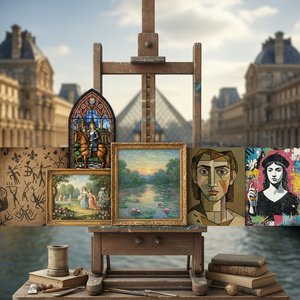
The Enduring Legacy of French Art: Movements, Masters & Cultural Impact
Explore the rich history of French art, from the Salon to Impressionism & beyond. Discover iconic masters, key movements, and expert guidance for collecting timeless masterpieces. OriginalUniqueArt.

Paul Cézanne: As 25 Obras-Primas que Definiram um Gênio da Arte Moderna | OriginalUniqueArt
Descubra as 25 obras-primas de Paul Cézanne, o mestre do pós-impressionismo! Explore a história, técnica e cores vibrantes por trás de quadros icônicos como 'Les Baigneurs' e 'Mont Sainte-Victoire'. Encontre reproduções de arte exclusivas para decorar sua casa com elegância em OriginalUniqueArt.com.
