

 Visualizar na parede
 Compartilhar
 Compartilhar
 Detalhes
 Guia
Guia

 Baixar imagem
 Semelhantes
 Raio X
 Ver diaporama
 Estatísticas
Meditation
 Oil On Canvas
- WallArt
- Symbolism
 1893
1893- 19th Century
 48.0 x 65.0 cm
 Ohara Museum of Art
 Ler mais
Reprodução em Óleo Feita à Mão
Óleo sobre tela pintado à mão no tamanho e moldura de sua escolha, feito sob encomenda pelos nossos artistas. ( Alternar para Impressão Alternar para Imagem Digital)




P118B €10

P118H €10

P118W €10

P438Z €10

P508JH €12

P508YH €12

P805H €10

P805Z €10

P919BZ €10

P919G €10

P919XJ €10

P959ZH €10

P968JZ €12

W106C €8

W218G €10

W218JH €8

W218Y €10

W307PJ €10

W316G €10

W316PJ €8

W316Y €10

W398PJ €8

W4111J €10

W500HY €15

W500JH €15

W692G €12

W849H €8

W940BG €15

W953PJ €8




Escolha entre os nossos tamanhos pré-definidos que respeitam as proporções originais da obra de arte.

Insira a largura e a altura desejadas para se ajustarem à sua moldura ou parede. Como esta obra é pintada à mão, para um tamanho com proporções diferentes, o artista poderá pintar um pouco mais ao redor da imagem ou reduzir ligeiramente a composição — você escolhe. Enviamos uma maquete digital para sua aprovação antes de iniciar a pintura. A imagem exibida nesta página não representa o resultado real — apenas a maquete mostra o resultado final.
Após o pedido, a equipa OriginalUniqueArt.com enviará um e-mail ao cliente para solicitar instruções e fornecer uma prévia do esboço.
Entrega mundial () em 3 a 4 semanas, em vez das 5 semanas padrão. (26 Outubro). Sem comprometer a qualidade.

Envio expresso gratuito para todo o mundo

Tela de Linho de Alta Qualidade

Seguro de transporte completo

Garantia de Reembolso de Impostos Alfandegários

Garantia de Fidelidade Cromática

Política de Devolução em 100 Dias (Apenas para Defeitos)

Garantia de reembolso de 100%

Oferta de desconto por quantidade
 A opção de vidro está disponível apenas para tamanhos inferiores a 110 cm

Meditation
Técnica de Reprodução
Tamanho da Reprodução
-


Preço Total
€ 263
The Soul in Stillness: A Journey into Carrière’s Meditation
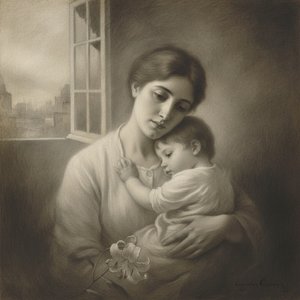
In the quiet corners of art history, few works possess the haunting, introspective power of Eugène Anatole Carrière’s 1893 masterpiece, Meditation. This oil on canvas is far more than a mere portrait; it is an invitation into the private sanctuary of the human psyche. At first glance, the viewer is met with the profound stillness of a young woman lost in thought, her presence commanding the space through a deliberate lack of movement. Carrière, a titan of the French Symbolist movement, eschews the fleeting light and vibrant energy of his Impressionist contemporaries to instead cultivate an atmosphere of eternal, somber reflection. The subject does not interact with the world outside the frame; rather, she exists in a state of profound interiority, making the painting a poignant testament to the beauty found within solitude and the weight of unspoken thoughts.
The technical brilliance of Meditation lies in Carrière’s masterful command over a restricted, almost monochromatic palette. Eschewing bright colors, the artist utilizes a sophisticated range of deep browns, velvety blacks, and subtle, earthy undertones of muted red and orange. This choice is not merely aesthetic but deeply psychological, serving to shroud the subject in a sense of mystery and melancholy. Through an ambitious layering process and the meticulous application of glazing techniques, Carrière achieves a luminous depth that seems to glow from within the canvas itself. The texture of the paint is remarkably tactile, creating a soft, skin-like quality in the figure’s face and a heavy, luxurious feel to her garments. His brushwork, while controlled, retains an organic fluidity that mirrors the natural contours of the human form, lending the piece a dreamlike, ethereal quality that borders on the supernatural.
Symbolism and the Echoes of the Subconscious
To understand Meditation is to understand the heart of Symbolism. During the fin-de-sięcle period, artists sought to represent ideas and emotions rather than the literal external world. In this work, every element serves a symbolic purpose. The woman’s downward gaze and slumped, vulnerable posture act as visual metaphors for grief, introspection, or perhaps an existential longing. The flattened composition—where the background dissolves into a hazy, indistinct void—strips away all worldly distractions, forcing the viewer to confront the subject's emotional state directly. There is no landscape to provide context, only the raw, unadulterated presence of feeling.
For the discerning collector or interior designer, this painting offers a profound sense of gravitas and emotional depth. It is a piece that does not merely decorate a wall but transforms the atmosphere of a room, bringing a sense of quiet sophistication and intellectual weight. Whether placed in a contemporary gallery setting or a classic study, Meditation acts as an anchor of tranquility. Its somber tones and rich textures provide a perfect counterpoint to modern minimalism or complement the ornate grandeur of traditional decor. Owning a high-quality reproduction of this work allows one to possess a fragment of the Symbolist soul, a permanent window into the profound beauty of the human spirit in repose.
Perguntas e Respostas
"Meditation" permaneceu no país de origem do seu artista?
Não – a obra de arte encontra-se no exterior. "Meditation" está guardada em Japão, enquanto Eugène Anatole Carrière nasceu em França.
Posso examinar "Meditation" com mais detalhes?
A página Raio X de "Meditation", de Eugène Anatole Carrière é um visualizador interativo que permite percorrer onze camadas ópticas da imagem da obra, incluindo uma visualização em estilo raio-X.
Que atmosfera "Meditation", de Eugène Anatole Carrière traz a um ambiente?
A atmosfera Calm de "Meditation", de Eugène Anatole Carrière combina perfeitamente com o ambiente recomendado: um(a) Living Room.
Biografia do Artista
Early Life and Training
Eugène Anatole Carrière, born January 16, 1849, in Gournay-sur-Marne, France, embarked on his artistic journey at a young age. He pursued his studies diligently at the École des Beaux-Arts in Paris, absorbing the foundational principles of classical art while simultaneously nurturing an inclination towards more expressive styles. His formative years under Cabanel instilled within him a meticulous attention to detail and a mastery of anatomical representation—skills that would prove invaluable throughout his prolific career.Artistic Style and Influences
Carrière’s distinctive artistic style is immediately recognizable by its pervasive brown monochrome palette, a deliberate choice that has captivated critics and collectors alike. This unconventional aesthetic wasn't born in isolation; it resonated deeply with the spirit of Symbolism, an artistic movement characterized by its preoccupation with psychological states and spiritual themes.A pivotal influence on Carrière’s oeuvre was Peter Paul Rubens—a Flemish Baroque painter whose dynamic compositions and luminous color harmonies captivated him during his formative years. Exposure to Rubens's work fostered a fascination for theatrical lighting and the depiction of emotion, elements that would permeate Carrière’s canvases.
The Young Mother (1879)
One of Carrière’s earliest masterpieces, “The Young Mother,” exemplifies the artist’s signature domestic themes. Executed in 1879, this poignant portrait captures a moment of quiet intimacy—a mother tenderly gazing upon her child.Displayed prominently at the Musée des Beaux-Arts de Rouen, "The Young Mother" established Carrière's reputation as a painter of profound emotional depth and technical virtuosity. It signaled the beginning of his exploration into portraying human experience with sensitivity and nuance.
Notable Works and Exhibitions
Carrière’s artistic output spanned numerous exhibitions throughout his lifetime, notably those organized by the Société Nationale des Beaux-Arts, where he served as a respected member and influential educator.Among his most celebrated paintings are “The Sick Child,” depicting a vulnerable infant bathed in soft light; “First Communion,” portraying a solemn religious ceremony with meticulous detail; and “Portrait of Louis-Henri Devillez,” which showcases Carrière’s exceptional ability to convey character and psychological complexity.
Legacy and Influence on Modern Art
Eugène Carrière's monochrome style exerted considerable influence on subsequent generations of artists, particularly Pablo Picasso during his Blue Period. This stylistic kinship underscores Carrière’s enduring legacy as a pioneer of French Symbolism—a movement that sought to transcend mere representation and delve into the realm of inner experience.His unwavering commitment to exploring human emotion through restrained color palettes continues to inspire artists today, cementing Carrière's place as a cornerstone of modern art history.

Eugène Anatole Carrière
1849 - 1906 , França
Dados Rápidos
- Artistic Movement Or Style: Simbolismo, Monocromático
- Artists Or Movements Influenced By This Artist: ['Picasso (azul)']
- Artists Who Influenced This Artist: ['Rubens']
- Date Of Birth: 16 jan. 1849
- Date Of Death: 27 mar. 1906
- Full Name: Eugène Anatole Carrière
- Nationality: Francês
- Notable Artworks:
- O Filho Doente
- A Primeira Comunhão
- Place Of Birth: Gournay-sur-Marne, França
Artigos Relacionados

O Legado Duradouro da Pintura a Óleo sobre Tela: Técnica, História e Prática Contemporânea
Explore a história e as técnicas da pintura a óleo com especialistas. Descubra os mestres, materiais essenciais e o futuro desta arte atemporal. Reproduções de qualidade museológica.

Oil on Canvas: A Historical & Technical Exploration of a Timeless Artistic Medium
Explore the rich history & enduring techniques of oil painting on canvas. Discover the science behind its longevity, conservation practices, and contemporary relevance. Expert insights for art enthusiasts.
Eugène Carrière: The 'Peintre d'Âme' & Symbolist Portraiture’s Intimate Vision
Explore the haunting world of Eugène Carrière, a pivotal French Symbolist artist known for his deeply intimate portraits & 'peinture d'âme'. Discover his life, style, and lasting influence on modern masters like Picasso. Shop high-quality reproductions at OriginalUniqueArt.

The Enduring Legacy of Oil on Canvas: Technique, History & Aesthetic Impact
Explore the rich history & techniques of oil painting – from Renaissance masters to Impressionism. Discover pigments, layering methods, and why this timeless medium endures. Expert insights for artists & art enthusiasts.

The Enduring Power of Painting: A Historical & Contemporary Exploration of Form and Emotion
Explore the rich history & enduring techniques of oil painting with OriginalUniqueArt. Discover masterpieces, learn about art collecting, and find authentic handmade reproductions crafted by skilled artists.