

 Visualizar em escala
 Enviar
 Compartilhar
 Ver detalhes
 Guia de Obras do Aluno

 Baixar imagem
 Semelhantes
 Raio X
 Apresentação de slides
 Estatísticas
Masks


 Ver mais
Reprodução em Óleo Feita à Mão
Óleo sobre tela pintado à mão no tamanho e moldura de sua escolha, feito sob encomenda pelos nossos artistas. ( Alternar para Impressão Ver Imagem Digital)




P118B €10

P118H €10

P118W €10

P438Z €10

P508JH €12

P508YH €12

P805H €10

P805Z €10

P919BZ €10

P919G €10

P919XJ €10

P959ZH €10

P968JZ €12

W106C €8

W218G €10

W218JH €8

W218Y €10

W307PJ €10

W316G €10

W316PJ €8

W316Y €10

W398PJ €8

W4111J €10

W500HY €15

W500JH €15

W692G €12

W849H €8

W940BG €15

W953PJ €8




Escolha entre os nossos tamanhos pré-definidos que respeitam as proporções originais da obra de arte.

Digite a largura e a altura de que necessita, para se ajustar à sua moldura ou à sua parede. Esta obra é pintada à mão, por isso, para um tamanho com uma proporção diferente, o artista pode pintar um pouco mais ao redor da imagem ou cortar um pouco — você escolhe. Enviamos-lhe uma maquete digital para aprovação antes de a pintura começar. A imagem exibida nesta página não mostra o resultado real — apenas a maquete mostra.
Após o pedido, a equipa OriginalUniqueArt.com enviará um e-mail ao cliente para solicitar instruções e fornecer uma prévia do esboço.
Entrega mundial () em 3 a 4 semanas, em vez das 5 semanas padrão. (21 Outubro). Sem comprometer a qualidade.

Envio expresso gratuito para todo o mundo

Tela de Linho Premium

Seguro de transporte total

Garantia de Reembolso de Impostos Alfandegários

Garantia de Fidelidade de Cor

Política de Devolução em 100 Dias (Apenas para Defeitos)

Garantia de reembolso de 100%

Desconto para múltiplas unidades
 A opção de vidro está disponível apenas para tamanhos inferiores a 110 cm

Masks
Técnica de Reprodução
Dimensões da Reprodução
-


Preço Total
€ 262
The Enigmatic Dance of Masks – A Study in Emil Nolde’s Expressionist Vision
Emil Nolde's "Masks," painted in 1911, isn’t merely a depiction of carnival revelry; it’s a profound exploration of identity, hidden desires, and the unsettling duality inherent within human nature. Created during his time as a key member of Die Brücke – “The Bridge” – a group pushing the boundaries of German Expressionism in Dresden and Berlin, the painting embodies the movement's core tenets: a rejection of academic realism in favor of raw emotion, bold color, and a focus on subjective experience. Nolde himself described his interest in "the grotesque expression of power" and “elemental force,” sentiments powerfully realized within this captivating composition.
The scene unfolds against a deceptively simple blue background, immediately drawing the viewer’s eye to the central figures – five distinct masks suspended in an ambiguous space. Each mask isn't simply a representation of a face; it’s a carefully constructed symbol, radiating a potent emotional charge. The leftmost mask, a dark red and toothy visage, hints at aggression and perhaps even menace. Nearby, an upside-down pink mask suggests vulnerability and a suppressed sadness. Nolde masterfully employs a technique reminiscent of primitive tribal art – particularly the masks of Solomon Islands and Yoruna Indians from Brazil – drawing inspiration from non-Western cultures to amplify the painting’s primal energy. These references weren't merely decorative; they represented a deliberate attempt to tap into fundamental human emotions, divorced from rational thought.
A Symphony of Color and Impasto
Nolde’s masterful use of color is central to the painting’s impact. He abandons subtle gradations in favor of vibrant, almost jarring hues – fiery oranges, deep blues, and stark reds – applied with a thick impasto technique. This layering of paint creates a tactile surface, inviting the viewer to reach out and feel the energy contained within each mask. The brushstrokes are visible, deliberate, and intensely expressive, mirroring the turbulent emotions conveyed by the figures. This physicality of the paint itself contributes significantly to the painting’s unsettling atmosphere; it feels as though the masks are not merely objects on a canvas but living entities, pulsating with hidden power.
The composition is deliberately unbalanced, further enhancing the sense of unease. The placement of the masks – some close to the viewer, others receding into the distance – creates a dynamic tension, suggesting a perpetual state of shifting identities and concealed motivations. Nolde’s decision to depict these masks in isolation amplifies their symbolic weight, forcing the viewer to confront each one individually and contemplate its hidden meaning.
Historical Context and Lasting Resonance
“Masks” was painted during a period of intense social and political upheaval in Germany – a time marked by rapid industrialization, growing anxieties about modernity, and the rise of nationalist ideologies. Die Brücke’s rejection of traditional artistic conventions reflected a broader cultural rebellion against established norms. Following World War I, Nolde's work became increasingly introspective and emotionally charged, often exploring themes of isolation, mortality, and the darker aspects of human experience.
Interestingly, the painting was confiscated by the Nazi regime in 1937 due to its perceived “degenerate” nature – a label applied to works deemed unsuitable for German culture. Despite this suppression, "Masks" endured, eventually finding its way into private collections and, ultimately, onto the walls of The Nelson-Atkins Museum of Art in Kansas City. Its continued presence speaks to the enduring power of Nolde’s vision and its ability to resonate with viewers across generations.
A Timeless Exploration of Identity
“Masks” remains a profoundly evocative work, inviting endless interpretation. It's not simply a depiction of carnival masks; it’s an allegory for the masks we all wear in our daily lives – the facades we present to the world, concealing our true selves beneath layers of social expectation and personal insecurity. Nolde’s bold colors, expressive brushwork, and unsettling imagery combine to create a timeless meditation on identity, illusion, and the hidden depths of the human psyche. Reproductions capture only a fraction of the painting's raw emotional power, but they offer a valuable opportunity to engage with this remarkable work of Expressionist art.
Perguntas e Respostas
Onde posso comprar uma impressão de "Masks" de Emil Nolde?
"Masks" está disponível como uma impressão fine art em tela de algodão ou papel canvas de arquivo. Os pedidos são feitos em sua página de Impressão Fine Art, no tamanho de sua escolha.
Quem criou "Masks" e em qual estilo se encontra?
"Masks" foi criada por Emil Nolde no estilo Expressionist Landscape. O artista e o movimento identificam a tradição da obra.
Em que ano foi criado "Masks" de Emil Nolde?
"Masks" de Emil Nolde foi criado em 1911.
Biografia do Artista
Early Life and Artistic Beginnings
Emil Nolde, a name synonymous with vibrant expressionism, was born Hans Emil Hansen on August 7, 1867, in the small village of Nolde, nestled within Schleswig-Holstein, Germany. His origins were deeply rooted in rural life—a landscape shaped by farming traditions and a strong connection to religious beliefs. This formative environment would profoundly influence his artistic vision, imbuing it with a sense of both groundedness and spiritual intensity. Despite initial reservations from his parents, who envisioned a more conventional path for their son – perhaps as a craftsman or merchant – Nolde’s unwavering passion for art ultimately prevailed. He began his artistic journey not in formal academies, but through practical experience, initially working as a wood carver and furniture decorator. This early exposure to craftsmanship instilled a meticulous attention to detail, which would later inform his distinctive painting style. It was only in his late twenties that Nolde finally dedicated himself fully to the pursuit of art, embarking on a path marked by self-education and relentless experimentation.Artistic Development and Influences
Nolde’s artistic evolution unfolded through a process of constant exploration and absorption of diverse influences. He embarked on extensive travels, immersing himself in cultures and artistic traditions far removed from his native Germany. These journeys proved to be transformative, exposing him to the raw power of primitive art – particularly masks and carvings—and sparking an enduring fascination with their symbolic depth. The works of Vincent van Gogh and Paul Gauguin served as crucial touchstones, demonstrating the expressive potential of color and form. Van Gogh’s turbulent brushstrokes and Gauguin's bold use of tropical hues ignited a desire within Nolde to break free from academic constraints and prioritize emotional impact over strict representation. Initially experimenting with Realism and Impressionism, he quickly recognized that these styles lacked the intensity needed to convey his inner world. This realization led him towards a more subjective and emotionally charged approach, laying the foundation for his signature Expressionist style.Die Brücke and Expressionist Breakthrough
In 1905, Nolde played a pivotal role in co-founding Die Brücke (The Bridge), a groundbreaking group of German Expressionist artists. This collective represented a radical departure from the established art world, seeking to dismantle traditional conventions and express profound inner emotions through unrestrained experimentation. Nolde’s contribution to Die Brücke was nothing short of transformative; his audacious use of color—often jarringly bright and intensely saturated—and his distorted forms pushed the boundaries of representation to their limits. However, despite his significant contributions, Nolde maintained a somewhat independent trajectory within the group, frequently diverging in subject matter and stylistic approach. He remained deeply committed to exploring themes that resonated with his own spiritual convictions, often depicting scenes from biblical narratives and delving into the darker aspects of human experience.Key Themes and Artistic Style
Nolde’s artistic output is characterized by a remarkable consistency in recurring themes: religious scenes imbued with profound symbolism, evocative landscapes capturing the raw beauty of nature, dramatic seascapes reflecting the power of the ocean, and poignant portraits revealing glimpses into the human psyche. A particularly compelling aspect of his work lies in his fascination with masks—both as tangible objects and potent symbols representing primal emotions and hidden identities. His artistic style is immediately recognizable by several key elements: a vibrant palette dominated by yellows, reds, and blues; distorted forms that prioritize emotional expression over realistic accuracy; and an impasto technique – the application of thick layers of paint creating a tactile surface brimming with energy. Nolde’s paintings are not merely depictions of reality; they are visceral expressions of inner experience, inviting viewers to confront their own emotions and grapple with profound questions about life, death, and spirituality.Notable Works and Historical Significance
Throughout his prolific career, Emil Nolde created a vast body of work that continues to captivate audiences worldwide. Some of his most celebrated paintings include Masks (1906-1907), a powerful exploration of primitive symbolism; The Mocking of Christ (1909), a deeply unsettling depiction of religious suffering; and the evocative Autumn Sea (1908). His series *The Legend of St. Maria Aegyptica* (1912) is particularly noteworthy for its erotic intensity and disturbing imagery. Despite facing criticism and censorship during the rise of Nazism – his work was deemed “degenerate” and removed from museums – Nolde remained steadfast in his artistic convictions, continuing to paint in secret. His legacy as a pioneering Expressionist artist endures, inspiring generations of artists with his bold experimentation, emotional intensity, and unwavering commitment to expressing the complexities of the human experience. He remains a central figure in the history of German art, celebrated for his unique vision and enduring influence.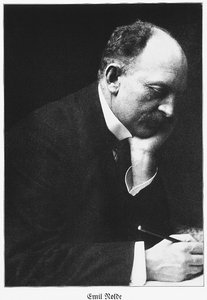
Emil Nolde
1867 - 1956 , Alemanha
Informações Rápidas
- Artistic Movement Or Style: Expressionismo, Die Brücke
- Artists Or Movements Influenced By This Artist: ['Die Brücke']
- Artists Who Influenced This Artist:
- Van Gogh
- Gauguin
- Date Of Birth: 7 de Agosto de 1867
- Date Of Death: 15 de Abril de 1956
- Full Name: Emil Nolde (Hans Emil Hansen)
- Nationality: Alemão-Dinamarquês
- Notable Artworks:
- O Profeta
- Mocionamento de Cristo
- Jardim de Flores
- Place Of Birth: Nolde, Alemanha
Artigos Relacionados
The Raw Emotion of Expressionism: A Deep Dive into its History, Characteristics & Enduring Influence
Explore the raw emotion of Expressionism with OriginalUniqueArt. Discover its history, key artists like Kirchner & Munch, and lasting influence on modern art. Expert insights for collectors & enthusiasts.
Unveiling the Mystery: A Journey Through the World's Most Iconic Mask Artworks
Embark on a profound journey through the world's most iconic mask artworks. Explore the spiritual depth, intricate craftsmanship, and rich cultural heritage of global traditions, from Chhau to Gomira, in this expert-led exploration of ancestral artistry and symbolic beauty.

Expressionismo Alemão: 10 Obras-Primas que Moldaram a Arte Moderna | OriginalUniqueArt
Descubra as 10 obras-primas do Expressionismo Alemão que revolucionaram a arte moderna. Explore a paixão de Munch, Kirchner e Kandinsky! Reproduções de museu em OriginalUniqueArt.com. Explore a coleção online.

Unmasking Emotion: A Journey Through the Raw Power and Visceral Beauty of German Expressionism
Explore the raw emotional power of German Expressionism. From Kirchner to Die Brücke, discover how artists used distortion and vibrant color to unmask the human psyche. A deep dive into art history for the discerning collector and enthusiast.
The Visceral Cry of a Nation: Exploring Emotion & Distortion in German Expressionism
Explore the powerful world of German Expressionism with OriginalUniqueArt. Discover Kirchner, Nolde & Die Brücke's emotive masterpieces. Learn about this pivotal art movement and its lasting impact on modern art.

