Tamanho do texto

() ·

Uma pintura feita para você, à mão

Dancer and Reclining Man

Reprodução em Óleo Feita à Mão

Óleo sobre tela pintado à mão no tamanho e moldura de sua escolha, feito sob encomenda pelos nossos artistas. ( Alternar para Impressão Alternar para Imagem Digital)

Descrição do Item

Experience the raw emotion of Emil Nolde's 'Dancer and Reclining Man.' This Expressionist masterpiece bursts with bold colors & dynamic forms, capturing a moment of performance and contemplation.

Biografia do Artista

"meta_description": "Emil Nolde foi um pintor expressionista alemão conhecido por suas cores vibrantes, paisagens dramáticas e obras religiosas intensas. Um dos fundadores de Die Brücke, sua arte explora emoções profundas e simbolismo através de formas distorcidas e pinceladas expressivas."

de ·

Capítulo 1

Qual deve ser o tamanho?

Deslize para alterar o tamanho; a imagem à esquerda mostra a moldura em sua largura real. As proporções originais são mantidas.

Tamanho padrão
personalizado
CM
INCH

Escolha entre os nossos tamanhos pré-definidos que respeitam as proporções originais da obra de arte.

largura
altura

Insira a largura e a altura desejadas para se ajustarem à sua moldura ou parede. Como esta obra é pintada à mão, para um tamanho com proporções diferentes, o artista poderá pintar um pouco mais ao redor da imagem ou reduzir ligeiramente a composição — você escolhe. Enviamos uma maquete digital para sua aprovação antes de iniciar a pintura. A imagem exibida nesta página não representa o resultado real — apenas a maquete mostra o resultado final.

Capítulo 2

Como deve chegar?

Escolha as bordas da tela esticada

Escolha sua moldura

Corner sample of the WhiteWrap canvas edge finish, stretched on madeira maciça bars
Branco €1
Corner sample of the BlurSideWrap canvas edge finish, stretched on madeira maciça bars
Bordas esfumaçadas €1
Corner sample of the ExtendedWrap canvas edge finish, stretched on madeira maciça bars
Bordas estendidas €1
Corner sample of the P118B picture frame: poliestireno moldado, 5 cm wide and 3 cm thick
P118B €10
Corner sample of the P118H picture frame: poliestireno moldado, 5 cm wide and 3 cm thick
P118H €10
Corner sample of the P118W picture frame: poliestireno moldado, 5 cm wide and 3 cm thick
P118W €10
Corner sample of the P438Z picture frame: poliestireno moldado, 5.5 cm wide and 3.5 cm thick
P438Z €10
Corner sample of the P508JH picture frame: poliestireno moldado, 7 cm wide and 3.5 cm thick
P508JH €12
Corner sample of the P508YH picture frame: poliestireno moldado, 7 cm wide and 3.5 cm thick
P508YH €12
Corner sample of the P805H picture frame: poliestireno moldado, 5 cm wide and 3.5 cm thick
P805H €10
Corner sample of the P805Z picture frame: poliestireno moldado, 5 cm wide and 3.5 cm thick
P805Z €10
Corner sample of the P919BZ picture frame: poliestireno moldado, 7 cm wide and 3.5 cm thick
P919BZ €10
Corner sample of the P919G picture frame: poliestireno moldado, 7 cm wide and 3.5 cm thick
P919G €10
Corner sample of the P919XJ picture frame: poliestireno moldado, 7 cm wide and 3.5 cm thick
P919XJ €10
Corner sample of the P959ZH picture frame: poliestireno moldado, 5 cm wide and 3 cm thick
P959ZH €10
Corner sample of the P968JZ picture frame: poliestireno moldado, 6 cm wide and 4 cm thick
P968JZ €12
Corner sample of the W106C picture frame: madeira maciça, 5 cm wide and 3 cm thick
W106C €8
Corner sample of the W218G picture frame: madeira maciça, 5 cm wide and 3 cm thick
W218G €10
Corner sample of the W218JH picture frame: madeira maciça, 5 cm wide and 3 cm thick
W218JH €8
Corner sample of the W218Y picture frame: madeira maciça, 5 cm wide and 3 cm thick
W218Y €10
Corner sample of the W307PJ picture frame: madeira maciça, 6 cm wide and 3 cm thick
W307PJ €10
Corner sample of the W316G picture frame: madeira maciça, 6 cm wide and 3 cm thick
W316G €10
Corner sample of the W316PJ picture frame: madeira maciça, 6 cm wide and 3 cm thick
W316PJ €8
Corner sample of the W316Y picture frame: madeira maciça, 6 cm wide and 3 cm thick
W316Y €10
Corner sample of the W398PJ picture frame: madeira maciça, 5 cm wide and 3 cm thick
W398PJ €8
Corner sample of the W4111J picture frame: madeira maciça, 6.5 cm wide and 3.5 cm thick
W4111J €10
Corner sample of the W500HY picture frame: madeira maciça, 7 cm wide and 5 cm thick
W500HY €15
Corner sample of the W500JH picture frame: madeira maciça, 7 cm wide and 5 cm thick
W500JH €15
Corner sample of the W692G picture frame: madeira maciça, 8 cm wide and 4 cm thick
W692G €12
Corner sample of the W849H picture frame: madeira maciça, 5 cm wide and 3 cm thick
W849H €8
Corner sample of the W940BG picture frame: madeira maciça, 7.5 cm wide and 4.5 cm thick
W940BG €15
Corner sample of the W953PJ picture frame: madeira maciça, 6 cm wide and 3.5 cm thick
W953PJ €8
Corner sample of the H24-GOLD picture frame: madeira entalhada com gesso, 10 cm wide and 6 cm thick
H24-GOLD €30
Corner sample of the H24-SILVER picture frame: madeira entalhada com gesso, 10 cm wide and 6 cm thick
H24-SILVER €30
Corner sample of the H36-GOLD picture frame: madeira entalhada com gesso, 15 cm wide and 6.5 cm thick
H36-GOLD €45
Corner sample of the H36-SILVER picture frame: madeira entalhada com gesso, 15 cm wide and 6.5 cm thick
H36-SILVER €45
Prévia da moldura
Com moldura

Moldura: . Dimensões totais com a moldura: .

Capítulo 3

Quem o pinta, e deveria algo mudar?

Exemplos do que pode ser alterado: Substituir o rosto pela foto do cliente; Adicionar um animal de estimação (ex: substituir gato por cachorro); Incluir uma mensagem oculta no fundo; Alterar a paisagem ou elementos do fundo.
Após o pedido, a equipe da OriginalUniqueArt.com enviará um e-mail ao cliente para instruções e fornecerá uma prévia da montagem

Entrega mundial () em 3 a 4 semanas, em vez das 5 semanas padrão. (3 Novembro). Sem comprometer a qualidade.

Capítulo 4

Os retoques finais

Uma placa de identificação, como em um museu?

Detalhes da Placa de Bronze Gravada

This elegant plaque features the artist's name and the title of the artwork, finely engraved for a timeless presentation.

It is made from bronze with a refined, elegant finish. The text is precisely laser-engraved for a sharp and permanent result. Measuring 9x2 cm, the plaque is compact yet easy to read. It's built to be durable and scratch-resistant, offering a professional, museum-quality look. Mounting is simple thanks to the included adhesive backing.

Detalhes da Placa de Acrílico Transparente

The plaque includes essential engraved details such as the artist's name, the title of the artwork, the date it was created, the type of media used-like oil on canvas or watercolor-a brief description of the piece, and a QR code that links to the complete artwork information.

It is crafted from clear acrylic, offering a sleek, modern appearance. The text is UV-engraved in black to ensure strong visual contrast. With a size of 10x15 cm, it ensures optimal readability. It comes equipped with two metal hooks for secure wall mounting. The plaque is designed to be weather-resistant, making it suitable for various environments, and it includes interactive features that work seamlessly with smartphone scanning.

Detalhes da Placa de Acrílico Preto

This elegant plaque includes engraved information such as the artist's name, the title of the artwork, the date it was created, the type of media used (like oil on canvas or watercolor), a short description of the artwork, and a QR code for quick access to more information.

The plaque itself is made from refined black acrylic with a premium finish. The text is laser-engraved in white for high contrast and readability. Its size is 10x15 cm, designed to be easy to read. It comes with two metal hooks for professional mounting. The design is sleek and fits any interior style. It is also weather-resistant and durable, with built-in digital integration for mobile compatibility.

Um verniz protetor?

Para quando você precisa?

Capítulo 5

A sua pintura, conforme encomendada

Dancer and Reclining Man

Técnica de Reprodução

Tamanho da Reprodução

-

Artista Sênior de Elite

Mais detalhes, refinamento e tempo de produção adicional

-

Moldura para Reprodução

-

-

Para obras de arte ou reproduções com mais de 105 cm (aproximadamente 41 polegadas) em qualquer um dos lados, a moldura será enviada como um kit desmontado. Este método garante uma entrega segura e evita danos durante o transporte.

Montagem profissional necessária — este não é um produto DIY (faça você mesmo).
O kit deve ser montado e a tela esticada por um profissional de molduraria experiente, utilizando cola de madeira (não inclusa), um alicate de esticar tela e grampos para manter as travessas alinhadas enquanto a cola seca. A montagem incorreta ou a tensão desigual da tela podem danificar permanentemente a obra de arte e não estão cobertas pela nossa garantia.

  • Todas as barras de madeira maciça estão incluídas, precisamente cortadas ao tamanho certo.

  • Montado com os parafusos fornecidos, além de cola para madeira para as junções dos cantos, que não está inclusa e deve ser providenciada pelo seu moldurista.

  • São necessárias ferramentas profissionais não incluídas: um alicate de estiramento de tela (esticador) e grampos para manter as ripas alinhadas enquanto a cola seca.

Importante:
As junções dos cantos requerem cola para madeira, as ripas devem ser mantidas com grampos até que a cola esteja completamente seca, e o estiramento da tela na moldura montada requer um alicate de esticar tela. Nenhum destes itens está incluído no kit. Por favor, certifique-se de contar com um profissional de molduraria experiente antes de encomendar este tamanho.

Etiqueta de identificação

-

-

Verniz de Proteção

Verniz brilhante (realça as cores e protege contra a luz e a umidade)

-

Personalizar minha obra

Exemplos de alterações possíveis: Substituir o rosto por uma foto do cliente; Adicionar um animal de estimação (ex.: substituir gato por cachorro); Incluir uma mensagem oculta no fundo; Alterar a paisagem ou os elementos do fundo.

-

Urgente

Entrega mundial () em 3 a 4 semanas, em vez das 5 semanas padrão. (3 Novembro). Sem comprometer a qualidade.

-

Envio Expresso

Entrega mundial para em 5 semanas. (10 Novembro).

Com envio incluído

Preço Total

€ 290

Preço Total € 290

A opção de vidro está disponível apenas para tamanhos inferiores a 110 cm

Incluído em todos os pedidos

  • Envio expresso gratuito para todo o mundo
  • Tela de Linho de Alta Qualidade
  • Seguro de transporte completo
  • Garantia de Reembolso de Impostos Alfandegários
  • Garantia de Fidelidade Cromática
  • Política de Devolução em 100 Dias (Apenas para Defeitos)
  • Garantia de reembolso de 100%
  • Oferta de desconto por quantidade

Dancer and Reclining Man by Emil Nolde: An Expressionist Exploration of Form and Emotion

  • Artist: Emil Nolde (Hans Emil Hansen)
  • Birth Year: 1867
  • Death Year: 1956
  • Origin: Germany

A Glimpse into Nolde's Expressionist Vision

“Dancer and Reclining Man,” created by Emil Nolde around 1938-1945, is a striking example of his mature Expressionist style. This artwork isn’t merely a depiction of two figures; it's an exploration of human emotion and psychological depth conveyed through bold colors, simplified forms, and dynamic brushwork. Nolde, a key figure in the German Expressionist movement and initially associated with Die Brücke, sought to express inner feelings rather than represent external reality faithfully. This piece exemplifies that pursuit.

Composition, Color, and Technique: A Symphony of Emotion

The composition is deliberately simple yet powerful. The dancer dominates the scene, positioned centrally and slightly elevated above a reclining man. This arrangement creates a sense of immediacy and draws the viewer's eye directly to the interaction between these two figures. Nolde employs a vibrant color palette dominated by yellows, purples, blues, and greens. Yellow is used extensively on both figures, creating a striking contrast against the cooler tones of the background. The loose application of paint, likely using watercolor or gouache, contributes to the artwork’s raw energy. Lines are not precisely defined; instead, they are suggested through brushstrokes and color transitions, blurring the outlines of the figures and enhancing their expressive quality. Angular lines further amplify the sense of movement and dynamism within the composition.

Symbolism and Historical Context: A Reflection of Inner Turmoil

Created during a turbulent period in German history – the years leading up to and including World War II – “Dancer and Reclining Man” carries an undercurrent of emotional intensity. While the exact meaning remains open to interpretation, the distorted forms and bold colors suggest underlying tensions or anxieties. The dancer’s energetic pose contrasts with the reclining man's relaxed state, potentially symbolizing a duality between action and contemplation, performance and repose. Nolde himself faced persecution by the Nazi regime, who deemed his work "degenerate art," and banned him from painting. Despite this adversity, he continued to create, often in secret, producing works like this one that resonate with profound emotional depth.

The Enduring Legacy of Nolde's Expressionism

“Dancer and Reclining Man” is a testament to Emil Nolde’s unique artistic vision. It encapsulates the core tenets of Expressionism – prioritizing subjective experience and emotional expression over realistic representation. This artwork, with its bold colors, simplified forms, and raw energy, continues to captivate viewers and serves as a powerful reminder of the artist's ability to convey complex emotions through visual language. Owning a hand-painted reproduction allows you to bring this evocative piece into your home or office, experiencing firsthand the emotional power of Nolde’s Expressionist masterpiece.

Perguntas e Respostas

Como "Dancer and Reclining Man" se posiciona entre os temas recorrentes de Emil Nolde?

Entre os temas recorrentes de Emil Nolde — inspired by van gogh & gauguin, folk art., representative of nolde's expressionist style., performance, relaxation, psychological depth. — "Dancer and Reclining Man" traz seu próprio foco em dancer, reclining man, expressionism, figures, emotion, color, dynamic, performance.

Onde posso ver uma prévia de "Dancer and Reclining Man"?

Uma prévia de "Dancer and Reclining Man", de Emil Nolde está disponível na página de Pré-visualização da obra.

Onde posso baixar "Dancer and Reclining Man", de Emil Nolde?

"Dancer and Reclining Man", de Emil Nolde pode ser descarregado na página de Download da obra, como download de imagem digital em alta resolução.

Saiba mais sobre esta pintura

Visualizar na parede Visualizar em RA Alternar para Impressão Alternar para Imagem Digital Compartilhar
Detalhes Guia Adicionar aos favoritos Baixar imagem Semelhantes Raio X Ver diaporama Perguntas e Respostas Estatísticas

Em números

  • 29molduras para escolher
  • tamanhos padrão, em suas próprias proporções
  • 5semanas para pintar e entregar
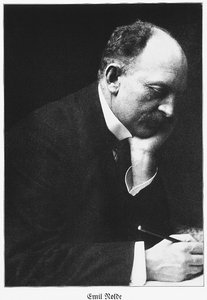
Emil Nolde

Emil Nolde

1867 - 1956, Alemanha

Informações rápidas sobre Emil Nolde

  • Artistic Movement Or Style: Expressionismo, Die Brücke
  • Artists Or Movements Influenced By This Artist: ['Die Brücke']
  • Artists Who Influenced This Artist:
    • Van Gogh
    • Gauguin
  • Date Of Birth: 7 de Agosto de 1867
  • Date Of Death: 15 de Abril de 1956
  • Full Name: Emil Nolde (Hans Emil Hansen)
  • Nationality: Alemão-Dinamarquês
  • Notable Artworks:
    • O Profeta
    • Mocionamento de Cristo
    • Jardim de Flores
  • Place Of Birth: Nolde, Alemanha

Biografia do Artista

Early Life and Artistic Beginnings

Emil Nolde, a name synonymous with vibrant expressionism, was born Hans Emil Hansen on August 7, 1867, in the small village of Nolde, nestled within Schleswig-Holstein, Germany. His origins were deeply rooted in rural life—a landscape shaped by farming traditions and a strong connection to religious beliefs. This formative environment would profoundly influence his artistic vision, imbuing it with a sense of both groundedness and spiritual intensity. Despite initial reservations from his parents, who envisioned a more conventional path for their son – perhaps as a craftsman or merchant – Nolde’s unwavering passion for art ultimately prevailed. He began his artistic journey not in formal academies, but through practical experience, initially working as a wood carver and furniture decorator. This early exposure to craftsmanship instilled a meticulous attention to detail, which would later inform his distinctive painting style. It was only in his late twenties that Nolde finally dedicated himself fully to the pursuit of art, embarking on a path marked by self-education and relentless experimentation.

Artistic Development and Influences

Nolde’s artistic evolution unfolded through a process of constant exploration and absorption of diverse influences. He embarked on extensive travels, immersing himself in cultures and artistic traditions far removed from his native Germany. These journeys proved to be transformative, exposing him to the raw power of primitive art – particularly masks and carvings—and sparking an enduring fascination with their symbolic depth. The works of Vincent van Gogh and Paul Gauguin served as crucial touchstones, demonstrating the expressive potential of color and form. Van Gogh’s turbulent brushstrokes and Gauguin's bold use of tropical hues ignited a desire within Nolde to break free from academic constraints and prioritize emotional impact over strict representation. Initially experimenting with Realism and Impressionism, he quickly recognized that these styles lacked the intensity needed to convey his inner world. This realization led him towards a more subjective and emotionally charged approach, laying the foundation for his signature Expressionist style.

Die Brücke and Expressionist Breakthrough

In 1905, Nolde played a pivotal role in co-founding Die Brücke (The Bridge), a groundbreaking group of German Expressionist artists. This collective represented a radical departure from the established art world, seeking to dismantle traditional conventions and express profound inner emotions through unrestrained experimentation. Nolde’s contribution to Die Brücke was nothing short of transformative; his audacious use of color—often jarringly bright and intensely saturated—and his distorted forms pushed the boundaries of representation to their limits. However, despite his significant contributions, Nolde maintained a somewhat independent trajectory within the group, frequently diverging in subject matter and stylistic approach. He remained deeply committed to exploring themes that resonated with his own spiritual convictions, often depicting scenes from biblical narratives and delving into the darker aspects of human experience.

Key Themes and Artistic Style

Nolde’s artistic output is characterized by a remarkable consistency in recurring themes: religious scenes imbued with profound symbolism, evocative landscapes capturing the raw beauty of nature, dramatic seascapes reflecting the power of the ocean, and poignant portraits revealing glimpses into the human psyche. A particularly compelling aspect of his work lies in his fascination with masks—both as tangible objects and potent symbols representing primal emotions and hidden identities. His artistic style is immediately recognizable by several key elements: a vibrant palette dominated by yellows, reds, and blues; distorted forms that prioritize emotional expression over realistic accuracy; and an impasto technique – the application of thick layers of paint creating a tactile surface brimming with energy. Nolde’s paintings are not merely depictions of reality; they are visceral expressions of inner experience, inviting viewers to confront their own emotions and grapple with profound questions about life, death, and spirituality.

Notable Works and Historical Significance

Throughout his prolific career, Emil Nolde created a vast body of work that continues to captivate audiences worldwide. Some of his most celebrated paintings include Masks (1906-1907), a powerful exploration of primitive symbolism; The Mocking of Christ (1909), a deeply unsettling depiction of religious suffering; and the evocative Autumn Sea (1908). His series *The Legend of St. Maria Aegyptica* (1912) is particularly noteworthy for its erotic intensity and disturbing imagery. Despite facing criticism and censorship during the rise of Nazism – his work was deemed “degenerate” and removed from museums – Nolde remained steadfast in his artistic convictions, continuing to paint in secret. His legacy as a pioneering Expressionist artist endures, inspiring generations of artists with his bold experimentation, emotional intensity, and unwavering commitment to expressing the complexities of the human experience. He remains a central figure in the history of German art, celebrated for his unique vision and enduring influence.

Informações Rápidas

  • Year: c.1938-1945
  • Artist: Emil Nolde
  • Medium: Watercolor or gouache on paper
  • Movement: Expressionism
  • Notable elements or techniques:
    • Bold colors
    • Simplified forms
    • Loose brushwork

Quiz de Arte

Cada pergunta possui apenas uma resposta correta.

Pergunta 1:
Which artistic movement is "Dancer and Reclining Man" most closely associated with?
Pergunta 2:
What is a prominent characteristic of the lines used in this artwork?
Pergunta 3:
How does the artist utilize color to create contrast within the composition?
Pergunta 4:
What is a key element contributing to the sense of depth in this artwork?
Explore obras de arte organizadas por temas, estilos e características.