Menu

() ·

A painting made for you, by hand

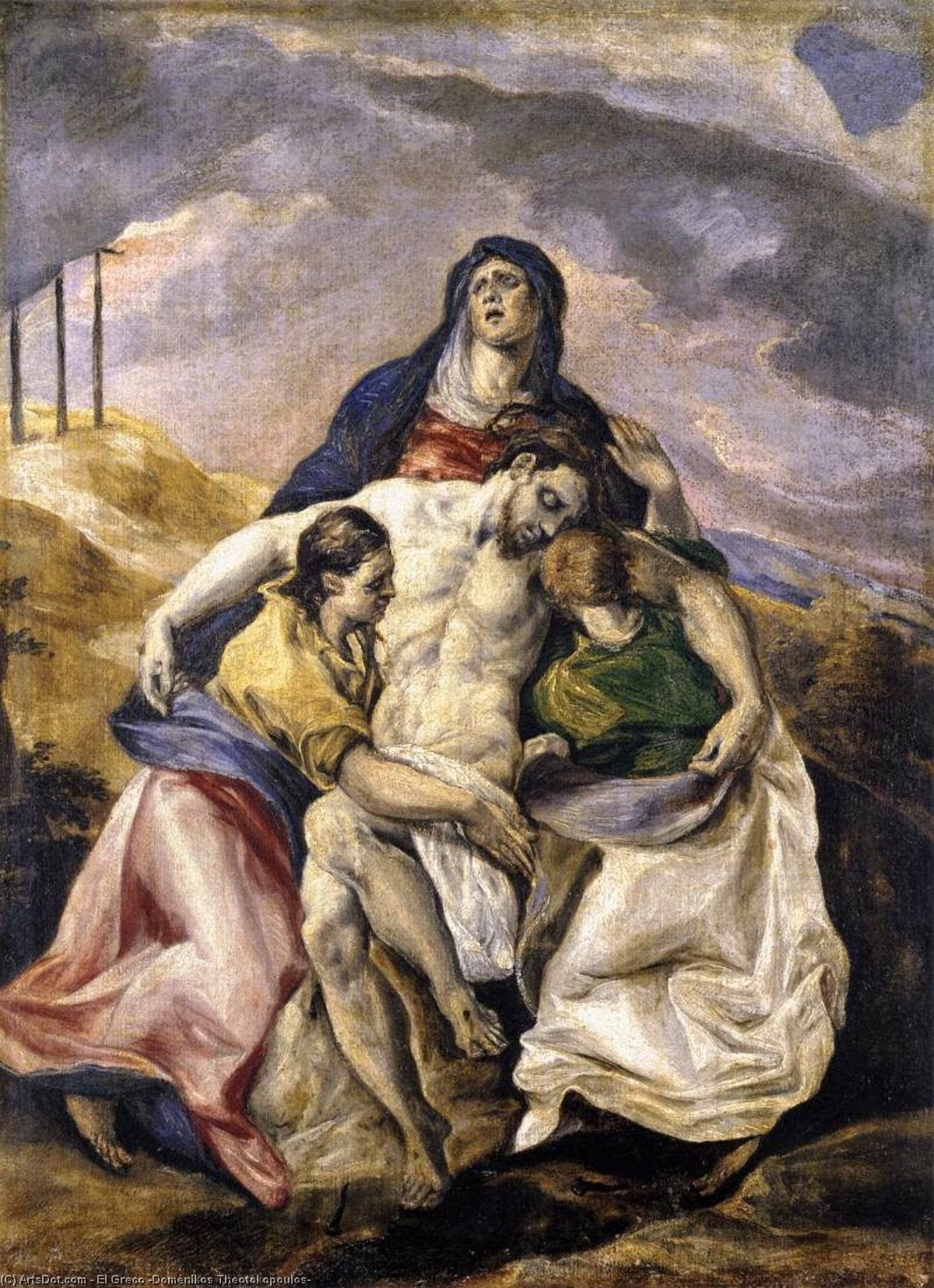
Pietà

Reprodução em Óleo Feita à Mão

Óleo sobre tela pintado à mão no tamanho e moldura de sua escolha, feito sob encomenda pelos nossos artistas. ( Alternar para Impressão Alternar para Imagem Digital)

Descrição do Item

Experience the profound emotional intensity of El Greco's Pietà, a Mannerist masterpiece of distorted grace and spiritual sorrow that invites you to bring this timeless vision of devotion into your own collection.

Biografia do Artista

Explore a obra-prima de El Greco: 'São Francisco Recebendo as Estigmas'. Uma intensa representação da fé, sofrimento e graça divina em uma pintura icônica do século XVI.

from ·

Chapter 1

How large should it be?

Slide to change the size; the picture on the left shows the frame at its real width. The proportions of the original are kept.

Tamanho padrão
personalizado
CM
INCH

Escolha entre os nossos tamanhos pré-definidos que respeitam as proporções originais da obra de arte.

largura
altura

Insira a largura e a altura desejadas para se ajustarem à sua moldura ou parede. Como esta obra é pintada à mão, para um tamanho com proporções diferentes, o artista poderá pintar um pouco mais ao redor da imagem ou reduzir ligeiramente a composição — você escolhe. Enviamos uma maquete digital para sua aprovação antes de iniciar a pintura. A imagem exibida nesta página não representa o resultado real — apenas a maquete mostra o resultado final.

Chapter 2

How should it arrive?

Choose the edges of the stretched canvas

Choose your frame

Corner sample of the WhiteWrap canvas edge finish, stretched on madeira maciça bars
White €1
Corner sample of the BlurSideWrap canvas edge finish, stretched on madeira maciça bars
Blurside €1
Corner sample of the ExtendedWrap canvas edge finish, stretched on madeira maciça bars
Extended €1
Corner sample of the P118B picture frame: poliestireno moldado, 5 cm wide and 3 cm thick
P118B €10
Corner sample of the P118H picture frame: poliestireno moldado, 5 cm wide and 3 cm thick
P118H €10
Corner sample of the P118W picture frame: poliestireno moldado, 5 cm wide and 3 cm thick
P118W €10
Corner sample of the P438Z picture frame: poliestireno moldado, 5.5 cm wide and 3.5 cm thick
P438Z €10
Corner sample of the P508JH picture frame: poliestireno moldado, 7 cm wide and 3.5 cm thick
P508JH €12
Corner sample of the P508YH picture frame: poliestireno moldado, 7 cm wide and 3.5 cm thick
P508YH €12
Corner sample of the P805H picture frame: poliestireno moldado, 5 cm wide and 3.5 cm thick
P805H €10
Corner sample of the P805Z picture frame: poliestireno moldado, 5 cm wide and 3.5 cm thick
P805Z €10
Corner sample of the P919BZ picture frame: poliestireno moldado, 7 cm wide and 3.5 cm thick
P919BZ €10
Corner sample of the P919G picture frame: poliestireno moldado, 7 cm wide and 3.5 cm thick
P919G €10
Corner sample of the P919XJ picture frame: poliestireno moldado, 7 cm wide and 3.5 cm thick
P919XJ €10
Corner sample of the P959ZH picture frame: poliestireno moldado, 5 cm wide and 3 cm thick
P959ZH €10
Corner sample of the P968JZ picture frame: poliestireno moldado, 6 cm wide and 4 cm thick
P968JZ €12
Corner sample of the W106C picture frame: madeira maciça, 5 cm wide and 3 cm thick
W106C €8
Corner sample of the W218G picture frame: madeira maciça, 5 cm wide and 3 cm thick
W218G €10
Corner sample of the W218JH picture frame: madeira maciça, 5 cm wide and 3 cm thick
W218JH €8
Corner sample of the W218Y picture frame: madeira maciça, 5 cm wide and 3 cm thick
W218Y €10
Corner sample of the W307PJ picture frame: madeira maciça, 6 cm wide and 3 cm thick
W307PJ €10
Corner sample of the W316G picture frame: madeira maciça, 6 cm wide and 3 cm thick
W316G €10
Corner sample of the W316PJ picture frame: madeira maciça, 6 cm wide and 3 cm thick
W316PJ €8
Corner sample of the W316Y picture frame: madeira maciça, 6 cm wide and 3 cm thick
W316Y €10
Corner sample of the W398PJ picture frame: madeira maciça, 5 cm wide and 3 cm thick
W398PJ €8
Corner sample of the W4111J picture frame: madeira maciça, 6.5 cm wide and 3.5 cm thick
W4111J €10
Corner sample of the W500HY picture frame: madeira maciça, 7 cm wide and 5 cm thick
W500HY €15
Corner sample of the W500JH picture frame: madeira maciça, 7 cm wide and 5 cm thick
W500JH €15
Corner sample of the W692G picture frame: madeira maciça, 8 cm wide and 4 cm thick
W692G €12
Corner sample of the W849H picture frame: madeira maciça, 5 cm wide and 3 cm thick
W849H €8
Corner sample of the W940BG picture frame: madeira maciça, 7.5 cm wide and 4.5 cm thick
W940BG €15
Corner sample of the W953PJ picture frame: madeira maciça, 6 cm wide and 3.5 cm thick
W953PJ €8
Corner sample of the H24-GOLD picture frame: madeira entalhada com gesso, 10 cm wide and 6 cm thick
H24-GOLD €30
Corner sample of the H24-SILVER picture frame: madeira entalhada com gesso, 10 cm wide and 6 cm thick
H24-SILVER €30
Corner sample of the H36-GOLD picture frame: madeira entalhada com gesso, 15 cm wide and 6.5 cm thick
H36-GOLD €45
Corner sample of the H36-SILVER picture frame: madeira entalhada com gesso, 15 cm wide and 6.5 cm thick
H36-SILVER €45
Prévia da moldura
Com moldura

Moulding: . Overall size with the frame: .

Chapter 3

Who paints it, and should anything change?

Examples of what can be changed: Replace face with customer photo; Add pet (e.g., replace cat with dog); Include hidden message in background; Change background landscape or elements.
After order, OriginalUniqueArt.com team will email client for instructions and provide a mockup preview

Entrega mundial () em 3 a 4 semanas, em vez das 5 semanas padrão. (30 Outubro). Sem comprometer a qualidade.

Chapter 4

The finishing touches

A nameplate, as in a museum?

Detalhes da Placa de Bronze Gravada

This elegant plaque features the artist's name and the title of the artwork, finely engraved for a timeless presentation.

It is made from bronze with a refined, elegant finish. The text is precisely laser-engraved for a sharp and permanent result. Measuring 9x2 cm, the plaque is compact yet easy to read. It's built to be durable and scratch-resistant, offering a professional, museum-quality look. Mounting is simple thanks to the included adhesive backing.

Detalhes da Placa de Acrílico Transparente

The plaque includes essential engraved details such as the artist's name, the title of the artwork, the date it was created, the type of media used-like oil on canvas or watercolor-a brief description of the piece, and a QR code that links to the complete artwork information.

It is crafted from clear acrylic, offering a sleek, modern appearance. The text is UV-engraved in black to ensure strong visual contrast. With a size of 10x15 cm, it ensures optimal readability. It comes equipped with two metal hooks for secure wall mounting. The plaque is designed to be weather-resistant, making it suitable for various environments, and it includes interactive features that work seamlessly with smartphone scanning.

Detalhes da Placa de Acrílico Preto

This elegant plaque includes engraved information such as the artist's name, the title of the artwork, the date it was created, the type of media used (like oil on canvas or watercolor), a short description of the artwork, and a QR code for quick access to more information.

The plaque itself is made from refined black acrylic with a premium finish. The text is laser-engraved in white for high contrast and readability. Its size is 10x15 cm, designed to be easy to read. It comes with two metal hooks for professional mounting. The design is sleek and fits any interior style. It is also weather-resistant and durable, with built-in digital integration for mobile compatibility.

A protective varnish?

When do you need it?

Chapter 5

Your painting, as you ordered it

Pietà

Técnica de Reprodução

Tamanho da Reprodução

-

Artista Sênior de Elite

Mais detalhes, refinamento e tempo de produção adicional

-

Moldura para Reprodução

-

-

Para obras de arte ou reproduções com mais de 105 cm (aproximadamente 41 polegadas) em qualquer um dos lados, a moldura será enviada como um kit desmontado. Este método garante uma entrega segura e evita danos durante o transporte.

Montagem profissional necessária — este não é um produto DIY (faça você mesmo).
O kit deve ser montado e a tela esticada por um profissional de molduraria experiente, utilizando cola de madeira (não inclusa), um alicate de esticar tela e grampos para manter as travessas alinhadas enquanto a cola seca. A montagem incorreta ou a tensão desigual da tela podem danificar permanentemente a obra de arte e não estão cobertas pela nossa garantia.

  • Todas as barras de madeira maciça estão incluídas, precisamente cortadas ao tamanho certo.

  • Montado com os parafusos fornecidos, além de cola para madeira para as junções dos cantos, que não está inclusa e deve ser providenciada pelo seu moldurista.

  • São necessárias ferramentas profissionais não incluídas: um alicate de estiramento de tela (esticador) e grampos para manter as ripas alinhadas enquanto a cola seca.

Importante:
As junções dos cantos requerem cola para madeira, as ripas devem ser mantidas com grampos até que a cola esteja completamente seca, e o estiramento da tela na moldura montada requer um alicate de esticar tela. Nenhum destes itens está incluído no kit. Por favor, certifique-se de contar com um profissional de molduraria experiente antes de encomendar este tamanho.

Etiqueta de identificação

-

-

Verniz de Proteção

Verniz brilhante (realça as cores e protege contra a luz e a umidade)

-

Personalizar minha obra

Exemplos de alterações possíveis: Substituir o rosto por uma foto do cliente; Adicionar um animal de estimação (ex.: substituir gato por cachorro); Incluir uma mensagem oculta no fundo; Alterar a paisagem ou os elementos do fundo.

-

Urgente

Entrega mundial () em 3 a 4 semanas, em vez das 5 semanas padrão. (30 Outubro). Sem comprometer a qualidade.

-

Envio Expresso

Entrega mundial para em 5 semanas. (6 Novembro).

Com envio incluído

Preço Total

€ 265

Preço Total € 265

A opção de vidro está disponível apenas para tamanhos inferiores a 110 cm

Included with every order

  • Envio expresso gratuito para todo o mundo
  • Tela de Linho de Alta Qualidade
  • Seguro de transporte completo
  • Garantia de Reembolso de Impostos Alfandegários
  • Garantia de Fidelidade Cromática
  • Política de Devolução em 100 Dias (Apenas para Defeitos)
  • Garantia de reembolso de 100%
  • Oferta de desconto por quantidade

A Vision of Sorrow and Grace: The Ethereal World of El Greco’s Pietà

In the quiet intensity of 1575, Domenikos Theotokópoulos, known to history as El Greco, captured a moment that transcends the boundaries of mere religious iconography. His Pietà is not simply a depiction of biblical grief; it is a profound psychological landscape where the earthly and the divine collide. As we gaze upon the Virgin Mary cradling the lifeless body of Jesus, we are invited into a space where sorrow is transformed into something luminous and transcendent. This masterpiece stands as a monumental testament to Renaissance spirituality, filtered through the intensely personal and visionary lens of a Cretan master who would eventually redefine the trajectory of European art.

The painting serves as a hauntingly beautiful meditation on compassion and sacrifice. Unlike more literal interpretations of the Lamentation, El Greco’s vision focuses on the emotional resonance of the figures. The weight of Christ's body is felt not just through physical gravity, but through the spiritual heaviness that permeates the composition. For collectors and lovers of fine art, this piece offers a rare opportunity to possess a fragment of the Mannerist revolution—a period where the artist’s internal truth took precedence over the rigid anatomical accuracy of the High Renaissance.

The Mastery of Mannerist Distortion and Light

To understand the impact of this work, one must look closely at El Greco’s deliberate departure from reality. Embracing the Mannerist style, the artist employs expressive distortions to communicate a heightened emotional state. Observe how the figures are subtly elongated, creating an ethereal presence that seems to float above the earthly realm. The drapery does not merely hang; it swirls with a dramatic, turbulent movement that mirrors the internal agony of the mourners. This is not a mistake of proportion, but a sophisticated stylistic choice designed to serve as a conduit for spiritual truth.

The technique behind this luminous surface is nothing short of miraculous. El Greco utilized painstaking layers of translucent glazes over an underpainting, a method that allows light to appear as if it is emanating from within the canvas itself. His palette, dominated by somber blues and deep reds, evokes the traditional colors of mourning and penitence. These pigments are applied with strategic precision, concentrating brilliance on key areas to guide the viewer's eye through the drama of the scene. For an interior designer, such a piece provides a sophisticated focal point, bringing a sense of historical depth and a quiet, contemplative energy to any curated space.

A Legacy of Spiritual Intensity

The historical context of the Pietà is deeply intertwined with El Greco’s own journey from the Byzantine traditions of Crete to the vibrant artistic hubs of Venice and Rome, finally settling in the spiritual heart of Toledo, Spain. This synthesis of influences—the meticulous detail of his Greek roots combined with the dramatic chiaroscuro of Italy—results in a work that feels both ancient and startlingly modern. The painting’s ability to evoke such profound empathy is why it remains a cornerstone of Christian iconography and a highly sought-after subject for high-quality reproductions.

When integrating a reproduction of this magnitude into a home or gallery, one is not merely adding decoration; one is introducing a narrative of resilience and grace. The Pietà invites the viewer to reflect on themes of maternal devotion and the enduring power of faith. It is a piece that demands attention through its subtle complexities, rewarding the observant eye with new layers of meaning upon every viewing. Whether placed in a sunlit study or a more formal setting, El Greco’s vision continues to captivate, offering an eternal window into the human soul.

Perguntas e Respostas

Para que tipo de uso é recomendada uma reprodução de "Pietà", de El Greco?

O uso sugerido para "Pietà", de El Greco é Statement, podendo também ser utilizado para outros fins.

Qual é a intensidade das cores de "Pietà", de El Greco?

As cores em "Pietà", de El Greco possuem uma intensidade Balanced.

Qual tamanho e orientação são recomendados para uma impressão de "Pietà", de El Greco?

Tamanho Small, orientação Portrait: esta é a configuração de impressão sugerida para "Pietà", de El Greco.

More about this painting

Visualizar na parede Visualizar em RA Alternar para Impressão Alternar para Imagem Digital Compartilhar
Detalhes Guia Adicionar aos favoritos Baixar imagem Semelhantes Raio X Ver diaporama Q&A Estatísticas

In numbers

  • 1575the year it was painted
  • 29frames to choose from
  • standard sizes, in its own proportions
  • 5weeks to paint and deliver it
El Greco

El Greco

1541 - 1614, Grécia

Quick facts about El Greco

  • Artistic Movement Or Style: Mannerismo e Barroco
  • Artists Who Influenced This Artist:
    • Titian
    • Tintoretto
  • Date Of Birth: 1541
  • Full Name: Doménikos Theotokópoulos
  • Nationality: Grega
  • Notable Artworks:
    • Burial of the Count of Orgaz
    • View of Toledo
    • El Espolio
    • Saint Sebastian
  • Place Of Birth: Crete, Greece

Biografia do Artista

Doménikos Theotokópoulos, called El Greco

Doménikos Theotokópoulos, universally known as El Greco – “the Greek” – stands as one of the most enigmatic and influential figures in Western art history. Born around 1541 in Crete, then under Venetian rule, his artistic journey transcended geographical boundaries and stylistic conventions, establishing him as a pioneer whose vision anticipated movements like Expressionism and Cubism centuries later. More than just a painter, El Greco was a sculptor and architect who embodied the spirit of his time—a testament to faith, innovation, and an unwavering pursuit of artistic truth.

Early Training and Cretan Roots

El Greco’s formative years were steeped in Byzantine tradition. Crete, at that time a bastion of Orthodox Christianity, nurtured a rich artistic heritage characterized by meticulous detail, symbolic imagery, and profound spiritual contemplation. He received his initial training within this environment, mastering the techniques of icon painting—a craft demanding unwavering precision and an understanding of theological concepts. This foundational knowledge would profoundly shape his subsequent artistic endeavors, informing his approach to composition, color palette, and expressive gesture. The influence of Byzantine art is palpable in his early works, particularly *Saint Titus*, where the drapery folds are rendered with astonishing realism and imbued with a sense of solemn dignity—a hallmark of Cretan painting during the Renaissance.

Venetian Exposure: Embracing Innovation

Around 1567, El Greco embarked on a transformative voyage to Venice, Italy’s artistic epicenter at the time. This relocation marked a pivotal moment in his artistic development, exposing him to the groundbreaking innovations championed by Titian, Tintoretto, and Veronese—masters who had revolutionized painting with their mastery of color, perspective, and dramatic lighting. He eagerly absorbed their techniques, experimenting with looser brushwork and embracing the sensual qualities of oil paint—a departure from the more restrained mediums favored in Crete. The Venetian influence is vividly apparent in *Saint Sebastian*, painted shortly after his arrival, where anatomical accuracy blends seamlessly with theatrical chiaroscuro—creating a scene brimming with emotional intensity. This encounter with Venetian art propelled him toward a bolder stylistic vision, one that would ultimately define his legacy.

Roman Aspirations and Mannerist Influence

El Greco’s ambition extended beyond Venice; he sought recognition in Rome, the heart of the Renaissance and papal patronage. Despite facing considerable competition within the Roman art world—a realm dominated by established artists and conservative tastes—he persevered, honing his skills and producing a series of works that showcased his talent for capturing psychological nuance and conveying profound emotion. However, El Greco struggled to gain widespread acclaim in Rome, finding it difficult to secure commissions from influential patrons. Nevertheless, he absorbed the stylistic precepts of Mannerism—a movement characterized by elongated figures, distorted perspectives, and stylized compositions—further enriching his artistic repertoire. This exposure to Mannerist aesthetics contributed to the distinctive elongation of his figures and the unsettling grandeur of his canvases—elements that would become synonymous with El Greco’s style.

Toledo: Spiritual Synthesis and Artistic Zenith

In 1577, El Greco established himself in Toledo, Spain—a city steeped in religious fervor during the Counter- Reformation and renowned for its magnificent cathedral and monastic institutions. This relocation proved to be instrumental in achieving his artistic zenith, providing him with a supportive environment and fostering collaborations with prominent patrons who recognized his singular genius. It was here that he produced his most celebrated paintings—works imbued with an unparalleled blend of Byzantine tradition, Venetian innovation, and Mannerist refinement. *The Burial of the Count of Orgaz*, considered El Greco’s masterpiece, exemplifies this synthesis perfectly—a monumental composition featuring elongated figures bathed in ethereal light, conveying a sense of spiritual transcendence that captivated audiences throughout Europe. His Toledo paintings stand as enduring symbols of faith, artistic ambition, and the transformative power of creative vision—solidifying his place among the greatest artists of all time.

Informações Rápidas

  • Dimensions: 66 x 48 cm
  • Title: Pietà
  • Year: 1575
  • Location: Toledo Cathedral, Spain
  • Artistic style: Expressive; stylized
  • Movement: Spanish Mannerism

Quiz de Arte

Cada pergunta possui apenas uma resposta correta.

Pergunta 1:
What is the primary subject matter depicted in El Greco’s Pietà?
Pergunta 2:
El Greco's style is characterized by:
Pergunta 3:
In what city was El Greco primarily active during his artistic career?
Pergunta 4:
What religious tradition heavily influenced El Greco's early artistic training?
Pergunta 5:
The image description mentions a dark background. What is the purpose of this darkened backdrop in relation to the artwork’s overall mood?