

 Visualizar na parede
 Compartilhar
 Compartilhar
 Detalhes
 Guia
Guia

 Baixar imagem
 Semelhantes
 Raio X
 Ver diaporama
 Estatísticas
An Abstract Composition with Two Anthropomorphic Figures
 Acrylic On Canvas
- WallArt
- Surrealism
 1940
1940 78.0 x 56.0 cm
 National Trust
 Ler mais
A obra de arte exibida nesta página é protegida por leis de direitos autorais, o que significa que não podemos criar ou vender legalmente uma reprodução idêntica. Esta proteção é aplicada por meio de acordos internacionais, tais como a Convenção de Berna e pelas leis nacionais, incluindo as estabelecidas por Lei de Direitos Autorais dos EUA - Título 17.
Este método cumpre plenamente as regulamentações de direitos autorais, pois não envolve a cópia ou duplicação da obra protegida. Em vez disso, trata-se de uma reinterpretação criativa — uma nova pintura que é influenciada pela original, mas não idêntica a ela.
Giclée / Impressão de Arte
Impressão giclée ou em tela de qualidade de museu, com produção rápida e opções flexíveis de acabamento. ( Comprar pintura feita à mão Alternar para Imagem Digital)




P118B €10

P118H €10

P118W €10

P438Z €10

P508JH €12

P508YH €12

P805H €10

P805Z €10

P919BZ €10

P919G €10

P919XJ €10

P959ZH €10

P968JZ €12

W106C €8

W218G €10

W218JH €8

W218Y €10

W307PJ €10

W316G €10

W316PJ €8

W316Y €10

W398PJ €8

W4111J €10

W500HY €15

W500JH €15

W692G €12

W849H €8

W940BG €15

W953PJ €8




Escolha entre os nossos tamanhos pré-definidos que respeitam as proporções originais da obra de arte.

Insira a largura e a altura desejadas para se ajustarem à sua moldura ou parede. Uma impressão pode ser apenas cortada, nunca ampliada além da imagem original; portanto, um tamanho com proporções diferentes resultará na perda de parte da imagem. Enviamos uma maquete digital para sua aprovação antes de realizarmos a impressão. A imagem exibida nesta página não mostra o corte real — apenas a maquete o faz.
Entrega mundial () em 2 semanas, em vez das 4/5 semanas padrão. (26 Outubro)

Envio expresso gratuito para todo o mundo

Tela de Linho de Alta Qualidade

Seguro de transporte completo

Garantia de Reembolso de Impostos Alfandegários

Garantia de Fidelidade Cromática

Política de Devolução em 100 Dias (Apenas para Defeitos)

Garantia de reembolso de 100%

Oferta de desconto por quantidade
 A opção de vidro está disponível apenas para tamanhos inferiores a 110 cm

An Abstract Composition with Two Anthropomorphic Figures
Giclée / Impressão de Arte
Tamanho da Reprodução
-


Preço Total
€ 70
Eileen Agar: Bridging Surrealism and Observation
Eileen Agar (1899 – 1991) stands as an enigmatic figure in the annals of British art, simultaneously rooted in the intellectual currents of Surrealism and driven by a profound engagement with the natural world. Her artistic journey began amidst the vibrant cultural landscape of Buenos Aires, Argentina, where she absorbed influences from both European avant-garde movements and her own familial heritage—a blend that would inform her distinctive visual language throughout her prolific career. Formal training at Heathfield St Mary's School and subsequent studies at Byam Shaw School of Art solidified her artistic grounding, yet it was the Parisian crucible of 1928–30 that truly catalyzed her creative evolution, immersing her in the heady atmosphere of Surrealist discourse and collaboration with luminaries like André Breton and Max Ernst.- Early Influences: Agar’s formative years witnessed exposure to artists such as Edmund Dulac and Arthur Rackham, whose fantastical illustrations instilled a fascination for imaginative storytelling and visual embellishment—sensibilities that would permeate her later works.
- Surrealist Engagement: Her participation in the 1936 Surrealist Exhibition in London marked a pivotal moment, establishing her connection with the movement’s core tenets of dreamlike imagery and subconscious exploration. Collaborations with fellow artists fostered experimentation and challenged conventional artistic boundaries.
Three Studies for Figures at the Base of a Crucifixion: A Synthesis of Form and Emotion
Francis Bacon's monumental triptych, Three Studies for Figures at the Base of a Crucifixion (1944), represents a watershed moment in British art history—a daring assertion of abstraction alongside visceral psychological depth. Executed on Sundeala fibre board during a period marked by profound personal turmoil and artistic introspection, the canvases embody Bacon’s unwavering commitment to confronting existential anxieties through unsettling visual metaphors. The work's genesis stemmed from Agar’s fascination with Aeschylus’s Oresteia—specifically, the Furies—and their depiction of retribution and suffering—themes that would resonate throughout her oeuvre.- Stylistic Characteristics: Bacon’s signature style—characterized by elongated, distorted organic forms against stark orange backgrounds—captures the essence of Surrealist principles while simultaneously conveying a palpable sense of unease and vulnerability.
- Material Innovation: The use of Sundeala fibre board offered a novel textural surface for Bacon's explorations, allowing him to achieve remarkable sculptural effects that heighten the emotional impact of his compositions.
Symbolism and Emotional Resonance
Agar’s artistic vision transcended mere stylistic imitation; she sought to distill profound psychological truths into visual representations—a pursuit reflected in her meticulous attention to detail and her masterful manipulation of color and form. Three Studies for Figures at the Base of a Crucifixion exemplifies this ambition, presenting fragmented human figures as emblems of mortality and trauma—symbols that invite contemplation on themes of guilt, remorse, and the inescapable confrontation with death. The painting’s unsettling stillness underscores Bacon's conviction that art should provoke emotional responses—challenging viewers to confront uncomfortable realities and grapple with existential dilemmas.Legacy and Influence
Eileen Agar’s contribution to British art extends far beyond her individual masterpieces; she served as an inspiration for subsequent generations of artists who embraced experimentation and pursued unconventional aesthetic paths. Her unwavering belief in artistic freedom—a stance mirrored in her rejection of conventional notions of beauty—continues to resonate today, reminding us that true creativity resides in defying expectations and forging one’s own distinctive voice. Three Studies for Figures at the Base of a Crucifixion stands as testament to Agar's enduring legacy—a hauntingly beautiful work that embodies the spirit of Surrealism while simultaneously articulating the complexities of human experience.Perguntas e Respostas
Em que ano foi criado "An Abstract Composition with Two Anthropomorphic Figures", de Eileen Agar?
"An Abstract Composition with Two Anthropomorphic Figures", de Eileen Agar foi criado em 1940.
Onde posso ver a obra original "An Abstract Composition with Two Anthropomorphic Figures", de Eileen Agar?
A obra original "An Abstract Composition with Two Anthropomorphic Figures" pode ser vista no National Trust, Londres, Reino Unido.
Como "An Abstract Composition with Two Anthropomorphic Figures", de Eileen Agar pode ser utilizado na decoração de interiores?
As recomendações de uso para "An Abstract Composition with Two Anthropomorphic Figures", de Eileen Agar são (Accent) e o ambiente (Living Room).
Artigos Relacionados

Top 10 Obras-Primas do Expressionismo Abstrato: Arte para Decorar e Inspirar | OriginalUniqueArt.com
Descubra as 10 obras-primas do Expressionismo Abstrato com Jackson Pollock, Mark Rothko e mais! Explore a história, técnica e emoção por trás de cada pintura. Encontre reproduções de arte exclusivas para decorar sua casa em OriginalUniqueArt.com.

Kandinsky: As 25 Obras-Primas que Definem o Abstracionismo | OriginalUniqueArt
Descubra as 25 obras-primas de Wassily Kandinsky, pioneiro da arte abstrata! Explore a história, cores e significado por trás de cada pintura. Encontre reproduções de alta qualidade e inspire sua decoração em OriginalUniqueArt.com.

Abstração Geométrica: 10 Obras-Primas que Moldaram a Arte Moderna | OriginalUniqueArt.com
Descubra as 10 obras-primas da Abstração Geométrica que revolucionaram a arte moderna! Explore Kandinsky, Mondrian e outros artistas icônicos. Encontre reproduções de alta qualidade para decorar sua casa com OriginalUniqueArt.com.

As 10 Obras Mais Famosas em Tons de Azul Ardósia | OriginalUniqueArt.com
Descubra as 10 pinturas mais emblemáticas em tons de azul ardósia! Explore a história, artistas como Monet e Van Gogh, e o significado da cor na arte. Encontre reproduções de alta qualidade para decorar sua casa com OriginalUniqueArt.com.
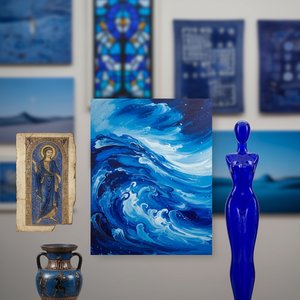
The Allure of Azure: Exploring the Symbolic & Aesthetic Depths of Blue in Art History
Explore the rich history of blue in art! Discover its symbolism, from ancient pigments to modern masterpieces by Kandinsky & Seurat. Uncover the psychological impact and cultural meanings behind this captivating hue.