
() ·
A painting made for you, by hand
Reprodução em Óleo Feita à Mão
Óleo sobre tela pintado à mão no tamanho e moldura de sua escolha, feito sob encomenda pelos nossos artistas. ( Alternar para Impressão Alternar para Imagem Digital)
Descrição do Item
Edward Armitage’s ‘Deputation to Faraday’ (1873) – a formal Victorian portrait showcasing meticulous detail & authority. Explore this significant artwork's style, symbolism & historical context.
Biografia do Artista
Discover Edward Armitage (1817-1896), a Victorian painter known for historical & biblical scenes, frescoes, and dramatic works like 'Retribution'.
 Ler mais
from ·
Chapter 1
How large should it be?
Slide to change the size; the picture on the left shows the frame at its real width. The proportions of the original are kept.
Escolha entre os nossos tamanhos pré-definidos que respeitam as proporções originais da obra de arte.

Insira a largura e a altura desejadas para se ajustarem à sua moldura ou parede. Como esta obra é pintada à mão, para um tamanho com proporções diferentes, o artista poderá pintar um pouco mais ao redor da imagem ou reduzir ligeiramente a composição — você escolhe. Enviamos uma maquete digital para sua aprovação antes de iniciar a pintura. A imagem exibida nesta página não representa o resultado real — apenas a maquete mostra o resultado final.
Chapter 2
How should it arrive?
Choose the edges of the stretched canvas
Choose your frame

White €1

Blurside €1

Extended €1

P118B €10

P118H €10

P118W €10

P438Z €10

P508JH €12

P508YH €12

P805H €10

P805Z €10

P919BZ €10

P919G €10

P919XJ €10

P959ZH €10

P968JZ €12

W106C €8

W218G €10

W218JH €8

W218Y €10

W307PJ €10

W316G €10

W316PJ €8

W316Y €10

W398PJ €8

W4111J €10

W500HY €15

W500JH €15

W692G €12

W849H €8

W940BG €15

W953PJ €8

H24-GOLD €30

H24-SILVER €30

H36-GOLD €45

H36-SILVER €45
Com moldura
Moulding: . Overall size with the frame: .
Chapter 3
Who paints it, and should anything change?
After order, OriginalUniqueArt.com team will email client for instructions and provide a mockup preview
Entrega mundial () em 3 a 4 semanas, em vez das 5 semanas padrão. (30 Outubro). Sem comprometer a qualidade.
Chapter 4
The finishing touches
A nameplate, as in a museum?
Detalhes da Placa de Bronze Gravada
This elegant plaque features the artist's name and the title of the artwork, finely engraved for a timeless presentation.
It is made from bronze with a refined, elegant finish. The text is precisely laser-engraved for a sharp and permanent result. Measuring 9x2 cm, the plaque is compact yet easy to read. It's built to be durable and scratch-resistant, offering a professional, museum-quality look. Mounting is simple thanks to the included adhesive backing.
Detalhes da Placa de Acrílico Transparente
The plaque includes essential engraved details such as the artist's name, the title of the artwork, the date it was created, the type of media used-like oil on canvas or watercolor-a brief description of the piece, and a QR code that links to the complete artwork information.
It is crafted from clear acrylic, offering a sleek, modern appearance. The text is UV-engraved in black to ensure strong visual contrast. With a size of 10x15 cm, it ensures optimal readability. It comes equipped with two metal hooks for secure wall mounting. The plaque is designed to be weather-resistant, making it suitable for various environments, and it includes interactive features that work seamlessly with smartphone scanning.
Detalhes da Placa de Acrílico Preto
This elegant plaque includes engraved information such as the artist's name, the title of the artwork, the date it was created, the type of media used (like oil on canvas or watercolor), a short description of the artwork, and a QR code for quick access to more information.
The plaque itself is made from refined black acrylic with a premium finish. The text is laser-engraved in white for high contrast and readability. Its size is 10x15 cm, designed to be easy to read. It comes with two metal hooks for professional mounting. The design is sleek and fits any interior style. It is also weather-resistant and durable, with built-in digital integration for mobile compatibility.
A protective varnish?
When do you need it?
Chapter 5
Your painting, as you ordered it

Deputation to Faraday
Técnica de Reprodução
Tamanho da Reprodução
-

Artista Sênior de Elite
Mais detalhes, refinamento e tempo de produção adicional
-

Moldura para Reprodução
-
-
Para obras de arte ou reproduções com mais de 105 cm (aproximadamente 41 polegadas) em qualquer um dos lados, a moldura será enviada como um kit desmontado. Este método garante uma entrega segura e evita danos durante o transporte.
Montagem profissional necessária — este não é um produto DIY (faça você mesmo).
O kit deve ser montado e a tela esticada por um profissional de molduraria experiente, utilizando cola de madeira (não inclusa), um alicate de esticar tela e grampos para manter as travessas alinhadas enquanto a cola seca. A montagem incorreta ou a tensão desigual da tela podem danificar permanentemente a obra de arte e não estão cobertas pela nossa garantia.
 Para obras de arte ou reproduções com mais de 105 cm (aproximadamente 41 polegadas) em qualquer um dos lados, a moldura será enviada como um kit desmontado. Este método garante uma entrega segura e evita danos durante o transporte.
Todas as barras de madeira maciça estão incluídas, precisamente cortadas ao tamanho certo.
Montado com os parafusos fornecidos, além de cola para madeira para as junções dos cantos, que não está inclusa e deve ser providenciada pelo seu moldurista.
São necessárias ferramentas profissionais não incluídas: um alicate de estiramento de tela (esticador) e grampos para manter as ripas alinhadas enquanto a cola seca.
Importante:
As junções dos cantos requerem cola para madeira, as ripas devem ser mantidas com grampos até que a cola esteja completamente seca, e o estiramento da tela na moldura montada requer um alicate de esticar tela. Nenhum destes itens está incluído no kit. Por favor, certifique-se de contar com um profissional de molduraria experiente antes de encomendar este tamanho.

Etiqueta de identificação
-
-

Verniz de Proteção
Verniz brilhante (realça as cores e protege contra a luz e a umidade)
-

Personalizar minha obra
Exemplos de alterações possíveis: Substituir o rosto por uma foto do cliente; Adicionar um animal de estimação (ex.: substituir gato por cachorro); Incluir uma mensagem oculta no fundo; Alterar a paisagem ou os elementos do fundo.
-

Urgente
Entrega mundial () em 3 a 4 semanas, em vez das 5 semanas padrão. (30 Outubro). Sem comprometer a qualidade.
-
Envio Expresso
Entrega mundial para em 5 semanas. (6 Novembro).
Com envio incluído
Preço Total
€ 331
A opção de vidro está disponível apenas para tamanhos inferiores a 110 cm
Included with every order
- Envio expresso gratuito para todo o mundo
- Tela de Linho de Alta Qualidade
- Seguro de transporte completo
- Garantia de Reembolso de Impostos Alfandegários
- Garantia de Fidelidade Cromática
- Política de Devolução em 100 Dias (Apenas para Defeitos)
- Garantia de reembolso de 100%
- Oferta de desconto por quantidade


 Visualizar na parede
 Compartilhar
 Compartilhar
 Detalhes
 Guia
Guia

 Baixar imagem
 Semelhantes
 Raio X
 Ver diaporama
 Q&A
Q&A Estatísticas
In numbers
- 1873the year it was painted
- 29frames to choose from
- standard sizes, in its own proportions
- 5weeks to paint and deliver it
About the original
 Academic Realism
 1873
1873 138.0 x 183.0 cm
 Royal Society

Edward Armitage
1817 - 1896
Quick facts about Edward Armitage
- Artistic Movement Or Style: Victorian Painting
- Artists Or Movements Influenced By This Artist: Romanticism
- Artists Who Influenced This Artist: Paul Delaroche
- Date Of Birth: 1817
- Date Of Death: 1896
- Full Name: Edward Armitage RA
- Nationality: English
- Notable Artworks: ['Retribution']
- Place Of Birth: London, England
Biografia do Artista
Early Life and Family Roots
Edward Armitage, born in London on May 20th, 1817, emerged from a background steeped in the burgeoning industrial wealth of Yorkshire. Though his initial years were spent within the capital’s confines, his lineage was firmly anchored in the north of England, specifically to the Armitage family of Farnley Hall, just south of Leeds. His father, James Armitage, was a prominent ironmaster, one of seven sons descended from a line that had acquired Farnley Hall in 1799. This familial foundation—a blend of established land ownership and entrepreneurial spirit—would subtly shape the artist’s trajectory, providing both opportunity and a degree of independence.
The Armitage family's involvement extended beyond ironworks; his brother, Thomas Rhodes Armitage, notably founded the Royal National Institute of the Blind, demonstrating a commitment to social betterment. This sense of purpose, though not directly artistic, resonates within the often-grand and morally weighty themes that would come to define Edward’s work. He was connected through family to several notable figures including Robert Armitage (MP) and Robert Selby Armitage.
Artistic Formation in Paris
Recognizing his son's inclination towards art, James Armitage supported Edward’s pursuit of formal training, leading him to Paris in 1837. The École des Beaux-Arts became the crucible where young Armitage honed his skills under the tutelage of Paul Delaroche, a history painter at the zenith of his fame. Delaroche's influence proved profound; he instilled in Armitage a meticulous draughtsmanship, a dedication to historical accuracy, and a penchant for dramatic narrative—qualities that would become hallmarks of his style.
Armitage wasn’t merely a student but an active participant in Delaroche’s ambitious projects. He was selected as one of four assistants tasked with the monumental fresco *Hémicycle* within the Palais des Beaux-Arts, even reputedly serving as a model for the head of Masaccio—a testament to his developing physical presence and artistic aptitude. His early Parisian works, such as *Prometheus Bound* (1842), already hinted at the power he would later wield, earning praise for its skillful execution but also noted for an almost “brutally energetic” quality.
The Westminster Palace Competitions and Early Success
Returning to London in 1843, Armitage entered a period of intense competition with the ambitious project to decorate the new Palace of Westminster. Following the devastating fire of 1834, Queen Victoria’s consort, Prince Albert, spearheaded an initiative to adorn the rebuilt Houses of Parliament with frescoes depicting scenes from British history and literary masterpieces—Spenser, Shakespeare, and Milton being key sources of inspiration.
The ensuing cartoon competitions were fiercely contested. Armitage quickly distinguished himself, securing first prizes for *The Landing of Julius Caesar in Britain* (1843) and later for *The Spirit of Religion* (1845). While these designs weren’t ultimately realized as frescoes—a consequence of the technical challenges inherent in the London climate—they established his reputation and led to commissions for two significant works within the Poets' Gallery: *The Thames and its Tributaries* (from Pope) and *The Death of Marmion* (from Scott). These early successes, coupled with the Queen’s purchase of his large-scale oil painting *The Battle of Meeanee* (1847), cemented Armitage’s position within the Victorian art world.
A Career Defined by Historical Grandeur
Following a period of study in Rome, Armitage consistently exhibited at the Royal Academy from 1848 until 1893. His oeuvre became characterized by large-scale historical and biblical paintings—works that demanded both technical skill and an understanding of complex narratives. *Retribution* (1858), now housed in the Leeds Museum, stands as a particularly striking example; its allegorical depiction of the suppression of the Indian Mutiny, embodied in a colossal female figure grappling with a tiger, exemplifies his dramatic flair and moral seriousness.
His travels during the Crimean War informed paintings like *The Bottom of the Ravine at Inkerman* (1856) and *Souvenir of Scutari*, demonstrating an engagement with contemporary events. However, it was his ability to translate grand historical themes—such as *Samson* (1851) and *Hagar* (1852)—into visually compelling narratives that truly defined his artistic legacy.
Legacy and Historical Significance
Edward Armitage’s career unfolded within a Victorian art landscape increasingly fascinated by historical spectacle and moral allegory. While he consciously emulated the style of Paul Delaroche, his work also reflects a uniquely British sensibility—a blend of meticulous detail, dramatic composition, and a commitment to narrative clarity.
Though his frescoes proved vulnerable to the ravages of time, Armitage’s oil paintings continue to captivate viewers with their scale, ambition, and technical mastery. He represents a significant figure in Victorian art, bridging the gap between academic tradition and a growing interest in contemporary events. His dedication to “high purposes,” as one critic noted, irrespective of immediate reward, underscores his enduring appeal—a testament to an artist who sought not merely to depict history but to imbue it with meaning and moral weight.
Artigos Relacionados

The Enduring Power of Painting: A Historical & Contemporary Exploration of Form and Emotion
Explore the rich history & enduring techniques of oil painting with OriginalUniqueArt. Discover masterpieces, learn about art collecting, and find authentic handmade reproductions crafted by skilled artists.
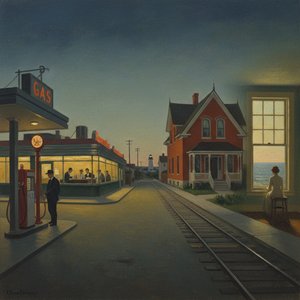
Edward Hopper: As 25 Obras-Primas que Definem a Alma Americana | OriginalUniqueArt
Descubra as 25 obras-primas de Edward Hopper, o mestre do realismo americano. Explore a atmosfera melancólica, luz e sombra em quadros icônicos como 'Nighthawks'. Encontre reproduções de arte exclusivas para decorar sua casa com OriginalUniqueArt.com.
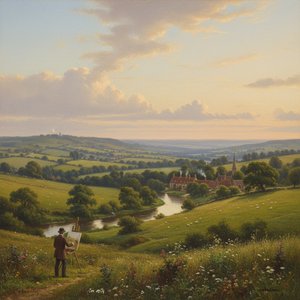
Edward Wilkins Waite: A Victorian Vision of Surrey's Serene Landscapes & Artistic Legacy
Explore the serene landscapes of Edward Wilkins Waite (1854-1924), a prolific Victorian painter celebrated for his depictions of Surrey's countryside. Discover his artistic influences, career highlights & collecting guide.

The Enduring Legacy of Oil on Canvas: Technique, History & Aesthetic Impact
Explore the rich history & techniques of oil painting – from Renaissance masters to Impressionism. Discover pigments, layering methods, and why this timeless medium endures. Expert insights for artists & art enthusiasts.