
 Alternar para Impressão
 Ler mais







































 Para obras de arte ou reproduções com mais de 105 cm (aproximadamente 41 polegadas) em qualquer um dos lados, a moldura será enviada como um kit desmontado. Este método garante uma entrega segura e evita danos durante o transporte.


Dance on the Beach: An Expressionist Echo of Joy Amidst Darkness
Edvard Munch’s Dance on the Beach is more than just a depiction of seaside merriment; it's a profound meditation on human experience rendered in the searing language of Expressionism. Painted in 1904, this artwork transcends mere observation, plunging viewers into a realm where vibrant color clashes with unsettling shadows—a characteristic hallmark of Munch’s artistic vision and a powerful reflection of the anxieties simmering beneath the surface of early 20th-century Europe.The Expressionist Movement: Beyond Impressionism's Surface
Expressionism arose as a defiant reaction against the prevailing aesthetic sensibilities of its time, rejecting Impressionism’s serene pursuit of optical accuracy in favor of prioritizing subjective emotion and psychological intensity. Influenced by thinkers like Nietzsche and Freud, it questioned accepted moral codes and championed an unflinching confrontation with inner turmoil—a sentiment deeply resonant with Munch's own personal struggles. The movement sought to capture the “growing alienation” from societal norms and a yearning for artistic innovation, rejecting the polished surfaces of bourgeois culture in favor of raw emotion and distorted forms. It’s important to note that Expressionism wasn’t simply about portraying feelings; it was about actively transforming reality through art, aiming to communicate inner states rather than merely representing external appearances.A Symphony of Light and Shadow: Munch's Technique
Munch’s masterful manipulation of light is central to the painting’s emotive power. Unlike Impressionists who sought to capture fleeting moments of sunlight, Munch deliberately employs chiaroscuro—the dramatic contrast between light and dark—to heighten the sense of unease and amplify the figures’ psychological drama. The luminous patches of color illuminate the dancers' movements and suggest a carefree spirit, yet these bursts of vibrancy are juxtaposed with deep shadows that envelop the periphery of the scene, hinting at hidden anxieties and unspoken fears. This technique isn’t merely decorative; it serves as a conduit for conveying Munch’s preoccupation with mortality and decay—a subtle but pervasive element woven throughout his oeuvre. The artist meticulously builds up texture through layering paint, creating palpable surfaces that invite contemplation and mirroring the turbulent emotions depicted within.The Figure of the Nude: Symbolism in Motion
The inclusion of nude figures – specifically two dancers – is laden with symbolic significance. In the context of Expressionist art, nudity wasn’t simply a matter of aesthetic representation; it functioned as a vehicle for exploring themes of vulnerability, desire, and existential questioning. Munch's depiction reflects the social mores of his era, where artistic explorations of the human body challenged conventional notions of morality and celebrated beauty in its rawest form. The figures embody both joy and apprehension—a duality that encapsulates the broader anxieties inherent in the Expressionist project: a yearning for liberation intertwined with an awareness of inescapable suffering.Modernism's Influence and Lasting Legacy
Dance on the Beach stands as a pivotal work within Modernism’s broader artistic landscape—a movement characterized by technological advancements, urbanization, and profound shifts in philosophical thought. Artists like Munch embraced experimentation and abstraction, rejecting traditional conventions to forge new paths of expression. The painting's stylistic boldness anticipates developments in subsequent movements such as Surrealism and Abstract Expressionism, demonstrating Munch’s enduring influence on the trajectory of 20th-century art. Its exploration of psychological depth continues to resonate with audiences today, reminding us that true artistic power lies not merely in replicating reality but in confronting its darkest corners—and illuminating them with a flicker of defiant beauty.- Painting by 'Edvard Munch' | Edvard Munch:Dance on the Beach (Expressionism,)
- Modernism
- Light in painting
- Painting by 'Clyfford Still' | Clyfford Still:PH-212 (Oil On Canvas,)
Visit OriginalUniqueArt.com to explore more artworks and learn about the artists who created them.
Perguntas e Respostas
Como faço para baixar a imagem de "Dança na Praia", de Edvard Munch?
Um download está disponível para "Dança na Praia": a página de Download da obra oferece download de imagem digital em alta resolução.
Onde e para qual finalidade é recomendado "Dança na Praia"?
"Dança na Praia" é sugerida para Acento cromático, e o espaço recomendado é um(a) Sala de Estar.
Qual é o nível de contraste de "Dança na Praia", de Edvard Munch?
O contraste entre claro e escuro de "Dança na Praia" é registrado como Declaração. O contraste descreve a intensidade da diferença entre as áreas claras e escuras.





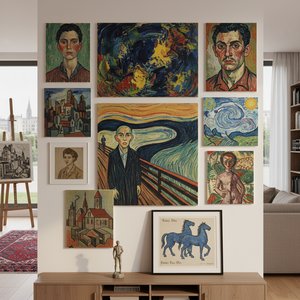

 Visualizar na parede
 Compartilhar
 Compartilhar
 Detalhes
 Guia
Guia

 Baixar imagem
 Semelhantes
 Raio X
 Ver diaporama
 Q&A
Q&A Estatísticas


