Surrealism
untitled (828) (Diego Rivera)
Diego Rivera (1886–1957) criou untitled (828). Pertence ao movimento Surrealism.

 Visualizar na parede

 Pintura a Óleo Feita à Mão
 Compartilhar
 Compartilhar
 Ficha técnica


 Baixar imagem
 Semelhantes
 Raio X
 Ver diaporama
 Perguntas e Respostas

 Estatísticas
untitled (828), em resumo
- Título
- untitled (828)
- Artista
- Diego Rivera (1886–1957)
- Artista nascido em
- Guanajuato, México
- Movimento
- Surrealism
- Tema
- surreal horse, pumpkin imagery, illusion art”, “abstract figure”, "mexican culture", "dreamlike scene"
O que untitled (828) retrata?
A Surreal Steed: Decoding Diego Rivera’s “untitled (828)”
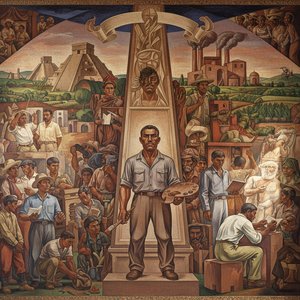
This captivating work by Mexican master Diego Rivera presents a dreamlike scene that immediately draws the viewer into its enigmatic world. The central image – a man riding what is unmistakably a distorted, oversized pumpkin as if it were a horse – is both whimsical and unsettling. A smaller figure, presumably the rider, sits behind, sporting a hat, adding to the narrative ambiguity. The backdrop features a doorway marked with the word ‘Illusion,’ subtly reinforcing the painting’s core themes. Rivera, renowned for his monumental murals celebrating Mexican history and social justice, demonstrates here a fascinating foray into more personal and symbolic territory.Style & Technique: A Fusion of Cubism and Surrealism
“untitled (828)” showcases Rivera's adeptness at blending artistic styles. The work leans heavily towards both Cubism, evident in the flattened perspective and simplified geometric forms, and Surrealism, manifested through the illogical juxtaposition of elements – a pumpkin transformed into a horse. The technique is characterized by visible brushstrokes and an impasto-like texture, suggesting the generous application of oil paint. This tactile quality adds depth and physicality to the otherwise ethereal scene. The muted color palette, punctuated by vibrant oranges and yellows within the pumpkin-horse, further enhances the painting’s dramatic impact. Rivera's deliberate distortion of perspective creates a sense of unease and invites contemplation on the nature of reality itself.Symbolism & Interpretation: Illusion, Identity, and Societal Expectations
The symbolism embedded within “untitled (828)” is rich and open to interpretation. The pumpkin-horse can be seen as a representation of deception, or an altered perception of reality – the ‘Illusion’ doorway serving as a direct clue. It might also symbolize the absurdity of life, challenging conventional notions of power and control. The rider's posture and anonymity suggest themes of identity and perhaps a commentary on societal expectations. Is this figure leading the pumpkin-horse, or is he being led astray? The artwork prompts viewers to question what is real and what is merely a construct of our own minds. Rivera’s work often contained social commentary; while less explicit here, it's possible to read a subtle critique of power dynamics within society.Rivera’s Artistic Context & Lasting Impact
Diego Rivera (1886-1957) was a pivotal figure in the Mexican Muralism movement, using art as a powerful tool for social and political expression. While best known for his large-scale public works – like those found at the Museo Mural Diego Rivera in Mexico City – this smaller work reveals another facet of his artistic genius. “untitled (828)” demonstrates Rivera’s willingness to experiment with form and symbolism, foreshadowing some of the themes explored by later Surrealist artists. This piece offers a unique glimpse into the artist's creative process and provides collectors and interior designers with an intriguing statement piece that sparks conversation and invites deeper engagement. Its dreamlike quality makes it particularly well-suited for spaces seeking a touch of intellectual curiosity and artistic flair.Imagens em alta resolução de untitled (828)
Protected by copyright: these files are for personal reference, not a licence to republish.
Diego Rivera, untitled (828).
Perguntas sobre untitled (828) respondidas
O que representa "untitled (828)"?
Os temas de "untitled (828)" são surreal horse, pumpkin imagery, illusion art”, “abstract figure”, "mexican culture", "dreamlike scene", geometric forms”.
"untitled (828)", de Diego Rivera está em domínio público?
Informação de direitos autorais para "untitled (828)", de Diego Rivera: a obra está em ainda protegido por direitos autorais. Isso determina se reproduções da imagem podem ser feitas livremente.
A qual artista "untitled (828)" é atribuída?
O artista por trás de "untitled (828)" é Diego Rivera. A obra está catalogada sob o nome de Diego Rivera.
A qual movimento artístico pertence "untitled (828)", de Diego Rivera?
O movimento associado a "untitled (828)", de Diego Rivera é Surrealism. Esta classificação situa a obra entre artistas e obras de arte relacionados.
A que período da carreira de Diego Rivera pertence "untitled (828)"?
"untitled (828)" pertence ao Mature Period da carreira de Diego Rivera. Esta classificação relaciona a obra ao desenvolvimento do artista.
"untitled (828)", de Diego Rivera, está em domínio público? E por quê?
O status de direitos autorais de "untitled (828)" - ainda protegido por direitos autorais - decorre do falecimento do artista em 1957.
Como "untitled (828)" se insere na trajetória artística de Diego Rivera?
"untitled (828)" integra a produção Surrealism de Diego Rivera, cujos temas recorrentes incluem cubism & surrealism, mexican folk art", chagall's dreamscapes, social commentary", mexican identity, illusion & deception, "rivera.
De que forma o tema de "untitled (828)" se relaciona com os temas habituais de Diego Rivera?
"untitled (828)" retrata surreal horse, pumpkin imagery, illusion art”, “abstract figure”, "mexican culture", "dreamlike scene", geometric forms”, enquanto os temas recorrentes de Diego Rivera são cubism & surrealism, mexican folk art", chagall's dreamscapes, social commentary", mexican identity, illusion & deception, "rivera. A comparação entre ambos revela como a obra se relaciona com os temas habituais do artista.
Sobre o artista, Diego Rivera

1886–1957, México
Diego Rivera
Infância, Família e Formação Artística Diego Rivera emergiu de uma família de meios modestos em Guanajuato, México, nascido em 8 de dezembro de 1886. Seu ambiente primordial foi marcado por uma perda significativa quando seu irmão gêmeo, Carlos, faleceu aos dois anos de idade. Apesar disso, seu talento manifestou-se quase imediatamente. Aos três anos, Rivera já desenhava, um ímpeto que seus pais, María del Pilar Barrientos e Diego Rivera Acosta, reconheceram e apoiaram.
Também de Diego Rivera
 Guanajuato1934
 Detroit Industry, North Wall
 Sonho de uma Tarde de Domingo no Parque Alameda1948
 Land and Freedom
Ensaios sobre untitled (828)
 10 Iconic Mixed Media Masterpieces That Redefined Modern ArtJourney through history with 10 legendary mixed media masterpieces that redefined art. Explore iconic techniques, textures, and the stories…
 Diego Rivera: A Revolutionary Vision of Mexican Identity Through MuralismExplore the revolutionary murals of Diego Rivera and his profound impact on Mexican art & identity. Discover his techniques, iconic works l…
 Liminality in Canvas: Decoding the Symbolic Power of Doorways and Thresholds in Art HistoryExplore the profound symbolism of thresholds and doorways in art history. Discover the secrets behind these painted boundaries now.