
 Visualizar em escala
 Enviar
 Compartilhar
 Ver detalhes

 Baixar
 Semelhantes
 Raio X
 Apresentação de slides
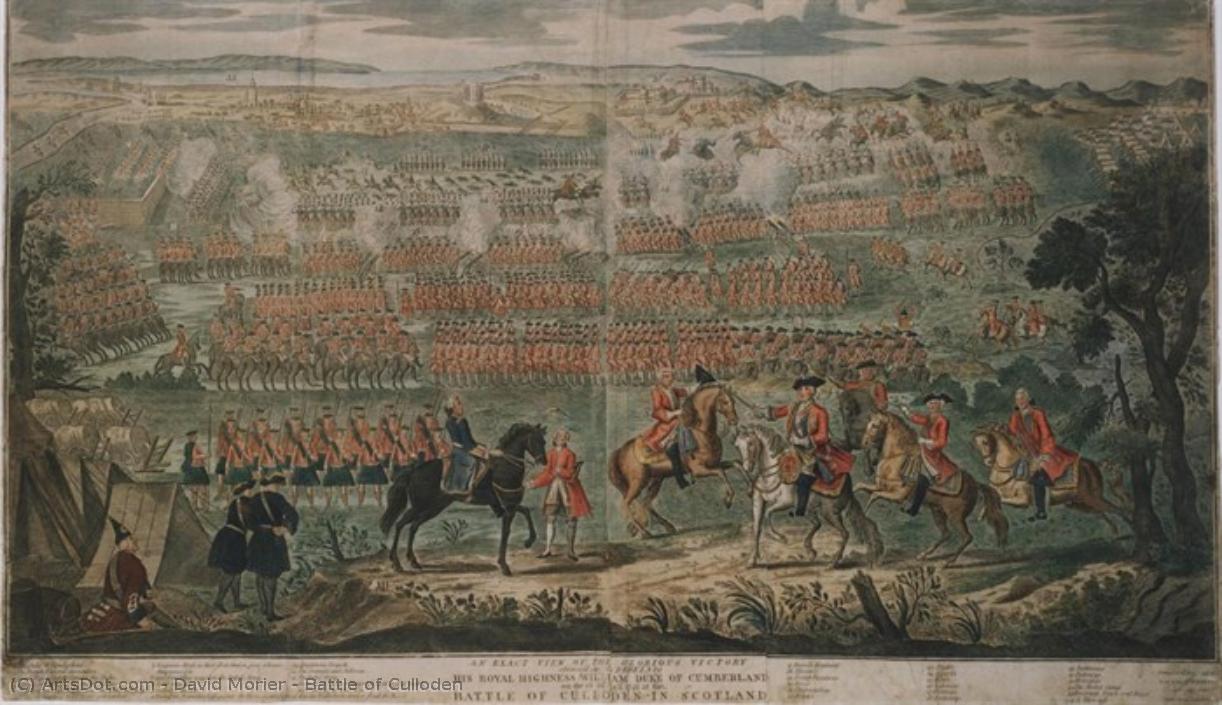
Battle of Culloden


 Ver mais
Giclée / Impressão de Arte
Impressão giclée ou em tela de qualidade de museu, com produção rápida e opções flexíveis de acabamento. ( Encomendar reprodução pintada à mão Comprar imagem em alta resolução)




































Escolha entre os nossos tamanhos pré-definidos que respeitam as proporções originais da obra de arte.

Você pode inserir suas próprias dimensões para se ajustar a uma moldura ou espaço específico. Se o tamanho selecionado não corresponder às proporções da imagem original, iremos recortar a obra de arte ou estender a imagem com uma borda espelhada ou preenchimento sólido. Um mockup digital será enviado para sua aprovação antes do início da produção.
Por favor, observe que a visualização na tela não reflete o recorte ou a extensão real. Apenas o mockup mostrará com precisão a composição final.
Embora tamanhos personalizados estejam disponíveis, recomendamos selecionar uma dimensão da lista predefinida para preservar as proporções originais.
Entrega mundial () em 2 semanas, em vez das 4/5 semanas padrão. (20 Agosto)

Envio Expresso Gratuito para todo o Mundo

Tela de Linho Premium

Seguro de transporte total

Garantia de Reembolso de Impostos Alfandegários

Garantia de Fidelidade de Cor

Política de Devolução de 60 Dias (Apenas para Defeitos)

Garantia de reembolso de 100%

Desconto para múltiplas unidades
 A opção de vidro está disponível apenas para tamanhos inferiores a 110 cm

Battle of Culloden
Giclée / Impressão de Arte
Dimensões da Reprodução
-


Preço Total
$ 80
Biografia do Artista
A Legacy of Valor: The Life and Art of David Morier
In the grand tapestry of eighteenth-century British art, few threads are as intricately woven with military precision and aristocratic splendor as those left by David Morier. An Anglo-Swiss master whose presence in England helped define the visual language of an era, Morier navigated a world of shifting political tides, from the echoes of the War of Austrian Succession to the profound upheaval of the Jacobite Rebellion. Though his early years remain partially veiled in the mists of history—with records suggesting a birth in Bern, Switzerland, around 1705—his arrival in England near 1743 marked the beginning of a transformative period for British equestrian and military portraiture.
Morier’s ascent within the competitive London art scene was not merely a matter of talent, but of profound professional acumen. He possessed a rare ability to secure the patronage of the highest echelons of society, most notably Duke Frederick Augustus II Cumberland. This relationship served as the cornerstone of his career, providing him with more than just financial stability; it granted him unprecedented access to the very heart of military life. Through this connection, Morier was able to observe the rhythms of the camp, the discipline of the regiment, and the raw intensity of the battlefield, translating these lived experiences into works that resonated with both accuracy and grandeur.
The Art of the Equestrian and the Military Landscape
What distinguishes Morier from his contemporaries is his unparalleled ability to marry the anatomical rigor of equestrian portraiture with the dramatic narrative of military history. He did not merely paint horses and men; he captured the spirit of command. His works often centered on the idealized vision of leadership, where the powerful musculature of a mount and the resolute posture of a commander served as symbols of martial virtue and stability. This mastery is perhaps most evident in his depictions of the Duke of Cumberland, where the artist utilized the scarlet military state coat and the commanding presence of the cavalry to convey an image of unshakeable authority.
Beyond the singular portrait, Morier’s oeuvre extends into the realm of historical documentation. His engravings and paintings serve as vital windows into the chaos and consequence of 18th-century conflicts. One might consider his contributions through the following thematic lenses:
- The Drama of Conflict: Works such as his depiction of the Battle of Culloden (1746) utilize a sense of movement and atmospheric tension to convey the harrowing reality of the Jacobite defeat.
- Regimental Identity: His meticulous attention to detail allowed him to document specific military figures, such as Sir Armine Wodehouse and Major General Sir Charles Howard, preserving the lineage and pride of various regiments for posterity.
- Anatomical Excellence: A profound understanding of equine anatomy, which allowed him to celebrate legendary animals like the Godolphin Arabian alongside their human counterparts.
Historical Significance and Enduring Impression
The significance of David Morier lies in his role as a visual chronicler of a pivotal moment in British history. At a time when the nation was defining its imperial identity and navigating internal rebellions, Morier provided the imagery that helped solidify the mythos of the British military. His paintings were not merely decorative; they were instruments of prestige, designed to commemorate triumphs and immortalize the figures who shaped the destiny of the realm.
As we look back upon his career, we see an artist who successfully bridged the gap between the observational precision of a documentary artist and the emotive power of a classical painter. Though he passed away in London around 1770, leaving behind a legacy that continues to fascinate historians and art enthusiasts alike, Morier’s ability to capture the intersection of human ambition and animal grace ensures his place in the pantheon of great historical painters. His work remains an essential study in how art can serve as both a mirror to the turbulence of war and a monument to the enduring ideals of heroism.

David Morier
1705 - 1770 , Switzerland
Informações Rápidas
- Artistic Movement Or Style: 18th Century Painting
- Date Of Birth: Bern, Switzerland (1705)
- Date Of Death: c. 8 January 1770
- Full Name: David Morier
- Nationality: Swiss
- Notable Artworks:
- An incident in the rebellion of 1745 (The Battle of Culloden)
- George II (after David Morier)
- Frederick Louis, Prince of Wales (after David Morier)
- Place Of Birth: Bern
Artigos Relacionados
Século XVIII na Arte: 10 Obras que Definem uma Era – OriginalUniqueArt
Descubra 10 obras-primas do Século XVIII! Explore a arte de David, Fragonard e Reynolds. Neoclassicismo, Rococó e retratos icônicos ganham vida. Encontre reproduções de alta qualidade para decorar sua casa com OriginalUniqueArt.com
George Paul Chalmers: Rediscovering the Angus Rembrandt & Scottish Colourist Roots
Explore the captivating world of George Paul Chalmers (1833-1878), a pivotal Scottish painter. Discover his landscapes, portraits & connection to the Aesthetic Movement and Colourists. Learn about this 'Angus Rembrandt's' legacy with OriginalUniqueArt.
Sir John Watson Gordon: A Study in Scottish Landscape Painting & Tonal Impressionism
Explore the captivating portraits of Sir John Watson Gordon, a leading Scottish master. Discover his evolution from neoclassical style to atmospheric Tonalism and influence on 19th-century British art. Learn about his iconic sitters & legacy.

Jacques-Louis David: Neoclassical Ideals & Revolutionary Witness
Explore the life & art of Jacques-Louis David, leading Neoclassical painter of the French Revolution. Discover iconic works like 'The Death of Marat' and his lasting impact on art history. Expert analysis & high-quality reproductions at OriginalUniqueArt.

David Roberts: A Scottish Pioneer of Topographical Art & Orientalist Vision
Explore the captivating world of David Roberts, a pioneering Scottish painter renowned for his detailed Orientalist scenes & stunning Egyptian landscapes. Discover his legacy and find museum-quality reproductions at OriginalUniqueArt.

