

 Visualizar na parede
 Compartilhar
 Compartilhar
 Detalhes
 Guia
Guia

 Baixar imagem
 Semelhantes
 Raio X
 Ver diaporama
 Estatísticas
Sketch for the play
 Oil On Canvas
- WallArt
- Expressionism
 1947
1947 29.0 x 29.0 cm
 Palácio da Arte da Geórgia - Museu de História Cultural
 Ler mais
Reprodução em Óleo Feita à Mão
Óleo sobre tela pintado à mão no tamanho e moldura de sua escolha, feito sob encomenda pelos nossos artistas. ( Alternar para Impressão Alternar para Imagem Digital)




P118B €10

P118H €10

P118W €10

P438Z €10

P508JH €12

P508YH €12

P805H €10

P805Z €10

P919BZ €10

P919G €10

P919XJ €10

P959ZH €10

P968JZ €12

W106C €8

W218G €10

W218JH €8

W218Y €10

W307PJ €10

W316G €10

W316PJ €8

W316Y €10

W398PJ €8

W4111J €10

W500HY €15

W500JH €15

W692G €12

W849H €8

W940BG €15

W953PJ €8




Escolha entre os nossos tamanhos pré-definidos que respeitam as proporções originais da obra de arte.

Insira a largura e a altura desejadas para se ajustarem à sua moldura ou parede. Como esta obra é pintada à mão, para um tamanho com proporções diferentes, o artista poderá pintar um pouco mais ao redor da imagem ou reduzir ligeiramente a composição — você escolhe. Enviamos uma maquete digital para sua aprovação antes de iniciar a pintura. A imagem exibida nesta página não representa o resultado real — apenas a maquete mostra o resultado final.
Após o pedido, a equipa OriginalUniqueArt.com enviará um e-mail ao cliente para solicitar instruções e fornecer uma prévia do esboço.
Entrega mundial () em 3 a 4 semanas, em vez das 5 semanas padrão. (25 Outubro). Sem comprometer a qualidade.

Envio expresso gratuito para todo o mundo

Tela de Linho de Alta Qualidade

Seguro de transporte completo

Garantia de Reembolso de Impostos Alfandegários

Garantia de Fidelidade Cromática

Política de Devolução em 100 Dias (Apenas para Defeitos)

Garantia de reembolso de 100%

Oferta de desconto por quantidade
 A opção de vidro está disponível apenas para tamanhos inferiores a 110 cm

Sketch for the play
Técnica de Reprodução
Tamanho da Reprodução
-


Preço Total
€ 263
A Storm Within: David Kakabadze’s ‘Sketch for the Play’
David Kakabadze's “Sketch for the Play,” painted in 1947, isn’t merely a landscape; it’s a visceral embodiment of turmoil and nascent creation. This oil on canvas immediately commands attention with its dramatic intensity – a brooding sky dominated by towering, almost menacing mountains that seem to press down upon a fragmented world below. The composition is deliberately fractured, divided into distinct horizontal bands: a dark, foreboding foreground punctuated by the skeletal remains of what appears to be an industrial structure, a mid-ground featuring a stark railway line slicing through a muted expanse of vegetation, and finally, an upper register ablaze with the turbulent energy of the heavens. It’s a scene pregnant with unspoken narrative, inviting the viewer to decipher its hidden meanings.
Kakabadze, a pivotal figure in Georgian modernism, wasn't simply replicating nature; he was translating it through a lens of intense emotion and experimentation. Born in 1889 in the remote village of Kukhi near Khoni, his artistic journey began with rigorous scientific study at St. Petersburg University, a foundation that would later inform his meticulous approach to composition and form. However, it was his embrace of European avant-garde movements – particularly Cubism and Expressionism – coupled with a deep reverence for Georgian traditions, that truly defined his unique style. “Sketch for the Play” exemplifies this synthesis; the geometric simplification of shapes, reminiscent of Cubist principles, is overlaid with the raw emotionality characteristic of Expressionism.
The Language of Impasto: Technique and Texture
What immediately strikes the eye is Kakabadze’s masterful use of impasto – a technique involving thick application of paint. The canvas itself becomes a landscape of ridges and valleys, each stroke deliberately visible, lending the artwork a palpable sense of texture and movement. This isn't a smooth, polished surface; it’s a dynamic, almost sculptural representation of the scene. The dark foreground is rendered with particularly dense impasto, creating an immediate feeling of weight and confinement, while the sky explodes with looser, more fluid brushstrokes, conveying the chaotic energy of the storm. The railway line, a stark vertical element, further emphasizes this tension between order and disorder.
Kakabadze’s choice of color palette – predominantly cool blues, grays, and greens – reinforces the artwork's somber mood. Yet, strategically placed accents of warm ochre and yellow within the clouds and vegetation hint at a glimmer of hope or perhaps simply the potential for renewal amidst the darkness. The deliberate flattening of perspective contributes to the overall sense of unease, suggesting that this is not a realistic depiction of space but rather an emotional landscape projected onto the canvas.
Symbolism in the Fragmented Landscape
The imagery within “Sketch for the Play” is rich with symbolic potential. The imposing mountains can be interpreted as representing both strength and isolation, while the railway line – a recurring motif in Kakabadze’s work – often signifies progress, connection, or even the relentless march of time. The decaying industrial structure in the foreground could symbolize the decline of traditional ways of life, juxtaposed against the enduring power of nature. The storm itself is a potent symbol of inner turmoil and transformation—a period of upheaval that inevitably precedes growth.
Interestingly, Kakabadze’s artistic output often explored themes of Georgian identity and folklore, subtly interwoven with his engagement with European modernism. While “Sketch for the Play” doesn't explicitly depict traditional Georgian subjects, its emotional intensity and fragmented composition resonate with a distinctly Georgian sensibility. It’s a work that invites contemplation, prompting viewers to consider not only the beauty of the landscape but also the complexities of human experience.
Bringing Kakabadze Home: Reproduction Options
David Kakabadze's “Sketch for the Play” is a powerful and evocative artwork that continues to captivate audiences today. A high-quality reproduction offers a remarkable opportunity to bring this masterpiece into your home or office, allowing you to appreciate its intricate details and emotional depth. OriginalUniqueArt.com offers meticulously crafted reproductions of this iconic painting, utilizing archival-grade materials and employing the same techniques as the original – including careful attention to impasto texture. Whether you choose a standard size or opt for a custom reproduction tailored to your specific needs, you can be assured of an authentic representation that faithfully captures the spirit and artistry of David Kakabadze’s masterpiece.
Perguntas e Respostas
A que período da carreira de David Kakabadze pertence "Sketch for the play"?
"Sketch for the play" representa o Mature Period de David Kakabadze.
Qual disposição melhor se adapta ao formato de "Sketch for the play", de David Kakabadze?
O formato (Square) e o ambiente recomendado (Living Room) são as duas informações de posicionamento registradas para "Sketch for the play", de David Kakabadze.
Por quais outros nomes ou pseudônimos David Kakabadze é conhecido?
David Kakabadze também é conhecido pelos nomes Davit Kakabadze, Kakabadze David.
Biografia do Artista
A Pioneer of Georgian Modernism: The Life and Art of David Kakabadze
David Kakabadze, born in the village of Kukhi near Khoni, Georgia, in 1889, stands as a pivotal figure in the development of twentieth-century Georgian art. His career was one of remarkable innovation, seamlessly blending the burgeoning currents of European avant-garde movements with a deep reverence for his native Georgian traditions. Kakabadze wasn’t merely an artist; he was a polymath – a painter, graphic artist, scenic designer, art scholar, cinematic innovator, and even an amateur photographer. This multifaceted approach to creativity defined his artistic journey and cemented his legacy as one of Georgia's most important modernist masters. His early life, though rooted in the simplicity of a peasant family, was marked by intellectual curiosity fostered through sponsorship that allowed him to pursue studies at St. Petersburg University, graduating with a degree in natural sciences in 1916. Simultaneously, he honed his artistic skills under Dmitroyev-Kavkazsky and immersed himself in the study of Georgia’s rich artistic heritage. This dual education – scientific rigor combined with artistic sensitivity – would become a hallmark of his work.Parisian Encounters and Artistic Transformation
Following a brief period teaching and painting in Tbilisi, Kakabadze embarked on a transformative chapter of his life in Paris from 1919 to 1927. This sojourn placed him at the epicenter of the European avant-garde, exposing him to Cubism, Futurism, and other radical artistic experiments. He actively participated in exhibitions with the Société des Artistes Indépendants, forging connections with fellow Georgian artists Lado Gudiashvili and Shalva Kikodze. It was during this period that Kakabadze’s style underwent a dramatic evolution. Initially captivated by the landscapes of his native Imereti province – particularly the ethereal beauty of misty mountains and shimmering lakes – he began to explore “subjectless painting,” experimenting with unconventional materials like metal, mirror glass, and stained glass in place of traditional paints. This exploration wasn't merely about technical innovation; it was a quest to redefine the very essence of pictorial representation. He delved deeply into Cubism, absorbing its fragmented forms and analytical approach, yet always maintaining a distinct artistic voice that prevented his work from becoming mere imitation. His theoretical writings during this time, published in Parisian art journals, demonstrate a profound engagement with the intellectual underpinnings of modern art, establishing him as a thought leader within the modernist community. He meticulously dissected visual perception, questioning established conventions and advocating for new ways of perceiving and interpreting reality—a stance that foreshadowed many developments in later artistic movements.Innovation Beyond the Canvas: Cinema and Stage Design
Kakabadze’s inventive spirit extended far beyond painting. Recognizing the potential of new technologies, he began experimenting with cinema in the early 1920s, driven by a desire to overcome what he perceived as film's inherent limitations. He envisioned a cinematic experience that transcended passive observation, aiming for immersion and emotional impact—a vision remarkably prescient considering the technological landscape of his time. Driven by this ambition, he designed and patented a stereoscopic film projector that created the illusion of three-dimensionality without the need for glasses – a monumental feat of engineering and artistic ingenuity that positioned him as a pioneer of 3D cinema decades before it became commonplace. This inventive streak also manifested in his stage designs, particularly during his collaboration with the renowned Georgian theatre director Kote Marjanishvili after returning to Georgia in 1927. His sets were not merely backdrops but immersive environments incorporating innovative techniques like projections, light effects, and collage-like constructions—a bold departure from traditional theatrical aesthetics. He conceived elaborate productions that pushed boundaries of visual storytelling, transforming the theatre into a space for experimentation and artistic exploration.Return to Georgia and Enduring Legacy
Kakabadze’s return to Georgia in 1927 coincided with the rise of Soviet power and the imposition of Socialist Realism as the dominant artistic style. This presented Kakabadze with an undeniable challenge—a confrontation between his deeply ingrained modernist convictions and the ideological imperatives of the era. Despite facing pressure from official circles, he steadfastly defended his artistic principles, refusing to compromise on his vision of art as a vehicle for intellectual freedom and aesthetic experimentation. He continued to contribute to Georgian culture through documentary filmmaking focused on preserving cultural heritage—a testament to his belief in the importance of documenting and celebrating Georgia’s traditions. Furthermore, he taught at Tbilisi State Academy of Arts, nurturing the next generation of artists and ensuring that his influence would endure beyond his own lifetime. David Kakabadze passed away in 1952, leaving behind a body of work that was largely overlooked for decades—a regrettable circumstance considering its significance as a cornerstone of Georgian modernist art. However, in recent years, there has been a growing appreciation for Kakabadze’s contribution to the artistic landscape and an increasing recognition of his pioneering spirit—a legacy destined to inspire artists for generations to come.Key Works and Collections
Some of Kakabadze’s most notable works include Sailboats, Bretagne, and Sketch for Getting Various Grades of Light in a Single Electric Bulb. These pieces exemplify his ability to synthesize European artistic trends with Georgian cultural identity—a characteristic that distinguishes him from many of his contemporaries. His work can be found in prominent collections around the world, including the Art Palace of Georgia – Museum of Cultural History in Tbilisi, the Berardo Collection Museum in Lisbon, and the Thyssen-Bornemisza Museum in Madrid. Furthermore, a significant collection of his early works resides at Yale University—a testament to Kakabadze’s international recognition during his lifetime.
David Kakabadze
1889 - 1952 , Geórgia
Dados Rápidos
- Artistic Movement Or Style: Avant-garde, Cubism
- Artists Or Movements Influenced By This Artist: ['Numerous artists']
- Date Of Birth: August 20, 1889
- Full Name: David Kakabadze
- Nationality: Georgian
- Notable Artworks:
- Sailboats
- Bretagne
- Sketch for Getting Various Grades of Light in a Single Electric Bulb
- Place Of Birth: Kutaisi, Georgia
Artigos Relacionados

Evocations of Place: A Historical Journey Through Landscape Art
Explore the rich history of landscape art with OriginalUniqueArt. Discover renowned artists, movements like Impressionism & Romanticism, and expert guidance for collecting timeless pieces. Find your perfect serene escape today!
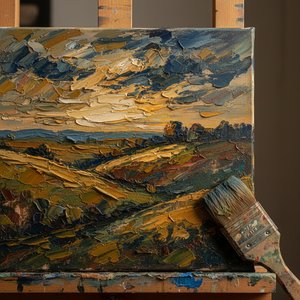
The Timeless Beauty of Oil on Canvas: A Masterclass in Texture, Impasto, and Artistic Mastery
Discover the profound allure of oil on canvas. Explore the mastery of impasto textures, the science of pigment longevity, and expert guides to selecting museum-quality reproductions that elevate your collection with timeless elegance and tactile depth.

Os 10 Mestres da Paisagem Romântica: Arte para Inspirar a Sua Casa
Descubra os 10 quadros mais emblemáticos da Paisagem Romântica! Explore a história de Turner, Friedrich e outros mestres. Encontre reproduções de arte exclusivas para inspirar sua decoração em OriginalUniqueArt.com.

The Enduring Legacy of Oil on Canvas: Technique, History & Aesthetic Impact
Explore the rich history & techniques of oil painting – from Renaissance masters to Impressionism. Discover pigments, layering methods, and why this timeless medium endures. Expert insights for artists & art enthusiasts.

John Constable: As 25 Obras-Primas que Definem o Mestre da Paisagem Inglesa | OriginalUniqueArt
Descubra as 25 obras-primas de John Constable, o mestre da paisagem inglesa! Explore a arte romântica, cores vibrantes e histórias fascinantes por trás de 'Hay Wain' e outras pinturas icônicas. Encontre reproduções de alta qualidade para decorar sua casa com OriginalUniqueArt.com.
