

 Visualizar em escala
 Enviar
 Compartilhar
 Ver detalhes
 Guia de Obras do Aluno

 Baixar imagem
 Semelhantes
 Raio X
 Apresentação de slides
 Estatísticas
Three Trees near Thixendale

 Ver mais
Adquira uma imagem digital de alta resolução e aprimorada, muito superior à prévia online.
Cada arquivo é meticulosamente preparado por nossos especialistas internos, utilizando ferramentas avançadas e retoques manuais de alta precisão. Garantimos que cada imagem apresente clareza excepcional, fidelidade de cores e detalhes minuciosos.
O arquivo final é entregue por e-mail em até 72 horas, otimizado para uso imediato em ambientes profissionais, editoriais e de impressão. Esta é a mesma qualidade utilizada por estúdios de design de alto nível, editoras e galerias.
Imagem Digital
Baixe um arquivo de alta resolução para exibição pessoal, impressão e projetos criativos. ( Alternar para Impressão Encomendar reprodução pintada à mão)
Incluído em cada pedido de imagem digital
Entrega Digital Especializada e Garantida
Ao escolher o OriginalUniqueArt.com, você não está apenas adquirindo uma imagem — você está recebendo uma obra de arte digital profissionalmente aprimorada, elaborada com precisão e com garantia de satisfação. Aqui está tudo o que acompanha seu pedido, automaticamente:

Entrega rápida por e-mail
O seu arquivo de imagem digital em alta resolução será enviado por e-mail em até 72 horas após o pedido — pronto para uso imediato.

Arquivo Digital com IA Otimizado
Sua obra de arte é otimizada profissionalmente por meio de ferramentas avançadas de IA e edição manual, garantindo o máximo de detalhes, clareza e precisão de cores.

Reenvio gratuito vitalício
Apagou ou perdeu o seu ficheiro acidentalmente? Não se preocupe – nós reenviamos para si a qualquer momento, gratuitamente.

Sem Taxas de Importação - Sempre
Desfrute da sua obra de arte instantaneamente, sem taxas alfandegárias, impostos ou custos de entrega — downloads digitais são sempre isentos de taxas.

Garantia de Precisão de Cores
Garantimos que sua imagem digital reflita as cores originais com a maior fidelidade possível, utilizando ferramentas profissionais e gerenciamento de cores.

Garantia de satisfação de 100 dias
Se não estiver satisfeito com a sua imagem digital, nós a revisaremos ou reembolsaremos 100% dentro de 100 dias — sem perguntas.

Garantia de Reembolso 100%
Não está satisfeito? Receba o reembolso total em até 100 dias após o recebimento do seu arquivo digital — sem perguntas.

Descontos para pedidos em lote
Compre 3 imagens, economize 10% - Compre 5, economize 15% - Compre 10+, economize 20%. Ideal para projetos criativos, galerias e agências.
David Hockney’s “Three Trees near Thixendale”: A Celebration of Light and Landscape
The Yorkshire countryside holds a particular fascination for British artist David Hockney, whose seminal painting "Three Trees near Thixendale" embodies this enduring connection to place. Completed in 1983, the artwork isn't merely a depiction of trees; it’s an immersive experience rendered in Hockney’s signature style—a bold departure from traditional landscape painting that prioritizes luminosity and simplification.Style and Technique: Embracing Optical Illusion
Hockney’s approach distinguishes itself through his masterful manipulation of optical illusion, a technique he honed throughout his prolific career. Rather than striving for photographic realism, he employs a vibrant palette dominated by yellows and oranges—colors chosen deliberately to capture the fleeting effects of sunlight filtering through the branches. The trees themselves are rendered in broad, gestural strokes, reducing their complexity to essential forms while retaining an undeniable sense of dynamism. This simplification isn’t about diminishing beauty; it's about distilling it down to its purest essence, allowing viewers to perceive the underlying structure and rhythm of the scene. Hockney famously described his method as “painting with light,” a statement that encapsulates the core philosophy guiding this remarkable piece.Historical Context: Postmodern Reflections on Tradition
“Three Trees near Thixendale” emerged during a pivotal moment in British art history—the rise of postmodernism. Rejecting the grand narratives and stylistic conventions of Modernism, Hockney embraced experimentation and challenged established artistic hierarchies. The painting’s influence can be seen in subsequent landscape artists who sought to capture atmospheric conditions with comparable boldness and expressive freedom. It stands as a testament to Hockney's unwavering commitment to pushing boundaries while simultaneously honoring the legacy of Romantic landscape painters like Turner—a dialogue between past and present that underscores the enduring power of observation and artistic intuition.Symbolism: The Trees as Vessels of Memory
Beyond its aesthetic qualities, “Three Trees near Thixendale” resonates with deeper symbolic meanings. Trees have long been associated with resilience, growth, and connection to the natural world—themes central to Hockney’s broader artistic vision. In this specific instance, the three trees may represent interconnectedness and harmony within the landscape, mirroring Hockney's own belief in capturing fleeting moments of beauty before they vanish. Furthermore, the painting evokes memories of Yorkshire summers—a nostalgic yearning for simpler times and a celebration of the enduring spirit of place.Emotional Impact: A Moment Frozen in Time
Ultimately, “Three Trees near Thixendale” succeeds in transporting viewers to the Yorkshire countryside, capturing not just what is seen but also how it feels. The radiant colors evoke warmth and optimism, while the expressive brushstrokes convey a sense of immediacy and spontaneity. It’s a painting that invites contemplation—a reminder that true beauty lies in embracing imperfection and appreciating the transformative power of light. This artwork continues to inspire collectors and interior designers alike who seek to infuse their spaces with a touch of Hockney's distinctive vision, ensuring that “Three Trees near Thixendale” remains a cherished emblem of British landscape art for generations to come.Perguntas e Respostas
Onde posso comprar uma reprodução pintada à mão de "Three Trees near Thixendale" de David Hockney?
Cópias pintadas à mão de "Three Trees near Thixendale" de David Hockney são vendidas em este site: uma reprodução a óleo pintada à mão sobre tela de linho, encomendadas através de esta página.
Qual tamanho devo imprimir para "Three Trees near Thixendale" para o meu quarto?
Em um(a) Living Room, sugere-se que "Three Trees near Thixendale" seja impresso no tamanho Large.
Para qual tom se inclina "Three Trees near Thixendale"?
A tonalidade dominante de "Three Trees near Thixendale" de David Hockney é Green to Violet Spectrum. A tonalidade é o tom subjacente da paleta.
Em qual movimento e em qual época se insere "Three Trees near Thixendale" de David Hockney?
"Three Trees near Thixendale" de David Hockney insere-se no movimento Contemporary Realism, dentro da era Era Moderna de seu criador.
"Three Trees near Thixendale" de David Hockney utiliza contrastes fortes ou harmonias suaves?
A análise cromática de "Three Trees near Thixendale" de David Hockney registra um contraste Balanced e uma harmonia Strong Color Unity.
Quem criou "Three Trees near Thixendale"?
O artista por trás de "Three Trees near Thixendale" é David Hockney. A obra está catalogada sob o nome de David Hockney.
"Three Trees near Thixendale" está disponível como uma impressão fine art?
Para obter uma impressão de "Three Trees near Thixendale" de David Hockney, basta encomendá-la em esta página: uma impressão fine art em tela de algodão ou papel canvas de arquivo.
Biografia do Artista
A Life Painted in Light: The World of David Hockney
David Hockney, born July 9, 1937, in Bradford, England, is more than simply a painter; he’s a visual polymath whose career has spanned painting, drawing, printmaking, stage design, and photography. His story begins amidst the grit and determination of Bradford, a landscape that instilled within him a keen observational eye, even as his father, Kenneth Hockney, fostered a spirit of independent thought through conscientious objection during World War II. This early environment shaped a young artist who would consistently challenge conventions and forge his own path. Formal education at Wellington Primary School and Bradford Grammar School laid the foundation for a career that would redefine British art in the 20th and 21st centuries, culminating in studies at Bradford College of Art and later, the prestigious Royal College of Art in London. It was during these formative years that Hockney began to articulate a unique artistic voice, one that blended Pop sensibilities with a distinctly British perspective.The Rise of a Pop Icon and Beyond
The 1960s witnessed Hockney’s ascent as a pivotal figure within the burgeoning Pop Art movement. However, unlike some contemporaries who wholeheartedly embraced American commercial culture, Hockney brought a uniquely British sensibility to the genre. His work exploded with vibrant color and bold lines, depicting scenes that were both familiar and subtly subversive. A Bigger Splash (1966), perhaps his most iconic early piece, encapsulates this perfectly – a seemingly simple depiction of a swimming pool becomes a meditation on Californian leisure, artifice, and the very act of seeing. This wasn’t merely representation; it was an exploration of how we perceive reality. Critics noted Hockney's masterful use of color theory, mirroring the influence of Bauhaus principles. His double portraits, like American Collectors (Fred and Marcia Weisman), demonstrate his remarkable ability to capture not just likeness but also the essence of personality and relationship—a technique that foreshadowed later explorations into psychological portraiture. Hockney’s artistic vision was profoundly shaped by artists such as Francis Bacon and Lucian Freud, whose unflinching depictions of human emotion served as inspiration for his own work.Experimentation, Innovation, and The Rescue Of Painting
Hockney's artistic curiosity has never been confined to a single medium. Throughout his career, he relentlessly experimented with new technologies and approaches. From his early embrace of lithography and etching to his later explorations of photography – particularly his use of Polaroid composites in the 1980s – Hockney consistently pushed the boundaries of what art could be. He famously declared painting wasn’t dead but needed “rescuing” from its own conventions, leading him to develop innovative techniques like perspective distortions and fragmented viewpoints. This desire to revitalize painting led to ambitious projects such as Pearblossom Hwy., 11–18th April 1986, a complex photomontage that challenged traditional notions of space and representation—a bold statement against the prevailing artistic trends of the time. His stage designs for opera, including sets for Mozart's The Magic Flute and Stravinsky’s The Rake’s Progress, further demonstrate his versatility and ability to translate his visual language into a different artistic realm.Recognition, Legacy, And Enduring Influence
David Hockney’s contributions to the art world have been widely recognized throughout his illustrious career. He was appointed Order of the Companion of Honour (CH) in 2018, a testament to his profound impact on British culture—a prestigious honor bestowed upon him for his lifetime achievements. Prior to that, he was elected a Fellow of the Royal Society (FRS) in 2003 and received the Laureate of the Praemium Imperiale for Painting in 2000—acknowledging his exceptional artistic talent and intellectual curiosity. His works are held in major museum collections worldwide, ensuring his art continues to inspire new generations. Hockney’s influence extends beyond the visual arts; he has become a cultural icon, celebrated for his wit, intelligence, and unwavering commitment to artistic exploration. He remains an active force in the art world, continually challenging expectations and inspiring artists across disciplines—a figure who embodies the spirit of innovation and artistic freedom.- Notable Works: Including *A Bigger Splash*, *American Collectors (Fred and Marcia Weisman)*, *Pearblossom Hwy., 11–18th April 1986*
- Influences: Artists like Francis Bacon and Lucian Freud profoundly impacted Hockney’s artistic vision.
- Techniques: Hockney pioneered innovative techniques such as perspective distortions and fragmented viewpoints, redefining how artists approached representation.
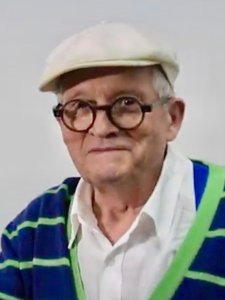
David Hockney
1937 - , Reino Unido
Informações Rápidas
- Artistic Movement Or Style: Pop Art
- Artists Or Movements Influenced By This Artist: ['']
- Artists Who Influenced This Artist:
- Pauline Boty
- Francis Bacon
- Date Of Birth: 9 Jul 1937
- Full Name: David Hockney
- Nationality: British
- Notable Artworks:
- A Bigger Splash
- Portrait of an Artist
- We Two Boys Together
- Place Of Birth: Bradford, UK