

 Visualizar em escala
 Enviar
 Compartilhar
 Ver detalhes
 Guia de Obras do Aluno

 Baixar imagem
 Semelhantes
 Raio X
 Apresentação de slides
 Estatísticas
The third love painting


 Ver mais
A obra de arte exibida nesta página é protegida por leis de direitos autorais, o que significa que não podemos criar ou vender legalmente uma reprodução idêntica. Esta proteção é aplicada por meio de acordos internacionais, tais como a Convenção de Berna e pelas leis nacionais, incluindo as estabelecidas por Lei de Direitos Autorais dos EUA - Título 17.
Como uma alternativa respeitosa e legal, oferecemos obras de arte personalizadas e pintadas à mão, inspiradas na obra original. Nossos artistas profissionais e experientes estudam cuidadosamente o estilo, a atmosfera e a essência artística da obra original para criar uma peça nova e única que evoque a mesma sensação — permanecendo como uma criação original por direito próprio.
Este método cumpre plenamente as regulamentações de direitos autorais, pois não envolve a cópia ou duplicação da obra protegida. Em vez disso, trata-se de uma reinterpretação criativa — uma nova pintura que é influenciada pela original, mas não idêntica a ela.
Reprodução em Óleo Feita à Mão
Óleo sobre tela pintado à mão no tamanho e moldura de sua escolha, feito sob encomenda pelos nossos artistas. ( Alternar para Impressão Ver Imagem Digital)




P118B €10

P118H €10

P118W €10

P438Z €10

P508JH €12

P508YH €12

P805H €10

P805Z €10

P919BZ €10

P919G €10

P919XJ €10

P959ZH €10

P968JZ €12

W106C €8

W218G €10

W218JH €8

W218Y €10

W307PJ €10

W316G €10

W316PJ €8

W316Y €10

W398PJ €8

W4111J €10

W500HY €15

W500JH €15

W692G €12

W849H €8

W940BG €15

W953PJ €8




Escolha entre os nossos tamanhos pré-definidos que respeitam as proporções originais da obra de arte.

Pode inserir as suas próprias dimensões para se adequar a uma moldura ou espaço específico. Se o tamanho selecionado não corresponder às proporções da imagem original, iremos cortar a obra de arte ou estender a pintura com elementos adicionais pintados à mão. Um esboço digital será enviado para sua aprovação antes do início da produção.
Tenha em atenção que a pré-visualização no ecrã não reflete o corte ou extensão real. Apenas o esboço mostrará com precisão a composição final.
Embora tamanhos personalizados estejam disponíveis, recomendamos selecionar uma dimensão da lista predefinida para preservar as proporções originais.
Após o pedido, a equipa OriginalUniqueArt.com enviará um e-mail ao cliente para solicitar instruções e fornecer uma prévia do esboço.
Entrega mundial () em 3 a 4 semanas, em vez das 5 semanas padrão. (10 Outubro). Sem comprometer a qualidade.

Envio expresso gratuito para todo o mundo

Tela de Linho Premium

Seguro de transporte total

Garantia de Reembolso de Impostos Alfandegários

Garantia de Fidelidade de Cor

Política de Devolução em 100 Dias (Apenas para Defeitos)

Garantia de reembolso de 100%

Desconto para múltiplas unidades
 A opção de vidro está disponível apenas para tamanhos inferiores a 110 cm

The third love painting
Técnica de Reprodução
Dimensões da Reprodução
-


Preço Total
€ 259
A Poignant Encounter with Impermanence
In the quietude of David Hockney’s “The Third Love,” we find ourselves standing before a composition that is as much a psychological landscape as it is a visual one. At first glance, the viewer is met with a striking, almost jarring simplicity: a solitary wooden chair, its seat a vibrant splash of red, bearing the stark, handwritten command “must go.” This single phrase transforms the object from a mere piece of furniture into a profound vessel for existential reflection. The painting does not merely depict a chair; it captures a moment of transition, an intersection between presence and departure, where the weight of memory meets the inevitability of change.
The emotional resonance of the work lies in its ability to evoke a sense of bittersweet nostalgia. There is a stillness here that feels heavy with the passage of time, inviting the observer to contemplate their own attachments and the transient nature of life. For the collector or the designer, this piece offers more than just aesthetic beauty; it provides a conversational anchor, a way to introduce themes of mindfulness and deep introspection into a living space.
The Mastery of Hockney’s Visual Language
To understand the power of “The Third Love,” one must look closely at Hockney’s signature approach to form and color. Eschewing the rigid constraints of photographic realism, Hockney employs a style that prioritizes atmosphere and feeling over literal accuracy. Influenced by the structural innovations of Cézanne and the bold contours of Picasso, his technique here utilizes flattened perspectives and a luminous palette to create a sense of depth that is felt rather than measured. The texture of the wood grain is rendered with meticulous care, yet it exists within a space where light and color take precedence over shadow.
The artist’s use of color is particularly masterful in this period of his career. The interplay between the muted, earthy tones of the background—reminiscent of the rolling Yorkshire hills—and the sudden, defiant brightness of the red seat creates a visual tension that keeps the eye moving. This deliberate rejection of illusionistic depth allows the subject to emerge with a graphic clarity, making the "must go" inscription feel like an inescapable truth etched into the very fabric of the scene.
A Legacy of Observation and Context
Created during a prolific era between 1968 and 1970, this work serves as a vital window into Hockney’s evolving relationship with his surroundings. During this time, the artist was deeply engaged in documenting the landscapes of Yorkshire, finding inspiration in the subtle shifts of light and the organic geometry of the English countryside. In “The Third Love,” we see the seeds of his transition from figuration toward a more nuanced abstraction. The background, though understated, carries the DNA of that landscape, grounding the surrealist element of the text within a recognizable, naturalistic world.
For those seeking to adorn a curated collection or an avant-garde interior, this painting represents a pinnacle of 20th-century British art. It is a piece that bridges the gap between Pop Art sensibilities and deep, emotive expressionism. Owning a reproduction of such a significant work allows one to bring a piece of art history into the modern home—a constant, quiet reminder of the beauty found in the fleeting moments of our lives.
Perguntas e Respostas
"The third love painting" está disponível como uma impressão fine art?
Para obter uma impressão de "The third love painting" de David Hockney, basta encomendá-la em esta página: uma impressão fine art em tela de algodão ou papel canvas de arquivo.
Como "The third love painting" de David Hockney pode ser utilizado na decoração de interiores?
O uso de (Statement) e o espaço (Living Room) são as duas recomendações registradas para "The third love painting" de David Hockney.
Que emoção a obra "The third love painting" do Contemporary Minimalism transmite?
"The third love painting" carrega um tom emocional Nostalgic dentro do movimento Contemporary Minimalism.
Qual é o uso recomendado de uma impressão de "The third love painting"?
O uso recomendado de uma impressão de "The third love painting" é Statement.
Onde posso comprar uma reprodução pintada à mão de "The third love painting" de David Hockney?
Você pode encomendar uma reprodução pintada à mão de "The third love painting" de David Hockney diretamente em esta página: uma reprodução a óleo pintada à mão sobre tela de linho, feita sob encomenda.
A qual artista "The third love painting" é atribuída?
O artista por trás de "The third love painting" é David Hockney. A obra está catalogada sob o nome de David Hockney.
Com qual sentimento "The third love painting" está associada?
O tom emocional registrado para "The third love painting" de David Hockney é Nostalgic. Ele resume o sentimento que a obra expressa.
Biografia do Artista
A Life Painted in Light: The World of David Hockney
David Hockney, born July 9, 1937, in Bradford, England, is more than simply a painter; he’s a visual polymath whose career has spanned painting, drawing, printmaking, stage design, and photography. His story begins amidst the grit and determination of Bradford, a landscape that instilled within him a keen observational eye, even as his father, Kenneth Hockney, fostered a spirit of independent thought through conscientious objection during World War II. This early environment shaped a young artist who would consistently challenge conventions and forge his own path. Formal education at Wellington Primary School and Bradford Grammar School laid the foundation for a career that would redefine British art in the 20th and 21st centuries, culminating in studies at Bradford College of Art and later, the prestigious Royal College of Art in London. It was during these formative years that Hockney began to articulate a unique artistic voice, one that blended Pop sensibilities with a distinctly British perspective.The Rise of a Pop Icon and Beyond
The 1960s witnessed Hockney’s ascent as a pivotal figure within the burgeoning Pop Art movement. However, unlike some contemporaries who wholeheartedly embraced American commercial culture, Hockney brought a uniquely British sensibility to the genre. His work exploded with vibrant color and bold lines, depicting scenes that were both familiar and subtly subversive. A Bigger Splash (1966), perhaps his most iconic early piece, encapsulates this perfectly – a seemingly simple depiction of a swimming pool becomes a meditation on Californian leisure, artifice, and the very act of seeing. This wasn’t merely representation; it was an exploration of how we perceive reality. Critics noted Hockney's masterful use of color theory, mirroring the influence of Bauhaus principles. His double portraits, like American Collectors (Fred and Marcia Weisman), demonstrate his remarkable ability to capture not just likeness but also the essence of personality and relationship—a technique that foreshadowed later explorations into psychological portraiture. Hockney’s artistic vision was profoundly shaped by artists such as Francis Bacon and Lucian Freud, whose unflinching depictions of human emotion served as inspiration for his own work.Experimentation, Innovation, and The Rescue Of Painting
Hockney's artistic curiosity has never been confined to a single medium. Throughout his career, he relentlessly experimented with new technologies and approaches. From his early embrace of lithography and etching to his later explorations of photography – particularly his use of Polaroid composites in the 1980s – Hockney consistently pushed the boundaries of what art could be. He famously declared painting wasn’t dead but needed “rescuing” from its own conventions, leading him to develop innovative techniques like perspective distortions and fragmented viewpoints. This desire to revitalize painting led to ambitious projects such as Pearblossom Hwy., 11–18th April 1986, a complex photomontage that challenged traditional notions of space and representation—a bold statement against the prevailing artistic trends of the time. His stage designs for opera, including sets for Mozart's The Magic Flute and Stravinsky’s The Rake’s Progress, further demonstrate his versatility and ability to translate his visual language into a different artistic realm.Recognition, Legacy, And Enduring Influence
David Hockney’s contributions to the art world have been widely recognized throughout his illustrious career. He was appointed Order of the Companion of Honour (CH) in 2018, a testament to his profound impact on British culture—a prestigious honor bestowed upon him for his lifetime achievements. Prior to that, he was elected a Fellow of the Royal Society (FRS) in 2003 and received the Laureate of the Praemium Imperiale for Painting in 2000—acknowledging his exceptional artistic talent and intellectual curiosity. His works are held in major museum collections worldwide, ensuring his art continues to inspire new generations. Hockney’s influence extends beyond the visual arts; he has become a cultural icon, celebrated for his wit, intelligence, and unwavering commitment to artistic exploration. He remains an active force in the art world, continually challenging expectations and inspiring artists across disciplines—a figure who embodies the spirit of innovation and artistic freedom.- Notable Works: Including *A Bigger Splash*, *American Collectors (Fred and Marcia Weisman)*, *Pearblossom Hwy., 11–18th April 1986*
- Influences: Artists like Francis Bacon and Lucian Freud profoundly impacted Hockney’s artistic vision.
- Techniques: Hockney pioneered innovative techniques such as perspective distortions and fragmented viewpoints, redefining how artists approached representation.
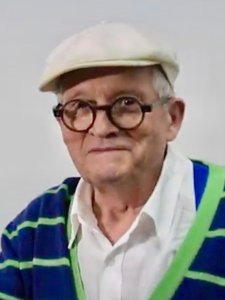
David Hockney
1937 - , Reino Unido
Informações Rápidas
- Artistic Movement Or Style: Pop Art
- Artists Or Movements Influenced By This Artist: ['']
- Artists Who Influenced This Artist:
- Pauline Boty
- Francis Bacon
- Date Of Birth: 9 Jul 1937
- Full Name: David Hockney
- Nationality: British
- Notable Artworks:
- A Bigger Splash
- Portrait of an Artist
- We Two Boys Together
- Place Of Birth: Bradford, UK
Artigos Relacionados

Echoes of Time: Exploring the Enduring Appeal & Historical Context of Vintage Art Prints
Explore the captivating world of vintage art prints! Discover their history, collecting tips & enduring appeal. Expert insights on chromolithography and building a legacy collection with OriginalUniqueArt.

Crimson Threads of Narrative: Exploring Symbolism & Representation in Artworks Featuring the Red Dress
Explore the rich symbolism of the red dress in art history! From ancient power displays to iconic portraits like Cézanne’s 'Madame Cezanne', discover the cultural and artistic significance behind this captivating color. Expert analysis & insights.

Giclée Prints: Archival Quality & Aesthetic Nuances for the Discerning Collector
Explore the world of giclée prints with OriginalUniqueArt. Learn about archival quality, aesthetic nuances & investment potential. Expert guidance for discerning art collectors seeking museum-quality reproductions and lasting value.

The Enduring Legacy of Fine Art Prints: Technique, History & Aesthetic Impact
Explore the rich history & techniques of fine art prints. Discover investment potential, assess authenticity, and learn how to preserve your collection with expert guidance. Trusted insights for discerning collectors.
The Enduring Legacy of Printmaking: Techniques, Themes & Artistic Innovation Across Centuries
Explore the rich history of printmaking with OriginalUniqueArt. Discover techniques from intaglio to lithography, learn about collecting valuable prints & find museum-quality reproductions. Expert insights for art enthusiasts and collectors.


