
 Visualizar na parede
 Compartilhar
 Compartilhar
 Detalhes
 Guia
Guia

 Baixar imagem
 Semelhantes
 Raio X
 Ver diaporama
 Perguntas e Respostas
 Estatísticas
Madeline after prayer
 Ler mais
Giclée / Impressão de Arte
Impressão giclée ou em tela de qualidade de museu, com produção rápida e opções flexíveis de acabamento. ( Comprar pintura feita à mão Alternar para Imagem Digital)




































Escolha entre os nossos tamanhos pré-definidos que respeitam as proporções originais da obra de arte.

Insira a largura e a altura desejadas para se ajustarem à sua moldura ou parede. Uma impressão pode ser apenas cortada, nunca ampliada além da imagem original; portanto, um tamanho com proporções diferentes resultará na perda de parte da imagem. Enviamos uma maquete digital para sua aprovação antes de realizarmos a impressão. A imagem exibida nesta página não mostra o corte real — apenas a maquete o faz.
Entrega mundial () em 2 semanas, em vez das 4/5 semanas padrão. (10 Novembro)

Envio expresso gratuito para todo o mundo

Tela de Linho de Alta Qualidade

Seguro de transporte completo

Garantia de Reembolso de Impostos Alfandegários

Garantia de Fidelidade Cromática

Política de Devolução em 100 Dias (Apenas para Defeitos)

Garantia de reembolso de 100%

Oferta de desconto por quantidade
 A opção de vidro está disponível apenas para tamanhos inferiores a 110 cm

Madeline after prayer
Giclée / Impressão de Arte
Tamanho da Reprodução
-


Preço Total
€ 73
The Inspiration Behind the Painting
Maclise drew inspiration from John Keats's poem "The Eve of St. Agnes," which tells the story of Madeline, a maiden who hopes to dream of her future husband after prayer. The painting depicts Madeline in a peaceful bedroom setting, surrounded by elements that reflect her religious and artistic inclinations.Elements of the Painting
- Books and Guitar: Two books are visible in the scene, one near the center and another towards the left side. A guitar is also present on the left side, adding a musical element to the room. - Chairs and Clock: There are three chairs in the bedroom, with one located at the far right, another closer to the middle, and the third chair situated further back in the scene. A clock can be seen hanging on the wall above Madeline's head, indicating the time of day. - Madeline's Portrait: The woman appears to be sitting on the edge of her bed while holding a book. She has long hair that falls down her back.Artistic Style and Influence
Maclise's work came close to the Pre-Raphaelite style late in his career, as seen in Madeline after Prayer. The detailed setting and proximity to the main figure distinguish this conception from John Everett Millais’s 1863 version of the subject.Relevance and Availability
This painting is part of the collection at the Walker Art Gallery, Liverpool. For those interested in acquiring a handmade oil painting reproduction of Madeline after Prayer, OriginalUniqueArt.com offers high-quality reproductions made from 100% cotton canvas with modern machines.Conclusion
Daniel Maclise's Madeline after Prayer is a serene and detailed portrait that captures the essence of a peaceful moment. The painting's elements, inspired by Keats's poem, create a captivating scene that reflects Madeline's hopes and dreams.- Painting by 'Daniel Maclise' | Daniel Maclise:Madeline after prayer (Drawing,)
- Daniel Maclise - Wikipedia
Perguntas e Respostas
Que harmonia de cores apresenta "Madeline after prayer", de Daniel Maclise?
A harmonia de cores de "Madeline after prayer" é definida como Balanced Harmony.
Como "Madeline after prayer" equilibra luz e sombra?
"Madeline after prayer", de Daniel Maclise apresenta um brilho de deep_shadow, com uma luminância de Dark.
As cores de "Madeline after prayer", de Daniel Maclise são saturadas ou suaves?
A paleta de "Madeline after prayer" possui uma saturação Muted.
Biografia do Artista
Early Life and Artistic Beginnings
Daniel Maclise, a name synonymous with the grandeur of Victorian history painting, was born on January 25th, 1806, in Cork, Ireland – a city steeped in both artistic tradition and the rugged beauty of the countryside. His father, Alexander McLish, was a tanner and shoemaker, providing a practical grounding for a young boy who instinctively sought to capture the world through art. From an early age, Daniel displayed a remarkable talent for drawing, a gift nurtured by his mother, Rebecca McLeish, who recognized and encouraged his burgeoning artistic inclinations. He received his initial education in Cork, where he honed his skills at the local School of Art, focusing intently on the fundamentals of drawing and anatomy – essential building blocks for any aspiring artist. It was during this formative period that Maclise’s passion solidified, a deep-seated desire to translate historical narratives and human experiences onto canvas with meticulous detail and dramatic flair.London Calling: Training and Early Recognition
Driven by his ambition and the need for more advanced training, Daniel embarked on a significant journey in 1827, relocating to London – the vibrant heart of British art and culture. This move was largely self-funded, demonstrating his unwavering commitment to his artistic pursuits. He enrolled at the Royal Academy Schools, an institution renowned for its rigorous curriculum and esteemed faculty. Here, he immersed himself in the study of classical techniques, mastering the principles of perspective, composition, and color theory. Maclise quickly distinguished himself, excelling particularly in life drawing and, crucially, history painting – a genre that would define his career. His early successes were marked by a series of captivating portraits, notably depicting figures like Charles Kean, the celebrated actor, and Niccolò Paganini, the legendary violinist. These works garnered immediate attention, establishing Maclise’s reputation as a skilled portraitist with a keen eye for capturing personality and character.The Shadowy Figure of “Alfred Croquis”
Adding another layer to his artistic identity, Maclise adopted the pseudonym "Alfred Croquis" while contributing illustrations to *Fraser's Magazine* in the 1830s. This clever disguise allowed him to create a series of character portraits – often humorous and satirical – that resonated deeply with readers and further cemented his popularity. “Alfred Croquis” became known for his ability to capture the essence of Victorian society, portraying its figures with wit, charm, and subtle social commentary. The success achieved under this pseudonym significantly boosted Maclise’s profile and demonstrated his versatility as an artist.Monumental Achievements: Westminster Palaces and Literary Collaborations
Maclise's career reached its zenith during the mid-19th century, marked by a succession of monumental commissions that solidified his place in British art history. He was elected an Associate of the Royal Academy in 1835 and, ultimately, a full member in 1840 – a prestigious recognition of his artistic merit. Perhaps his most enduring legacy lies in his magnificent murals adorning Westminster Palace. The *Meeting of Wellington and Blücher after the Battle of Waterloo*, depicting this pivotal moment in European history with breathtaking realism and dramatic intensity, remains a centerpiece of the building’s grand interior. Equally impressive is *The Death of Nelson*, a colossal fresco that vividly portrays the heroic demise of the British admiral – a testament to Maclise's mastery of scale and narrative composition. Beyond these monumental works, Maclise also lent his artistic talents to the illustration of Charles Dickens’ beloved Christmas books, bringing the author’s stories to life with evocative imagery and meticulous detail.A Style Defined by Detail and Narrative
Maclise’s artistic style was characterized by a remarkable blend of historical narrative, realism, and portraiture. He possessed an exceptional eye for detail, meticulously rendering fabrics, costumes, and facial expressions with astonishing accuracy. Influenced by both French Neoclassicism and classical art – particularly after his visit to Paris in 1830 – Maclise’s work often drew inspiration from historical events, literary works (most notably Shakespeare), and mythological tales. He skillfully combined these diverse sources into cohesive compositions that were both visually stunning and intellectually engaging. His ability to capture the essence of human emotion and create compelling narratives cemented his reputation as one of the foremost history painters of his era.Later Years and Lasting Legacy
Despite his immense success, Maclise’s dedication to his art took a significant toll on his health. In 1865, he declined the presidency of the Royal Academy, recognizing that his declining physical condition would hinder his ability to fulfill the responsibilities of the role. He died in Chelsea, London, on April 25th, 1870, leaving behind a vast and influential body of work. His memoir, published by William Justin O’Driscoll in 1871, offered valuable insights into his life and artistic philosophy. Today, Maclise's murals at Westminster Palace remain among the most celebrated examples of Victorian-era art, continuing to inspire awe and admiration for their scale, beauty, and historical significance. His illustrations for Dickens continue to delight readers, ensuring that his legacy endures as a vital contributor to both literature and visual culture. Daniel Maclise’s work stands as a powerful testament to the enduring power of art to capture history, evoke emotion, and illuminate the human experience.
Daniel Maclise
1806 - 1870 , Irlanda
Dados Rápidos
- Artistic Movement Or Style: Pintura histórica
- Artists Or Movements Influenced By This Artist: ['Neoclassicismo']
- Artists Who Influenced This Artist: ['Scott']
- Date Of Birth: 25 Jan 1806
- Date Of Death: 25 Abr 1870
- Full Name: Daniel Maclise
- Nationality: Irlandês
- Notable Artworks:
- Encontro Wellington Blücher
- Morte Nelson
- Juramento Chivalres
- Place Of Birth: Cork, Irlanda
Artigos Relacionados

The Art of Resistance: Tracing Political Upheaval Through Historical Painting
Explore how political upheaval reshapes art from the Dutch Golden Age to Romanticism. Discover the power of visual rebellion now.

Sir John Everett Millais: Pre-Raphaelite Rebellion & Victorian Narrative Detail
Explore the revolutionary art of Sir John Everett Millais & the Pre-Raphaelite Brotherhood. Discover their radical realism, symbolic narratives, and lasting impact on Victorian aesthetics. A deep dive into 19th-century masterpieces.

The Measured Moment: Decoding Clock Symbolism, Time, and Mortality in Baroque Art
Explore the profound symbolism of clocks and decay in Baroque Vanitas art. Decode the secrets of mortality with our expert guide.

25 Masterpieces by Amedeo Modigliani: The Soul of Modern Portraiture
Immerse yourself in the haunting beauty of Amedeo Modigliani. Explore 25 iconic masterpieces, from soulful portraits to elegant nudes. Find inspiration and museum-quality art reproductions for your decor. Discover all masterpieces on OriginalUniqueArt.com.
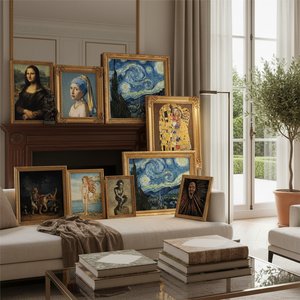
Clássicos Atemporais: 10 Obras de Arte para um Ambiente Sofisticado | OriginalUniqueArt.com
Descubra 10 obras de arte clássicas e atemporais de Monet, Van Gogh e outros mestres! Explore a história, o significado e as técnicas por trás de pinturas famosas. Encontre reproduções de alta qualidade para um ambiente sofisticado em OriginalUniqueArt.com.