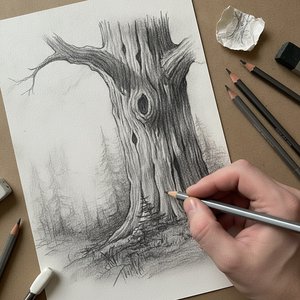
Landscape, Surrey
Reprodução em Óleo Feita à Mão
Óleo sobre tela pintado à mão no seu tamanho e moldura, feito sob encomenda pelos nossos artistas. ( Encomendar impressão
Comprar imagem em alta resolução)
Escolha entre os nossos tamanhos pré-definidos que respeitam as proporções originais da obra de arte.

Pode inserir as suas próprias dimensões para se adequar a uma moldura ou espaço específico. Se o tamanho selecionado não corresponder às proporções da imagem original, iremos cortar a obra de arte ou estender a pintura com elementos adicionais pintados à mão. Um esboço digital será enviado para sua aprovação antes do início da produção.
Tenha em atenção que a pré-visualização no ecrã não reflete o corte ou extensão real. Apenas o esboço mostrará com precisão a composição final.
Embora tamanhos personalizados estejam disponíveis, recomendamos selecionar uma dimensão da lista predefinida para preservar as proporções originais.
Após o pedido, a equipa OriginalUniqueArt.com enviará um e-mail ao cliente para solicitar instruções e fornecer uma prévia do esboço.
Entrega mundial () em 3 a 4 semanas, em vez das 5 semanas padrão. (14 Agosto). Sem comprometer a qualidade.
Envio Expresso Gratuito para todo o Mundo
Tela de Linho Premium
Seguro de transporte total
Garantia de Reembolso de Impostos Alfandegários
Garantia de Fidelidade de Cor
Política de Devolução de 60 Dias (Apenas para Defeitos)
Garantia de reembolso de 100%
Desconto para múltiplas unidades
Landscape, Surrey
Técnica de Reprodução
Dimensões da Reprodução
-
Preço Total
$ 300
Descrição da Obra
A Serene Vista: Exploring Daniel Maclise's "Landscape, Surrey"
- Artist: Daniel Maclise
- Date: Unknown (likely mid-19th century)
- Medium: Graphite pencil on paper
Daniel Maclise’s “Landscape, Surrey” offers a captivating glimpse into the beauty of the English countryside through the meticulous eye of a Victorian artist. This detailed pencil drawing presents a panoramic view of rolling hills and trees, showcasing Maclise's skill in capturing atmospheric perspective and conveying a sense of tranquility.
Composition and Technique: A Study in Detail
The artwork’s predominantly horizontal composition emphasizes the breadth of the landscape, inviting the viewer to immerse themselves in the scene. Maclise employs a linear style characterized by precise lines used to define shapes and contours with varying degrees of pressure, creating tonal variations that simulate depth and form. The foreground features a small clearing with slender trees and what appears to be a path or trail leading into the distance, subtly suggesting exploration and journey. Texture is skillfully achieved through hatching and cross-hatching techniques, realistically depicting the rough surfaces of bark, grass, and stone. The diffused lighting suggests an overcast day, contributing to the overall mood of serenity.
Style and Historical Context: Victorian Landscape Drawing
“Landscape, Surrey” exemplifies the style of 19th-century landscape drawing, a period marked by a renewed interest in depicting natural scenes with accuracy and detail. This movement reflected a broader cultural shift towards Romanticism and an appreciation for the sublime beauty of nature. Maclise, known primarily as a history and portrait painter, demonstrates his versatility through this work, showcasing his observational skills and ability to capture the essence of a landscape. His training at the Cork School of Art and later at the Royal Academy Schools undoubtedly influenced his technical proficiency and attention to detail.
Symbolism and Emotional Impact: Tranquility and Contemplation
While symbolic elements are minimal, the artwork evokes a profound sense of serenity and contemplation. The expansive vista encourages viewers to pause and appreciate the beauty of the natural world. The path leading into the distance can be interpreted as a metaphor for life's journey or the pursuit of exploration. Maclise’s masterful use of perspective and tonal variations creates an emotional resonance, drawing the viewer into the scene and fostering a feeling of peacefulness.
About the Artist: Daniel Maclise (1806-1870)
- Birthplace: Cork, Ireland
- Known For: History paintings, literary illustrations, murals at Westminster Palace (including "The Death of Nelson")
Daniel Maclise was a prominent Irish artist who achieved considerable recognition in London. Beyond his celebrated historical works, this landscape drawing reveals another facet of his artistic talent – his ability to capture the subtle beauty and tranquility of the natural world with remarkable skill and precision.
Biografia do Artista
Early Life and Artistic Beginnings
Daniel Maclise, a name synonymous with the grandeur of Victorian history painting, was born on January 25th, 1806, in Cork, Ireland – a city steeped in both artistic tradition and the rugged beauty of the countryside. His father, Alexander McLish, was a tanner and shoemaker, providing a practical grounding for a young boy who instinctively sought to capture the world through art. From an early age, Daniel displayed a remarkable talent for drawing, a gift nurtured by his mother, Rebecca McLeish, who recognized and encouraged his burgeoning artistic inclinations. He received his initial education in Cork, where he honed his skills at the local School of Art, focusing intently on the fundamentals of drawing and anatomy – essential building blocks for any aspiring artist. It was during this formative period that Maclise’s passion solidified, a deep-seated desire to translate historical narratives and human experiences onto canvas with meticulous detail and dramatic flair.London Calling: Training and Early Recognition
Driven by his ambition and the need for more advanced training, Daniel embarked on a significant journey in 1827, relocating to London – the vibrant heart of British art and culture. This move was largely self-funded, demonstrating his unwavering commitment to his artistic pursuits. He enrolled at the Royal Academy Schools, an institution renowned for its rigorous curriculum and esteemed faculty. Here, he immersed himself in the study of classical techniques, mastering the principles of perspective, composition, and color theory. Maclise quickly distinguished himself, excelling particularly in life drawing and, crucially, history painting – a genre that would define his career. His early successes were marked by a series of captivating portraits, notably depicting figures like Charles Kean, the celebrated actor, and Niccolò Paganini, the legendary violinist. These works garnered immediate attention, establishing Maclise’s reputation as a skilled portraitist with a keen eye for capturing personality and character.The Shadowy Figure of “Alfred Croquis”
Adding another layer to his artistic identity, Maclise adopted the pseudonym "Alfred Croquis" while contributing illustrations to *Fraser's Magazine* in the 1830s. This clever disguise allowed him to create a series of character portraits – often humorous and satirical – that resonated deeply with readers and further cemented his popularity. “Alfred Croquis” became known for his ability to capture the essence of Victorian society, portraying its figures with wit, charm, and subtle social commentary. The success achieved under this pseudonym significantly boosted Maclise’s profile and demonstrated his versatility as an artist.Monumental Achievements: Westminster Palaces and Literary Collaborations
Maclise's career reached its zenith during the mid-19th century, marked by a succession of monumental commissions that solidified his place in British art history. He was elected an Associate of the Royal Academy in 1835 and, ultimately, a full member in 1840 – a prestigious recognition of his artistic merit. Perhaps his most enduring legacy lies in his magnificent murals adorning Westminster Palace. The *Meeting of Wellington and Blücher after the Battle of Waterloo*, depicting this pivotal moment in European history with breathtaking realism and dramatic intensity, remains a centerpiece of the building’s grand interior. Equally impressive is *The Death of Nelson*, a colossal fresco that vividly portrays the heroic demise of the British admiral – a testament to Maclise's mastery of scale and narrative composition. Beyond these monumental works, Maclise also lent his artistic talents to the illustration of Charles Dickens’ beloved Christmas books, bringing the author’s stories to life with evocative imagery and meticulous detail.A Style Defined by Detail and Narrative
Maclise’s artistic style was characterized by a remarkable blend of historical narrative, realism, and portraiture. He possessed an exceptional eye for detail, meticulously rendering fabrics, costumes, and facial expressions with astonishing accuracy. Influenced by both French Neoclassicism and classical art – particularly after his visit to Paris in 1830 – Maclise’s work often drew inspiration from historical events, literary works (most notably Shakespeare), and mythological tales. He skillfully combined these diverse sources into cohesive compositions that were both visually stunning and intellectually engaging. His ability to capture the essence of human emotion and create compelling narratives cemented his reputation as one of the foremost history painters of his era.Later Years and Lasting Legacy
Despite his immense success, Maclise’s dedication to his art took a significant toll on his health. In 1865, he declined the presidency of the Royal Academy, recognizing that his declining physical condition would hinder his ability to fulfill the responsibilities of the role. He died in Chelsea, London, on April 25th, 1870, leaving behind a vast and influential body of work. His memoir, published by William Justin O’Driscoll in 1871, offered valuable insights into his life and artistic philosophy. Today, Maclise's murals at Westminster Palace remain among the most celebrated examples of Victorian-era art, continuing to inspire awe and admiration for their scale, beauty, and historical significance. His illustrations for Dickens continue to delight readers, ensuring that his legacy endures as a vital contributor to both literature and visual culture. Daniel Maclise’s work stands as a powerful testament to the enduring power of art to capture history, evoke emotion, and illuminate the human experience.Daniel Maclise
1806 - 1870 , Irlanda
Informações Rápidas
- Artistic Movement Or Style: Pintura histórica
- Artists Or Movements Influenced By This Artist: ['Neoclassicismo']
- Artists Who Influenced This Artist: ['Scott']
- Date Of Birth: 25 Jan 1806
- Date Of Death: 25 Abr 1870
- Full Name: Daniel Maclise
- Nationality: Irlandês
- Notable Artworks:
- Encontro Wellington Blücher
- Morte Nelson
- Juramento Chivalres
- Place Of Birth: Cork, Irlanda


A opção de vidro está disponível apenas para tamanhos inferiores a 110 cm