
 Visualizar na parede
 Compartilhar
 Compartilhar
 Detalhes
 Guia
Guia

 Baixar imagem
 Semelhantes
 Raio X
 Ver diaporama
 Perguntas e Respostas
 Estatísticas
Metropolis

- 239.0 x 548.0 cm


 Ler mais
A obra de arte exibida nesta página é protegida por leis de direitos autorais, o que significa que não podemos criar ou vender legalmente uma reprodução idêntica. Esta proteção é aplicada por meio de acordos internacionais, tais como a Convenção de Berna e pelas leis nacionais, incluindo as estabelecidas por Lei de Direitos Autorais dos EUA - Título 17.
Este método cumpre plenamente as regulamentações de direitos autorais, pois não envolve a cópia ou duplicação da obra protegida. Em vez disso, trata-se de uma reinterpretação criativa — uma nova pintura que é influenciada pela original, mas não idêntica a ela.
Giclée / Impressão de Arte
Impressão giclée ou em tela de qualidade de museu, com produção rápida e opções flexíveis de acabamento. ( Comprar pintura feita à mão Alternar para Imagem Digital)




P118B €10

P118H €10

P118W €10

P438Z €10

P508JH €12

P508YH €12

P805H €10

P805Z €10

P919BZ €10

P919G €10

P919XJ €10

P959ZH €10

P968JZ €12

W106C €8

W218G €10

W218JH €8

W218Y €10

W307PJ €10

W316G €10

W316PJ €8

W316Y €10

W398PJ €8

W4111J €10

W500HY €15

W500JH €15

W692G €12

W849H €8

W940BG €15

W953PJ €8




Escolha entre os nossos tamanhos pré-definidos que respeitam as proporções originais da obra de arte.

Insira a largura e a altura desejadas para se ajustarem à sua moldura ou parede. Uma impressão pode ser apenas cortada, nunca ampliada além da imagem original; portanto, um tamanho com proporções diferentes resultará na perda de parte da imagem. Enviamos uma maquete digital para sua aprovação antes de realizarmos a impressão. A imagem exibida nesta página não mostra o corte real — apenas a maquete o faz.
Entrega mundial () em 2 semanas, em vez das 4/5 semanas padrão. (4 Novembro)

Envio expresso gratuito para todo o mundo

Tela de Linho de Alta Qualidade

Seguro de transporte completo

Garantia de Reembolso de Impostos Alfandegários

Garantia de Fidelidade Cromática

Política de Devolução em 100 Dias (Apenas para Defeitos)

Garantia de reembolso de 100%

Oferta de desconto por quantidade
 A opção de vidro está disponível apenas para tamanhos inferiores a 110 cm

Metropolis
Giclée / Impressão de Arte
Tamanho da Reprodução
-


Preço Total
€ 72
A City’s Fever Dream: Zaha Hadid's ‘Metropolis’
Zaha Hadid’s “Metropolis,” painted in 1988, isn’t merely a cityscape; it’s a visceral representation of urban anxiety and the relentless expansion of modern life. Created during a pivotal period of her architectural career – a time when she was forging a radical new aesthetic that defied conventional spatial thinking – the painting captures a frenetic energy rarely found in traditional cityscapes. It's a work brimming with dynamism, a fever dream rendered in acrylic on canvas, and a surprisingly intimate reflection on the complexities of urban existence.
Hadid’s early artistic explorations were deeply rooted in mathematics and geometry, disciplines she approached with an almost obsessive precision. This intellectual rigor is immediately apparent in “Metropolis.” The city isn't presented as a harmonious whole but rather as a fractured mosaic of interconnected villages, each pulsating with its own distinct rhythm. These individual units – rendered in varying shades of red, ochre, and yellow – seem to be vying for dominance, creating a sense of chaotic competition. The River Thames, a vital artery of London, is depicted as a vibrant orange streak, acting as both a divider and a connector between these disparate zones.
Deconstructing the Metropolis: Style and Technique
The painting’s style is undeniably deconstructivist, anticipating many of the principles that would later define Hadid's architectural designs. The sharp angles, fragmented forms, and deliberate distortions challenge traditional notions of perspective and spatial coherence. Unlike a realistic depiction, “Metropolis” prioritizes emotional impact over photographic accuracy. Hadid employs bold brushstrokes and layered colors to build up texture and create a sense of movement—as if the city itself is constantly shifting and evolving.
Technically, the painting showcases Hadid’s early experimentation with acrylic on canvas. The medium lends itself beautifully to her fluid, dynamic style, allowing for both precise detailing and broad washes of color. Notice how she uses layering – building up colors in thin glazes—to create a luminous quality and suggest depth within the fragmented composition. The deliberate use of red isn’t simply decorative; it's symbolic, representing the intensity, urgency, and even the potential danger inherent in urban life.
Symbolism and Emotional Resonance
“Metropolis” is rich with symbolism, offering a commentary on the social and psychological pressures of modern city living. The prevalence of red—often associated with fire, passion, and conflict—suggests a simmering tension beneath the surface of the urban landscape. The individual villages represent not just physical spaces but also distinct communities, each grappling with its own challenges and aspirations. The painting subtly critiques the homogenization of urban experience, highlighting the fragmentation and isolation that can arise within densely populated areas.
Despite its somewhat unsettling depiction, “Metropolis” is ultimately a powerful and evocative work. It’s not simply a portrayal of London; it's an exploration of the human condition—our desire for connection, our struggles with identity, and our constant negotiation with the overwhelming forces of urban life. The painting invites viewers to contemplate their own relationship to the city, prompting questions about its beauty, its chaos, and its enduring allure.
A Legacy in Reproduction
Today, “Metropolis” stands as a testament to Zaha Hadid’s visionary talent and her profound impact on contemporary art and architecture. High-quality reproductions capture much of the original's dynamism and emotional intensity, offering a compelling addition to any collection or interior space. When selecting a reproduction, consider the materials used – archival quality prints on canvas or fine art paper will ensure that the colors remain vibrant for years to come, preserving the essence of this remarkable work.
Perguntas e Respostas
Existe uma apresentação de slides para "Metropolis", de Zaha Hadid?
O diaporama de "Metropolis" pode ser visualizado na página Apresentação de imagens da obra.
O que "Metropolis", de Zaha Hadid retrata e qual é a sua atmosfera?
"Metropolis", de Zaha Hadid retrata cityscape, birds, red background, hadid, architecture, urban, metropolis, em uma atmosfera Dramatic. O tema e a ambientação descrevem, juntos, a obra.
Qual é a técnica e as dimensões de "Metropolis", de Zaha Hadid?
A obra original "Metropolis", de Zaha Hadid é um trabalho em Acrylic On Canvas com dimensões de 239 x 548 cm. A técnica e o tamanho referem-se ao objeto original.
Biografia do Artista
Uma Visão Revolucionária: A Vida e o Legado de Zaha Hadid
Nascida em Bagdá, Iraque, em 1950, Dame Zaha Mohammad Hadid emergiu como uma das forças arquitetônicas mais significativas do nosso tempo. Sua jornada não começou dentro dos limites tradicionais de uma criação artística, mas em meio a um estimulante ambiente intelectual; seu pai, Muhammad al-Hajj Husayn Hadid, era um bem-sucedido industrial e político, enquanto sua mãe, Wajiha al-Sabunji, nutriu uma paixão pela arte. Essa mistura única de pragmatismo e criatividade moldaria profundamente a visão de mundo da jovem Zaha. Inicialmente cursando matemática na Universidade Americana de Beirute, ela logo descobriu que sua verdadeira vocação residia no reino do design espacial, o que a levou a Londres em 1972 e à matrícula na Architectural Association School of Architecture. Foi aqui, sob a tutela de figuras influentes como Rem Koolhaas, Elia Zenghelis e Bernard Tschumi, que o pensamento arquitetônico radical de Hadid começou a tomar forma. Esses mentores incentivaram o questionamento das normas estabelecidas, promovendo um ambiente onde a experimentação e a inovação floresciam — o alicerce sobre o qual ela construiria sua carreira extraordinária.Desconstruindo Convenções: Estilo e Influências
Zaha Hadid não projetava simplesmente edifícios; ela esculpia experiências. Amplamente celebrada como uma pioneira do desconstrutivismo, sua obra rejeitou audaciosamente as geometrias rígidas e as formas convencionais que há muito definiam a prática arquitetônica. Em vez disso, ela abraçou a fragmentação, as curvas dinâmicas e um senso de movimento fluido, criando estruturas que pareciam desafiar a própria gravidade. Seus projetos não eram meramente espaços funcionais; eram declarações artísticas — expressões poderosas de forma e energia. A influência dos movimentos de vanguarda do início do século XX, particularmente o Suprematismo e a obra de Kazimir Malevich, é prontamente perceptível em suas explora de iniciação. De fato, seu projeto de graduação, “Malevich’s Tektonik”, serviu como uma demonstração poderosa de seu compromisso com princípios abstratos e formas não retilíneas. Mas Hadid não era apenas uma imitadora; ela sintetizou essas influências com sua própria visão única, libertando a geometria arquitetônica e imbuindo-a de uma nova identidade expressiva. Crucialmente, a pintura e o desenho não eram meramente ferramentas preparatórias para Hadid — eram integrantes do próprio processo de design, permitindo-lhe explorar conceitos espaciais e visualizar formas complexas antes que se materializassem em concreto e aço.Criações Icônicas: Um Impacto Global
Hadid estabeleceu seu próprio escritório em Londres em 1980, mas o reconhecimento não veio facilmente. Seus primeiros projetos eram frequentemente considerados radicais demais, desafiadores demais para o clima arquitetônico predominante. No entanto, ela perseverou e, gradualmente, sua abordagem inovadora começou a ganhar tração. O Hong Kong Peak Club (198entes) foi uma exibição precoce de seu estilo emergente, prenunciando as estruturas deslumbrantes que viriam a seguir. Ao longo das décadas seguintes, o escritório de Hadid concluiu uma série de projetos marcos que redefiniram as paisagens urbanas ao redor do globo. Estes incluíram o fluido e dinâmico London Aquatics Centre para as Olimpíadas de 2012, um testemunho de sua habilidade em criar espaços que inspiram movimento e atletismo; o Broad Art Museum em Michigan, EUA, com sua impressionante fachada de aço inoxidável plissado; o MAXXI – Museu Nacional de Artes do Século XXI em Roma, Itália, uma complexa interação de volumes e vazios; a Ópera de Guangzhou na China, assemelhando-se a duas pedras suaves no Rio das Pérolas; e o Centro Heydar Aliyev em Baku, Azerbaijão, uma estrutura deslumbrante em forma de onda que incorpora sua estética curvilínea característica. Esses projetos não eram apenas edifícios — eram ícones culturais, expandindo os limites da possibilidade arquitetônica.Reconhecimento e Influência Duradoura
Os elogios concedidos a Zaha Hadid ao longo de sua carreira são um testemunho de seu talento extraordinário e impacto duradouro. Ela recebeu inúmeros prêmios, culminando no Pritzker Architecture Prize em 2004 — a mais alta honraria na arquitetura — tornando-se a primeira mulher a receber este prestigiado reconhecimento individualmente. Outras honrarias incluíram o Stirling Prize (concedido duas vezes, em 2010 e 2011) e, postumamente, a Royal Gold Medal do Royal Institute of British Architects em 2016, novamente um marco histórico para uma mulher. Além de suas conquistas arquitetônicas, Hadid rompeu barreiras como uma arquiteta mulher em um campo historicamente dominado por homens, tornando-se uma inspiração para inúmeros designers aspirantes. Seu legado estende-se além das estruturas físicas que criou; reside em sua influência transformadora no pensamento e na prática arquitetônica. Mesmo após sua morte prematura em 2016, a Zaha Hadid Architects continua a operar, levando adiante sua visão e princípios com dedicação inabalável. Sua exploração de meios artísticos além da arquitetura — como obras como “Tatlin Tower and Tectonic” — demonstra uma sinergia única entre o conhecimento do design e a expressão artística. Os edifícios de Zaha Hadid permanecem como monumentos duradouros ao seu espírito inovador, moldando o ambiente construído para as gerações vindouras.Além dos Edifícios: Um Legado Artístico Permanente
Embora celebrada principalmente por suas conquistas arquitetônicas, a visão criativa de Zaha Hadid estendeu-se muito além do reino do design de edifícios. Ela explorou consistentemente meios artísticos como a pintura e o design de produtos, vendo-os não como disciplinas separadas, mas como expressões interconectadas de sua sensibilidade estética única. Suas pinturas, frequentemente caracterizadas por composições dinâmicas e formas abstratas, serviram como explorações conceituais que informaram diretamente seus projetos arquitetônicos. Essas obras não eram meramente esboços ou representações; eram integrantes do desenvolvimento de suas ideias, permitindo-lhe experimentar relações espaciais e texturas visuais antes de traduzi-las em estruturas tridimensionais.- Pinturas Iniciais: Suas primeiras pinturas, como “Orange Explosion on White”, demonstram uma fascinação por formas fragmentadas e cores vibrantes, prefigurando os princípios desconstrutivistas que definiriam seu estilo arquitetônico.
- Objetos de Design: Hadid também aventurou-se no design de produtos, criando mobiliário, luminárias e outros objetos que ecoavam as linhas fluidas e as qualidades esculturais de seus edifícios. O Chanel Mobile Art Pavilion em Tóquio é um exemplo primordial desta abordagem interdisciplinar, demonstrando sua habilidade de traduzir conceitos arquitetônicos em um ambiente imersivo e portátil.
- Explorações Conceituais: Obras como “Interpretation of Tatlin” revelam seu engajamento com os movimentos de vanguarda históricos e seu desejo de reinterpretar os princípios modernistas em um contexto contemporâneo.
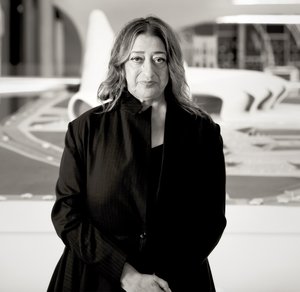
Zaha Hadid
1950 - 2016 , Iraque
Dados Rápidos
- Artistic Movement Or Style: Deconstructivismo
- Artists Or Movements Influenced By This Artist: ['Suprematismo']
- Artists Who Influenced This Artist:
- Kazimir Malevich
- Rem Koolhaas
- Date Of Birth: 1950-10-31
- Full Name: Zaha Mohammad Hadid
- Nationality: Britânica
- Notable Artworks: ['Tatlin Tower and Tectonic']
- Place Of Birth: Bagdá, Iraque
Artigos Relacionados

Crimson Threads of Narrative: Exploring Symbolism & Representation in Artworks Featuring the Red Dress
Explore the rich symbolism of the red dress in art history! From ancient power displays to iconic portraits like Cézanne’s 'Madame Cezanne', discover the cultural and artistic significance behind this captivating color. Expert analysis & insights.
Urban Visions: A Historical & Artistic Exploration of the Cityscape in Painting
Explore the evolution of cityscape painting from historical maps to Impressionist masterpieces. Discover artists like Caillebotte, Utrillo & Matsumoto Shunsuke. Find museum-quality reproductions at OriginalUniqueArt.
Feathered Visions: A Historical & Artistic Exploration of Birds in Painting
Explore the rich history of birds in painting! Discover symbolism, artistic movements & master artists like Audubon. High-quality reproductions available at OriginalUniqueArt.

Mark Rothko: As 25 Obras-Primas que Definem um Ícone da Arte Abstrata | OriginalUniqueArt
Descubra as 25 obras-primas de Mark Rothko, ícone do expressionismo abstrato. Explore a história, cores e emoção por trás de cada tela. Reproduções de arte exclusivas para sua casa em OriginalUniqueArt.com.

25 Obras-Primas da National Gallery: Arte, História e Decoração Exclusiva
Descubra as 25 obras primas da National Gallery, Londres! Explore a história de Van Gogh, Monet, Rembrandt e outros mestres. Encontre reproduções de arte exclusivas para decorar sua casa com elegância. Inspire-se e explore a coleção completa em OriginalUniqueArt.com.