
 Visualizar em escala
 Enviar
 Compartilhar
 Ver detalhes
 Guia de Obras do Aluno

 Baixar imagem
 Semelhantes
 Raio X
 Apresentação de slides
 Estatísticas
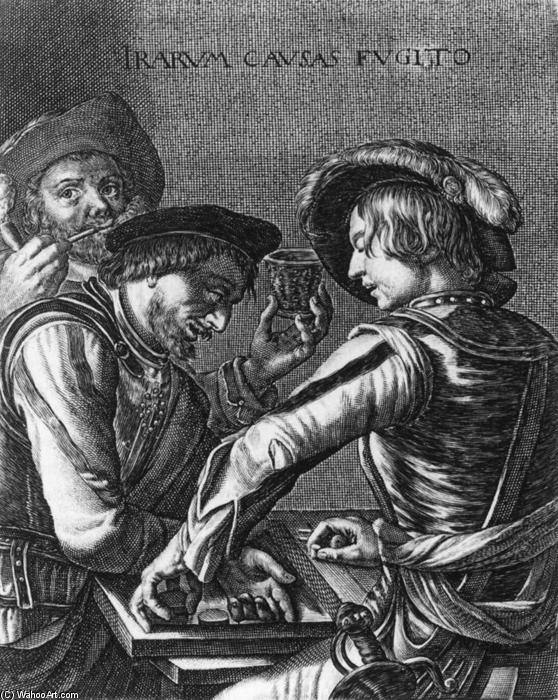
Backgammon Players

 Ver mais
Adquira uma imagem digital de alta resolução e aprimorada, muito superior à prévia online.
Cada arquivo é meticulosamente preparado por nossos especialistas internos, utilizando ferramentas avançadas e retoques manuais de alta precisão. Garantimos que cada imagem apresente clareza excepcional, fidelidade de cores e detalhes minuciosos.
O arquivo final é entregue por e-mail em até 72 horas, otimizado para uso imediato em ambientes profissionais, editoriais e de impressão. Esta é a mesma qualidade utilizada por estúdios de design de alto nível, editoras e galerias.
Imagem Digital
Baixe um arquivo de alta resolução para exibição pessoal, impressão e projetos criativos. ( Alternar para Impressão Encomendar reprodução pintada à mão)
Incluído em cada pedido de imagem digital
Entrega Digital Especializada e Garantida
Ao escolher o OriginalUniqueArt.com, você não está apenas adquirindo uma imagem — você está recebendo uma obra de arte digital profissionalmente aprimorada, elaborada com precisão e com garantia de satisfação. Aqui está tudo o que acompanha seu pedido, automaticamente:

Entrega rápida por e-mail
O seu arquivo de imagem digital em alta resolução será enviado por e-mail em até 72 horas após o pedido — pronto para uso imediato.

Arquivo Digital com IA Otimizado
Sua obra de arte é otimizada profissionalmente por meio de ferramentas avançadas de IA e edição manual, garantindo o máximo de detalhes, clareza e precisão de cores.

Reenvio gratuito vitalício
Apagou ou perdeu o seu ficheiro acidentalmente? Não se preocupe – nós reenviamos para si a qualquer momento, gratuitamente.

Sem Taxas de Importação - Sempre
Desfrute da sua obra de arte instantaneamente, sem taxas alfandegárias, impostos ou custos de entrega — downloads digitais são sempre isentos de taxas.

Garantia de Precisão de Cores
Garantimos que sua imagem digital reflita as cores originais com a maior fidelidade possível, utilizando ferramentas profissionais e gerenciamento de cores.

Garantia de satisfação de 100 dias
Se não estiver satisfeito com a sua imagem digital, nós a revisaremos ou reembolsaremos 100% dentro de 100 dias — sem perguntas.

Garantia de Reembolso 100%
Não está satisfeito? Receba o reembolso total em até 100 dias após o recebimento do seu arquivo digital — sem perguntas.

Descontos para pedidos em lote
Compre 3 imagens, economize 10% - Compre 5, economize 15% - Compre 10+, economize 20%. Ideal para projetos criativos, galerias e agências.
Biografia do Artista
Crispijn van de Passe: A Master of Dutch Printmaking
Crispijn van de Passe, born in Arnemuiden, Netherlands around 1564 and passing away in Utrecht in 1637, stands as a pivotal figure in the history of Flemish and Dutch printmaking. More than just an engraver, he was a publisher, a family patriarch, and a driving force behind the flourishing print trade of Antwerp during the late 16th and early 17th centuries. His legacy isn’t defined by individual masterpieces alone, but rather by his systematic approach to reproducing works of art – portraits, book illustrations, decorative plates, and even architectural designs – with remarkable accuracy and detail, establishing a standard for quality that influenced generations of printmakers.
Van de Passe's early life remains somewhat shrouded in mystery. He was part of a large artistic family centered around his father, Crispijn I van de Passe, who had established a successful engraving workshop in Antwerp. This familial connection provided him with invaluable training and access to a network of artists and patrons. However, Crispijn van de Passe the Elder quickly distinguished himself through his meticulous technique and organizational skills. He didn’t simply copy existing images; he developed a sophisticated system for transferring designs – often based on paintings by renowned Flemish masters – onto copper plates using a process involving multiple stages of etching and engraving. This method, which involved creating a series of intermediate prints, allowed him to achieve an astonishing level of precision and tonal subtlety rarely seen in contemporary engravings.
The Van de Passe Family Enterprise
Crispijn van de Passe’s influence extends far beyond his individual output; he essentially built a printmaking dynasty. His wife, Magdalena van de Passe, was not merely a domestic figure but a skilled engraver in her own right, contributing significantly to the family's business and specializing particularly in landscapes and portraits. Their children – Simon, Crispijn II, Willem, and Martha – all followed in their father’s footsteps, each mastering different aspects of the printmaking process: engraving, etching, and publishing. This collaborative environment fostered a remarkable exchange of knowledge and techniques within the family workshop.
The Van de Passe family's success was largely due to their ability to cater to the growing demand for printed images during this period. Books were becoming increasingly accessible, and illustrated editions – particularly those featuring portraits of prominent figures – were highly sought after by wealthy collectors and institutions. The family’s systematic approach to reproduction ensured that these books could be produced quickly and efficiently, while maintaining a high level of visual quality. They also specialized in producing “family prints,” meticulously detailed engravings depicting members of noble families, which became incredibly popular as commemorative portraits.
Technique and Style
Crispijn van de Passe’s engravings are characterized by their remarkable realism and attention to detail. He was a master of capturing texture – the folds of clothing, the sheen of metal, the delicate details of hair – with astonishing accuracy. His use of light and shadow created a sense of depth and volume, bringing his subjects to life on the printed page. Unlike some of his contemporaries who favored a more stylized approach, Van de Passe’s engravings were remarkably faithful to the original paintings they depicted.
A key element of his technique was his use of multiple plates. He would create several separate plates, each engraved with a different part of the image, and then combine them using a process called “pochoir” – essentially a stencil technique – to achieve complex tonal effects and intricate details. This method allowed him to reproduce subtle gradations of color and shading that would have been impossible to achieve with a single plate. His work is often described as ‘mechanical’ due to the precision involved, but it's important to remember this was achieved through immense skill and artistic judgment.
Legacy and Influence
Crispijn van de Passe’s impact on the development of printmaking in the Netherlands is undeniable. He established a model for systematic reproduction that influenced countless engravers who followed him. His meticulous technique, combined with his entrepreneurial spirit, helped to transform Antwerp into a major center of print production. Furthermore, his family's legacy continued long after his death, with his descendants maintaining the workshop and producing prints until the mid-18th century.
His work continues to be studied and admired today for its technical brilliance and artistic merit. Pieces like “Fortitude” and “Frontispiece,” showcasing his ability to capture both portraiture and decorative elements, remain prime examples of his skill. Crispijn van de Passe’s contribution to the dissemination of art through print helped shape the visual culture of Europe during a period of immense artistic innovation and change.

Crispijn Van De Passe
1564 - 1637 , Netherlands
Informações Rápidas
- Full Name: Crispijn van de Passe
- Nationality: Dutch
- Date Of Birth: 1564
- Date Of Death: 1637
- Place Of Birth: Arnemuiden, Netherlands
- Notable Artworks:
- Fortitude
- Frontispiece
- Discordia
- Artistic Movement Or Style: Flemish Prints
- Artists Or Movements Influenced By This Artist: ['Van de Passe Family']