

 Visualizar em escala
 Enviar
 Compartilhar
 Ver detalhes
 Guia de Obras do Aluno

 Baixar imagem
 Semelhantes
 Raio X
 Apresentação de slides
 Estatísticas
Roman Ruins
 Oil
Oil- WallArt
- Dutch Golden Age
 1620
1620- Early Modern
 23.0 x 31.0 cm
 Ver mais
Reprodução em Óleo Feita à Mão
Óleo sobre tela pintado à mão no tamanho e moldura de sua escolha, feito sob encomenda pelos nossos artistas. ( Alternar para Impressão Ver Imagem Digital)




P118B €10

P118H €10

P118W €10

P438Z €10

P508JH €12

P508YH €12

P805H €10

P805Z €10

P919BZ €10

P919G €10

P919XJ €10

P959ZH €10

P968JZ €12

W106C €8

W218G €10

W218JH €8

W218Y €10

W307PJ €10

W316G €10

W316PJ €8

W316Y €10

W398PJ €8

W4111J €10

W500HY €15

W500JH €15

W692G €12

W849H €8

W940BG €15

W953PJ €8




Escolha entre os nossos tamanhos pré-definidos que respeitam as proporções originais da obra de arte.

Digite a largura e a altura de que necessita, para se ajustar à sua moldura ou à sua parede. Esta obra é pintada à mão, por isso, para um tamanho com uma proporção diferente, o artista pode pintar um pouco mais ao redor da imagem ou cortar um pouco — você escolhe. Enviamos-lhe uma maquete digital para aprovação antes de a pintura começar. A imagem exibida nesta página não mostra o resultado real — apenas a maquete mostra.
Após o pedido, a equipa OriginalUniqueArt.com enviará um e-mail ao cliente para solicitar instruções e fornecer uma prévia do esboço.
Entrega mundial () em 3 a 4 semanas, em vez das 5 semanas padrão. (24 Outubro). Sem comprometer a qualidade.

Envio expresso gratuito para todo o mundo

Tela de Linho Premium

Seguro de transporte total

Garantia de Reembolso de Impostos Alfandegários

Garantia de Fidelidade de Cor

Política de Devolução em 100 Dias (Apenas para Defeitos)

Garantia de reembolso de 100%

Desconto para múltiplas unidades
 A opção de vidro está disponível apenas para tamanhos inferiores a 110 cm

Roman Ruins
Técnica de Reprodução
Dimensões da Reprodução
-


Preço Total
€ 263
A Window into Antiquity: The Timeless Allure of Roman Ruins
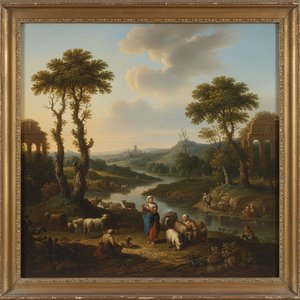
In the delicate, circular embrace of this exquisite tondo, Cornelis van Poelenburgh invites us to step through a portal into a bygone era. Painted around 1620, Roman Ruins is far more than a mere depiction of architectural decay; it is a profound meditation on the passage of time and the enduring relationship between humanity and the remnants of greatness. The composition, framed by its characteristic round format, focuses our gaze upon a landscape where the grandeur of the Roman Empire has softened into a pastoral sanctuary. Within this intimate space, the heavy stone arches and crumbling pillars serve as silent witnesses to history, now providing a backdrop for the quiet, rhythmic pulse of rural life.
The scene unfolds with a masterful use of light and shadow, reminiscent of the Dutch Golden Age's obsession with atmospheric truth. As we gaze upon the foreground, we encounter a world in gentle motion: a shepherd tending his flock, a laborer with his oxen, and figures caught in quiet contemplation. These small-scale inhabitants of the landscape bring a sense of warmth and vitality to the otherwise somber ruins. The artist employs a subtle, earthy palette—rich ochres, muted greens, and soft umbers—to weave a tapestry of textures that feels both tactile and ethereal. The hazy, overcast sky suggests the fleeting light of dawn or dusk, casting a melancholic yet peaceful glow over the entire vista, evoking a sense of nostalgia for a lost civilization.
The Mastery of the Italianate Style
Cornelis van Poelenburgh was a pivotal figure in the first generation of Dutch landscape painters who found profound inspiration in Italy. His travels to Rome allowed him to infuse his Northern training with the classical elegance of the Mediterranean. In Roman Ruins, we see this synthesis perfected. The technique is characterized by an incredible attention to detail; every crack in the ancient masonry and every distant bird in flight is rendered with a precision that draws the viewer deeper into the frame. This meticulousness does not feel clinical, however, but rather serves to enhance the three-dimensional depth of the scene, making the archway feel like a real threshold through which one might walk.
For the discerning collector or interior designer, this piece offers a unique emotional resonance. It possesses a "Caravaggesque" drama tempered by a serene, pastoral tranquility. The symbolism of the ruins—representing the inevitable cycle of rise and fall—is balanced by the resilience of the natural world and the simplicity of the human spirit. Such a work is an ideal centerpiece for a sophisticated interior, providing a conversational focal point that inspires reflection. Whether placed in a sunlit study or a grand gallery, this reproduction captures a moment of eternal stillness, offering any space it inhabits a touch of historical majesty and poetic grace.
Perguntas e Respostas
Quem criou "Roman Ruins" e em que ano?
"Roman Ruins" foi criado por Cornelis Van Poelenburch em 1620.
O que "Roman Ruins" de Cornelis Van Poelenburch retrata?
Os temas presentes em "Roman Ruins" de Cornelis Van Poelenburch incluem figures, sheep, cow, archway, ruins, trees, birds, earth tones. Juntos, eles resumem o assunto da obra.
Quão intensas são as cores de "Roman Ruins"?
As cores de "Roman Ruins" de Cornelis Van Poelenburch apresentam uma saturação Muted com uma intensidade Balanced.
Biografia do Artista
primeiros anos e formação
cornelis van poelenburgh, um proeminente pintor de paisagens holandês, nasceu em utrecht, na holanda, em 1594. seus primeiros passos no mundo das artes foram guiados pelo mestre abraham bloemaert, um artista de renome na época. este aprendizado fundamental foi o alicerce sobre o qual van poelenburch construiu seu futuro sucesso artístico.carreira artística e influências
as viagens de van poelenburch a roma, no início do século XVII, exerceram uma influência profunda em sua obra, consolidando-o como um dos principais representantes da primeira geração de pintores de paisagens holandeses que atuaram na Itália. suas pinturas de pequena escala, que frequentemente apresentam paisagens italianizadas habitadas por pequenas figuras encenando cenas bíblicas ou mitológicas, revelam um estilo único e encantador. obras notáveis:- satyrs spying on nymphs (após 1627), um exemplo característico do trabalho de van poelenburch, apresentando paisagens arcaicas com figuras em banho. (ver no OriginalUniqueArt)
- council of the gods (c. 1630), uma pintura que exibe a paisagem montanhosa idealizada de van poelenburch e deusas inspiradas no mundo romano, atualmente preservada no mauritshuis (haia, holanda). (ver no OriginalUniqueArt)
legado e últimos anos
a obra de van poelenburch era altamente estimada por seus contemporâneos, incluindo o grão-duque da toscana e o stadholder holandês. ele retornou posteriormente a utrecht, onde faleceu em 1667, apenas alguns anos após seu antigo mestre abraham bloemaert. pontos principais:- nascido em utrecht, holanda, em 1594
- treinado com abraham bloemaert
- influenciado por seu período em roma
- conhecido por paisagens italianizadas de pequena escala com figuras
- faleceu em utrecht em 1667 ver obras de cornelis van poelenburch no OriginalUniqueArt saiba mais sobre cornelis van poelenburgh na wikipedia

Cornelis Van Poelenburch
1594 - 1667 , Países Baixos
Informações Rápidas
- Artistic Movement Or Style: Paisagem Holandesa, Romanista
- Artists Or Movements Influenced By This Artist: ['Claude Lorraine']
- Artists Who Influenced This Artist: ['Abraham Bloemaert']
- Date Of Birth: 1594, Utrecht, Países Baixos
- Date Of Death: 1667, Utrecht, Países Baixos
- Full Name: Cornelis van Poelenburgh
- Nationality: Holandesa
- Notable Artworks:
- Sátiros espiando ninfas
- Conselho dos deuses
- Place Of Birth: Utrecht, Países Baixos
Artigos Relacionados

Golden Light & Dutch Skies: The Timeless Magic of Dutch Golden Age Landscapes
Discover the breathtaking beauty of Dutch Golden Age landscapes. Explore the mastery of light, chiaroscuro, and 17th-century realism through an expert art history lens, celebrating the enduring legacy of the Dutch Masters for discerning collectors and art lovers.

Golden Age Reflections: Dutch Baroque Painting & Cultural Innovation
Explore the Dutch Golden Age of painting! Discover key artists like Vermeer & ter Borch, their innovative techniques, and the rich cultural context behind these Baroque masterpieces. Learn about collecting & appreciating this iconic art period.

Mastering Light & Shadow: A Journey Through the Dutch Golden Age's Luminous Legacy
Embark on a cultural journey through the Dutch Golden Age. Explore the masterful interplay of light and shadow in 17th-century masterpieces, from Rembrandt to Vermeer, and discover how this era of profound realism continues to inspire fine art collectors today.

A Era de Ouro Holandesa: 10 Mestras-Obras Imperdíveis para Decorar com Arte
Descubra as 10 obras-primas da Era de Ouro Holandesa! Explore a história, técnica e beleza atemporal de Rembrandt, Vermeer e outros mestres. Encontre reproduções de arte exclusivas para decorar sua casa com elegância em OriginalUniqueArt.com.
Nicolaes Berchem: Dutch Golden Age Pastoralism & the Evolution of Landscape Painting
Explore the captivating world of Nicolaes Berchem, a leading Dutch Golden Age painter. Discover his idyllic landscapes, masterful technique & lasting influence on art history. Learn more at OriginalUniqueArt.