
 Visualizar em escala
 Enviar
 Compartilhar
 Ver detalhes

 Baixar
 Semelhantes
 Raio X
 Apresentação de slides
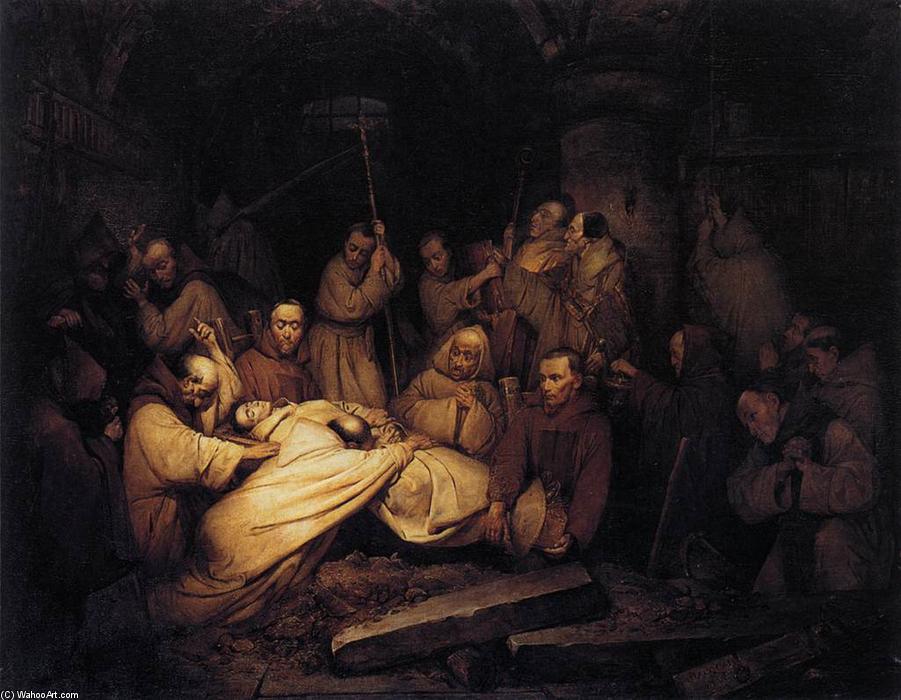
The Count of Comminges Recognizing Adélaide
 1836
1836 163.0 x 208.0 cm
 Musée des Beaux-Arts
 Ver mais
Reprodução em Óleo Feita à Mão
Óleo sobre tela pintado à mão no seu tamanho e moldura, feito sob encomenda pelos nossos artistas. ( Encomendar impressão Comprar imagem em alta resolução)




































Escolha entre os nossos tamanhos pré-definidos que respeitam as proporções originais da obra de arte.

Pode inserir as suas próprias dimensões para se adequar a uma moldura ou espaço específico. Se o tamanho selecionado não corresponder às proporções da imagem original, iremos cortar a obra de arte ou estender a pintura com elementos adicionais pintados à mão. Um esboço digital será enviado para sua aprovação antes do início da produção.
Tenha em atenção que a pré-visualização no ecrã não reflete o corte ou extensão real. Apenas o esboço mostrará com precisão a composição final.
Embora tamanhos personalizados estejam disponíveis, recomendamos selecionar uma dimensão da lista predefinida para preservar as proporções originais.
Após o pedido, a equipa OriginalUniqueArt.com enviará um e-mail ao cliente para solicitar instruções e fornecer uma prévia do esboço.
Entrega mundial () em 3 a 4 semanas, em vez das 5 semanas padrão. (21 Agosto). Sem comprometer a qualidade.

Envio Expresso Gratuito para todo o Mundo

Tela de Linho Premium

Seguro de transporte total

Garantia de Reembolso de Impostos Alfandegários

Garantia de Fidelidade de Cor

Política de Devolução de 60 Dias (Apenas para Defeitos)

Garantia de reembolso de 100%

Desconto para múltiplas unidades
 A opção de vidro está disponível apenas para tamanhos inferiores a 110 cm

The Count of Comminges Recognizing Adélaide
Técnica de Reprodução
Dimensões da Reprodução
-


Preço Total
$ 300
Biografia do Artista
Claudius Jacquand: Life and Legacy
Early Life and Education
- Born: December 11, 1803, in Lyon, France.
- Jacquand came from a family of artisans; his father was a comb-maker. This background instilled in him an appreciation for craftsmanship that would later influence his artistic approach.
- He received his initial art training at the École nationale des beaux-arts de Lyon under Fleury François Richard, laying the foundation for his future career.
Paris and Early Success
- Following his mother’s death in 1836, Jacquand moved to Paris, a pivotal moment that marked the beginning of his professional artistic journey.
- He began exhibiting his work soon after arriving in Paris, quickly gaining recognition for his talent and skill.
- Recognition: In 1839, he was knighted in the Legion d'Honneur. A year later, he received a Gold Medal at an exposition in Brussels, followed by another Gold Medal and the Order of Leopold at an exhibition in The Hague.
Personal Life and Social Standing
- The death of his father provided Jacquand with financial stability, enabling him to marry Lydia de Forbin, a woman from the aristocracy. She was the daughter of Louis Nicolas Philippe Auguste de Forbin and widow of the Viscount Alexandre Paul de Pinelli.
- He became Mayor of Émeringes in 1844, demonstrating his involvement in local affairs.
- Jacquand built a mansion in Émeringes inspired by Parisian architecture, reflecting his refined taste and social status.
Artistic Style and Themes
- Key Genres: Jacquand specialized in historical tableaus, genre scenes, and religious subjects. His works often depicted dramatic narratives with meticulous detail.
- His style is generally categorized within the Romanticism movement, characterized by emotional intensity, vibrant colors, and a focus on storytelling.
- Notable Works: Include “The Count of Comminges Recognizing Adélaide,” “Cinq-mars surrendering his épée to louis xiii”, and “Pietro Perugino painting for the monks of perugia”.
Later Life and Challenges
- The French Revolution of 1848 significantly impacted Jacquand’s financial situation, leading to a decline in his income.
- He sought employment but was unsuccessful in securing the position of director at the Musée de l'Histoire de France at Versailles.
- Jacquand and his wife moved to Boulogne-sur-Mer in 1852, selling their properties to maintain their lifestyle. They later faced further financial hardship and were forced to move to less expensive quarters in Paris.
- Final Years: Lydia’s death in 1863 compounded his difficulties. He continued to exhibit but struggled financially until his death on April 2, 1878, in Paris.
Legacy and Historical Significance
- Although not as widely celebrated today as some of his contemporaries, Claudius Jacquand was a respected artist during his lifetime.
- His works provide valuable insights into 19th-century French society, history, and artistic tastes.
- Influence: He taught painting to his son-in-law, Auguste de Pinelli, who also became a well-known artist, continuing the family’s artistic legacy.

Claudius Jacquand
1803 - 1878 , France
Informações Rápidas
- Birth Date: 1803-12-11
- Birth Place: Lyon, France
- Death Date: 1878-04-02
- Influenced: Auguste de Pinelli
- Influenced By: Fleury François Richard
- Movement: Romanticism
- Name: Claudius Jacquand
- Nationality: French
- Notable Works:
- The Count of Comminges Recognizing Adélaide
- Cinq-mars surrendering his épée to louis xiii
- Pietro Perugino painting for the monks of perugia
- The young gaston, called the angel of foix

