Alternar para Impressão
 Ler mais







































 Para obras de arte ou reproduções com mais de 105 cm (aproximadamente 41 polegadas) em qualquer um dos lados, a moldura será enviada como um kit desmontado. Este método garante uma entrega segura e evita danos durante o transporte.


Claude Monet: Capturing Ephemeral Beauty – An Exploration of “Luncheon in the Studio”
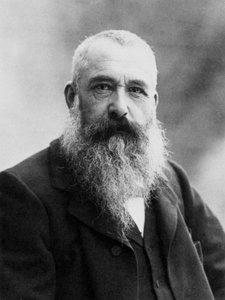
Claude Monet (1840–1926) stands as an undisputed titan of Impressionism, a movement that irrevocably altered the course of Western art history. More than simply depicting landscapes; he pursued a radical vision—to translate the sensory experience of observing nature onto canvas, prioritizing immediate perception and capturing the fleeting dance of light and color. His philosophy, rooted in plein air painting – working outdoors directly from observation – revolutionized artistic practice and cemented his legacy as one of the most influential artists of the 19th century.
“Luncheon in the Studio,” completed in 1868, exemplifies Monet’s unwavering commitment to this groundbreaking approach. Painted during a period of relative comfort afforded by his patron Louis Joachim Gaudibert—allowing him uninterrupted focus on his artistic endeavors amidst the warmth of family life—the canvas presents a deceptively simple scene: two women enjoying a meal outdoors beneath a dappled canopy of trees.
Background and Context
Étretat, Normandy, served as Monet’s home base during this pivotal year. The commune was known for its dramatic cliffs overlooking the English Channel, offering an ideal backdrop for capturing atmospheric effects—a fascination that would characterize much of Monet's oeuvre. At the time, Monet’s artistic ambitions were fueled by a desire to transcend academic conventions and embrace a more truthful representation of reality. This ambition aligns perfectly with the broader Impressionist movement’s rejection of idealized forms and meticulous detail in favor of capturing the immediacy of sensory experience.
Analysis: Light, Color, and Technique
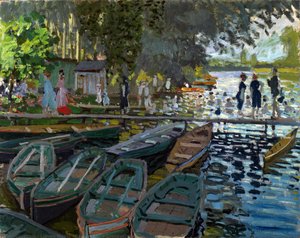
Monet's masterful manipulation of light and color is immediately apparent upon viewing “Luncheon.” He employs loose brushstrokes—a hallmark of Impressionism—to convey movement and vibrancy. The artist’s palette bursts with hues that capture the nuances of sunlight filtering through foliage, creating a shimmering tapestry of greens, yellows, and browns. Monet skillfully blends colors optically, rather than mixing them on the palette, maximizing luminosity and simulating how the human eye perceives color.
Symbolism and Emotional Resonance
"Luncheon in the Studio" transcends mere visual representation; it embodies profound symbolic significance. The inclusion of a clock—a deliberate gesture by Monet—references the passage of time and underscores the fleeting nature of beauty. Furthermore, the composition itself speaks to themes of domestic tranquility and contemplation, inviting viewers to immerse themselves in the serenity of the outdoor setting.
Legacy and Influence
“Luncheon in the Studio” remains a cornerstone of Impressionist art history, influencing generations of artists who followed Monet’s lead. Its enduring appeal lies not only in its aesthetic beauty but also in its articulation of a fundamental artistic principle: the pursuit of truthfulness through observation and emotion. Today, this masterpiece is housed at the Städel Museum in Frankfurt, Germany—a testament to Monet's enduring contribution to the canon of Western art.
To experience the captivating charm and elegance of Monet’s “Luncheon” firsthand, consider commissioning a stunning canvas print or an oil-painted replica from OriginalUniqueArt.com. Explore more about Claude Monet and other influential artists at OriginalUniqueArt.com.
For those eager to delve deeper into Monet’s artistic journey, consult Wikipedia: Wikipedia. Discover the breadth of his artistic output at OriginalUniqueArt.com's collection: OriginalUniqueArt.com.
Perguntas e Respostas
Como posso descobrir obras de arte semelhantes a "O Déjeuner sur l'herbe", de Claude Monet?
Obras semelhantes a "O Déjeuner sur l'herbe" estão listadas na página de Obras semelhantes desta obra.
Posso ver "O Déjeuner sur l'herbe", de Claude Monet sob diferentes luzes?
"O Déjeuner sur l'herbe" pode ser examinado camada por camada na página Raio X da obra, um visualizador inspirado em uma mesa de luz de conservação com onze leituras ópticas da imagem.
"O Déjeuner sur l'herbe" está disponível como uma impressão fine art?
Para obter uma impressão de "O Déjeuner sur l'herbe", de Claude Monet, basta encomendá-la na sua página de Impressão Fine Art: uma impressão fine art em tela de algodão ou papel canvas de arquivo.
 Visualizar na parede
 Compartilhar
 Compartilhar
 Detalhes
 Guia
Guia

 Baixar imagem
 Semelhantes
 Raio X
 Ver diaporama
 Q&A
Q&A Estatísticas