

 Visualizar em escala
 Enviar
 Compartilhar
 Ver detalhes
 Guia
Guia

 Baixar imagem
 Semelhantes
 Raio X
 Apresentação de slides
 Estatísticas
Uncle Toby and Widow Wadman
 Oil
Oil- WallArt
- Genre Painting
 1831
1831- 19th Century
 36.0 x 25.0 cm
 Shandy Hall
 Ver mais
Reprodução em Óleo Feita à Mão
Óleo sobre tela pintado à mão no tamanho e moldura de sua escolha, feito sob encomenda pelos nossos artistas. ( Alternar para Impressão Ver Imagem Digital)




P118B $10

P118H $10

P118W $10

P438Z $10

P508JH $12

P508YH $12

P805H $10

P805Z $10

P919BZ $10

P919G $10

P919XJ $10

P959ZH $10

P968JZ $12

W106C $8

W218G $10

W218JH $8

W218Y $10

W307PJ $10

W316G $10

W316PJ $8

W316Y $10

W398PJ $8

W4111J $10

W500HY $15

W500JH $15

W692G $12

W849H $8

W940BG $15

W953PJ $8




Escolha entre os nossos tamanhos pré-definidos que respeitam as proporções originais da obra de arte.

Pode inserir as suas próprias dimensões para se adequar a uma moldura ou espaço específico. Se o tamanho selecionado não corresponder às proporções da imagem original, iremos cortar a obra de arte ou estender a pintura com elementos adicionais pintados à mão. Um esboço digital será enviado para sua aprovação antes do início da produção.
Tenha em atenção que a pré-visualização no ecrã não reflete o corte ou extensão real. Apenas o esboço mostrará com precisão a composição final.
Embora tamanhos personalizados estejam disponíveis, recomendamos selecionar uma dimensão da lista predefinida para preservar as proporções originais.
Após o pedido, a equipa OriginalUniqueArt.com enviará um e-mail ao cliente para solicitar instruções e fornecer uma prévia do esboço.
Entrega mundial () em 3 a 4 semanas, em vez das 5 semanas padrão. (20 Setembro). Sem comprometer a qualidade.

Envio expresso gratuito para todo o mundo

Tela de Linho Premium

Seguro de transporte total

Garantia de Reembolso de Impostos Alfandegários

Garantia de Fidelidade de Cor

Política de Devolução em 100 Dias (Apenas para Defeitos)

Garantia de reembolso de 100%

Desconto para múltiplas unidades
 A opção de vidro está disponível apenas para tamanhos inferiores a 110 cm

Uncle Toby and Widow Wadman
Técnica de Reprodução
Dimensões da Reprodução
-


Preço Total
$ 300
A Moment Frozen in Time: The Intimacy of Leslie’s Vision
In the delicate interplay of light and shadow within "Uncle Toby and Widow Wadman," we are invited into a private, whispered world created by the masterful hand of Charles Robert Leslie. Painted in 1831, this intimate portrait transcends mere representation, offering instead a profound glimpse into a shared human connection. The composition centers on two figures caught in a moment of quiet communion; the man, draped in a striking red coat that commands the viewer's attention, leans toward the woman, whose white attire lends an ethereal, pure quality to her presence. Their proximity suggests a narrative far deeper than what is visible on the surface—a conversation perhaps filled with shared secrets, gentle humor, or the quiet weight of long-held affection.
The artistry of Leslie shines through in his ability to balance the grandiosity of classical portraiture with the tender nuances of genre painting. While his early training under masters like Benjamin West pushed him toward historical themes, it is in scenes such as this that he truly finds his soul. The technique employed here utilizes a soft, painterly approach that blurs the edges of the background, ensuring that the emotional gravity remains fixed upon the faces of the subjects. Every brushstroke serves to heighten the sense of atmosphere, making the viewer feel less like an observer and more like an unobserved guest in this charming, historical vignette.
Symbolism and the Art of Domestic Elegance
Beyond the central figures, the surrounding elements of the painting act as silent storytellers, enriching the domestic tapestry Leslie has woven. The presence of a chair to the left and a carefully placed handbag suggests a setting of refined comfort, grounding the emotional intensity of the characters within a tangible, lived-in reality. Even the subtle details, such as the placement of ties within the frame, contribute to a sense of organized elegance characteristic of the early 19th-century British aesthetic. These objects are not merely props; they are symbols of status, stability, and the quiet comforts of a well-ordered life.
For the discerning collector or interior designer, this piece offers more than just visual beauty; it provides a focal point of historical depth and emotional resonance. The contrast between the bold crimson of the man's coat and the luminous white of the woman's dress creates a dynamic visual rhythm that can breathe life into any sophisticated space. Whether placed in a study filled with leather-bound books or as a centerpiece in a contemporary gallery, a high-quality reproduction of this work serves as a window into the Romantic era—a period defined by its passion, its drama, and its profound appreciation for the beauty found in the most intimate of human encounters.
Biografia do Artista
Early Life and Training
Charles Robert Leslie, a name now synonymous with charming depictions of everyday British life, began his artistic journey in the bustling metropolis of London. Born on October 19, 1794, to American parents – Robert Charles and Lydia Leslie – his early years were marked by a transatlantic existence before settling permanently in England. At just five years old, the family relocated to Philadelphia, where young Charles received his initial education. However, his heart belonged to the artistic world, quickly diverging from the path of a bookseller, his intended apprenticeship, towards the vibrant realm of painting and theatre. His arrival in London in 1811 proved pivotal. Armed with letters of recommendation – a testament to his burgeoning talent – he secured support from prominent artists like Benjamin West and Washington Allston, figures whose influence would shape his early style. He enrolled at the Royal Academy Schools in 1813, where he swiftly distinguished himself, earning two silver medals for his exceptional skill. These accolades signaled not only his technical proficiency but also his ability to capture the essence of human experience through his art. The styles of West and Allston, both masters of historical painting and portraiture, undoubtedly played a significant role in shaping Leslie’s artistic vision, particularly during his formative years.Artistic Career and Style Development
Leslie's early career was characterized by an emulation of grand historical themes – a common practice among young artists seeking recognition at the Royal Academy. His initial works, such as “The Murder of Rutland by Lord Clifford,” demonstrate a clear debt to the conventions of history painting, meticulously rendered with dramatic lighting and elaborate compositions. However, it wasn’t long before Leslie discovered his true calling: genre painting – scenes of everyday life, populated by relatable characters and imbued with a subtle sense of humor. This shift marked a significant turning point in his artistic development. Works like “Londoners Gypsying” exemplify this new direction, capturing the lively atmosphere of London street life with remarkable detail and a lighthearted touch. Leslie’s ability to portray human interaction and capture fleeting moments of joy became his signature style. He wasn't merely depicting scenes; he was conveying emotions and inviting viewers into the heart of British society.Notable Works and Museum Involvement
Charles Robert Leslie’s artistic output spanned a diverse range of subjects, but several works stand out as particularly noteworthy. “Sir Walter Scott’s Portrait” is a testament to his skill in capturing the likeness and personality of celebrated figures – a talent he honed through numerous commissions. His paintings weren't confined to portraits; he also produced captivating landscapes and scenes of rural life, reflecting the changing social landscape of Britain. Furthermore, Leslie’s contributions extended beyond his studio. He was elected as an Associate of the Royal Academy in 1821, a prestigious honor that solidified his position within the British art establishment. His legacy is preserved at the Centre d'Art Britannique de Yale, where a comprehensive collection of his works offers scholars and enthusiasts alike a valuable opportunity to study his artistic evolution.Legacy and Later Life
Leslie’s life was intertwined with that of another prominent artist, John Constable. He wrote the first biography of Constable, “Memoirs of the Life of John Constable,” a work considered a seminal text in understanding the artist's life and career. His friendship with Constable provided him with invaluable insights into the artistic process and the challenges faced by artists navigating the competitive world of the Royal Academy. After a brief period working as an illustrator in West Point, Leslie returned to England, where he spent his final years pursuing his art and writing. He passed away on May 5, 1859, leaving behind a rich artistic legacy that continues to captivate audiences today. His work serves as a window into Victorian Britain, offering glimpses of daily life, social customs, and the enduring power of human connection.Key Influences
Leslie’s artistic journey was profoundly shaped by several key influences:- Benjamin West: A leading figure in the Royal Academy, West's mastery of historical painting provided Leslie with a foundational understanding of composition, lighting, and dramatic storytelling.
- Washington Allston: Known for his evocative landscapes and romantic sensibilities, Allston’s influence can be seen in Leslie’s exploration of mood and atmosphere.
- The Royal Academy: The institution itself provided Leslie with a rigorous artistic education and a platform for showcasing his work.

Charles Robert Leslie
1794 - 1859 , Reino Unido
Informações Rápidas
- Artistic Movement Or Style: Pintura de gênero
- Artists Or Movements Influenced By This Artist: ['John Constable']
- Artists Who Influenced This Artist:
- Benjamin West
- Washington Allston
- Date Of Birth: 19 Oct 1794
- Date Of Death: 5 May 1859
- Full Name: Charles Robert Leslie
- Nationality: Britânico/Americano
- Notable Artworks:
- Assassinato de Rutland
- Londoners Gypsying
- Retrato de Sir Walter Scott
- Place Of Birth: Londres, Reino Unido
Artigos Relacionados

Mark Rothko: As 25 Obras-Primas que Definem um Ícone da Arte Abstrata | OriginalUniqueArt
Descubra as 25 obras-primas de Mark Rothko, ícone do expressionismo abstrato. Explore a história, cores e emoção por trás de cada tela. Reproduções de arte exclusivas para sua casa em OriginalUniqueArt.com.
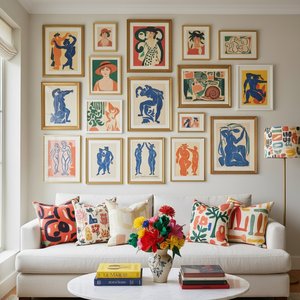
Henri Matisse: As 25 Obras-Primas que Definem um Mestre da Cor | OriginalUniqueArt
Descubra as 25 obras-primas de Henri Matisse que revolucionaram a arte moderna! Explore o Fauvismo, cores vibrantes e a história por trás dos quadros mais famosos do artista. Encontre reproduções de alta qualidade para decorar sua casa com OriginalUniqueArt.com.

Crimson Threads of Narrative: Exploring Symbolism & Representation in Artworks Featuring the Red Dress
Explore the rich symbolism of the red dress in art history! From ancient power displays to iconic portraits like Cézanne’s 'Madame Cezanne', discover the cultural and artistic significance behind this captivating color. Expert analysis & insights.

The Subtleties of White: Exploring Absence, Light & Symbolism in Art History
Explore the profound symbolism & history of white in art! From ancient purity to modern abstraction, discover how artists have used absence & light. Expert insights from OriginalUniqueArt.

Os 10 Quadros Mais Famosos Dominados pelo Branco: Arte e Decoração
Descubra os 10 quadros mais famosos dominados pelo branco, de Monet a Kandinsky! Explore a história da arte, técnicas e o poder da paleta neutra. Encontre reproduções de alta qualidade para sua decoração em OriginalUniqueArt.com.
