

 Visualizar em escala
 Enviar
 Compartilhar
 Ver detalhes
 Guia de Obras do Aluno

 Baixar imagem
 Semelhantes
 Raio X
 Apresentação de slides
 Estatísticas
Rural Landscape


 Ver mais
Reprodução em Óleo Feita à Mão
Óleo sobre tela pintado à mão no tamanho e moldura de sua escolha, feito sob encomenda pelos nossos artistas. ( Alternar para Impressão Ver Imagem Digital)




P118B €10

P118H €10

P118W €10

P438Z €10

P508JH €12

P508YH €12

P805H €10

P805Z €10

P919BZ €10

P919G €10

P919XJ €10

P959ZH €10

P968JZ €12

W106C €8

W218G €10

W218JH €8

W218Y €10

W307PJ €10

W316G €10

W316PJ €8

W316Y €10

W398PJ €8

W4111J €10

W500HY €15

W500JH €15

W692G €12

W849H €8

W940BG €15

W953PJ €8




Escolha entre os nossos tamanhos pré-definidos que respeitam as proporções originais da obra de arte.

Digite a largura e a altura de que necessita, para se ajustar à sua moldura ou à sua parede. Esta obra é pintada à mão, por isso, para um tamanho com uma proporção diferente, o artista pode pintar um pouco mais ao redor da imagem ou cortar um pouco — você escolhe. Enviamos-lhe uma maquete digital para aprovação antes de a pintura começar. A imagem exibida nesta página não mostra o resultado real — apenas a maquete mostra.
Após o pedido, a equipa OriginalUniqueArt.com enviará um e-mail ao cliente para solicitar instruções e fornecer uma prévia do esboço.
Entrega mundial () em 3 a 4 semanas, em vez das 5 semanas padrão. (24 Outubro). Sem comprometer a qualidade.

Envio expresso gratuito para todo o mundo

Tela de Linho Premium

Seguro de transporte total

Garantia de Reembolso de Impostos Alfandegários

Garantia de Fidelidade de Cor

Política de Devolução em 100 Dias (Apenas para Defeitos)

Garantia de reembolso de 100%

Desconto para múltiplas unidades
 A opção de vidro está disponível apenas para tamanhos inferiores a 110 cm

Rural Landscape
Técnica de Reprodução
Dimensões da Reprodução
-


Preço Total
€ 264
A Serene Vision of Rural America: Charles Harold Davis’ “Rural Landscape”
Charles Harold Davis' "Rural Landscape," painted in 1905, isn’t merely a depiction of a field and trees; it’s an invitation to step into a moment of profound tranquility. Born in Amesbury, Massachusetts, in 1856, Davis honed his artistic skills under the tutelage of prominent figures like Jules Joseph Lefebvre and Gustave Boulanger in Paris, absorbing the vibrant energy of the European art scene before returning to America and embracing a distinctly American aesthetic. His work, particularly during his time in Mystic, Connecticut, shifted towards a Tonalist style, characterized by its muted colors, atmospheric perspective, and an almost meditative focus on capturing the essence of nature – a legacy deeply influenced by the Barbizon School’s emphasis on light and shadow.
The painting immediately draws the eye with its harmonious blend of blues, greens, and browns. Davis masterfully employs a technique reminiscent of Impressionism, though tempered with a Tonalist sensibility. He doesn't strive for photographic realism; instead, he uses broken brushstrokes and subtle gradations of color to evoke a feeling of atmosphere—the hazy warmth of the afternoon sun filtering through the trees, the gentle movement of clouds across the sky. The composition is carefully balanced, leading the viewer’s eye through the scene towards a distant horizon, creating a sense of depth and spaciousness. Note the delicate rendering of the foliage – not sharply defined, but rather suggested with loose, expressive strokes that capture the texture and vitality of the landscape.
The Language of Light and Shadow
Davis’s genius lies in his ability to translate light into color and form. The painting is bathed in a soft, diffused light, characteristic of the late afternoon. He skillfully uses shadows to define shapes and create a sense of volume, particularly in the trees that frame the scene. These aren't dark, ominous shadows; they are gentle, almost luminous, suggesting warmth and inviting the viewer into the heart of the landscape. The clouds themselves are rendered with remarkable subtlety, shifting between shades of gray and blue, creating an ethereal quality that elevates the painting beyond a simple depiction of weather.
The inclusion of figures in the foreground adds a layer of narrative to the scene without disrupting its overall sense of serenity. These individuals – likely farmers or laborers – are rendered with minimal detail, serving primarily as anchors for the viewer’s eye and subtly hinting at human connection within this vast landscape. They represent not just a rural life but also a timeless harmony between humanity and nature.
Symbolism and Emotional Resonance
“Rural Landscape” is more than just a pretty picture; it's imbued with symbolism. The scene evokes a sense of nostalgia for a simpler time, a longing for connection to the land, and an appreciation for the beauty of the natural world. It speaks to the values of hard work, community, and resilience – themes that were particularly resonant in America at the turn of the 20th century.
The painting’s quietude is profoundly calming. It invites contemplation and offers a respite from the stresses of modern life. Davis's masterful use of color and light creates an emotional atmosphere of peace, contentment, and connection to something larger than oneself. The scene feels both familiar and timeless, tapping into a deep-seated human desire for beauty and tranquility.
A Legacy in American Art
Charles Harold Davis’s “Rural Landscape” stands as a testament to the power of Tonalist and Impressionistic techniques to capture the essence of the American landscape. His work is represented in prominent museums, including the Metropolitan Museum of Art and the Corcoran Gallery of Art, solidifying his place as a significant figure in American art history. Reproductions of this evocative painting offer a beautiful way to bring a touch of rural serenity into any home or office – a reminder of the enduring beauty and tranquility of the natural world.
Perguntas e Respostas
Qual técnica foi utilizada para "Rural Landscape" e quando foi criada?
"Rural Landscape" foi criada em 1905 utilizando a técnica de Oil On Canvas. O material e a data descrevem como e quando o original foi feito.
Que saturação e intensidade apresenta "Rural Landscape" de Charles Harold Davis?
"Rural Landscape" de Charles Harold Davis é registrado com uma saturação Subtle Color e uma intensidade Balanced.
Existe uma ficha informativa sobre "Rural Landscape" de Charles Harold Davis para estudantes?
Uma página de Guia está disponível para "Rural Landscape" de Charles Harold Davis: uma ficha informativa imprimível sobre a obra, projetada para estudantes e uso em sala de aula.
Biografia do Artista
primeiros anos e formação
charles harold davis, pintor de paisagens americano, nasceu em 7 de janeiro de 1856, em amesbury, massachusetts. como aluno do boston museum of fine arts, foi enviado a paris em 1880 para aperfeiçoar o seu ofício. sob a tutela de jules joseph lefebvre e gustave boulanger na académie julian, davis desenvolveu uma compreensão profunda da cena artística europeia.estilo artístico e influências
a obra de davis é caracterizada por suas representações serenas e idílicas de paisagens, capturando frequentemente a beleza da natureza com a máxima precisação. seu período em barbizon, onde pintou extensivamente, exerceu uma influência profunda em seu estilo, que eventualmente migrou em direção ao impressionismo. essa transformação é evidente em suas pinturas de nuvens, pelas quais ele se tornou renomado.conquistas notáveis e afiliações
- tornou-se membro pleno da national academy of design em 1906.
- recebeu uma medalha de prata na exposição de paris de 1889.
- suas obras estão representadas em museus proeminentes, incluindo o metropolitan museum of art (nova york), a corcoran gallery of art (washington) e o boston museum of fine arts.
legado
o legado de davis estende-se para além de suas contribuições artísticas. ele desempenhou um papel fundamental no estabelecimento da mystic art association em 1913, tornando-se uma figura de liderança na colônia de artistas que se desenvolveu em mystic, connecticut. veja as obras de charles harold davis na OriginalUniqueArt: https://OriginalUniqueArt.com/@/charles-harold-davis leia mais sobre charles harold davis na wikipedia: https://en.wikipedia.org/wiki/charles_harold_davis
Charles Harold Davis
1856 - 1933
Artigos Relacionados

John Constable: As 25 Obras-Primas que Definem o Mestre da Paisagem Inglesa | OriginalUniqueArt
Descubra as 25 obras-primas de John Constable, o mestre da paisagem inglesa! Explore a arte romântica, cores vibrantes e histórias fascinantes por trás de 'Hay Wain' e outras pinturas icônicas. Encontre reproduções de alta qualidade para decorar sua casa com OriginalUniqueArt.com.

The Unvarnished Truth: A Cultural Journey Through the Soul of American Realism
Explore the profound beauty of American Realism. From the Ashcan School's urban grit to intimate portraits, discover how artists captured the authentic soul of a nation through unvarnished truth and masterful observation.

Grant Wood & American Regionalism: Identity, Myth & the Rural Landscape
Explore the world of Grant Wood & American Regionalism with OriginalUniqueArt. Discover the symbolism behind 'American Gothic', recurring themes, and the movement's lasting impact on art history. High-quality reproductions available.

Realismo Americano: 10 Obras-Primas que Moldaram a Arte e Decoram o Lar
Descubra as 10 obras-primas do Realismo Americano! Explore a história de Hopper, Homer e Cassatt. Encontre reproduções de arte com qualidade museológica para decorar sua casa. Inspire-se em cores vibrantes e atmosferas únicas. Explore a coleção completa na OriginalUniqueArt.com.
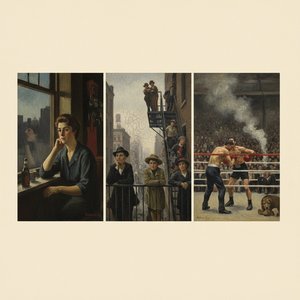
American Realism: Social Commentary & Artistic Representation in Early 20th-Century Painting
Explore the powerful social commentary & artistic representation of American Realism. Discover key artists like Bellows & Sloan, and understand the movement's lasting impact on 20th-century art history.