
() ·
Uma pintura feita para você, à mão
Reprodução em Óleo Feita à Mão
Óleo sobre tela pintado à mão no tamanho e moldura de sua escolha, feito sob encomenda pelos nossos artistas. ( Alternar para Impressão Alternar para Imagem Digital)
Biografia do Artista
Explore the evocative landscapes & still lifes of Carl Schuch (1846-1903). Austrian painter bridging realism & modernism, influenced by Monet & Rembrandt.
 Ler mais
de ·
Capítulo 1
Qual deve ser o tamanho?
Deslize para alterar o tamanho; a imagem à esquerda mostra a moldura em sua largura real. As proporções originais são mantidas.
Escolha entre os nossos tamanhos pré-definidos que respeitam as proporções originais da obra de arte.

Insira a largura e a altura desejadas para se ajustarem à sua moldura ou parede. Como esta obra é pintada à mão, para um tamanho com proporções diferentes, o artista poderá pintar um pouco mais ao redor da imagem ou reduzir ligeiramente a composição — você escolhe. Enviamos uma maquete digital para sua aprovação antes de iniciar a pintura. A imagem exibida nesta página não representa o resultado real — apenas a maquete mostra o resultado final.
Capítulo 2
Como deve chegar?
Escolha as bordas da tela esticada
Escolha sua moldura

Branco €1

Bordas esfumaçadas €1

Bordas estendidas €1

P118B €10

P118H €10

P118W €10

P438Z €10

P508JH €12

P508YH €12

P805H €10

P805Z €10

P919BZ €10

P919G €10

P919XJ €10

P959ZH €10

P968JZ €12

W106C €8

W218G €10

W218JH €8

W218Y €10

W307PJ €10

W316G €10

W316PJ €8

W316Y €10

W398PJ €8

W4111J €10

W500HY €15

W500JH €15

W692G €12

W849H €8

W940BG €15

W953PJ €8

H24-GOLD €30

H24-SILVER €30

H36-GOLD €45

H36-SILVER €45
Com moldura
Moldura: . Dimensões totais com a moldura: .
Capítulo 3
Quem o pinta, e deveria algo mudar?
Após o pedido, a equipe da OriginalUniqueArt.com enviará um e-mail ao cliente para instruções e fornecerá uma prévia da montagem
Entrega mundial () em 3 a 4 semanas, em vez das 5 semanas padrão. (7 Novembro). Sem comprometer a qualidade.
Capítulo 4
Os retoques finais
Uma placa de identificação, como em um museu?
Detalhes da Placa de Bronze Gravada
This elegant plaque features the artist's name and the title of the artwork, finely engraved for a timeless presentation.
It is made from bronze with a refined, elegant finish. The text is precisely laser-engraved for a sharp and permanent result. Measuring 9x2 cm, the plaque is compact yet easy to read. It's built to be durable and scratch-resistant, offering a professional, museum-quality look. Mounting is simple thanks to the included adhesive backing.
Detalhes da Placa de Acrílico Transparente
The plaque includes essential engraved details such as the artist's name, the title of the artwork, the date it was created, the type of media used-like oil on canvas or watercolor-a brief description of the piece, and a QR code that links to the complete artwork information.
It is crafted from clear acrylic, offering a sleek, modern appearance. The text is UV-engraved in black to ensure strong visual contrast. With a size of 10x15 cm, it ensures optimal readability. It comes equipped with two metal hooks for secure wall mounting. The plaque is designed to be weather-resistant, making it suitable for various environments, and it includes interactive features that work seamlessly with smartphone scanning.
Detalhes da Placa de Acrílico Preto
This elegant plaque includes engraved information such as the artist's name, the title of the artwork, the date it was created, the type of media used (like oil on canvas or watercolor), a short description of the artwork, and a QR code for quick access to more information.
The plaque itself is made from refined black acrylic with a premium finish. The text is laser-engraved in white for high contrast and readability. Its size is 10x15 cm, designed to be easy to read. It comes with two metal hooks for professional mounting. The design is sleek and fits any interior style. It is also weather-resistant and durable, with built-in digital integration for mobile compatibility.
Um verniz protetor?
Para quando você precisa?
Capítulo 5
A sua pintura, conforme encomendada

Der erste Versuch
Técnica de Reprodução
Tamanho da Reprodução
-

Artista Sênior de Elite
Mais detalhes, refinamento e tempo de produção adicional
-

Moldura para Reprodução
-
-
Para obras de arte ou reproduções com mais de 105 cm (aproximadamente 41 polegadas) em qualquer um dos lados, a moldura será enviada como um kit desmontado. Este método garante uma entrega segura e evita danos durante o transporte.
Montagem profissional necessária — este não é um produto DIY (faça você mesmo).
O kit deve ser montado e a tela esticada por um profissional de molduraria experiente, utilizando cola de madeira (não inclusa), um alicate de esticar tela e grampos para manter as travessas alinhadas enquanto a cola seca. A montagem incorreta ou a tensão desigual da tela podem danificar permanentemente a obra de arte e não estão cobertas pela nossa garantia.
 Para obras de arte ou reproduções com mais de 105 cm (aproximadamente 41 polegadas) em qualquer um dos lados, a moldura será enviada como um kit desmontado. Este método garante uma entrega segura e evita danos durante o transporte.
Todas as barras de madeira maciça estão incluídas, precisamente cortadas ao tamanho certo.
Montado com os parafusos fornecidos, além de cola para madeira para as junções dos cantos, que não está inclusa e deve ser providenciada pelo seu moldurista.
São necessárias ferramentas profissionais não incluídas: um alicate de estiramento de tela (esticador) e grampos para manter as ripas alinhadas enquanto a cola seca.
Importante:
As junções dos cantos requerem cola para madeira, as ripas devem ser mantidas com grampos até que a cola esteja completamente seca, e o estiramento da tela na moldura montada requer um alicate de esticar tela. Nenhum destes itens está incluído no kit. Por favor, certifique-se de contar com um profissional de molduraria experiente antes de encomendar este tamanho.

Etiqueta de identificação
-
-

Verniz de Proteção
Verniz brilhante (realça as cores e protege contra a luz e a umidade)
-

Personalizar minha obra
Exemplos de alterações possíveis: Substituir o rosto por uma foto do cliente; Adicionar um animal de estimação (ex.: substituir gato por cachorro); Incluir uma mensagem oculta no fundo; Alterar a paisagem ou os elementos do fundo.
-

Urgente
Entrega mundial () em 3 a 4 semanas, em vez das 5 semanas padrão. (7 Novembro). Sem comprometer a qualidade.
-
Envio Expresso
Entrega mundial para em 5 semanas. (14 Novembro).
Com envio incluído
Preço Total
€ 268
A opção de vidro está disponível apenas para tamanhos inferiores a 110 cm
Incluído em todos os pedidos
- Envio expresso gratuito para todo o mundo
- Tela de Linho de Alta Qualidade
- Seguro de transporte completo
- Garantia de Reembolso de Impostos Alfandegários
- Garantia de Fidelidade Cromática
- Política de Devolução em 100 Dias (Apenas para Defeitos)
- Garantia de reembolso de 100%
- Oferta de desconto por quantidade


 Visualizar na parede
 Compartilhar
 Compartilhar
 Detalhes
 Guia
Guia

 Baixar imagem
 Semelhantes
 Raio X
 Ver diaporama
 Perguntas e Respostas
 Estatísticas
Em números
- 29molduras para escolher
- tamanhos padrão, em suas próprias proporções
- 5semanas para pintar e entregar
Sobre o original

- 54.0 x 44.0 cm

Carl Schuch
1846 - 1903
Informações rápidas sobre Carl Schuch
- Full Name: Carl Eduard Schuch
- Nationality: Austrian
- Date Of Birth: 1846
- Date Of Death: 1903
- Place Of Birth: Vienna, Austria
- Artistic Movement Or Style: Realism, Modernism
- Artists Who Influenced This Artist:
- Rembrandt
- Monet
Biografia do Artista
A Life Immersed in Tone and Light: The Journey of Carl Schuch
Carl Eduard Schuch, born in Vienna in 1846, was an artist whose life unfolded as a quiet but determined exploration of color, light, and the subtle poetry of everyday subjects. Unlike many of his contemporaries who sought fame through grand historical narratives or bold stylistic innovation, Schuch carved a unique path, one defined by meticulous observation, a deep reverence for the Old Masters, and a gradual embrace of modern sensibilities. His story isn’t one of immediate recognition but rather of persistent refinement, a slow burn that ultimately positioned him as a pivotal figure in the transition from Realism to early Modernism in Austrian painting. He wasn't driven by ambition so much as an insatiable curiosity—a need to understand *how* light shaped form and *why* certain colors resonated with such emotional power.Early Studies and the Foundations of Realism
Schuch’s formal artistic training began in 1865 at the Academy of Fine Arts Vienna, where he studied landscape painting under Ludwig Halauska. This early period laid the groundwork for his lifelong fascination with nature, but it was a particular approach to representation that truly captured his attention. He wasn't content merely to depict scenes; he sought to dissect them, analyzing their tonal values and striving for an almost scientific accuracy in rendering light and shadow. He famously declared his intention to paint heads “like still-lifes, tone by tone, without emotion,” a statement revealing his initial focus on technical mastery over expressive gesture. This dedication to objective observation was firmly rooted in the Realist tradition prevalent at the time, emphasizing faithful portrayals of the world around him. However, even within this framework, Schuch’s sensitivity to nuance and atmospheric effects hinted at a deeper artistic sensibility that would blossom later in his career.The Parisian Years and the Influence of Monet
A turning point arrived in 1882 when Schuch relocated to Paris. This move exposed him to the burgeoning Impressionist movement, and while he never fully adopted their broken brushwork or emphasis on fleeting moments, the experience profoundly impacted his understanding of color theory and plein-air painting. He was particularly captivated by Claude Monet, whom he hailed as “the Rembrandt of plein-air painting.” Monet’s ability to capture the shifting qualities of light and atmosphere resonated deeply with Schuch's own artistic pursuits. However, it wasn’t simply imitation that drew him; rather, he saw in Monet a kindred spirit—an artist dedicated to unraveling the mysteries of perception. He spent countless hours studying Monet’s canvases, meticulously documenting his color palettes and techniques in detailed notebooks. This period also fostered an appreciation for the Barbizon school artists, whose focus on rural landscapes and direct observation further solidified Schuch's commitment to painting from nature.Friendship with Hagemeister and a Search for Authenticity
Schuch’s artistic journey wasn’t solely defined by his engagement with established movements; it was also profoundly shaped by personal relationships, most notably his intense friendship with Karl Hagemeister. The two artists met in Bavaria and embarked on a period of shared exploration, traveling extensively throughout Central Europe before settling together in the small village of Ferch near Berlin for three years. Their relationship was remarkably symbiotic—Hagemeister, known for his robust personality, provided practical support, hunting and fishing to sustain them both while Schuch focused intently on his painting. The nature surrounding Ferch became their shared muse, inspiring a series of intimate landscapes that reflected their close bond. However, this idyllic partnership eventually dissolved over a disagreement concerning Hagemeister’s work—a testament to Schuch's uncompromising artistic standards and his relentless pursuit of authenticity. The incident, involving Hagemeister discarding several paintings into the Seine, marked a painful but ultimately defining moment in Schuch’s career, reinforcing his commitment to following his own artistic vision.Legacy and Historical Significance
Carl Schuch died in 1903, leaving behind a body of work that continues to captivate viewers with its quiet beauty and subtle power. While he didn't achieve widespread fame during his lifetime, his influence on the development of Austrian Modernism is undeniable. He served as a crucial link between the Realist tradition and the emerging avant-garde movements, paving the way for artists like Gustav Klimt and Egon Schiele. His meticulous approach to color theory, combined with his sensitivity to light and atmosphere, anticipated many of the concerns that would define 20th-century painting. Schuch’s landscapes and still lifes are not merely representations of the external world; they are meditations on perception itself—an invitation to slow down, observe carefully, and appreciate the subtle poetry of everyday life. He demonstrated a profound understanding of how color could evoke emotion and create atmosphere, influencing generations of artists who followed in his footsteps. His work remains a testament to the power of quiet dedication, meticulous observation, and an unwavering commitment to artistic truth.- Key Influences: Ludwig Halauska, Claude Monet, Barbizon School painters, Rembrandt.
- Major Themes: Landscapes, Still Lifes, Color Theory, Atmospheric Effects.
- Artistic Style: Transition from Realism to early Modernism, characterized by meticulous observation and subtle use of color.
Artigos Relacionados
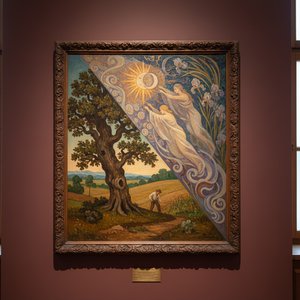
Carl Eduard Schuch: Bridging Realism & Symbolism in Late 19th-Century Austrian Painting
Explore the captivating landscapes & still lifes of Carl Eduard Schuch (1846-1903), a pivotal Austrian painter bridging realism and modernism. Discover his influences, unique style, and lasting legacy with OriginalUniqueArt.

Século XIX na Arte: 10 Obras que Definem uma Era | OriginalUniqueArt
Mergulhe no século XIX com 10 obras de arte icônicas! Explore Monet, Renoir e Van Gogh. Descubra a história, técnica e emoção por trás dos mestres do Impressionismo e Realismo. Encontre reproduções de alta qualidade em OriginalUniqueArt.com.
Da Ideia à Tela: Uma Exploração do Esboço Emocional nos Processos de Reprodução e Criação Artística
Explore a profunda conexão entre emoção e arte! Descubra como os mestres renascentistas expressavam sentimentos e aprenda técnicas para criar obras que tocam a alma. Guia completo sobre reproduções fiéis, interpretação artística e o poder da pintura em tela.

Karl Blossfeldt's 'Urformen der Kunst': Pioneering Botanical Photomicrography & Aesthetic Form
Explore Karl Blossfeldt's groundbreaking *Urformen der Kunst* & pioneering botanical photography. Discover the aesthetic power of nature, New Objectivity influences, and his lasting impact on modern art. Learn about collecting key works.