
![[shoe Chair] — Birgit Jürgenssen](/media/artworks/images-full/88/b3/88b3611dee4116311e4230dae13c736e.jpg)
 Enviar
 Compartilhar
 Ver detalhes
 Guia de Obras do Aluno

 Baixar imagem
 Semelhantes
 Apresentação de slides
 Estatísticas
[Shoe Chair]


 Ver mais
A obra de arte exibida nesta página é protegida por leis de direitos autorais, o que significa que não podemos criar ou vender legalmente uma reprodução idêntica. Esta proteção é aplicada por meio de acordos internacionais, tais como a Convenção de Berna e pelas leis nacionais, incluindo as estabelecidas por Lei de Direitos Autorais dos EUA - Título 17.
Como uma alternativa respeitosa e legal, oferecemos obras de arte personalizadas e pintadas à mão, inspiradas na obra original. Nossos artistas profissionais e experientes estudam cuidadosamente o estilo, a atmosfera e a essência artística da obra original para criar uma peça nova e única que evoque a mesma sensação — permanecendo como uma criação original por direito próprio.
Este método cumpre plenamente as regulamentações de direitos autorais, pois não envolve a cópia ou duplicação da obra protegida. Em vez disso, trata-se de uma reinterpretação criativa — uma nova pintura que é influenciada pela original, mas não idêntica a ela.
Reprodução em Óleo Feita à Mão
Óleo sobre tela pintado à mão no tamanho e moldura de sua escolha, feito sob encomenda pelos nossos artistas. ( Alternar para Impressão Ver Imagem Digital)




































Escolha entre os nossos tamanhos pré-definidos que respeitam as proporções originais da obra de arte.

Digite a largura e a altura de que necessita, para se ajustar à sua moldura ou à sua parede. Esta obra é pintada à mão, por isso, para um tamanho com uma proporção diferente, o artista pode pintar um pouco mais ao redor da imagem ou cortar um pouco — você escolhe. Enviamos-lhe uma maquete digital para aprovação antes de a pintura começar. A imagem exibida nesta página não mostra o resultado real — apenas a maquete mostra.
Após o pedido, a equipa OriginalUniqueArt.com enviará um e-mail ao cliente para solicitar instruções e fornecer uma prévia do esboço.
Entrega mundial () em 3 a 4 semanas, em vez das 5 semanas padrão. (23 Outubro). Sem comprometer a qualidade.

Envio expresso gratuito para todo o mundo

Tela de Linho Premium

Seguro de transporte total

Garantia de Reembolso de Impostos Alfandegários

Garantia de Fidelidade de Cor

Política de Devolução em 100 Dias (Apenas para Defeitos)

Garantia de reembolso de 100%

Desconto para múltiplas unidades
 A opção de vidro está disponível apenas para tamanhos inferiores a 110 cm
![[Shoe Chair]](/static/images/originaluniqueart/artworks/painting.a1e74a1cb7dc.png)
[Shoe Chair]
Técnica de Reprodução
Dimensões da Reprodução
-


Preço Total
€ 263
Birgit Jürgenssen’s “Shoe Chair”: A Study in Ambiguity and Feminist Critique
Birgit Jürgenssen's "Shoe Chair," created in 1974, is more than just a sculptural juxtaposition of a chair and a stiletto; it’s a potent statement born from the fertile ground of feminist art movements and a profound exploration of gender roles, physicality, and the very nature of objectification. Emerging from Vienna's vibrant avant-garde scene in the 1970s, Jürgenssen, a key member of DIE DAMEN collective – alongside figures like Evelyne Egerer and ONA B. – was relentlessly committed to challenging societal norms through her work, often employing unconventional materials and provocative imagery. “Shoe Chair” exemplifies this approach, presenting a deliberately unsettling hybrid that forces the viewer to confront uncomfortable questions about identity and representation.
- Conceptual Foundation: The sculpture’s genesis lies in Jürgenssen's interest in identifying with the material world, particularly through the lens of feminine experience. She sought to reveal the latent power residing within objects, using them as vehicles for exploring ideational depictions of the female form and its associated societal pressures.
- Symbolic Dichotomy: The pairing of a chair – traditionally representing rest, support, and domesticity – with a stiletto heel – intrinsically linked to femininity, status, and often, objectification – immediately establishes a complex tension. This deliberate discordance is central to the work’s impact.
Materiality and Technique: A Study in Contrasts
The physical construction of “Shoe Chair” speaks volumes about Jürgenssen's artistic intent. Likely crafted from wood, leather, and possibly fabric, the sculpture showcases a masterful manipulation of contrasting textures. The smooth, supple leather of the shoe’s straps and sole is juxtaposed against the more rugged, natural texture of the wooden chair frame. This tactile interplay isn’t merely aesthetic; it reinforces the core thematic conflict – the delicate vulnerability of the feminine form versus the assertive power symbolized by the stiletto.
- Photographic Representation: The photograph itself, a meticulously executed image capturing this complex object, utilizes soft, diffused lighting to minimize harsh shadows and highlight the sculpture’s intricate details. The perspective is straightforward, offering a frontal view that emphasizes the work's three-dimensionality despite its two-dimensional presentation.
- Compositional Choices: The slightly off-center placement of the sculpture creates visual interest while maintaining a sense of balance. The strong vertical lines of the chair’s legs and backrest are deliberately countered by the diagonal lines introduced by the stiletto heel, generating a dynamic tension within the composition.
Historical Context and Emotional Resonance
"Shoe Chair" was created during a pivotal moment in art history – the rise of feminist body art and the questioning of traditional artistic representations of women. Jürgenssen’s work aligns with the broader concerns of DIE DAMEN, who sought to reclaim agency and challenge patriarchal structures through their creative practices. The sculpture's ambiguity evokes feelings of unease and contemplation, prompting viewers to consider the ways in which objects can be imbued with symbolic meaning and how these meanings are shaped by societal expectations.
- Legacy: Jürgenssen’s exploration of gender roles continues to resonate today, solidifying her position as a pioneer of feminist art.
Collecting and Displaying – A Statement Piece
A hand-painted reproduction of Birgit Jürgenssen's “Shoe Chair” offers a unique opportunity to own a piece of challenging and thought-provoking contemporary art. This sculpture’s inherent ambiguity, combined with its masterful execution, makes it an ideal addition to any discerning collection or interior space. Its powerful symbolism invites dialogue and serves as a constant reminder of the ongoing struggle for gender equality and artistic freedom.
Perguntas e Respostas
De que forma o tema de "[Shoe Chair]" se relaciona com os temas habituais de Birgit Jürgenssen?
Entre os temas registrados de Birgit Jürgenssen — feminist damen group, gendered object relations, social critique, power, exploring female subjectivity, conceptual body art — "[Shoe Chair]" traz seu próprio foco em feminist art, sculptural hybrid, gender roles, object symbolism, conceptual sculpture, birgit jürgenssen, stiletto chair.
Qual é o tamanho de impressão recomendado para "[Shoe Chair]"?
Recomenda-se o tamanho de impressão Large para "[Shoe Chair]". Outros tamanhos estão disponíveis com as mesmas proporções.
Onde posso comprar uma impressão de "[Shoe Chair]" de Birgit Jürgenssen?
"[Shoe Chair]" está disponível como uma impressão fine art em tela de algodão ou papel canvas de arquivo. Os pedidos são feitos em sua página de Impressão Fine Art, no tamanho de sua escolha.
Biografia do Artista
Birgit Jürgenssen: A Pioneer of Feminist Body Art
Birgit Jürgenssen (1949 – 2003) was an Austrian photographer, painter, graphic artist, curator and teacher who specialized in feminine body art with self-portraits and photo series. She emerged from the Viennese avant-garde scene of the late 1960s and early 1970s, a period marked by intense debates surrounding gender roles and artistic expression. Her work stands apart for its uncompromising exploration of female subjectivity and its critique of societal constraints—themes that continue to resonate with contemporary artists and scholars alike.- Early Life and Education: Born in Vienna, Austria in 1949, Jürgenssen pursued her artistic education at the University of Applied Arts Vienna between 1968 and 1971. This formative period exposed her to influential figures within Viennese art discourse and instilled a commitment to challenging conventional perspectives.
- The Magna Feminismus Exhibition: Her breakthrough came in 1975 with participation in the *MAGNA-Feminismus: Kunst und Kreativität* exhibition, organized by Valie Export. This landmark event showcased a diverse range of feminist artworks, and Jürgenssen’s photograph *Housewives’ Kitchen Apron*, featuring a sculpture of an apron in the shape of an oven—a deliberate inversion of domestic iconography—immediately established her reputation as a bold innovator.
Artistic Style and Recurring Themes
Jürgenssen's artistic style was characterized by meticulous detail and psychological depth. She employed photography extensively, often combining it with drawing and sculpture to create multi-layered artworks that interrogated the complexities of female experience. Her recurring motifs—the female body transformed through various mediums—served as a vehicle for confronting issues of identity, vulnerability, and resistance. Notably, her self-portraits frequently depicted women adorned in furs or masks, symbolizing an attempt to escape oppressive societal codes and embrace primal instincts. The image *I Want Out Of Here!*, captured in 1976, powerfully conveyed the feeling of entrapment—a central preoccupation throughout her oeuvre.- Notable Works: Among her most celebrated pieces are *10 Days – 100 Photos* (1980), a series documenting the daily life of women in Vienna, and *Untitled (Self with Little Fur)* (1974–77), which exemplifies her fascination with exploring feminine vulnerability through symbolic imagery. Her sculptures, such as *Nest* (1979/2002)—a meticulously crafted piece featuring a nest filled with two eggs—further underscored her commitment to confronting societal expectations regarding motherhood and femininity.
Teaching and Curatorial Contributions
Jürgenssen’s influence extended beyond her own artistic practice. She served as lecturer and curator at the University of Applied Arts Vienna and the Academy of Fine Arts Vienna, nurturing a new generation of artists interested in feminist perspectives. Her estate—managed by Hubert Winter—included a vast collection of drawings, watercolor paintings, photogrammes, screens, solar graphics, and objects from various collections—a testament to her prolific creativity and intellectual curiosity.Legacy and Recognition
Birgit Jürgenssen’s photographic works numbered 250 and were exhibited in a retrospective held by the Sammlung Verbund and the Bank Austria Art Forum. Her contribution to feminist art was recognized as “outstanding international representatives of the feminist avant-garde,” cementing her place within the history of contemporary art. Her legacy continues to inspire artists and scholars who grapple with questions of gender, identity, and artistic expression—a testament to the enduring power of her uncompromising vision.
Birgit Jürgenssen
1949 - 2003 , Austria
Informações Rápidas
- Full Name: Birgit Jürgenssen
- Nationality: Austrian
- Date Of Birth: 1949
- Date Of Death: 2003
- Place Of Birth: Vienna, Austria
- Notable Artworks:
- Shoe Chair
- Nest
- Artistic Movement Or Style: Feminist Avant-garde
- Artists Who Influenced This Artist: ['Valie Export']
- Artists Or Movements Influenced By This Artist: ['Actionism']
Artigos Relacionados

The Enduring Form: Exploring Themes & Techniques in Sculpture Across Historical Periods
Explore the rich history of sculpture from ancient masterpieces to contemporary innovations. Discover key techniques, influential artists & investment potential for discerning art collectors.

The Enduring Form: Sculpture Across History, Technique & Emotional Resonance
Explore the rich history of sculpture with OriginalUniqueArt. Discover key techniques, influential artists & investment potential for discerning collectors. Expert insights into valuing and collecting timeless masterpieces.

Esculturas em Bronze Icônicas: 10 Obras que Revolucionaram a Arte | OriginalUniqueArt
Descubra as 10 esculturas em bronze mais icônicas da história! Explore a arte de Rodin, Michelangelo e outros mestres. Encontre reproduções de alta qualidade para sua casa em OriginalUniqueArt.com.
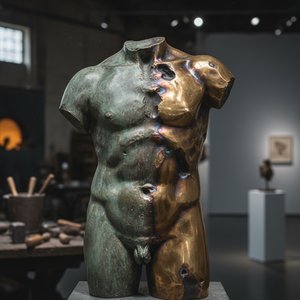
O Legado Duradouro da Escultura em Bronze: História, Técnicas e Interpretações Contemporâneas
Explore o legado da escultura em bronze: história, técnicas milenares como a cera perdida e tendências contemporâneas. Guia para colecionadores e apreciadores de arte.

As 10 Obras em Bronze Mais Icônicas que Transformaram a História da Arte | OriginalUniqueArt
Descubra as 10 esculturas em bronze mais influentes da história! Explore a arte de Rodin, Michelangelo e outros mestres. Reproduções de alta qualidade para decorar sua casa com elegância. OriginalUniqueArt.