

 Visualizar em escala
 Enviar
 Compartilhar
 Ver detalhes
 Guia de Obras do Aluno

 Baixar imagem
 Semelhantes
 Raio X
 Apresentação de slides
 Estatísticas
The Magdalen
 Oil On Panel
- Italian Renaissance
 1520
1520- Renaissance
 59.0 x 48.0 cm
 Galeria Nacional de Arte
 Ver mais
Reprodução em Óleo Feita à Mão
Óleo sobre tela pintado à mão no tamanho e moldura de sua escolha, feito sob encomenda pelos nossos artistas. ( Alternar para Impressão Ver Imagem Digital)




P118B €10

P118H €10

P118W €10

P438Z €10

P508JH €12

P508YH €12

P805H €10

P805Z €10

P919BZ €10

P919G €10

P919XJ €10

P959ZH €10

P968JZ €12

W106C €8

W218G €10

W218JH €8

W218Y €10

W307PJ €10

W316G €10

W316PJ €8

W316Y €10

W398PJ €8

W4111J €10

W500HY €15

W500JH €15

W692G €12

W849H €8

W940BG €15

W953PJ €8




Escolha entre os nossos tamanhos pré-definidos que respeitam as proporções originais da obra de arte.

Pode inserir as suas próprias dimensões para se adequar a uma moldura ou espaço específico. Se o tamanho selecionado não corresponder às proporções da imagem original, iremos cortar a obra de arte ou estender a pintura com elementos adicionais pintados à mão. Um esboço digital será enviado para sua aprovação antes do início da produção.
Tenha em atenção que a pré-visualização no ecrã não reflete o corte ou extensão real. Apenas o esboço mostrará com precisão a composição final.
Embora tamanhos personalizados estejam disponíveis, recomendamos selecionar uma dimensão da lista predefinida para preservar as proporções originais.
Após o pedido, a equipa OriginalUniqueArt.com enviará um e-mail ao cliente para solicitar instruções e fornecer uma prévia do esboço.
Entrega mundial () em 3 a 4 semanas, em vez das 5 semanas padrão. (7 Outubro). Sem comprometer a qualidade.

Envio expresso gratuito para todo o mundo

Tela de Linho Premium

Seguro de transporte total

Garantia de Reembolso de Impostos Alfandegários

Garantia de Fidelidade de Cor

Política de Devolução em 100 Dias (Apenas para Defeitos)

Garantia de reembolso de 100%

Desconto para múltiplas unidades
 A opção de vidro está disponível apenas para tamanhos inferiores a 110 cm

The Magdalen
Técnica de Reprodução
Dimensões da Reprodução
-


Preço Total
€ 258
The Magdalen by Bernardino Luini
Bernardino Luini, a name resonating softly within the annals of Italian Renaissance painting, emerged from the picturesque region surrounding Lake Maggiore around 1480. Born in Runo, a small *frazione* near Dumenza, his early life remains shrouded in some mystery, yet it’s clear that destiny propelled him towards Milan, the vibrant artistic heartland of northern Italy. By 1500, he had relocated with his father, poised to absorb the burgeoning creative energy of the city. While accounts vary regarding his initial training—some credit Giovan Stefano Scotto, others Ambrogio Bergognone—a more profound influence was undoubtedly on the horizon: Leonardo da Vinci. The precise nature of their relationship remains debated, but it’s widely believed Luini worked directly under the master, a formative experience that would indelibly shape his artistic trajectory. This apprenticeship wasn't merely technical; it was an immersion into a world steeped in observation and anatomical precision—a cornerstone of Leonardo’s revolutionary approach to portraying human form.- Subject Matter: The painting depicts Mary Magdalene, portrayed with serene dignity amidst the aftermath of Christ’s crucifixion. Luini meticulously captures her sorrowful gaze and posture, conveying a profound sense of grief and contemplation.
- Style: Luini's style is characterized by its graceful figures—known as “Luinesque”—characterized by elongated eyes and delicately rendered drapery. This aesthetic aligns seamlessly with the prevailing humanist ideals of the Renaissance, prioritizing human emotion and beauty above rigid formalism.
- Technique: Employing oil paint on panel, Luini skillfully utilized *sfumato*, Leonardo’s technique of blurring contours to create atmospheric depth and soften edges. This masterful blending of colors contributes significantly to the painting's ethereal quality and enhances its expressive power.
Historical Context
Painted circa 1520, “The Magdalen” emerged during a period of intense artistic innovation in Milan—a city under the patronage of Federico Borromeo, Bishop of Pavia and ardent supporter of humanist scholarship. Luini’s work reflects the broader cultural currents of the time, mirroring the Renaissance fascination with biblical narratives and exploring themes of faith, compassion, and spiritual redemption. The painting stands as a testament to Luini's ability to distill complex emotions into visually arresting compositions—a hallmark of his artistic legacy.Symbolism
The composition itself is laden with symbolic significance. Mary Magdalene’s posture embodies humility and penitence, reflecting her role as a repentant sinner forgiven by Christ. The muted palette—dominated by greens and browns—evokes the desolate landscape surrounding Jerusalem at the crucifixion, underscoring the painting's solemn atmosphere. Furthermore, Luini’s meticulous attention to detail—particularly in rendering Magdalene’s facial expression—demonstrates his commitment to conveying psychological realism—a departure from earlier artistic conventions.Emotional Impact
“The Magdalen” transcends mere visual representation; it evokes a powerful emotional response in the viewer. The painting's serene beauty juxtaposed with its poignant depiction of sorrow creates a compelling tension that invites contemplation and introspection. Luini’s masterful execution captures the essence of human suffering—transforming grief into an enduring symbol of compassion and spiritual grace. It remains a timeless masterpiece, resonating across centuries with its profound artistic merit and emotional depth.Perguntas e Respostas
Posso encomendar uma reprodução a óleo de "The Magdalen"?
Você pode encomendar uma reprodução pintada à mão de "The Magdalen" de Bernardino Luini diretamente em esta página: uma reprodução a óleo pintada à mão sobre tela de linho, feita sob encomenda.
Qual era a idade de Bernardino Luini quando "The Magdalen" foi criada?
Bernardino Luini criou "The Magdalen" aos 40 anos. O artista nasceu em 1480 e a obra data de 1520.
Em que ano foi criado "The Magdalen"?
A criação de "The Magdalen" de Bernardino Luini data de 1520.
Qual é a cor predominante de "The Magdalen" de Bernardino Luini?
A cor dominante de "The Magdalen" de Bernardino Luini é Black (#0c0c0a).
Quem é o artista por trás de "The Magdalen"?
"The Magdalen" foi criado por Bernardino Luini. As informações nesta página descrevem a obra original de Bernardino Luini.
Em que parte da casa uma reprodução de "The Magdalen" ficaria bem?
"The Magdalen" de Bernardino Luini é recomendado para um(a) Living Room. Esta sugestão baseia-se no tema, nas cores e na atmosfera da obra.
Como "The Magdalen" de Bernardino Luini pode ser utilizado na decoração de interiores?
O uso de (Accent) e o espaço (Living Room) são as duas recomendações registradas para "The Magdalen" de Bernardino Luini.
Biografia do Artista
A Lombard Luminary: The Life and Art of Bernardino Luini
Bernardino Luini, a name that whispers through the halls of Italian Renaissance painting, emerged from the serene landscapes surrounding Lake Maggiore around 1480. Born in Runo, a small hamlet nestled near Dumenza, his early life remains shrouded in a gentle mist of mystery – details scarce and often debated amongst scholars. Yet, it’s clear that fate, like a skilled hand guiding a brushstroke, steered him towards Milan, the vibrant heart of northern Italy's artistic world. By the year 1500, he had made his way to this bustling metropolis, poised to absorb the creative energy and intellectual ferment that defined the era. While precise accounts of his initial training remain elusive – some attribute it to Giovan Stefano Scotto, others to Ambrogio Bergognone – a far more significant influence was undoubtedly on the horizon: Leonardo da Vinci. The nature of their relationship is a subject of ongoing discussion, but it’s widely believed that Luini worked directly under the master's tutelage, an apprenticeship that profoundly shaped his artistic trajectory and imbued his work with a unique sensibility. This wasn't merely rote imitation; it was an immersion into Da Vinci’s world – a realm of subtle observation, innovative composition, and the elusive quality known as *sfumato*, which Luini would masterfully integrate into his own distinctive style.The Echoes of Leonardo: Style and Technique
Luini's artistic development wasn't simply a reflection of Da Vinci’s techniques; it was a sensitive assimilation, filtered through the lens of his own Lombard perspective. He didn’t strive to replicate Da Vinci’s intellectual rigor or anatomical precision with the same meticulous detail – instead, he embraced the softer, more lyrical aspects of the master’s style. This is particularly evident in his depictions of women—figures rendered with an ethereal grace, their gazes imbued with a gentle melancholy and an inwardness that invites contemplation. These captivating eyes, often described as “Luinesque” by the discerning eye of Vladimir Nabokov, possess a remarkable depth and expressiveness. Early works like *The Adoration of the Magi* (c. 1505), housed in San Pietro, Luino, already hint at this emerging style – showcasing a delicate handling of light and shadow, a masterful use of composition, and an early exploration of *sfumato*. His frescoes for the Oratory of Santa Maria Nuova in Pilastrello further solidified this distinctive approach. The influence of Bernardino Zenale’s *Cantù Polyptych* is also discernible in works like *St. Anthony of Padua* (1510s), demonstrating Luini's ability to synthesize diverse influences into a cohesive artistic vision, creating a style that was both deeply rooted in tradition and uniquely his own.A Flourishing Career: Commissions and Artistic Evolution
The first two decades of the 16th century witnessed an explosion of creative activity for Bernardino Luini. He wasn’t confined to religious subjects; his talents were sought after for secular commissions as well, reflecting the breadth of his artistic skill and versatility. The frescoes he created between 1509 and 1514 for Villa Pelucca in Sesto San Giovanni stand as a testament to this adaptability – depicting mythological scenes with an elegance that graced the walls of this aristocratic residence. These works, now housed in Milan’s Pinacoteca di Brera, reveal a painter equally adept at capturing the dynamism of classical narratives and the intimate beauty of human form. He continued to receive prestigious commissions throughout Lombardy— adorning churches and palaces with his distinctive style. His ability to imbue even grand-scale frescoes with an air of intimacy and emotional resonance cemented his position as one of the most sought-after artists of his time. Luini’s work during this period demonstrates a shift towards greater psychological depth and a subtle, almost melancholic beauty that distinguishes him from many of his contemporaries.Notable Works: A Tapestry of Faith and Myth
Bernardino Luini's oeuvre is rich with masterpieces, each reflecting a particular stage in his artistic development and showcasing his unique style. *St. Anthony of Padua* (1510-1513), a monumental fresco in the church of San Giorgio Maggiore in Milan, exemplifies his mastery of composition and his ability to convey profound emotion through subtle gestures and expressions. The *Adoration of the Magi*, painted around 1505 for San Pietro, Luino, is another key work, demonstrating his early exploration of perspective and his delicate handling of color. The frescoes at Villa Pelucca – depicting scenes from classical mythology – are particularly noteworthy for their elegance and refinement. His later works, such as *Salome with the Head of John the Baptist* (c. 1520-1530) and *Holy Family with Saints Anne and John the Baptist* (c. 1528-1530), showcase a deepening of his expressive power and a heightened sense of emotional intensity. These paintings, often characterized by their dreamlike quality and ambiguous narratives, continue to fascinate viewers today.Legacy and Enduring Influence
Bernardino Luini passed away in Milan in June 1532, leaving behind a legacy that extended far beyond his own lifetime. His son, Aurelio, followed in his footsteps, continuing the family’s artistic tradition. However, it is Bernardino who remains the more celebrated figure – remembered for his graceful figures, delicate *sfumato*, and the uniquely captivating quality of his “Luinesque” women. His work served as an inspiration to subsequent generations of artists, influencing the development of Lombard painting and contributing to the broader currents of Italian Renaissance art. Today, Luini’s masterpieces can be found in museums and churches throughout Italy – the Pinacoteca di Brera being a particularly rich repository of his works. His paintings continue to enchant viewers with their beauty, grace, and enduring emotional power, offering a poignant glimpse into the artistic sensibilities of a bygone era.
Bernardino Luini
1480 - 1532 , Itália
Informações Rápidas
- Artistic Movement Or Style: Renascença, Maneirismo
- Artists Or Movements Influenced By This Artist: ['Estilo Luinesque']
- Artists Who Influenced This Artist: ['Leonardo da Vinci']
- Date Of Birth: c. 1480
- Date Of Death: 1532
- Full Name: Bernardino Luini
- Nationality: Italiano
- Notable Artworks:
- Adoração dos Magos
- Santo Antão
- Villa Pelucca
- Place Of Birth: Reno, Itália
Artigos Relacionados

The Enduring Power of Painting: A Historical & Contemporary Exploration of Form and Emotion
Explore the rich history & enduring techniques of oil painting with OriginalUniqueArt. Discover masterpieces, learn about art collecting, and find authentic handmade reproductions crafted by skilled artists.
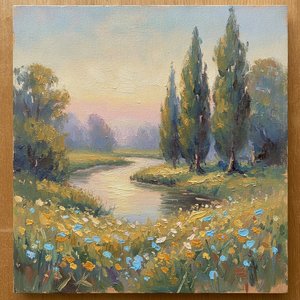
The Timeless Charm of Oil on Board: Reimagining Texture and Light through the Impressionist Lens
Discover the profound intimacy of oil on panel. Explore how Impressionist masters used rigid supports to capture light, texture, and impasto depth through exquisite, handmade oil reproductions for discerning collectors.

O Legado Duradouro da Pintura a Óleo sobre Tela: Técnica, História e Prática Contemporânea
Explore a história e as técnicas da pintura a óleo com especialistas. Descubra os mestres, materiais essenciais e o futuro desta arte atemporal. Reproduções de qualidade museológica.

Oil on Canvas: A Historical & Technical Exploration of a Timeless Artistic Medium
Explore the rich history & enduring techniques of oil painting on canvas. Discover the science behind its longevity, conservation practices, and contemporary relevance. Expert insights for art enthusiasts.

The Enduring Legacy of Oil on Canvas: Technique, History & Aesthetic Impact
Explore the rich history & techniques of oil painting – from Renaissance masters to Impressionism. Discover pigments, layering methods, and why this timeless medium endures. Expert insights for artists & art enthusiasts.

