
 Compartilhar
 Compartilhar
 Detalhes
 Guia
Guia

 Baixar imagem
 Semelhantes
 Ver diaporama
 Estatísticas
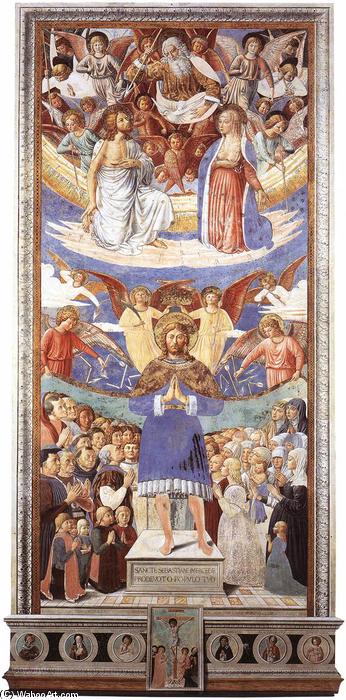
St Sebastian Intercessor
 Fresco
- Early Renaissance
 1464
1464- Renaissance
 527.0 x 248.0 cm
 Nave of Sant'Agostino
 Ler mais
Giclée / Impressão de Arte
Impressão giclée ou em tela de qualidade de museu, com produção rápida e opções flexíveis de acabamento. ( Comprar pintura feita à mão Alternar para Imagem Digital)




































Escolha entre os nossos tamanhos pré-definidos que respeitam as proporções originais da obra de arte.

Insira a largura e a altura desejadas para se ajustarem à sua moldura ou parede. Uma impressão pode ser apenas cortada, nunca ampliada além da imagem original; portanto, um tamanho com proporções diferentes resultará na perda de parte da imagem. Enviamos uma maquete digital para sua aprovação antes de realizarmos a impressão. A imagem exibida nesta página não mostra o corte real — apenas a maquete o faz.
Entrega mundial () em 2 semanas, em vez das 4/5 semanas padrão. (26 Outubro)

Envio expresso gratuito para todo o mundo

Tela de Linho de Alta Qualidade

Seguro de transporte completo

Garantia de Reembolso de Impostos Alfandegários

Garantia de Fidelidade Cromática

Política de Devolução em 100 Dias (Apenas para Defeitos)

Garantia de reembolso de 100%

Oferta de desconto por quantidade
 A opção de vidro está disponível apenas para tamanhos inferiores a 110 cm

St Sebastian Intercessor
Giclée / Impressão de Arte
Tamanho da Reprodução
-


Preço Total
€ 70
St Sebastian Intercessor: A Renaissance Masterpiece by Benozzo Gozzoli
- Title: St Sebastian Intercessor
- Artist: Benozzo Gozzoli
- Date: 1464
- Size: 527 x 248 cm
- Location: Nave of Sant'Agostino (San Gimignano, Italy)
Artistic Style and Technique
“St Sebastian Intercessor” is a remarkable fresco created by the renowned Italian artist Benozzo Gozzoli in 1464. This large-scale work showcases his mastery of the fresco technique, a method involving painting directly onto wet plaster. The vibrant colors and intricate details characteristic of Gozzoli’s style are evident throughout the scene. His approach blends realism with an International Gothic influence, resulting in figures that possess both detailed rendering and a sense of stylized elegance.
The composition depicts a gathering of people, including angels, Roman soldiers, and numerous onlookers, all centered around the martyrdom of St Sebastian. The use of perspective guides the viewer's eye upwards towards Christ, creating a hierarchical structure that emphasizes the spiritual significance of the event. Gozzoli’s skillful application of fresco allows for rich color saturation and textural depth, bringing the narrative to life.
Historical Context and Symbolism
Painted during a period of plague in 1464, “St Sebastian Intercessor” served as a votive offering – a prayer for divine intervention. The depiction of St Sebastian, fully clothed and shielding people from arrows, deviates from the traditional portrayal of him riddled with wounds. This symbolizes his role not just as a martyr but also as an intercessor, protecting humanity from suffering.
The scene is rich in symbolism: God the Father surrounded by angels prepares to hurl arrows representing divine wrath, while Mary and Christ kneel as intercessors, appealing for mercy. Christ’s display of his wounds and Mary's baring of her breast are poignant reminders of sacrifice and redemption. The crowd at St Sebastian’s feet represents humanity seeking solace and protection.
Emotional Impact and Legacy
“St Sebastian Intercessor” evokes a powerful sense of awe, reverence, and spiritual significance. The vibrant colors, detailed figures, and dramatic lighting create an emotionally charged atmosphere that draws the viewer into the scene. The painting’s enduring appeal lies in its ability to convey both the suffering of humanity and the promise of divine grace.
Benozzo Gozzoli's work remains a testament to the artistic achievements of the Early Renaissance, celebrated for its beauty, technical skill, and profound spiritual message. The fresco’s location within the Nave of Sant'Agostino continues to inspire visitors and art enthusiasts alike.
Perguntas e Respostas
As cores de "St Sebastian Intercessor" parecem intensas ou suaves?
A intensidade de cor de "St Sebastian Intercessor" é Balanced. A intensidade descreve o quão vibrantes as cores parecem ser.
Como "St Sebastian Intercessor" se posiciona entre os temas recorrentes de Benozzo Gozzoli?
Entre os temas recorrentes de Benozzo Gozzoli — international gothic style, fra angelico training, early work showcasing developing skill, demonstrates fresco mastery., religious devotion, plague intercession, divine mercy — "St Sebastian Intercessor" traz seu próprio foco em martyrdom, saint sebastian, fresco, religious, intercessor, angels, gozzoli, san gimignano.
Como é descrita a atmosfera de "St Sebastian Intercessor", de Benozzo Gozzoli?
A atmosfera geral de "St Sebastian Intercessor", de Benozzo Gozzoli é Classic. O clima descreve a sensação predominante da obra.
Biografia do Artista
Early Life and Training
Benozzo Gozzoli (b. ca. 1420, Firenze, Italy—died Oct. 4, 1497, Pistoia) was an italian renaissance painter from florence, best known for his series of murals in the palazzo medici-riccardi, depicting festive, vibrant processions with fine attention to detail and a pronounced international gothic influence. As a young artist, gozzoli was a pupil and assistant of the renowned painter fra angelico. Some of his early works, such as those in the convent of san marco in florence, were executed after fra angelico's designs. This training laid the foundation for gozzoli’s future success. He was born to Sandro di Lese and Margherita Pizzorno, a family of modest means but with connections to Florentine civic life. Little is known about his formative years beyond this basic biographical information. His artistic education began under fra angelico's tutelage at San Marco, where he honed his skills in fresco painting and developed an appreciation for the stylistic conventions of international gothic art—a style characterized by rich ornamentation, stylized figures, and a luminous palette that would permeate much of his subsequent work.Notable Works and Collaborations
Gozzoli’s artistic career blossomed during the Florentine Renaissance, marked by patronage from influential families like the Medici. He collaborated extensively with Lorenzo Ghiberti on the third bronze door of the baptistery in florence (1444-1447), contributing to its intricate sculptural decoration alongside his brother Vittorio. This project solidified gozzoli’s reputation as a skilled craftsman and exposed him to the artistic currents circulating at the time. Furthermore, he worked closely with fra angelico on frescoes commissioned for the chapel of pope nicholas v in the vatikan (1447), creating serene depictions of biblical scenes infused with angelic grace—a testament to their shared aesthetic sensibilities. His involvement in the decoration of santa maria in aracoeli also showcased his versatility and ability to adapt to diverse artistic contexts. Perhaps his most ambitious undertaking was the fresco cycle for the campo santo in pisa (1469-1485), a monumental project reflecting the grandeur of the era and demonstrating gozzoli’s mastery of landscape painting and narrative composition. The “Procession of the Magi” within this cycle stands as one of his crowning achievements, capturing the dynamism and splendor of a medieval procession with remarkable realism and expressive detail—a masterpiece that embodies the spirit of international gothic style.Artistic Style and Legacy
Gozzoli’s artistic style distinguished itself by its meticulous attention to detail and unwavering commitment to stylistic conventions—particularly those associated with international gothic art. Unlike many of his contemporaries who embraced linear perspective, gozzoli prioritized decorative richness and expressive color, creating images that captivated the eye and conveyed profound spiritual meaning. His frescoes are renowned for their luminous palettes, intricate drapery folds, and exquisitely rendered figures—a hallmark of his distinctive artistic vision. He achieved considerable fame during his lifetime, attracting commissions from prominent patrons throughout tuscany and umbria. Gozzoli’s legacy extends beyond his individual artworks; he helped to establish a new aesthetic paradigm that influenced subsequent generations of painters—demonstrating the enduring impact of his creative genius on italian art history. His work continues to inspire admiration for its beauty, sophistication, and profound symbolic resonance.Major Achievements
Benozzo Gozzoli’s artistic accomplishments include:- The “Journey of the Magi” fresco cycle in Palazzo Medici Riccardi (1459-1461): A seminal achievement in international gothic style, showcasing masterful landscape depiction and portraiture.
- Collaboration with Lorenzo Ghiberti on the Baptistery Doors (1444-1447): Contributing to a monumental sculptural project that elevated Florentine art to new heights.
- Frescoes for Santa Maria in Aracoeli (1458): Demonstrating his ability to execute complex commissions under papal patronage.
- The Campo Santo Frescoes in Pisa (1469-1485): A vast undertaking reflecting the artistic fervor of the Florentine Renaissance and cementing his reputation as a prolific artist.

Benozzo Gozzoli
1420 - 1497 , Itália
Dados Rápidos
- Artistic Movement Or Style: International Gothic
- Artists Who Influenced This Artist:
- Fra Angelico
- Lorenzo Ghiberti
- Date Of Birth: ca. 1420
- Date Of Death: Oct. 4, 1497
- Full Name: Benozzo di Lese
- Nationality: Florentine
- Notable Artworks:
- Journey of the Magi
- Scenes from St Francis
- Place Of Birth: Florence, Italy
Artigos Relacionados

The Enduring Legacy of Fresco: Technique, History & Artistic Expression
Explore the rich history & enduring artistry of fresco painting. Discover techniques from Giotto to Michelangelo, conservation efforts, & modern applications. Learn how OriginalUniqueArt brings this timeless art form to your home.

The Enduring Legacy of Fresco Painting: Techniques, History & Contemporary Relevance
Explore the rich history & enduring artistry of fresco painting – from Giotto to Michelangelo! Discover techniques, conservation efforts, & modern applications. Learn how OriginalUniqueArt brings this timeless art form to your home.

O Afresco como Legado Familiar: Preservando a Herança Através da Arte Mural
Descubra o afresco como legado familiar! Explore a história, técnica e conservação da pintura mural. Encontre reproduções de alta qualidade em .

Benozzo Gozzoli: Narrative Innovation & Secular Humanism in Early Renaissance Frescoes
Explore the innovative frescoes of Benozzo Gozzoli, a key Florentine Renaissance painter. Discover his unique blend of religious narrative, secular humanism & detailed portraiture in masterpieces like the Magi Chapel cycle.

The Enduring Legacy of Fresco: Technique, History & Artistic Expression Across Cultures
Explore the rich history & enduring legacy of fresco painting! Discover ancient techniques, Giotto's masterpieces, and modern applications. Expert insights for art lovers & professionals.


