

 Visualizar em escala
 Enviar
 Compartilhar
 Ver detalhes
 Guia de Obras do Aluno

 Baixar imagem
 Semelhantes
 Raio X
 Apresentação de slides
 Estatísticas
Turning Form


 Ver mais
A obra de arte exibida nesta página é protegida por leis de direitos autorais, o que significa que não podemos criar ou vender legalmente uma reprodução idêntica. Esta proteção é aplicada por meio de acordos internacionais, tais como a Convenção de Berna e pelas leis nacionais, incluindo as estabelecidas por Lei de Direitos Autorais dos EUA - Título 17.
Este método cumpre plenamente as regulamentações de direitos autorais, pois não envolve a cópia ou duplicação da obra protegida. Em vez disso, trata-se de uma reinterpretação criativa — uma nova pintura que é influenciada pela original, mas não idêntica a ela.
Giclée / Impressão de Arte
Impressão giclée ou em tela de qualidade de museu, com produção rápida e opções flexíveis de acabamento. ( Encomendar reprodução pintada à mão Ver Imagem Digital)




P118B €10

P118H €10

P118W €10

P438Z €10

P508JH €12

P508YH €12

P805H €10

P805Z €10

P919BZ €10

P919G €10

P919XJ €10

P959ZH €10

P968JZ €12

W106C €8

W218G €10

W218JH €8

W218Y €10

W307PJ €10

W316G €10

W316PJ €8

W316Y €10

W398PJ €8

W4111J €10

W500HY €15

W500JH €15

W692G €12

W849H €8

W940BG €15

W953PJ €8




Escolha entre os nossos tamanhos pré-definidos que respeitam as proporções originais da obra de arte.

Digite a largura e a altura de que necessita, para se ajustar à sua moldura ou à sua parede. Uma impressão só pode ser cortada, nunca ampliada além da imagem original, pelo que um tamanho com uma proporção diferente perderá parte da imagem. Enviamos-lhe uma maquete digital para aprovação antes de imprimirmos qualquer coisa. A imagem apresentada nesta página não mostra o corte real — apenas a maquete o faz.
Entrega mundial () em 2 semanas, em vez das 4/5 semanas padrão. (21 Outubro)

Envio expresso gratuito para todo o mundo

Tela de Linho Premium

Seguro de transporte total

Garantia de Reembolso de Impostos Alfandegários

Garantia de Fidelidade de Cor

Política de Devolução em 100 Dias (Apenas para Defeitos)

Garantia de reembolso de 100%

Desconto para múltiplas unidades
 A opção de vidro está disponível apenas para tamanhos inferiores a 110 cm

Turning Form
Giclée / Impressão de Arte
Dimensões da Reprodução
-


Preço Total
€ 70
Turning Form: An Exploration of Barbara Hepworth’s Sculptural Vision
Barbara Hepworth (1903–1975) stands as an undisputed titan amongst British sculptors, her pioneering approach to abstraction reshaping the landscape of modern art. Born in Wakefield, Yorkshire, Hepworth's formative years were steeped in the rugged beauty of the Pennines—a region that would profoundly influence her artistic sensibility and inspire a lifelong fascination with geological forms. Her early studies at Leeds School of Art laid the groundwork for her subsequent mastery at the Royal College of Art (RCA), where she honed her skills alongside fellow innovators like Henry Moore, forging connections that would propel them both to international acclaim. Hepworth’s artistic trajectory unfolded during a period marked by seismic shifts in European culture—the rise of Surrealism and the burgeoning interest in geometric abstraction. Embracing these movements with unwavering conviction, Hepworth joined forces with Ben Nicholson and Paul Nash to establish Unit One, a collective dedicated to synthesizing disparate influences into a cohesive aesthetic vision. This collaborative spirit extended beyond artistic endeavors; Hepworth married Nicholson in 1938, embarking on a relationship that nurtured both their creative pursuits and personal growth. The Second World War irrevocably altered Hepworth’s life circumstances, prompting her relocation to St Ives, Cornwall—a coastal haven that would become synonymous with her oeuvre. Amidst the dramatic vistas of the Cornish landscape, Hepworth cultivated a singular artistic practice characterized by an uncompromising commitment to exploring fundamental sculptural concepts. Her celebrated “Landscape Sculpture” series exemplifies this ethos, capturing the essence of geological forms—particularly limestone—through meticulously crafted bronze sculptures. These works resonate with a palpable sense of stillness and contemplation, inviting viewers to engage in a dialogue with the natural world. Hepworth’s artistic exploration extended beyond representational imagery, delving into the realm of pure abstraction. Her fascination with geometric shapes—circles, spheres, planes—became central to her sculptural vocabulary, mirroring the underlying rhythms and harmonies of mathematical principles. Notably, Hepworth's monumental sculpture *Turning Forms* (1950), exemplifies this stylistic preoccupation. Constructed from Galway limestone blocks, the piece embodies Hepworth’s belief that “the main sources of my inspiration are the human figure and the landscape; also the one in relation to the other.” The sculpture’s deliberate asymmetry—a hallmark of Hepworth's aesthetic—creates a dynamic tension between solidity and fluidity, reflecting the artist’s profound engagement with both natural and conceptual dimensions. The enduring legacy of Barbara Hepworth resides not merely in her groundbreaking contributions to modern sculpture but also in her unwavering dedication to artistic integrity. Her studio, Trewyn Studio, remains remarkably preserved—a testament to her meticulous attention to detail and her steadfast belief that “Carving to me is more interesting than modelling, because there is an unlimited variety of materials from which to draw inspiration.” Hepworth’s sculptures continue to captivate audiences worldwide, serving as beacons of artistic innovation and embodying the timeless beauty of geological forms.Perguntas e Respostas
Qual museu detém a obra original de "Turning Form"?
Você pode ver a obra original "Turning Form" no The Hepworth Wakefield, Wakefield, Reino Unido.
Qual é o formato de "Turning Form"?
"Turning Form" de Barbara Hepworth possui um formato Orientação vertical. O formato descreve as proporções da composição.
Qual técnica foi utilizada para "Turning Form" de Barbara Hepworth?
A técnica de "Turning Form" de Barbara Hepworth é Acrílico sobre tela. As reproduções visam reproduzir a aparência desta técnica.
Biografia do Artista
Barbara Hepworth: A Pioneer of Modern Sculpture
Barbara Hepworth (Wakefield, Yorkshire, 10 January 1903 — Saint Ives, Cornwall, 20 May 1975), was an English artist and sculptor whose groundbreaking approach to abstraction revolutionized the art world in the mid-20th century. Born into a family of engineers—her father, Herbert Hepworth, worked for West Riding County Council—Jocelyn Barbara Hepworth’s early life instilled in her a fascination with precision and form, influences that would permeate her artistic vision throughout her career.- Early Influences & Education: Hepworth's formative years were marked by exposure to the landscapes of Yorkshire and the encouragement of Miss McCroben, headteacher at Wakefield Girls’ High School, who recognized Hepworth’s talent for drawing and encouraged her ambition to pursue higher education. She excelled academically, securing a scholarship to Leeds School of Art in 1920 where she encountered Henry Moore—a friendship that would endure for decades and profoundly shape their artistic trajectories.
- Royal College of Art & The Birth of Modern Sculpture: Hepworth’s studies at the Royal College of Art from 1921 to 1924 proved pivotal. Alongside Moore, she embraced a radical new aesthetic—direct carving—rejecting traditional modeling techniques in favor of working directly with stone and wood. This method allowed for an unprecedented level of spontaneity and responsiveness to material qualities, establishing Hepworth as one of the foremost figures in the burgeoning movement of abstraction-création.
The Surrealist Years & Collaboration with Ben Nicholson
Hepworth’s artistic journey gained momentum during her involvement with the Hampstead Circle group—a collective of avant-garde artists united by a shared commitment to exploring subconscious imagery and geometric abstraction. Her relationship with Ben Nicholson blossomed in 1931, culminating in marriage shortly thereafter. Together they established a studio in St Ann's Terrace, Hampstead, where Hepworth honed her craft and experimented with new materials—particularly stringed sculptures that captured the essence of natural forms through rhythmic repetition and textural interplay.Monumental Sculpture & Recognition
The Second World War brought Hepworth and Nicholson to St Ives, Cornwall, where they found inspiration in the rugged Cornish coastline. During this period, Hepworth undertook ambitious commissions—most notably Winged Figure (1961–3), a monumental sculpture commissioned by John Lewis for their Oxford Street flagship store—demonstrating her mastery of scale and materiality. Her work gained international acclaim, securing prestigious awards and cementing her place as one of the most influential sculptors of her time.Legacy & Artistic Significance
Barbara Hepworth’s enduring legacy resides in her unwavering dedication to exploring the fundamental principles of form and space—a pursuit that transcended stylistic conventions and established her as a visionary pioneer of modern sculpture. Her sculptures continue to inspire artists worldwide, serving as testament to her artistic genius and her profound contribution to the history of art.
Barbara Hepworth
1903 - 1975 , Reino Unido
Informações Rápidas
- Artistic Movement Or Style: Modernismo
- Artists Or Movements Influenced By This Artist: ['Unit One']
- Artists Who Influenced This Artist: ['Henry Moore']
- Date Of Birth: 10 janeiro 1903
- Full Name: Jocelyn Barbara Hepworth
- Nationality: Inglesa
- Notable Artworks:
- Oval Form
- Two Forms
- Totem
- Place Of Birth: Wakefield, Inglaterra
Artigos Relacionados
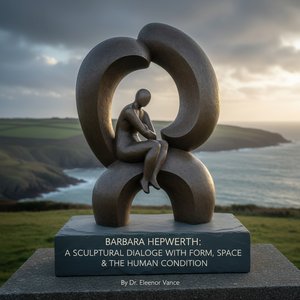
Barbara Hepworth: A Sculptural Dialogue with Form, Space & the Human Condition
Explore the profound world of Barbara Hepworth's sculpture. Discover her artistic evolution, iconic forms, and lasting influence on modern art. A guide for collectors & enthusiasts.

Kandinsky: As 25 Obras-Primas que Definem o Abstracionismo | OriginalUniqueArt
Descubra as 25 obras-primas de Wassily Kandinsky, pioneiro da arte abstrata! Explore a história, cores e significado por trás de cada pintura. Encontre reproduções de alta qualidade e inspire sua decoração em OriginalUniqueArt.com.
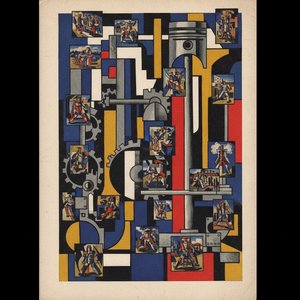
Fernand Léger: As 25 Obras-Primas que Definem um Ícone da Arte Moderna | OriginalUniqueArt
Descubra as 25 obras-primas de Fernand Léger, pioneiro do tubismo e da arte moderna. Explore a história, cores vibrantes e técnicas inovadoras por trás de seus quadros icônicos. Encontre reproduções de alta qualidade para decorar sua casa com estilo em OriginalUniqueArt.com.

Abstração Geométrica: 10 Obras-Primas que Moldaram a Arte Moderna | OriginalUniqueArt.com
Descubra as 10 obras-primas da Abstração Geométrica que revolucionaram a arte moderna! Explore Kandinsky, Mondrian e outros artistas icônicos. Encontre reproduções de alta qualidade para decorar sua casa com OriginalUniqueArt.com.

Beyond Form & Color: Geometric Abstraction's Evolution in 20th/21st Century Art
Explore the evolution of geometric abstraction from Cubism to contemporary art. Discover key artists like Malevich & Mondrian, investment insights, and expert collecting advice at OriginalUniqueArt.


