Abstraction-Création
Three Forms (Barbara Hepworth)
Barbara Hepworth (1903–1975) criou Three Forms. Pertence ao movimento Abstraction-Création. É feito em Stone. Está conservada no Tate Britain, em Londres, Reino Unido. Mede 34 × 53 cm.
- Stone
- 34 × 53 cm
- Tate Britain, Londres

 Pintura a Óleo Feita à Mão
 Compartilhar
 Compartilhar
 Ficha técnica


 Baixar imagem
 Semelhantes
 Ver diaporama
 Perguntas e Respostas

 Estatísticas
Three Forms, em resumo
- Título
- Three Forms
- Artista
- Barbara Hepworth (1903–1975)
- Artista nascido em
- Wakefield, Reino Unido
- Técnica
- Stone
- Dimensões
- 34 × 53 cm
- Onde ver
- Tate Britain, Londres, Reino Unido
- Movimento
- Abstraction-Création
- Período
- Modern
- Tema
- sculpture, abstraction, form, marble, geometric, minimalism
O que Three Forms retrata?
The Essence of Form: A Study in Modernist Serenity
In the quiet, monochromatic realm of Barbara Hepworth’s Three Forms, we encounter a profound dialogue between matter and void. Captured in a striking black-and-white composition, this work serves as a masterclass in the minimalist aesthetic that defined much of the twentieth-century sculptural revolution. The photograph presents three abstract sculptures, each a testament to Hepworth's ability to breathe life into stone. Arranged with meticulous balance upon a rectangular platform, these organic shapes emerge from a deep, velvety black background, creating an atmosphere of intense focus and meditative stillness. There is no distraction here—only the pure, unadulated interplay of light and shadow that defines the very soul of modernism.
The visual journey through this piece is one of tactile discovery. As the eye wanders across the smooth, rounded contours of the sculptures, one can almost feel the polished surface of the marble or alabaster from which they were birthed. Hepworth’s technique involves a delicate dance with geometry; while the sculptures themselves possess soft, flowing lines reminiscent of weathered river stones or celestial bodies, they are anchored by the sharp, decisive edge of the platform. This juxtaposition of organic fluidity and geometric stability creates a rhythmic tension, inviting the viewer to contemplate the relationship between the natural world and human intervention.
A Legacy of Abstraction and Light
To understand Three Forms is to understand the historical weight of the Unit One movement. As a pioneer who sought to bridge the gap between Surrealism and pure Abstraction, Hepworth utilized light as a sculptural tool. In this particular rendering, the directional lighting acts as an invisible chisel, carving out bright highlights that define the sculptures' three-dimensional presence and casting deep, dramatic shadows that suggest hidden depths within the stone. This interplay of luminance does more than just illuminate; it imbues the inanimate objects with a sense of movement and breath, making the static forms feel vibrantly alive.
For the discerning collector or interior designer, this work offers an unparalleled opportunity to introduce a sense of timeless sophistication into a space. The monochromatic palette ensures that the piece remains versatile, acting as a focal point that complements both contemporary minimalist interiors and more classical, opulent settings. It is not merely a photograph of sculpture, but an evocative window into the heart of British Modernism—a piece that promises to bring a sense of structural harmony, intellectual depth, and quiet elegance to any curated collection.
Em qual museu se encontra Three Forms?
Tate Britain
Londres, Reino Unido
As Origens e a História da Tate Britain Os alicerces da Tate Britain foram lançados por Sir Henry Tate, cuja visão estabeleceu um espaço dedicado à produção artística da nação. A instituição abriu as suas portas a 21 de julho de 1897, operando inicialmente sob o nome de National Gallery of British Art. Este período inicial concentrou-se em assegurar um lar permanente para a história visual do país, construindo uma coleção que cresceria em paralelo com a paisagem mutável da criatividade britânica.


Imagens em alta resolução de Three Forms

Protegido por direitos de autor: estes ficheiros são para referência pessoal e não constituem uma licença de republicação.
Barbara Hepworth, Three Forms, Tate Britain.
Perguntas sobre Three Forms respondidas
Onde posso ver a obra original "Three Forms", de Barbara Hepworth?
A obra original "Three Forms" pode ser vista no Tate Britain, Londres, Reino Unido.
Qual técnica foi utilizada em "Three Forms", de Barbara Hepworth?
Barbara Hepworth utilizou a técnica de Stone para "Three Forms". A técnica define a natureza material da obra original.
Quais são as dimensões de "Three Forms", de Barbara Hepworth na vida real?
As dimensões registradas de "Three Forms", de Barbara Hepworth são 53 x 34 cm. Reproduções podem ser encomendadas em outros tamanhos, mantendo as mesmas proporções.
O que "Three Forms", de Barbara Hepworth retrata?
Os temas presentes em "Three Forms", de Barbara Hepworth incluem sculpture, abstraction, form, marble, geometric, minimalism, spatial. Juntos, eles sintetizam o assunto da obra.
"Three Forms", de Barbara Hepworth está em domínio público?
Quanto aos direitos autorais, "Three Forms" está em ainda protegido por direitos autorais.
Quem criou "Three Forms"?
O artista por trás de "Three Forms" é Barbara Hepworth. A obra está catalogada sob o nome de Barbara Hepworth.
A qual movimento artístico pertence "Three Forms", de Barbara Hepworth?
"Three Forms", de Barbara Hepworth pertence ao movimento Abstraction-Création. Este movimento fornece o contexto estilístico da obra.
A que período da carreira de Barbara Hepworth pertence "Three Forms"?
"Three Forms" pertence ao Mid-Century Modern da carreira de Barbara Hepworth. Esta classificação relaciona a obra ao desenvolvimento do artista.
Por que o status de direitos autorais de "Three Forms" é como é?
O status de direitos autorais de "Three Forms" - ainda protegido por direitos autorais - decorre do falecimento do artista em 1975.
Sobre o artista, Barbara Hepworth

1903–1975, Reino Unido
Barbara Hepworth
Primeiros Anos, Família e Formação Barbara Hepworth nasceu em 10 de janeiro de 1903, em Wakefield, West Riding de Yorkshire, na Inglaterra. Sendo a filha mais velha de Gertrude e Herbert Hepworth, cresceu em um ambiente moldado pela engenharia, já que seu pai atuava como engenheiro civil para o West Riding County Council. Esse contexto familiar proporcionou-lhe uma base prática e estrutural desde cedo, um cenário em Yorkshire que começou a esculpir a consciência espacial que, anos mais tarde, definiria sua abordagem magistral da forma tridimensional. Sua jornada educacional teve início na Wakefield Girls' High School, um despertar acadêmico que a conduziu à Leeds School of Art em 1920.
Também de Barbara Hepworth
 Barbara Hepworth with the plaster of Figure for Landscape and a bronze cast of Figure (Archaean), November 1964.1964
 Spring (Arts Council Collection)1966
 Formas Cavas com Interior Branco1963
 Prototype for Mrs A.R.T. Richards (Quita)1924
Ensaios sobre Three Forms
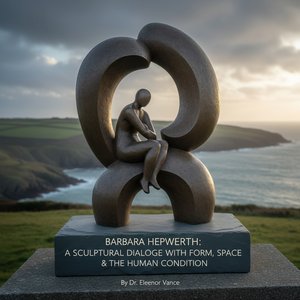 Barbara Hepworth: A Sculptural Dialogue with Form, Space & the Human ConditionExplore the profound world of Barbara Hepworth's sculpture. Discover her artistic evolution, iconic forms, and lasting influence on modern …
 Geometry with Purpose: Distinguishing Suprematism from ConstructivismMaster the differences between Suprematism and Constructivism with our expert guide. Discover the soul of the Russian avant-garde now.
 Sculpture Unveiled: A Definitive Guide to the Mastery of Three-Dimensional Art and FormExplore the profound history of sculpture, from classical realism to modern abstraction. Discover the mastery of form, texture, and medium …